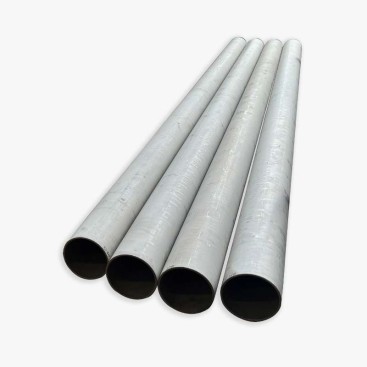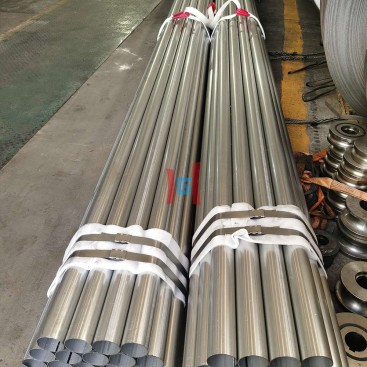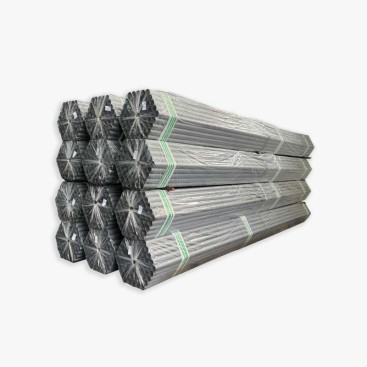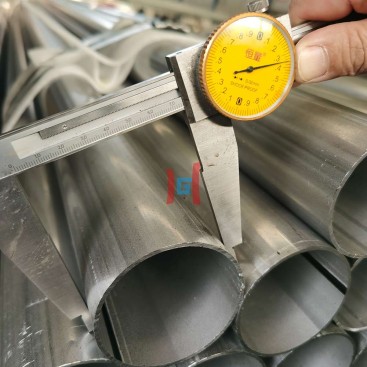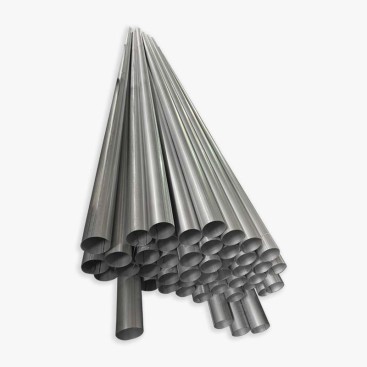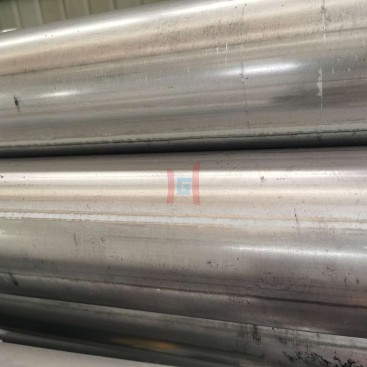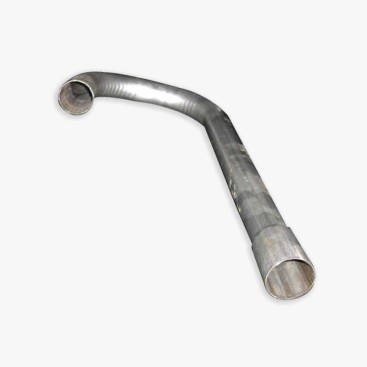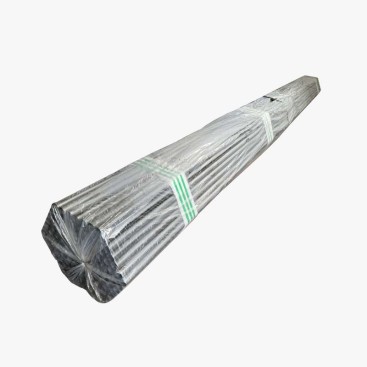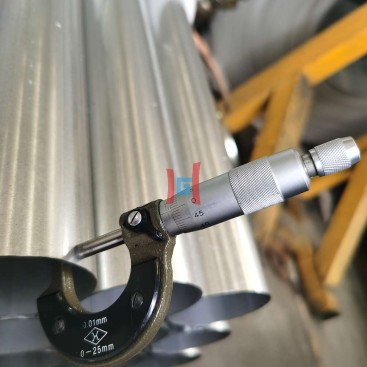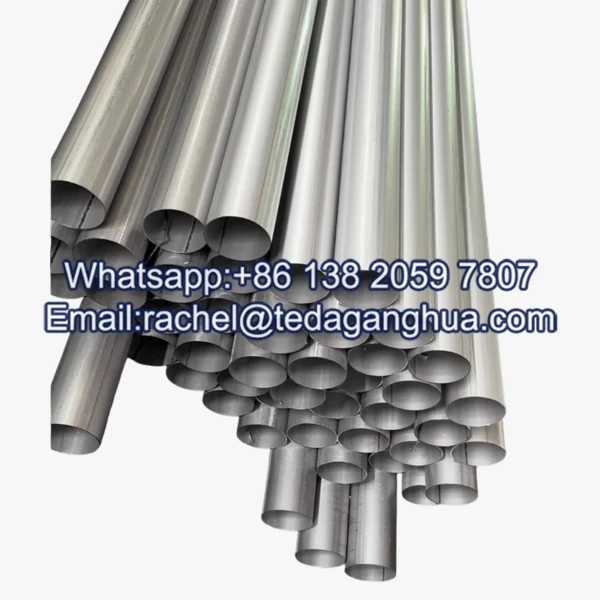
Hochfrequenzgeschweißtes aluminisiertes Stahlrohr
- Beschreibung
Beschreibung
High frequency welded aluminized steel pipe is a common product description in industrial tube sourcing. The key term is HFW, or High Frequency Welding. HFW is a form of electric resistance welding (Erw) that uses high-frequency electrical current to heat the edges of formed steel strip before pressure joins them into a continuous longitudinal seam. In other words, HFW belongs to the ERW family; the two terms are not competing manufacturing categories. For buyers, the practical difference lies in how the welding process controls heat input, production speed, and the weld zone. Jedoch, HFW is a process description, not an automatic quality grade. Weld bead treatment, Wärmebehandlung, coating repair, and inspection requirements still need to be confirmed in the purchase specification.
1. HFW and ERW: What Is the Relationship?
ERW stands for Electric Resistance Welding. It describes a family of welding processes in which electrical resistance generates heat at the edges of steel strip, and pressure brings those heated edges together to form a weld. HFW stands for High Frequency Welding. It is a type of ERW that uses high-frequency current to concentrate heating near the strip edges.
| Term | Meaning | Relationship |
|---|---|---|
| Erw | Elektrisches Widerstandsschweißen | The broader resistance-welding category |
| HFW | High Frequency Welding | A resistance-welding method using high-frequency current |
This means that HFW is a subset of ERW. When a supplier describes a pipe as HFW, the description already identifies it as a resistance-welded product. It is therefore reasonable to see HFW and ERW used together in technical discussions, but they do not represent two unrelated processes.
Key terminology point
ERW identifies the broader welding process family. HFW identifies a specific resistance-welding approach that uses high-frequency current. HFW is not a separate quality grade or a guarantee of superior finished-pipe performance.
2. How High Frequency Welding Works
In HFW tube production, flat steel strip passes through forming rolls that gradually shape it into a tubular profile. The two longitudinal edges approach each other at the welding point. High-frequency electrical current heats the edges in a concentrated area, and pressure from the squeeze rolls forces them together to create a continuous weld seam.
Steel strip enters the tube mill from a coil.
Forming rolls shape the strip and bring its edges together.
High-frequency current heats the edges in the welding zone.
Squeeze rolls press the heated edges together to form the longitudinal weld.
Weld flash is treated as specified, followed by sizing, Schneiden, und Inspektion.
Unlike conventional arc welding, the standard HFW process does not use filler wire to join the strip edges. The joint is formed by heating and pressure, with the weld zone consisting primarily of the parent steel material. Production parameters must be controlled to achieve the required weld integrity across the tube length.
3. What Does High Frequency Change in Production?
The use of high-frequency current affects how electrical energy is concentrated at the strip edges. Under suitable production conditions, this can create a relatively narrow heating zone and support high-speed continuous tube manufacturing. The actual result depends on the material, Wandstärke, tube diameter, power settings, forming conditions, and welding-line design.
| HFW Characteristic | Production Effect | Commercial Relevance |
|---|---|---|
| Concentrated heating | Can produce a relatively narrow heat-affected zone under controlled conditions | Limits the area of parent material exposed to significant welding heat |
| High production speed | Supports continuous, high-speed tube manufacturing | Can improve production capacity and manufacturing efficiency |
| Controlled edge joining | Can produce a consistent longitudinal weld when parameters are properly controlled | Supports repeatable weld quality and production stability |
A narrower heat-affected zone can reduce the width of material influenced by welding heat, but it does not mean that the weld area is unaffected. The weld and adjacent heat-affected zone may still have different microstructures and mechanical properties from the parent material. Some products therefore require additional heat treatment or other controlled finishing operations.
High production speed can also improve output and manufacturing efficiency. Jedoch, speed alone does not establish weld quality. Electrical power, edge preparation, forming alignment, squeeze pressure, and process monitoring all contribute to the result.
4. Does HFW Automatically Mean a Better Weld?
NEIN. HFW describes how the edges are heated and joined; it does not define the finished pipe’s quality class. A properly controlled HFW line can produce reliable welds, but the result must still be verified against the applicable product specification and inspection requirements.
The phrase “high frequency welded” is sometimes used commercially to emphasize a modern, high-speed welding process or a controlled weld zone. Buyers should not interpret it as proof that the pipe has higher strength, better corrosion resistance, or a longer service life than every other ERW product.
What actually establishes weld quality?
- Compliance with the applicable tube or pipe product standard.
- Controlled welding parameters and stable production conditions.
- Appropriate treatment of the internal and external weld flash.
- Specified heat treatment where required by the product standard or application.
- Dimensional and mechanical testing as applicable.
- Required nondestructive examination and documented inspection results.
For a fair comparison, ask suppliers for the product standard, weld inspection method, test requirements, and acceptance criteria. These details provide more useful evidence than the HFW label alone.
5. HFW Welding and the Aluminized Coating
For aluminized steel pipe, the welding process has an additional consideration: the effect of heat on the aluminum-based coating. If the tube is manufactured from pre-coated strip, the high temperature at the joining edges can damage or remove the original coating around the longitudinal seam.
HFW concentrates heating near the edges, which can limit the width of the affected zone under suitable conditions. Jedoch, a relatively narrow heat-affected zone does not mean that the coating at the seam remains intact. The weld area still needs an agreed treatment or acceptance condition.
Depending on the manufacturing route and application, the seam may receive a suitable repair coating, be accepted as an uncoated area under defined limits, or be handled through a post-weld coating process. Buyers should confirm which route applies to the actual product rather than assuming that HFW eliminates coating damage.
Important inquiry question
How is the coating at the HFW seam treated after welding? Ask whether the affected area is repaired, supplied as an agreed uncoated seam, or protected through a post-weld coating route.
The appropriate choice depends on coating composition, service temperature, Korrosionseinwirkung, and the customer’s acceptance requirements. A repaired seam should have an agreed repair method and inspection criteria. An uncoated seam may also be acceptable for certain applications if its condition and limits are clearly defined in the order.
6. Weld Flash, Wärmebehandlung, and Other Details to Confirm
The welding method is only one part of the finished tube specification. Buyers should also understand how the manufacturer handles weld flash, whether heat treatment is required, and how the seam coating is inspected.
| Artikel | Possible Requirement | Why It Matters |
|---|---|---|
| External flash | Remove, retain, or control to an agreed limit | Affects external profile, fit, and appearance |
| Internal flash | Remove, retain, or control internal projection | Affects bore clearance, assembly, and flow |
| Weld heat treatment | Apply where required by the product specification or service conditions | Can address weld-zone microstructure and mechanical-property requirements |
| Seam coating | Repair, accept within defined limits, or use a post-weld coating route | Defines protection at the heat-affected area |
| Weld inspection | Specify the applicable test and acceptance requirements | Provides evidence of weld integrity |
Heat treatment should not be specified simply because a tube is HFW. Whether it is required depends on the applicable product standard, Material, Abmessungen, and intended service. Similarly, bead removal must be defined according to the tube’s function because removing flash can affect local wall thickness and the nearby coating.
7. What to Ask a Supplier: Beyond “Is It HFW?”
Asking whether a tube is high-frequency welded provides useful process information, but it does not fully describe the finished product. A more effective inquiry asks about the welding method together with the seam treatment, Wärmebehandlung, coating condition, and inspection plan.
HFW aluminized pipe inquiry checklist
- Is the tube manufactured by HFW, and what product standard applies?
- What steel grade and substrate thickness are used?
- What is the outside diameter, Wandstärke, and length?
- Are the internal and external weld flashes removed?
- Is weld heat treatment required or included?
- How is the aluminum or aluminum-silicon coating at the seam treated?
- What weld inspection and mechanical testing are provided?
- Can the supplier provide material certificates and inspection records?
A clear purchase description could read:
Suggested purchase description
High-frequency welded aluminized steel pipe, specified steel grade and coating type, OD × WT × length, internal and external weld flash requirements, weld heat treatment condition, seam coating treatment, and agreed inspection criteria.
This description gives the supplier more actionable information than simply stating “HFW pipe.” It also reduces the risk of different suppliers quoting products with different weld finishing or coating conditions.
8. Teda Ganghua: Specification Coordination for Aluminized Steel Pipe
Teda Ganghua Metal is a steel stockist based in Tianjin TEDA, mit 20 years of steel stockist and export experience. The company supports international industrial buyers with steel sourcing, specification coordination, Verarbeitungsdienstleistungen, Qualitätsdokumentation, and export shipment arrangements.
For customers sourcing high frequency welded aluminized steel pipe, Teda Ganghua can help coordinate the required steel grade, coating type, Rohrabmessungen, and inspection conditions. Buyers can clarify the HFW production description alongside practical requirements for weld flash, Wärmebehandlung, and coating condition at the longitudinal seam.
Depending on product availability and confirmed manufacturing capabilities, purchasing support may include:
- Steel grade and substrate specification coordination.
- Aluminum or aluminum-silicon coating requirement confirmation.
- Outside diameter, Wandstärke, and length specification review.
- Weld seam, flash-removal, and coating-treatment requirement coordination.
- Schneiden, Schweißen, Biegen, and other processing services where applicable.
- Material Test Certificates and material traceability documentation.
- Third-party inspection arrangements and shipment verification.
Teda Ganghua maintains substantial steel inventory and works with established steel mill partners to support different industrial purchasing requirements. The company emphasizes specification-based sourcing, accurate shipment quantity verification, and material quality documentation.
Buyers are welcome to arrange inspections before shipment to verify the agreed material, Abmessungen, weld condition, Beschichtungsanforderungen, and shipment quantity. For HFW aluminized pipe projects, confirming the seam treatment and inspection criteria before production helps ensure that the delivered product matches the intended application.
Häufig gestellte Fragen
1. Is HFW the same as ERW?
HFW is a type of ERW. ERW is the broader electric resistance welding category, while HFW uses high-frequency current to heat the strip edges before pressure joins them into a continuous seam.
2. Does HFW produce a narrower heat-affected zone?
HFW can concentrate heating near the strip edges and produce a relatively narrow heat-affected zone under suitable conditions. The actual width and metallurgical condition depend on material properties and welding parameters.
3. Is HFW always better than other ERW methods?
NEIN. HFW is a process description, not a quality grade. Finished weld performance depends on process control, Material, Abmessungen, finishing, testing, and compliance with the applicable product standard.
4. Does HFW protect the aluminized coating at the weld seam?
NEIN. The concentrated welding heat can still damage or remove the pre-existing coating near the seam. The manufacturer and buyer should agree on repair coating, an acceptable uncoated seam, or a post-weld coating route.
5. What should buyers confirm besides the HFW process?
Confirm the product standard, Stahlsorte, Abmessungen, internal and external weld flash treatment, heat treatment where applicable, seam coating condition, and weld inspection requirements. These details define the finished product more clearly than the process name alone.