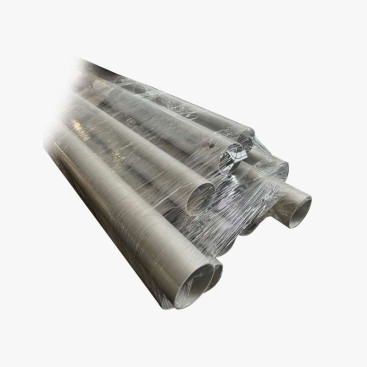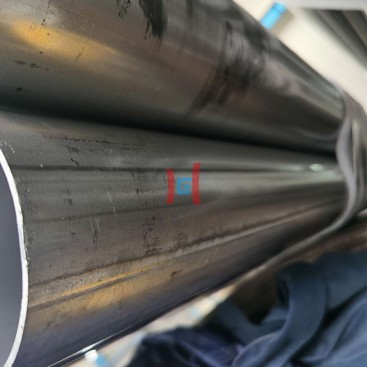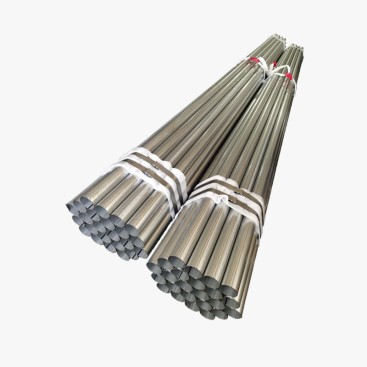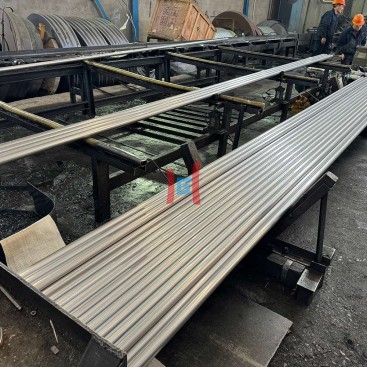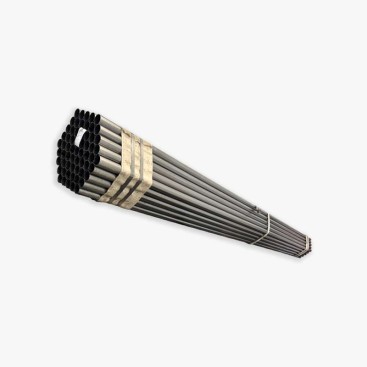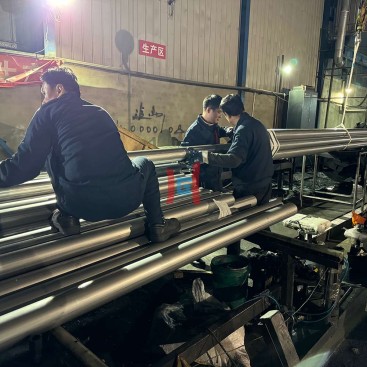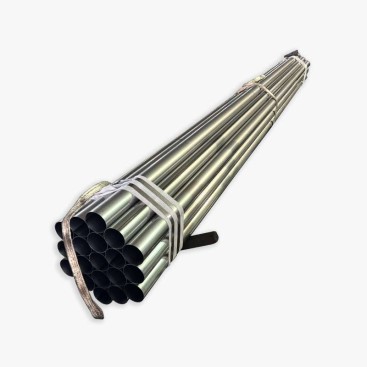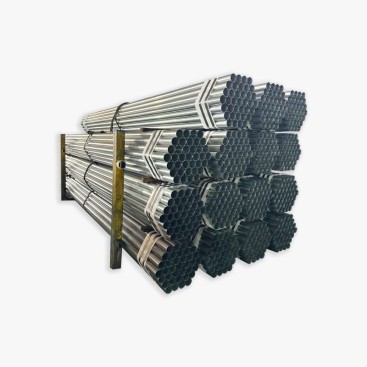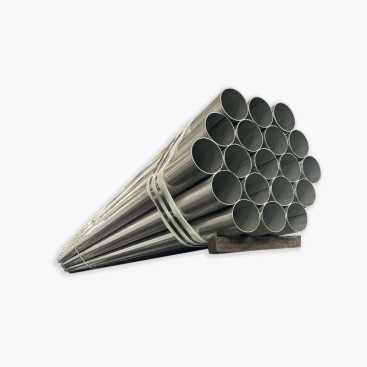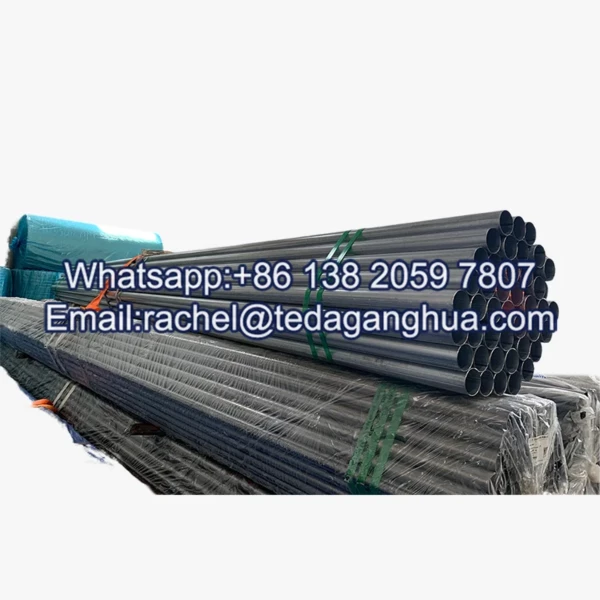
Q195 aluminisiertes Stahlrohr
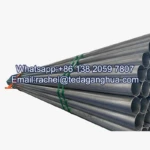
- Beschreibung
Beschreibung
Q195 aluminized pipe combines a low-carbon Chinese structural steel substrate with an aluminum-silicon protective coating, creating an economical tube option for general-duty applications. Q195 is defined under GB/T 700 and belongs to the lower-strength end of China’s carbon structural steel grades. Its specified minimum yield strength is 195 MPa for applicable thicknesses, while its relatively low carbon content supports good forming and welding characteristics. :contentReference[Schaf:0]{Index=0}
Material concept: Q195 provides the low-carbon steel base; aluminizing adds the surface protection. The coating does not turn the substrate into stainless steel. For procurement, the correct specification should therefore identify both the steel substrate and the required aluminized coating grade.
What Is Q195 Aluminized Pipe?
Q195 is a Chinese carbon structural steel grade covered by GB/T 700. The number “195” refers to the nominal minimum yield-strength level of 195 MPA. For material up to 16 mm in the GB/T 700 mechanical-property table, the minimum yield strength is 195 MPa and tensile strength is 315–430 MPa. :contentReference[Schaf:1]{index=1}
The base steel is relatively low in carbon, with GB/T 700 specifying maximum carbon of 0.12%, silicon of 0.30%, manganese of 0.50%, phosphorus of 0.035% and sulfur of 0.040% for Q195. This chemistry places it in the low-strength, highly workable part of the carbon structural steel family. :contentReference[Schaf:2]{index=2}
When this substrate is processed into tube and given an aluminum-silicon coating, the resulting product combines the forming and welding characteristics of the steel base with improved surface resistance to oxidation and atmospheric corrosion. The exact coating system should be selected according to the service environment rather than assuming that every aluminized tube has the same protection level.
Why Use Q195 as the Base Steel?
Low Carbon
The relatively low carbon level supports cold forming, bending and welding for many general-purpose tube applications.
Moderate Strength
Der 195 MPa minimum yield-strength level is appropriate for light-duty and general fabrication where higher structural strength is unnecessary.
Good Workability
The grade is associated with good plasticity, pressure-processing performance and weldability. :contentReference[Schaf:3]{index=3}
The important point is that Q195 is selected for the substrate’s mechanical and fabrication requirements, not for corrosion resistance. The aluminized surface is what provides the additional environmental protection needed in applications where bare carbon steel would have insufficient durability.
Q195 vs Q235 vs Q345: Which Base Grade Should You Choose?
The Q-series designation is useful because the number broadly indicates the specified yield-strength level. Q195 is the lightest-strength option among the three grades commonly encountered in this comparison, while Q235 provides a higher general structural strength level. Q345 is a legacy designation associated with the older GB/T 1591 system; modern procurement documents commonly use Q355 under GB/T 1591-2018, which replaced Q345 in the current standard framework. :contentReference[Schaf:4]{index=4}
| Base Grade | Nominal Yield Level | Relative Strength | Typical Selection Logic | Relative Material Cost Position |
|---|---|---|---|---|
| Q195 | 195 MPA | Niedrig | Light-duty tubes, general protection, Belüftung, supports and formed components | Economy-oriented |
| Q235 | 235 MPA | Medium | General structural and mechanical applications requiring more strength | Economy to standard |
| Q345 / current Q355 framework | Approximately 345–355 MPa class | Höher | Higher-load structural applications where the lower grades do not provide sufficient design margin | Higher-strength material route |
Do not substitute Q195 for Q235 or Q345/Q355 solely because the tube dimensions are identical. A lower-strength substrate can change the load-bearing capacity of a component. Material substitution should be reviewed against the design load, Wandstärke, section geometry and applicable standard.
When Is Q195 Aluminized Pipe a Good Choice?
This material combination is most attractive when the tube needs basic mechanical performance plus improved surface protection, but does not require the higher strength of a medium- or high-strength structural grade.
- Ventilation and duct-support structures
- General protective tubing
- Light-duty brackets and supports
- Equipment frames and guards
- General-purpose fabricated tube assemblies
- Components exposed to atmospheric conditions where bare carbon steel would corrode too quickly
For heavily loaded structural members, high-temperature pressure service, or applications involving severe mechanical impact, the base grade and coating should be reassessed rather than selecting Q195 simply because it is easy to form.
AS60 and AS80 Coating Selection
For aluminized tube procurement, AS60 and AS80 can be considered as different coating-level options when they are offered within the applicable product specification. The appropriate level depends on the expected exposure, Korrosionsumgebung, forming process and required durability.
Because coating designations can be defined differently by product standard, supplier specification or market convention, procurement documents should state the geltenden Norm, coating mass or thickness, substrate grade and test requirements rather than relying on “AS60” or “AS80” alone.
Typical Q195 Aluminized Tube Specification Framework
| Specification Item | Typical Procurement Range / Option | What to Confirm |
|---|---|---|
| Grundmaterial | Q195 | GB/T 700 grade and material certificate |
| Tube process | Erw / welded tube or other specified process | Welding method and dimensional tolerance |
| Outside diameter | Application-dependent; small and medium tube sizes are commonly configurable | OD tolerance and section geometry |
| Wall thickness | Selected according to load, forming and application requirements | Minimum wall after forming |
| Aluminisierte Beschichtung | AS60 / AS80 or project-specific level | Applicable standard and coating mass/thickness |
| Tube length | Fixed or cut-to-length | Tolerance and cutting condition |
| Oberflächenzustand | Continuous aluminized surface | Surface defects, coating continuity and handling marks |
Q195 Aluminized Pipe: Price-Tier Positioning
For procurement planning, the material can be viewed through a relative price tier rather than a fixed market price. Actual quotations vary with steel market conditions, Rohrabmessungen, coating level, order quantity, processing requirements and delivery terms.
Economy Tier
Q195 base + moderate aluminized coating such as an AS60-level specification where the environment permits.
Standard Tier
Q195 base + higher coating protection such as AS80 where additional environmental durability is required.
Higher-Strength Route
Q235 or a higher-strength structural grade when the application requires greater mechanical capacity rather than simply greater corrosion protection.
This distinction is important because a thicker aluminized coating does not compensate for an underspecified structural substrate. Likewise, selecting Q345/Q355 when Q195 already meets the mechanical requirement may add unnecessary material capability. The most efficient specification matches substrate strength and coating protection independently.
Q195 vs Q235 vs Q345: A Simple Decision Path
Schritt 1 — Check the load. If the component carries only a light or moderate load and the design permits a 195 MPa yield-strength level, Q195 may be sufficient.
Schritt 2 — Check the strength margin. If calculations require more capacity, move toward Q235 or a higher-strength grade instead of trying to solve a structural problem through coating selection.
Schritt 3 — Check the environment. If the base steel meets the mechanical requirement but corrosion protection is inadequate, adjust the aluminized coating specification.
Schritt 4 — Check fabrication. Confirm bending, Schweißen, Schneiden, coating integrity and dimensional tolerances before finalizing the tube specification.
Teda Ganghua Supply for Aluminized Steel Tubes
Teda Ganghua supports procurement of aluminized steel tubes for general industrial and fabricated applications, with specifications that can be matched to the required substrate grade, Rohrabmessungen, Wandstärke, coating level and processing requirements. For projects considering Q195 as an economical substrate, the specification can be reviewed together with the required aluminized coating and final tube geometry.
For procurement teams comparing different coating levels and tube configurations, Q195 aluminized steel tubes can be evaluated according to the actual application environment instead of choosing the coating solely by nominal designation.
Key Takeaways for Procurement
- Q195 is a low-carbon Chinese carbon structural steel grade under GB/T 700.
- Der 195 designation corresponds to the specified minimum yield-strength level for applicable dimensions. :contentReference[Schaf:5]{Index=5}
- Its relatively low carbon level supports forming and welding for many general-purpose applications.
- Aluminizing supplies surface protection; it does not replace the mechanical function of the steel substrate.
- AS60 and AS80 should be specified together with the applicable coating standard and coating requirement.
- Q235 is a logical step upward when more structural strength is required.
- Q345 is a legacy designation; current GB/T 1591 procurement commonly uses Q355 instead. :contentReference[Schaf:6]{index=6}
- Tube diameter, Wandstärke, coating level and fabrication method should be selected as one complete specification.
FAQ
What does Q195 mean in Q195 aluminized pipe?
Q195 identifies the low-carbon carbon structural steel substrate, with a specified minimum yield-strength level of 195 MPa for applicable thicknesses under GB/T 700. The aluminized layer is a separate surface-protection system. :contentReference[Schaf:7]{index=7}
Is Q195 suitable for structural tube applications?
It can be suitable for light-duty and general applications when the calculated load and applicable design standard permit its strength level. It should not automatically replace Q235 or higher-strength grades in load-bearing applications.
What is the difference between AS60 and AS80?
They represent different aluminized coating levels in specifications that use these designations. AS80 provides a higher coating level than AS60 within such a specification. The exact coating mass or thickness should always be confirmed against the applicable product standard.
Should I choose Q195 or Q235 for an aluminized tube?
Choose according to the required mechanical capacity. Q195 ist die wirtschaftsorientierte Variante mit geringerer Festigkeit, während Q235 eine höhere Streckgrenze bietet. Wenn das Design eine noch höhere Festigkeit erfordert, Eine aktuelle Spezifikation mit höherer Festigkeit wie Q355 ist möglicherweise besser geeignet.
Können aluminisierte Q195-Rohre zur Belüftung und zum allgemeinen Schutz verwendet werden??
Ja, Es kann für Lüftungsunterstützungen in Betracht gezogen werden, Schutzbauten, leichte Rahmen und ähnliche allgemeine Anwendungen, wenn die mechanischen und Umgebungsanforderungen erfüllt sind.