Costo de la tubería de acero aluminizado
- Descripción
Descripción
Understanding the cost of aluminized steel pipe requires looking beyond the price of the raw steel. The final manufacturing cost can include substrate material, aluminum-silicon coating requirements, tube forming and welding, corte, end preparation, inspección, embalaje, domestic transportation, and export-related expenses. Each component responds to different technical and commercial factors, so two products with similar dimensions may still have different cost structures.
For procurement managers, the objective is not simply to find the lowest-cost quotation. It is to understand which specifications drive expenditure, identify savings that do not compromise performance, and compare suppliers on a consistent technical basis. A structured cost analysis also helps distinguish unavoidable material costs from processing choices, order-size effects, and logistics expenses.
1. The Cost Chain: From Steel Substrate to Delivered Pipe
The manufacturing cost of a coated steel tube develops through several stages. The exact sequence depends on the production route, whether the coating is applied to the steel strip before tube forming or through another qualified process, and the inspection requirements for the finished product.
Base-steel grade, espesor, ancho, and procurement conditions
Tipo de recubrimiento, specified coating mass or thickness, and quality controls
formando, seam welding where applicable, apresto, and dimensional control
Corte, end preparation, dimensional checks, and required testing
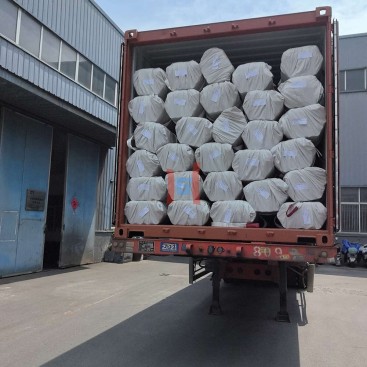
Protection, labeling, domestic freight, export documentation, and shipment handling
Each stage adds a different type of cost. Steel and coating are primarily material-related factors, while forming, soldadura, corte, and inspection depend on manufacturing complexity and quality requirements. Packaging and freight depend on the shipment configuration, destino, and handling conditions.
2. Main Cost Components and Their Influence
The following table summarizes the main cost drivers and the conditions that can increase or reduce their influence. It describes directional relationships rather than fixed percentages because the actual cost distribution varies by specification, production route, proveedor, and order size.
| Cost Component | Main Cost Drivers | Typical Influence |
|---|---|---|
| Sustrato de acero | Steel market conditions, grade, espesor, material yield, and procurement timing | Often a major cost driver, especially for material-intensive specifications. |
| Recubrimiento de aluminio y silicio | Coating designation, required coating quantity, process controls, e inspección | More demanding coating requirements can increase material and processing costs. |
| Tube forming and welding | DE, espesor de pared, manufacturing route, requisitos de costura, and production efficiency | Depends on equipment, process complexity, and required quality controls. |
| Cutting and end preparation | Cut count, length tolerance, deburring, beveling, and special end treatments | More operations and smaller batches can raise processing cost per piece. |
| Inspection and documentation | Testing scope, trazabilidad, certificados, and third-party inspection | Increases with additional verification and documentation requirements. |
| Packaging and domestic freight | Bundle dimensions, protective materials, shipment weight, and delivery distance | Can be significant for small orders or bulky shipments. |
| Export and currency exposure | Exchange rates, bank charges, export handling, insurance, and agreed delivery terms | Depends on the transaction currency, shipment route, and allocation of commercial responsibilities. |
There is no universal percentage split for these categories. For a standard production batch, raw material and coating may dominate the cost structure. For a small order with multiple cut lengths, tratamiento, embalaje, and freight can account for a larger proportion of the delivered cost.
3. Manufacturing Cost Is Not the Same as Selling Price
Manufacturing cost represents the expenses incurred to produce and prepare the goods. A supplier’s selling price is a commercial figure that may also account for overhead, financing, inventory risk, profit margin, market conditions, and order-specific commercial terms.
| Concept | What It Represents | What Buyers Should Check |
|---|---|---|
| Manufacturing cost | Material, tratamiento, inspección, and allocated production expenses | Whether the required specifications and operations are included. |
| Selling price | The supplier’s commercial offer under defined terms | Quantity, validity period, condiciones de pago, and included services. |
| Delivered cost | The total cost of obtaining the material at the agreed destination | Freight, insurance, duties, taxes, and other charges allocated to the buyer. |
A lower quotation does not necessarily indicate a lower manufacturing cost. Suppliers may use different production routes, material sources, stock positions, or commercial margins. More importantly, quotations may cover different coating requirements, tolerancias, testing scopes, or delivery responsibilities.
To compare offers fairly, buyers should normalize the specifications and commercial terms first. Confirm that each quotation covers the same substrate, designación de recubrimiento, dimensiones, longitud, requisitos de inspección, método de embalaje, and delivery basis. Otherwise, a seemingly attractive offer may simply exclude services that another supplier has already included.
4. How Steel Price, Revestimiento, and Dimensions Affect Cost
4.1 Base-Steel Price Fluctuations
The substrate is an important starting point in the cost calculation. Changes in steel prices can affect the replacement cost of inventory, the cost of newly purchased material, and the timing of supplier quotations. The impact depends on purchasing contracts, stock turnover, production lead times, and whether the material was purchased before or after a market movement.
Buyers can reduce uncertainty by confirming the quotation validity period, the material allocation policy, and whether the price is fixed for the confirmed order. For repeat purchases, a documented adjustment mechanism may be more practical than assuming that the same quotation will remain valid indefinitely.
4.2 Coating Grade and Required Performance
The specified aluminum-silicon coating affects both the material and the manufacturing controls required to achieve the agreed condition. Depending on the product and applicable specification, a higher coating requirement may involve greater coating consumption, more demanding process control, or additional verification.
Sin embargo, the relationship is not a universal linear calculation. Coating systems, measurement conventions, eficiencia de producción, and the stage at which coating is applied can differ. Buyers should compare the actual coating designation and acceptance criteria instead of relying on a general description such as heavy coating or premium coating.
The required coating should be selected according to the service environment, temperatura de funcionamiento, exposure conditions, and expected service life. Choosing a higher specification than necessary can add avoidable expense, while selecting an inadequate coating can lead to premature deterioration and higher replacement costs.
4.3 Outside Diameter and Wall Thickness
For a given material and length, a larger outside diameter or thicker wall generally increases steel consumption. Wall thickness can have a particularly direct effect on mass per meter, while diameter affects the circumference and therefore the amount of material needed to form the tube.
For an idealized tube with uniform wall thickness, the approximate cross-sectional area of the steel is:
A = π × t × (D − t)
D = outside diameter; t = wall thickness; A = steel cross-sectional area.
Multiplying this area by the tube length and steel density provides an estimate of substrate mass, subject to dimensional tolerances and the actual product geometry. This is a useful way to understand material consumption, but it is not a complete quotation formula because coating, manufacturing yield, tratamiento, inspección, and commercial expenses remain additional factors.
Wall thickness should not be reduced solely to lower the material cost. The final specification must remain suitable for the required mechanical loads, joining method, dimensional stability, and operating environment.
4.4 Currency and Export Expenses
Exchange-rate movements can change the local-currency cost of imported substrate, processing inputs, and other expenses. The effect on an export quotation depends on the supplier’s purchasing currency, sales currency, payment timing, and currency risk management.
Export-related expenses may include documentation, cargo handling, insurance, port services, and freight, depending on the agreed delivery terms. Buyers should check whether the quotation covers delivery to the factory, port, destination terminal, or final delivery address. Import duties and destination taxes should be treated separately when they are not included in the supplier’s offer.
5. Four Practical Ways to Reduce Procurement Cost
Effective cost reduction focuses on unnecessary variation, avoidable processing, and inefficient ordering rather than removing technical requirements that protect the product’s performance.
Strategy 1: Consolidate Specifications
Where engineering requirements permit, standardize OD, espesor de pared, and cut lengths across related orders. Fewer size variations can simplify stock allocation, cutting schedules, inspección, and packaging.
Strategy 2: Match the Coating to the Actual Service
Define the operating environment, temperatura, exposure, and expected service life before choosing a coating requirement. Avoid selecting a coating level solely because it was used in an unrelated application.
Strategy 3: Review Noncritical Tolerances
Specify tight tolerances where assembly, sealing, alignment, or performance requires them. For noncritical dimensions, an engineering-approved tolerance range may reduce machining, sorting, rejection, or production costs.
Strategy 4: Plan Batch Sizes and Delivery Dates
Combine compatible requirements when practical, schedule repeat purchases, and allow reasonable production lead time. This can reduce setup frequency, urgent processing, fragmented shipments, and avoidable handling charges.
These strategies should be assessed together. Consolidating orders may reduce processing cost but increase inventory carrying costs. A wider tolerance may simplify manufacturing but fail to meet an assembly requirement. The best decision is the one that lowers the total cost while preserving the specified function and acceptance criteria.
6. When Cutting Cost Can Increase the Total Cost
Not every reduction in the initial quotation represents a genuine saving. Removing an inspection step, lowering the coating requirement, or choosing a thinner wall can reduce immediate expenditure while increasing the risk of failure, maintenance, or early replacement.
| Proposed Saving | Potential Risk | Safer Evaluation Method |
|---|---|---|
| Reducing the coating requirement | Insufficient protection for the actual exposure conditions | Verify coating suitability against the service environment and expected life. |
| Reducing wall thickness | Lower mechanical capacity or loss of dimensional stability | Obtain engineering approval against loads, design requirements, and applicable standards. |
| Removing required inspection | Undetected dimensional, material, or coating nonconformity | Retain checks that directly support product acceptance and traceability. |
| Choosing the cheapest packing method | Surface damage, handling problems, or additional repacking | Match packaging to the route, storage conditions, and product protection needs. |
A life-cycle cost comparison considers more than the initial purchase. It can include installation, maintenance, downtime, replacement frequency, disposal, and the consequences of a component failure. Where corrosion or heat exposure is important, the technically appropriate coating and substrate may offer better overall value even if their initial cost is higher.
7. How to Compare Supplier Quotations Consistently
Before making a purchasing decision, prepare a common specification sheet and ask each supplier to quote against the same requirements. Separate the material price from optional processing and logistics where possible, so the reasons for cost differences remain visible.
| Comparison Item | Questions to Resolve |
|---|---|
| Material and coating | Are the substrate grade, designación de recubrimiento, and acceptance criteria equivalent? |
| Dimensions | Are OD, espesor de pared, longitud, and tolerances identical? |
| Manufacturing and inspection | Are welding, finishing, testing, certificados, and traceability included? |
| Order quantity | Do the minimum quantity, weight basis, and batch assumptions match? |
| Delivery and payment | Are lead time, shipping responsibilities, condiciones de pago, and quotation validity comparable? |
| Total delivered cost | Which freight, insurance, handling, taxes, or other charges remain outside the quotation? |
A cost breakdown does not require every supplier to disclose confidential internal accounting data. Buyers can instead request a commercially useful quotation that separates material, tratamiento, inspección, embalaje, and logistics charges where available. This creates a consistent comparison without assuming that every manufacturer’s internal cost allocation is identical.
8. Cost Planning with Teda Ganghua
Teda Ganghua supports industrial procurement teams evaluating material specifications, requisitos de procesamiento, and supply arrangements for coated steel tubular products. When sourcing tubos de acero aluminizado, buyers can submit a dimensional schedule or technical drawing for review, including the substrate grade, requisitos de recubrimiento, DE, espesor de pared, longitud, cantidad, and intended operating conditions.
For a more useful cost assessment, identify which dimensions can be standardized, which tolerances are essential, whether cutting or end preparation is required, and what inspection documents must accompany the shipment. Also state the delivery destination and target schedule so logistics and production requirements can be evaluated alongside the material specification.
Final costs depend on the confirmed technical requirements, material availability, processing route, cantidad, y condiciones de entrega. A quotation should therefore be reviewed as a complete supply proposal rather than as a standalone material rate. This approach helps buyers identify practical savings while maintaining the performance and quality required for their applications.
Preguntas frecuentes
1. What is the biggest factor affecting manufacturing cost?
The steel substrate and coating can be major contributors, but their relative influence depends on dimensions, requisitos de recubrimiento, production route, and order size. Corte, inspección, and logistics can become more significant for customized or small-batch orders.
2. Does a higher coating requirement always increase cost?
A more demanding coating requirement can increase material consumption or process-control costs, but the actual effect depends on the coating system and manufacturing route. Compare defined coating specifications rather than relying on general descriptions.
3. Why can two suppliers quote different amounts for the same dimensions?
They may differ in substrate sourcing, requisitos de recubrimiento, manufacturing efficiency, inspection scope, stock availability, processing inclusions, commercial margins, or delivery terms. Check that both quotations cover the same complete specification.
4. How can I reduce purchasing costs without sacrificing quality?
Standardize compatible sizes, optimize cutting plans, review noncritical tolerances with engineering approval, plan orders ahead, and select coating requirements according to actual service conditions. Avoid removing essential inspection or reducing material performance without technical justification.
5. Should I compare quotations by unit price or total delivered cost?
Compare el costo total de entrega después de normalizar las especificaciones, cantidad, tratamiento, inspección, embalaje, y condiciones de entrega. Esto proporciona una base más realista para evaluar la compra completa y sus implicaciones esperadas para la vida útil..