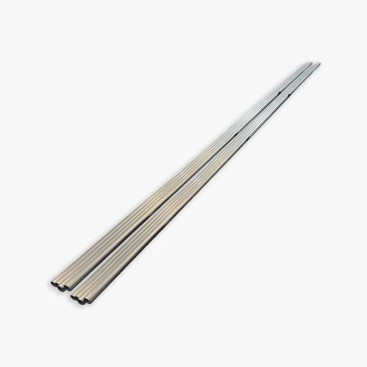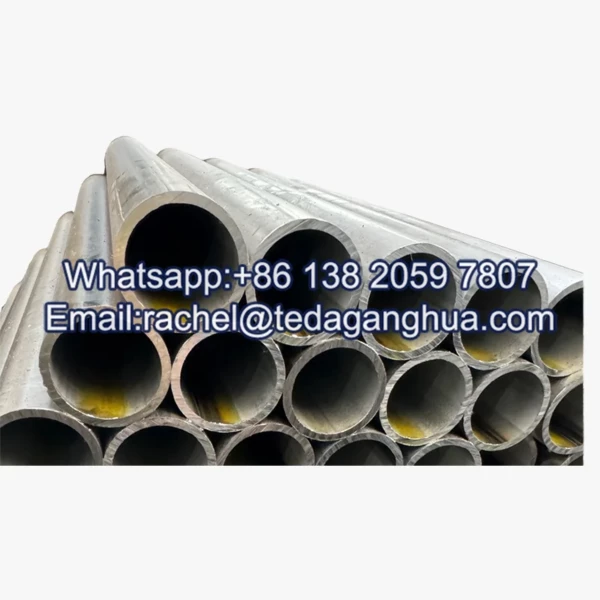
Aluminized Steel Pipe Manufacturer In China
- Descripción
Descripción
When evaluating an aluminized pipe manufacturer in China, the key question is not simply whether the company sells aluminized pipe, but whether it controls the manufacturing processes that determine the final product. A company may own a tube-forming line, purchase pre-coated steel, outsource aluminizing, or operate purely as a trading intermediary. These supply models can all appear similar during an initial inquiry, but their ability to adjust coating requirements, production parameters, quality controls, and delivery schedules can be very different.
Mill vs Trade House: Start With the Manufacturing Identity
For procurement managers, “manufacturer” should be treated as a verifiable supply-chain role rather than a marketing description. The first task is to identify which company controls the relevant production steps and which processes are performed by another party.
| Supply Entity | Typical Manufacturing Setup | Primary Control |
|---|---|---|
| Integrated manufacturer | Owns relevant aluminizing and tube-forming capabilities | Coating process, formando, soldadura, cutting and inspection |
| Tube manufacturer with outsourced coating | Owns tube production but purchases or outsources coated strip/coil | Tube forming and downstream processing |
| Trading house | Sources finished material from one or more manufacturers | Commercial coordination and supplier management |
These categories are not automatically good or bad. A trading company can provide sourcing flexibility, while a tube manufacturer can offer strong downstream control. The important procurement issue is knowing which entity is responsible for the characteristics specified in the purchase order.
1. Verify the Equipment List
The fastest way to test a manufacturer’s identity is to ask for an equipment list related specifically to the product being quoted. A generic factory profile is less useful because it may describe the company’s overall steel business rather than the actual production route for your pipe.
Ask for equipment information covering:
• Coil or strip preparation equipment
• Aluminizing or hot-dip coating equipment, where applicable
• Tube-forming line
• ERW or other welding equipment
• Sizing and straightening equipment
• Cutting equipment
• Dimensional and coating inspection instruments
• Bundling and packaging equipment
The equipment list should correspond to the production route stated in the quotation. If the company claims to control the coating process but cannot explain the coating line, process sequence, or inspection method, further verification is warranted.
2. Request a Live Production-Line Video
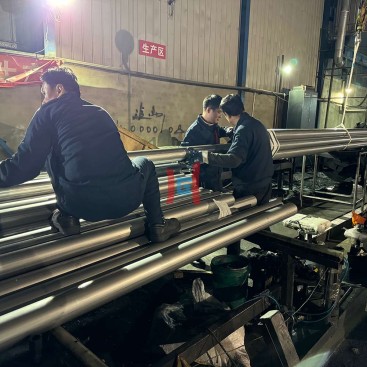
Production-line video can provide useful evidence when an overseas buyer cannot immediately conduct a factory visit. A live video call is particularly useful because the buyer can request specific equipment or production areas rather than reviewing only prepared promotional footage.
Ask the supplier to show the relevant production line from material entry through tube forming and finished-product inspection. Request close-up views of equipment nameplates, control panels, measuring instruments and current production where appropriate.
Useful video-verification questions:
- Can you show the line used for this specific tube size?
- Where does the aluminizing process take place?
- Is the coating applied before or after tube forming?
- Which production stages are performed at this facility?
- Which stages are subcontracted?
- Can you show the inspection area and relevant measuring equipment?
3. Ask Whether the Coating Process Is Self-Owned
This is one of the most important questions when identifying the manufacturing model. A company may manufacture tubes but purchase already coated material from another supplier. In that case, it controls tube forming but does not directly control the upstream aluminizing process.
Neither model should be described inaccurately. If coating is outsourced, the procurement team should know the coating supplier, process location, applicable standard and quality-control responsibility.
Ask the supplier to clarify:
| Question | Why It Matters |
|---|---|
| Who applies the aluminized coating? | Identifies the actual coating manufacturer. |
| Where is the coating line located? | Confirms whether coating is performed at the quoted facility. |
| What percentage of production is outsourced? | Shows how much of the supply chain is controlled internally. |
| Who performs coating inspection? | Clarifies responsibility for coating quality. |
| Can the coating specification be customized? | Shows the supplier’s practical control over the coating stage. |
4. Ask About the Outsourcing Ratio
“Do you outsource?” is often too broad. A more useful question is, “Which processes are outsourced, and approximately what proportion of this product’s production depends on external suppliers?"
A tube producer may perform forming, soldadura, sizing and cutting internally while sourcing coated strip externally. Another supplier may outsource both coating and tube production and simply coordinate the finished order. These two companies should not be evaluated as having the same manufacturing control.
For customized orders, outsourcing can also introduce another communication layer. Technical changes may need to pass from the sales company to the tube factory and then to the coating processor, increasing the number of interfaces that must be controlled.
What Manufacturing Control Can Add
Direct manufacturing control can become particularly relevant when the buyer needs more than a standard stock specification. The value is not simply the physical existence of a factory; it is the ability to respond to technical requirements within the production process.
| Requirement | Potential Manufacturing Advantage |
|---|---|
| Customized coating mass | Production parameters can potentially be coordinated closer to the coating process. |
| Special substrate requirement | Material selection can be coordinated with forming and performance requirements. |
| Non-standard dimensions | Forming and sizing parameters can be evaluated directly by the production team. |
| Process adjustment | Technical staff may be able to investigate production parameters without relying entirely on an external factory. |
| Quality deviation | Root-cause analysis can be performed closer to the relevant production stage. |
Sin embargo, these are capabilities to verify, not assumptions to make. A company should demonstrate its ability to adjust a specification or investigate a deviation rather than simply claiming that it has “full production control.”
Manufacturing Control vs Purchasing Flexibility
The distinction between a mill and a trade house becomes especially visible when comparing order quantity and delivery requirements.
A manufacturer may prefer a minimum production quantity because changing dimensions, substrate grades, coating specifications or production setups can create setup and scheduling costs. A trading company may combine demand from several customers and therefore offer greater flexibility for smaller quantities.
| Factor | Direct Manufacturer | Trade House |
|---|---|---|
| MOQ | May be influenced by production setup and batch economics. | May have more flexibility by consolidating orders. |
| Lead time | Can depend directly on production scheduling. | Can depend on available stock and the manufacturer’s schedule. |
| Customization | Potentially more direct technical coordination. | May require coordination with an external producer. |
| Small-lot sourcing | May be less flexible for unusual specifications. | May combine quantities from multiple sources. |
| Process feedback | Can potentially reach production engineers directly. | Usually passes technical communication through the supply chain. |
For this reason, procurement should not automatically equate “factory” with the most flexible purchasing option. A small trial order may be easier through a trade house, while a recurring customized specification may benefit from direct manufacturing coordination. The appropriate model depends on the purchase requirement.
Documents That Help Confirm Manufacturing Identity
Production evidence should be checked against commercial and quality documents. Look for consistency between the legal entity, factory information, test documentation and shipping paperwork.
Company identity: legal name, registered business information and invoicing entity.
Factory evidence: production-line information, equipment list, facility photographs or live video.
Technical evidence: product specifications, MTCs, coating test records and inspection reports.
Supply-chain evidence: explanation of outsourced coating, tube forming or other production stages.
Shipment evidence: packing list, material identification and traceability records.
Inconsistencies deserve clarification. Por ejemplo, if a supplier claims that coating is performed internally but its documentation identifies another company as the coating producer, the buyer should ask for an explanation before treating the supplier as an integrated manufacturer.
A Practical Manufacturer Verification Sequence
For a new supplier, the verification process can be kept simple and repeatable:
- Identify the legal entity. Confirm who will sign the contract and issue the invoice.
- Request the equipment list. Focus specifically on coating and tube-manufacturing equipment.
- Request a production-line video. Prefer a live walkthrough when practical.
- Map the production route. Identify every in-house and outsourced process.
- Verify technical control. Ask how coating mass, dimensions and other requirements are controlled.
- Compare MOQ and lead time. Determine whether the quoted schedule is based on stock or new production.
- Use a trial order or inspection. Verify that the claimed manufacturing capability translates into consistent delivered material.
Teda Ganghua: Direct Technical Communication for Tube Procurement
Teda Ganghua works with international procurement teams on aluminized steel tube requirements covering material specifications, dimensiones, requisitos de recubrimiento, inspection and export packaging. For buyers who need to distinguish manufacturing capability from simple trading supply, the technical inquiry can be structured around the actual production route and the specific requirements of the order.
During supplier qualification, buyers can clarify the substrate, coating designation and mass, dimensiones del tubo, tolerancias, requisitos de inspección, MOQ, production schedule and packaging before confirming the order. This approach gives procurement teams a clearer basis for comparing direct manufacturing supply with externally sourced material.
For buyers looking for tubos de acero aluminizado, Teda Ganghua can review the required grade, dimensiones, coating specification and quantity and provide a supply proposal based on the stated technical requirements.
FAQs
How can I verify whether a Chinese pipe supplier is actually a manufacturer?
Ask for the equipment list, production-line video and manufacturing route. Then determine which processes are performed internally and which are outsourced. The legal entity, inspection documents and production information should also be consistent.
Does a tube factory need to own an aluminizing line?
No. A tube producer can manufacture tubes from externally coated strip or coil. The important issue is to identify this arrangement accurately and understand who controls the coating process and quality.
Why should buyers ask about the outsourcing ratio?
The outsourcing ratio helps reveal how much of the production chain is controlled by the quoted supplier. It can also indicate how technical changes, quality deviations and scheduling issues will be coordinated.
Are manufacturers always better for large orders?
No necesariamente. A direct manufacturer may provide stronger process coordination, while a trade house may offer greater flexibility for mixed sizes or smaller lots. The comparison should be based on the required specification, cantidad, customization and delivery schedule.
What is the most useful question to ask a claimed manufacturer?
Pídale al proveedor que describa la ruta de producción completa para su producto exacto., incluyendo dónde se aplica el recubrimiento, donde se forma el tubo, qué etapas se subcontratan, y quién realiza cada inspección. La respuesta puede revelar más que la etiqueta "fabricante".