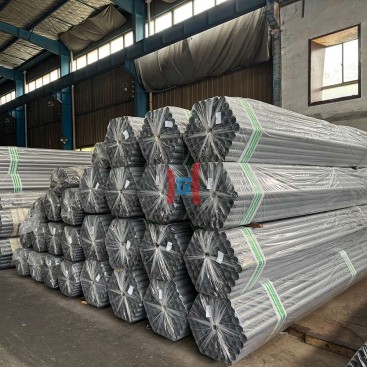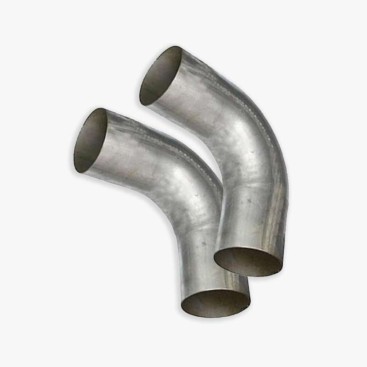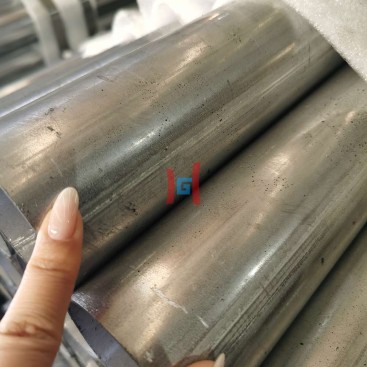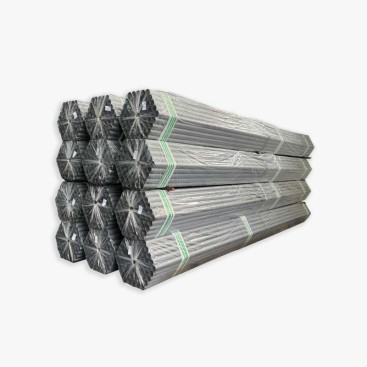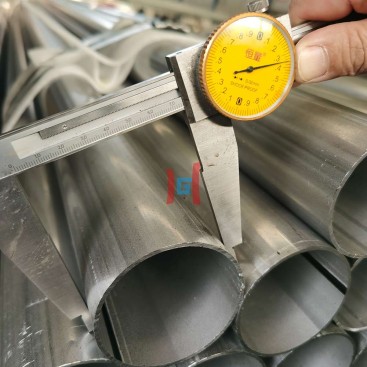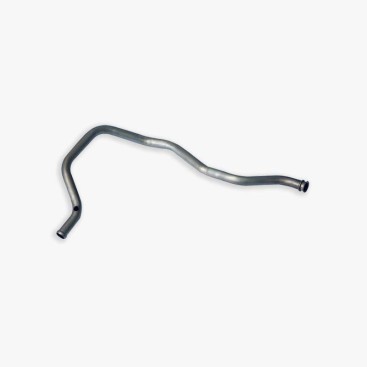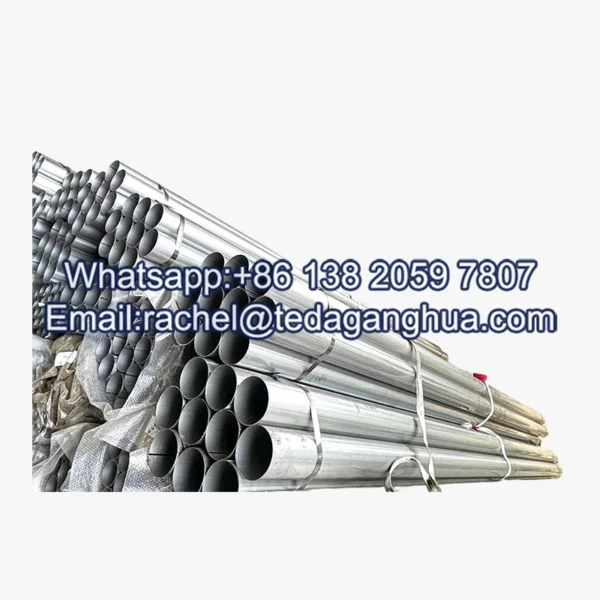
Distributeur de tuyaux en acier aluminisé
- Description
Description
Choosing between a distributor and a stockist is not simply a question of who can supply an aluminized steel pipe. For procurement managers, the more useful question is which supply role can solve the complete requirement: the right specification combination, the required delivery schedule, and any cutting or other processing needed before use.
These commercial terms can overlap in practice. A company may act as a distributor for regular products, a stockist for commonly requested sizes, and a trader when it needs to source a special requirement. Donc, buyers should evaluate the actual supply capability rather than relying only on the title used by the supplier.
What Does a Distributor Actually Do?
A distributor normally sits between manufacturers or major supply channels and downstream customers. Its value is not limited to reselling material. A capable distributor organizes supply, maintains relationships with multiple sources, manages logistics, and makes products available to customers who may not want to purchase directly from a large production facility.
For industrial tube procurement, this can be particularly useful when one project requires several combinations of outside diameter, épaisseur de paroi, longueur, spécification du revêtement, et la quantité. Instead of managing several individual supply channels, the buyer can ask one distributor to coordinate the complete package.
A distributor creates value through supply coordination. The strongest model combines sourcing access, inventory planning, order consolidation, logistics, documentation, and practical processing support.
Distributor vs Stockist: The Main Difference
A stockist places greater emphasis on physical inventory. Its business model is built around purchasing material in advance, storing commonly requested products, and releasing them when customers need them.
A distributor can also hold stock, but its role is broader. Distribution may include sourcing from established supply channels, coordinating products from different locations, arranging transportation, and supporting customers whose requirements cannot be fulfilled from one standard inventory position.
| Factor | Distributor | Stockist | Manufacturer |
|---|---|---|---|
| Main role | Supply coordination and regional or market distribution | Physical inventory holding and rapid release | Production according to manufacturing capability |
| Product range | Often broader across sources and specifications | Concentrated on stocked items | Usually focused on its production range |
| Small or mixed orders | Often suitable for consolidated requirements | Suitable when requested items are already stocked | May be less flexible for small mixed requirements |
| Traitement | Can coordinate cutting or other services | May provide or arrange basic processing | Depends on production and finishing lines |
| Delivery advantage | Network and logistics coordination | Fast release from available stock | Production schedule determines delivery |
The distinction is therefore functional rather than absolute. A supplier that calls itself a distributor may have very little physical inventory, while another distributor may operate a substantial warehouse. Procurement managers should ask where the material is located, whether it is actually available for the order, and who controls its release.
Distributor vs Pipe Manufacturer
Buying directly from a manufacturer can be attractive when the requirement is large, standardized, and closely aligned with the manufacturer’s production range. The factory controls the manufacturing process and can normally provide production-specific technical documentation and traceability.
The limitation appears when the buyer needs several specifications in one purchase. A pipe manufacturer may concentrate on particular dimensions, production routes, coating systems, or minimum production quantities. A procurement team needing a mixed package may therefore spend more time coordinating different production requirements.
A distributor can solve this problem by combining supply from established channels. The distributor may accept a more complicated specification list, consolidate the requirements, arrange transportation, and coordinate processing where necessary.
Manufacturer
Best suited to large, consistent requirements that fit the manufacturer’s production range and schedule.
Distributor
Useful when the buyer needs mixed specifications, consolidated supply, shorter fulfillment, or coordinated processing.
Distributor vs Trader: Do Not Treat Them as Identical
A trader generally focuses on sourcing and coordinating transactions. It may have access to several supply channels without maintaining substantial physical inventory of its own.
A distributor typically provides a more established distribution function and may maintain regional inventory, recurring supply relationships, warehousing, processing coordination, and delivery infrastructure. Cependant, the boundaries are not universal, and some companies perform both functions.
The practical test is simple: does the supplier control material availability and provide an operational supply service, or does it mainly forward your requirement to another source?
| Procurement Question | Distributor | Trader |
|---|---|---|
| Can it consolidate several specifications? | Usually a core advantage | Often possible through sourcing |
| Does it normally maintain inventory? | May maintain or control inventory | May rely mainly on external stock |
| Can it coordinate processing? | Often available | Usually arranged through another party |
| Main strength | Distribution, inventory, logistics, and service | Flexible sourcing and transaction coordination |
What Should a Procurement Manager Actually Evaluate?
The most useful evaluation is not simply whether a company describes itself as a distributor, stockist, trader, or supplier. Plutôt, evaluate whether it can solve three connected problems:
1. Specification Combination
Can the supplier provide the required outside diameter, épaisseur de paroi, longueur, qualité du matériau, coating designation, état de surface, manufacturing route, and quantity in one coordinated order?
2. Delivery Schedule
Is the requested material physically available, reserved for your order, or dependent on new production? A statement that a product is “available” is not enough unless the exact specification and quantity are confirmed.
3. Processing Requirement
Can the supplier provide cutting, dimensionnement, bundling, conditionnement, or other agreed processing before shipment, so your production team receives material in a usable form?
This three-part evaluation is often more useful than comparing suppliers by their commercial title alone. A slightly more complex supply channel can create substantial procurement value if it removes multiple coordination steps.
How to Ask for an Effective Quotation
Do not send a vague request such as “please quote aluminized steel pipe.” Give the distributor the complete requirement in the first enquiry. This allows the supplier to determine whether the material can be supplied from stock, consolidated from several sources, or scheduled for production.
A practical enquiry should include:
- Pipe or tube outside diameter
- Wall thickness
- Required length
- Material or steel grade
- Aluminum-silicon coating requirement where applicable
- Quantity for each specification
- Required standard or technical specification
- Cutting or fabrication requirements
- Inspection and documentation requirements
- Destination and target delivery schedule
- Estimated annual consumption for recurring requirements
Providing annual consumption is particularly useful for recurring procurement. It allows the distributor to evaluate stocking arrangements, supply scheduling, mixed specifications, and future releases instead of treating every enquiry as an isolated transaction.
Why Annual Volume Matters
A one-time enquiry tells a distributor what you need today. Annual consumption explains the larger purchasing pattern. If you regularly consume several sizes, the supplier can potentially develop a more suitable inventory and delivery plan.
Par exemple, a procurement manager may require three different tube sizes for the same production program. Buying each size independently can create separate sourcing, transport, and inventory coordination tasks. A capable distribution partner can instead evaluate the three requirements together and propose one coordinated supply arrangement.
| Information Provided | Supplier Can Evaluate | Procurement Benefit |
|---|---|---|
| Complete dimensions | Specification compatibility | Fewer quotation revisions |
| Multiple sizes | Stock and sourcing combination | Consolidated purchasing |
| Annual consumption | Supply planning | Better continuity planning |
| Processing requirements | Available service capability | Less downstream handling |
| Delivery target | Stock versus production route | More realistic scheduling |
When a Distributor Is the Better Choice
A distributor is particularly useful when your requirement has one or more of the following characteristics:
- Several pipe sizes or wall thicknesses are required.
- The order is smaller or more fragmented than a typical mill production lot.
- Material is needed within a relatively short schedule.
- You prefer one purchase order for several related specifications.
- Cutting or other preparation is required before delivery.
- You need a supplier to coordinate transportation and documentation.
- The requirement will repeat throughout the year.
By contrast, direct manufacturing can be more appropriate when the specification is highly standardized, the quantity is substantial, and the buyer can align its schedule with production requirements.
What to Verify Before Calling a Supplier a Stockist
Physical inventory is one of the easiest claims to misunderstand. A warehouse may contain the requested material while that material is already allocated to another customer. Donc, procurement managers should ask for available-to-sell quantity, not simply the total quantity physically present.
For an industrial tube order, confirm the exact grade, dimensions, revêtement, quantité, heat or batch identification where applicable, location, and release status. If the supplier cannot clearly explain where the material is and when it can be released, its stock position may not provide the delivery advantage you expected.
Teda Ganghua as a Supply Partner for Tube Requirements
For buyers looking beyond a simple spot transaction, Teda Ganghua can support aluminized steel tube procurement by combining product sourcing with practical export coordination. Its commercial approach is suited to procurement managers who need clear specifications, coordinated quantities, exigences de traitement, inspection arrangements, and shipment planning rather than a quotation based only on one generic product description.
When your requirement includes several dimensions or recurring annual consumption, provide the complete specification list together with the expected usage. Teda Ganghua can then evaluate the appropriate supply route and coordinate the required tube specifications, traitement, documentation, and delivery arrangement.
tubes en acier aluminisé can be discussed according to dimensions, exigences en matière de revêtement, application conditions, et spécifications du projet.
A Practical Decision Rule
If your only requirement is a large quantity of one standard specification and your schedule can follow production, direct factory purchasing may be appropriate.
If you need several specifications, smaller releases, shorter delivery, or coordinated processing, a distributor can provide greater operational value.
If the requirement is unusual and mainly depends on finding a suitable source, a trader or sourcing company may be useful.
If immediate availability is the priority and the exact material is already physically controlled by the supplier, a stockist can be the most practical option.
The key is therefore not to ask “Which supplier has the lowest unit cost?» mais “Which supply model removes the most procurement work while still meeting my technical and delivery requirements?»
Foire aux questions
What is the difference between a distributor and a stockist?
A stockist primarily emphasizes physical inventory and rapid release of stocked products. A distributor has a broader role that can include sourcing, inventory coordination, logistics, order consolidation, and processing services.
Is a distributor the same as a trader?
Pas nécessairement. A trader may mainly coordinate transactions and source material after receiving an enquiry, while a distributor generally provides a more established distribution function and may control inventory, logistics, and recurring supply channels. The two roles can overlap.
When should I buy from a distributor instead of a pipe manufacturer?
A distributor can be advantageous when you need mixed specifications, smaller quantities, shorter fulfillment, consolidated shipments, or coordinated processing. A manufacturer may be more suitable for large, standardized requirements that fit its production range.
How can I verify that a supplier really has stock?
Ask for the exact specification, quantity available for sale, physical location, identification or traceability information where applicable, and expected release date. Do not assume that material physically present in a warehouse is automatically available for your order.
What information should I include in an enquiry?
Provide the outside diameter, épaisseur de paroi, longueur, qualité du matériau, exigence de revêtement, applicable specification, quantity for each size, exigences de traitement, documentation needs, destination, delivery schedule, and estimated annual consumption. A complete enquiry allows the supplier to propose a more practical overall supply solution.