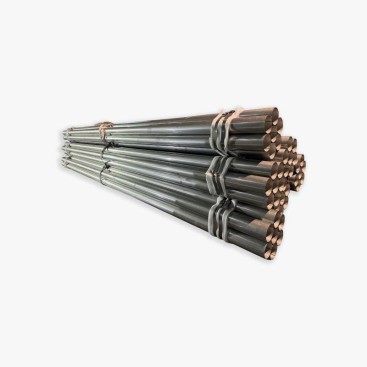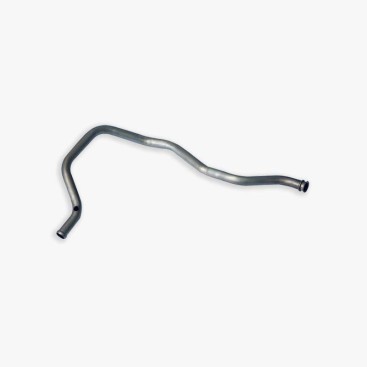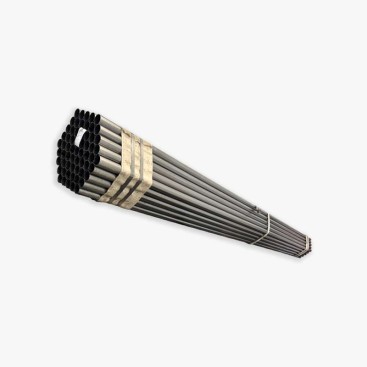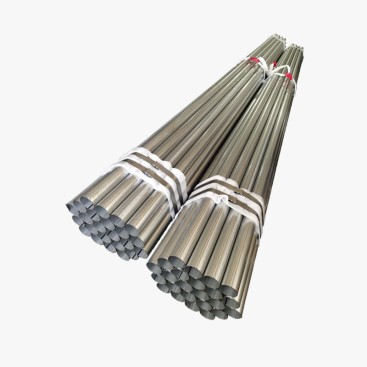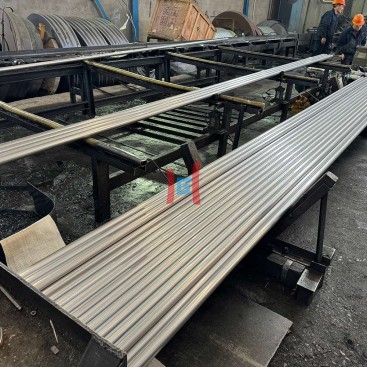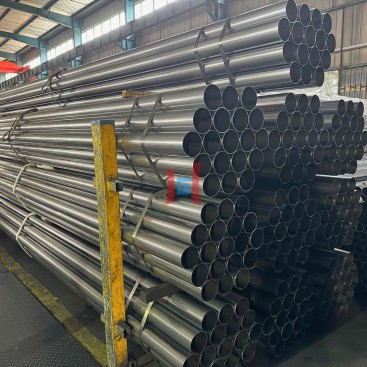

Tube en acier aluminisé As40

- Description
Description
AS40 is the lightest commonly specified aluminized steel coating grade. It is designed to reduce coating cost while providing a basic aluminum-silicon surface layer. Cependant, the lowest coating weight is not always the best value. AS40 aluminized steel tube can work well in dry indoor and mildly corrosive conditions, but a heavier coating should be considered when moisture, chaleur, or corrosion becomes a major concern.
What Does the AS Coating Grade Mean?
Dans les spécifications de l'acier aluminisé, le AS number refers to the nominal coating weight. It is normally expressed in grams per square meter of total coating on both sides of the steel substrate.
| Grade | Nominal coating weight | Relative protection | Typical positioning |
|---|---|---|---|
| AS40 | ~40 g/m² total | Basique | Dry indoor and light-duty service |
| AS80 | ~80 g/m² total | Plus haut | General industrial service |
| AS120 | ~120 g/m² total | Higher still | More demanding environments |
The exact coating weight and permitted tolerance depend on the applicable product standard and supply specification. Donc, buyers should always confirm whether the quoted AS value is a total both-side coating weight or another measurement basis.
AS40: The Lightest Coating Option
AS40 is positioned at the low end of the aluminized coating range. Its main advantage is straightforward: less coating material means lower material consumption and a lower coating cost.
For a tube used inside a dry building, a light coating may provide enough surface protection. It can also be suitable when the tube is mainly selected for appearance, basic oxidation resistance, or cost-sensitive fabrication.
What Does an AS40 Coating Look Like?
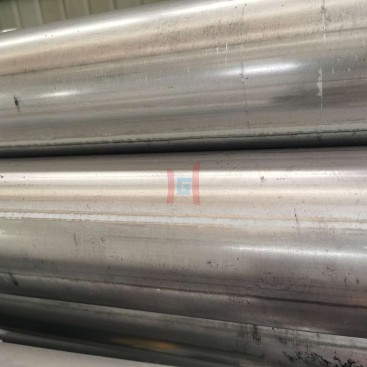
Aluminized steel uses an aluminum-silicon coating rather than a simple zinc coating. During hot-dip coating, the steel substrate is covered by an Al-Si layer and an intermetallic transition region.
Al-Si Surface Layer
Provides the main barrier against oxidation and environmental exposure.
Alloyed Transition Layer
Forms between the coating and the steel substrate during hot-dip processing.
Steel Substrate
Provides the tube’s mechanical strength and structural function.
For an AS40-level coating, the effective Al-Si coating thickness is typically in the light micrometer range, roughly around 10–20 μm as an indicative range. Actual local thickness varies with coating process, état de surface, and measurement method. Coating weight is therefore a more useful purchasing control than estimating thickness from the grade number alone.
AS40 vs AS80 vs AS120: What Changes?
Increasing the AS grade generally means increasing the amount of protective coating on the steel surface. Cependant, coating weight should not be converted directly into a fixed service life. Real durability also depends on humidity, température, pollutants, salt exposure, scratches, formation, and maintenance.
| Factor | AS40 | AS80 | AS120 |
|---|---|---|---|
| Coating amount | Lightest | About 2× AS40 | About 3× AS40 |
| Initial coating cost | Lowest | Modéré | Plus haut |
| Environmental margin | Limité | Mieux | Best of the three |
| Typical service condition | Dry/light-duty | Industriel général | More demanding service |
It is better to think of AS80 and AS120 as providing a larger coating reserve than AS40. They do not automatically provide a specific number of additional years of service.
Where Is AS40 Tube Suitable?
AS40 aluminized steel tube is most appropriate when the surrounding environment is relatively mild and the tube is not continuously exposed to water or aggressive chemicals.
| Application condition | AS40 suitability | Reason |
|---|---|---|
| Dry indoor structures | Bien | Low moisture exposure |
| Lightly corrosive indoor areas | Possible | Depends on actual contaminants |
| Decorative or appearance-focused tubes | Possible | Coating provides basic surface protection |
| Continuous outdoor wet exposure | Not preferred | Higher environmental demand |
| Strong chemical exposure | Not preferred | Coating selection must match the chemical environment |
| Severe high-temperature service | Not preferred without verification | Temperature and atmosphere affect coating performance |
When Is AS40 Not Enough?
A light coating becomes a weak choice when the tube is exposed to conditions that can repeatedly attack the surface.
- High humidity: frequent condensation can increase corrosion demand.
- Outdoor exposure: rain, pollutants, and repeated wet-dry cycles require more protection.
- Salt or marine atmosphere: chloride exposure can be significantly more aggressive than a dry indoor environment.
- Strong chemical exposure: the coating must be checked against the specific chemical and concentration.
- Service à haute température: température, atmosphere, and duration must be evaluated together.
- Heavy forming or handling: scratches and coating damage can reduce local protection regardless of nominal coating weight.
AS40 Tube Selection: A Practical Buying Checklist
Before ordering, buyers should define more than the tube outside diameter and wall thickness. The coating requirement can affect long-term performance just as much as the steel substrate.
Intérieur, outdoor, humid, marine, chimique, or high-temperature?
Specify AS40, AS80, AS120, or another required coating level.
Confirm outside diameter, épaisseur de paroi, longueur, and tolerance.
Confirm coating weight, qualité de surface, dimensional inspection, et les certificats requis.
AS40 and Tube Processing
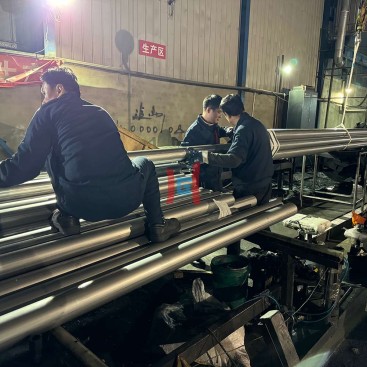
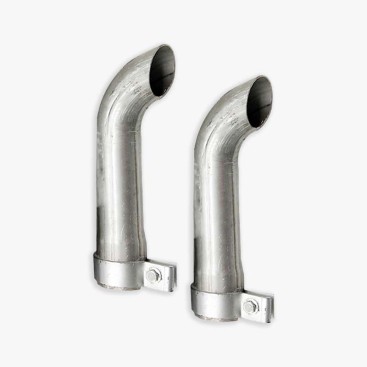
Processing should also be considered before the grade is fixed. Coupe, flexion, soudage, punching, and other operations can affect the coated surface. The exposed steel area created during fabrication may require an appropriate post-processing or protection method depending on the application.
For this reason, a supplier should understand the finished tube design, not only the raw material specification. This is especially important when AS40 is being considered for a cost-sensitive project.
How Teda Ganghua Can Support Aluminized Steel Tube Purchasing
Teda Ganghua supports international buyers sourcing coated steel tube and related metal products for industrial and fabrication applications. Buyers can specify the steel grade, dimensions des tubes, aluminized coating level, exigences de surface, quantité, and inspection documents according to the project.
For projects where coating weight is a key purchasing factor, the order specification can be reviewed around the actual service environment. This helps buyers avoid both over-specification et under-specification. Teda Ganghua can also support requirements related to cutting, flexion, soudage, and other downstream processing when applicable.
For buyers comparing different tube configurations, you can review the available tubes en acier aluminisé and specify the required coating grade and dimensions before quotation.
AS40 Aluminized Steel Tube FAQs
1. What does AS40 mean in aluminized steel?
AS40 generally identifies a nominal total coating weight of about 40 g/m² on both sides. The exact requirement and tolerance should be confirmed against the applicable standard.
2. Is AS40 the lightest aluminized coating grade?
AS40 is commonly positioned as a light coating grade. Cependant, available grades vary by standard, fabricant, and product type. The purchasing specification should always state the required coating weight.
3. Is AS40 suitable for outdoor use?
It can be used in some mild outdoor applications, but continuous rain, condensation, salt exposure, and pollutants increase the corrosion demand. A heavier coating may be more appropriate.
4. Is AS120 always better than AS40?
AS120 provides a higher coating weight, mais cela ne veut pas dire que c'est nécessaire pour chaque application. La qualité correcte doit être sélectionnée en fonction de l'environnement, durée de vie requise, fabrication, et spécifications du projet.
5. Comment l'AS40 doit-il être spécifié lors de l'achat d'un tube?
Préciser la norme applicable, nuance d'acier, dimensions des tubes, qualité de revêtement ou poids du revêtement, exigences de surface, tolérances, exigences d'inspection, et état de livraison. Décrivez également l'environnement de service réel afin que le niveau de revêtement puisse être évalué correctement..