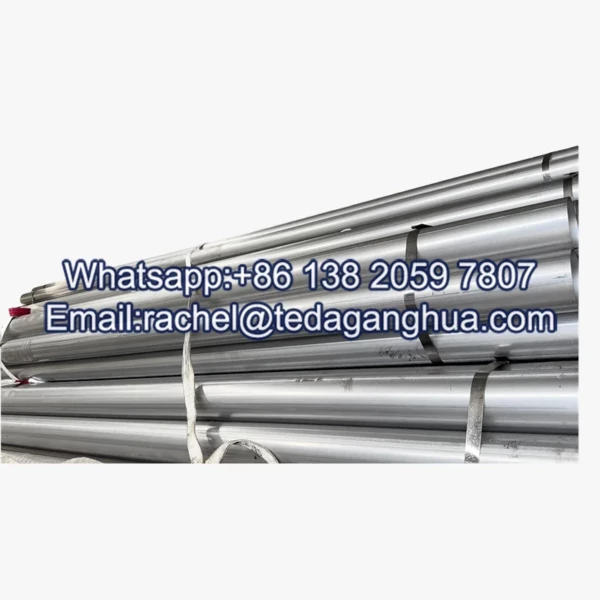
Tube en acier aluminisé Erw
- Description
Description
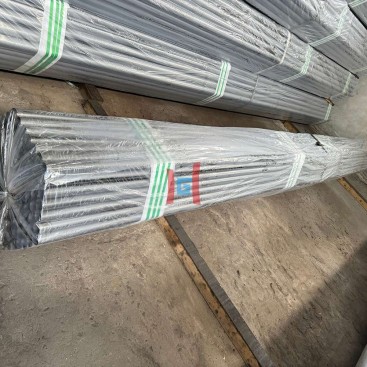
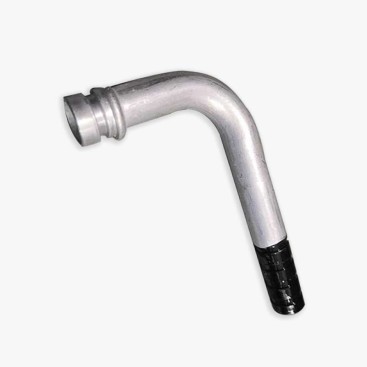
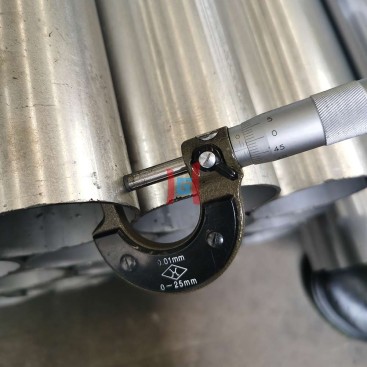
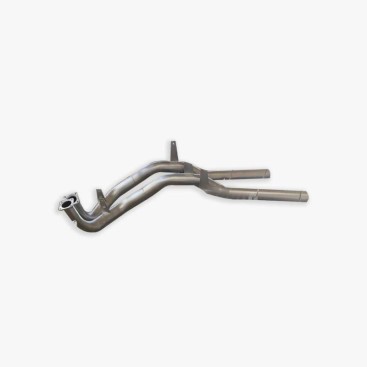
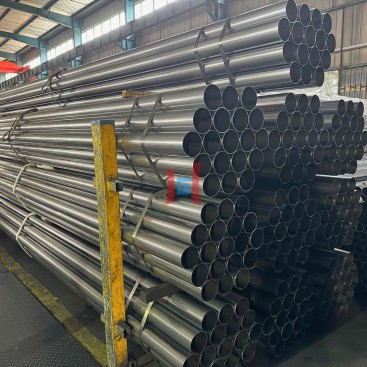
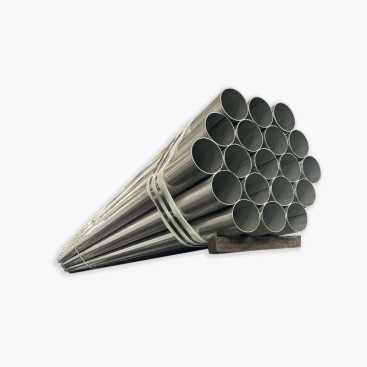
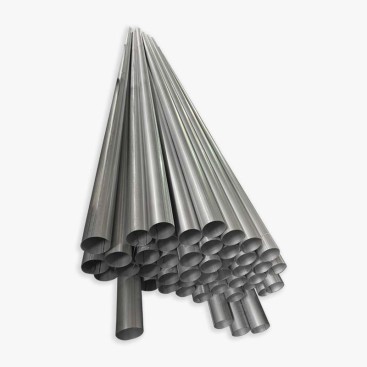
ERW aluminized steel tube is widely used in automotive exhaust systems, équipement de chauffage, industrial components, and other applications requiring a combination of tubular strength and aluminum-based surface protection. ERW stands for Electric Resistance Welding, a manufacturing process that joins the edges of formed steel strip through electrical resistance heat and pressure. This process creates a longitudinal weld seam along the tube body. For aluminized products, that seam deserves special attention because welding heat can damage the original aluminum or aluminum-silicon coating near the joint. Buyers should therefore understand how the tube is welded, how internal and external weld beads are treated, and how the coating condition at the seam is handled before placing an order.
1. What Is ERW Aluminized Steel Tube?
ERW means Electric Resistance Welding. In this process, flat steel strip is progressively formed into a round or specified tubular shape. Electrical current generates heat at the meeting edges, while pressure brings the heated edges together to form a continuous longitudinal weld.
Unlike conventional fusion welding processes that add filler wire or welding rods, standard ERW production joins the parent material without adding filler metal. The weld zone is therefore formed primarily from the steel edges themselves. Après soudage, the tube may undergo bead removal, dimensionnement, straightening, coupe, and other finishing operations according to the product specification.
| ERW Feature | Technical Description | Buyer Concern |
|---|---|---|
| No filler wire | The strip edges are joined through resistance heat and pressure without adding filler metal | Weld composition is generally close to the parent steel, subject to the welding process |
| Longitudinal weld seam | A continuous seam runs along the tube length | Seam quality and coating condition need confirmation |
| Internal weld bead | Excess material may project into the tube bore | Removal or retention should be specified |
| External weld bead | Excess material may project from the outside surface | Removal or retention affects appearance and finishing |
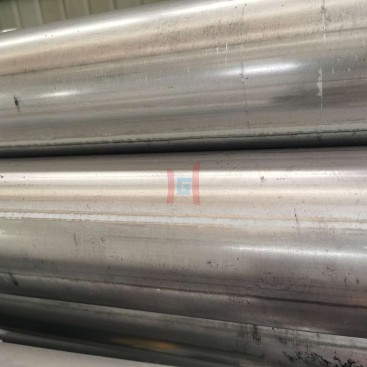
The longitudinal seam is a normal characteristic of ERW tube manufacturing. Its presence does not automatically indicate a defect. What matters is whether the weld meets the specified mechanical, dimensional, et les exigences en matière d'inspection.
2. How the ERW Welding Process Works
The ERW process uses electrical resistance heating to bring the strip edges to a suitable welding temperature. The formed edges are then pressed together to create a continuous joint. The exact process parameters depend on the steel grade, strip thickness, diamètre du tube, production speed, and equipment configuration.
Steel strip is fed continuously into the tube-forming line.
Forming rolls gradually bend the flat strip into a tubular shape, bringing the two edges together.
Electrical current heats the meeting edges, and pressure joins them into a continuous longitudinal seam.
Internal and external excess weld material is removed or retained according to the product requirements.
The tube is sized, redressé, cut to length, and inspected according to the agreed specification.
Because the process joins the edges along the full tube length, the resulting seam is generally visible as a longitudinal line or a treated weld area. Its final appearance depends on whether the bead is removed, how the surface is finished, and whether the tube receives coating before or after welding.
3. Why the Weld Seam Matters for Aluminized Tubes
The most important issue for aluminized ERW tubes is the effect of welding heat on the aluminum-based coating. When pre-coated steel strip is formed and welded, the temperature at the joining edges becomes high enough to damage or remove the original coating in and around the weld zone.
This means that the coating condition along the seam may differ from the coating on the rest of the tube surface. Depending on the manufacturing route and welding parameters, the affected area may show coating loss, oxydation, discoloration, or a change in surface appearance.
The issue is particularly relevant when the tube is made from pre-coated aluminum-silicon strip. The original coating on the flat strip cannot be assumed to remain unchanged through the welding operation. The seam area needs to be considered separately in the finished-product specification.
The key question for buyers
How is the coating at the ERW weld seam treated? Confirm whether the seam is repaired with an agreed coating method, left without coating, or accepted under a defined seam-area requirement.
There is no single treatment method that applies to every aluminized tube. The appropriate approach depends on the coating system, tube application, service temperature, exposition à la corrosion, and customer acceptance requirements. A clearly agreed seam condition is more important than assuming that every product must have an identical repair process.
4. Weld Seam Coating: Repair, Retention, or Acceptance
When welding affects the original coating, buyers and suppliers should agree on how the seam area will be delivered. Depending on the product and application, the specification may require a suitable repair coating, define an acceptable uncoated seam area, or establish other inspection and acceptance conditions.
| Seam Treatment | Description | What to Confirm |
|---|---|---|
| Repair coating | The affected seam area receives an agreed protective coating treatment | Repair material, application method, coverage, and acceptance criteria |
| Uncoated seam accepted | The seam area is supplied without additional coating repair | Permitted seam width, location, and suitability for the service environment |
| Post-weld coating route | The tube is coated after the welding operation | Coating process, internal and external coverage, and finished dimensions |
A post-weld coating route may avoid the specific problem of damaging a pre-existing coating at the seam, but it introduces its own process and inspection considerations. Buyers should confirm whether the internal and external surfaces can both be coated as required, and whether the finished coating meets the intended service conditions.
An uncoated seam is not automatically evidence of poor workmanship. It may be an agreed manufacturing condition for a particular application. Equally, a repaired seam should not be assumed to provide the same performance as the original coating without an agreed repair specification and inspection method.
5. Internal and External Weld Bead Removal
ERW welding can produce excess material along the joint. This material is commonly called weld flash or weld bead. Depending on the tube design and production process, the external bead, internal bead, or both may be removed.
External bead removal can improve the outside profile and surface appearance. Internal bead removal can provide a smoother bore, which may be important when the tube carries gas or liquid, connects to another component, or requires a close-fitting internal assembly.
Cependant, bead removal is not always required. Some structural or general-purpose applications may accept a retained internal bead if it does not interfere with function. The correct requirement depends on the tube’s intended use and the applicable product specification.
| Bead Condition | Potential Impact | Typical Requirement |
|---|---|---|
| External bead retained | May affect surface appearance, ajuster, or contact with adjacent parts | Suitable where the outside seam profile is acceptable |
| External bead removed | Provides a more uniform external profile | Useful for appearance or assembly requirements |
| Internal bead retained | May reduce internal clearance or affect flow and fitting | Acceptable when internal projection does not affect function |
| Internal bead removed | Creates a smoother internal passage | Useful for specific flow, fitting, and assembly requirements |
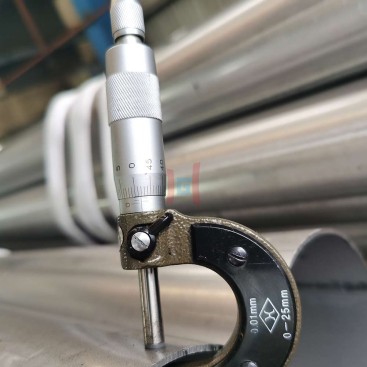
Bead removal must be controlled. Excessive removal can reduce local wall thickness or damage the surrounding surface. For coated tubes, the operation may also affect the coating near the weld seam. Buyers should therefore specify the required bead condition and any limits on remaining internal projection or local wall thickness.
6. Why Bead Requirements Affect Assembly and Service
The weld bead is not merely a cosmetic detail. Its position and size can influence how the tube fits into other components and performs during service.
- Tube insertion and telescoping: Internal or external projections may interfere with close-fitting connections or nested tube assemblies.
- Flexion: The weld seam and surrounding heat-affected region may respond differently during bending. Seam orientation and tooling should be considered where tight bends are required.
- Internal flow: An internal bead can create a local obstruction or disturbance in applications where flow characteristics matter.
- Surface appearance: External bead removal may be necessary for visible components or parts that require a more uniform outside profile.
- Coating integrity: Grinding or other bead-removal operations can damage nearby coating and may require an agreed repair or acceptance procedure.
Pour ces raisons, buyers should avoid vague instructions such as “smooth weld.” Plutôt, specify whether the internal and external beads should be removed, retained, or controlled within defined limits. If a particular connection or bending operation is involved, provide the relevant assembly requirements to the supplier.
7. What to Include in an ERW Aluminized Tube Purchase Order
A complete order should define the tube material, revêtement, dimensions, weld seam condition, et les exigences en matière d'inspection. The following table provides a practical checklist for technical inquiries.
| Order Item | Information to Specify | Reason |
|---|---|---|
| Manufacturing process | ERW welded tube | Identifies the tube production route |
| Matériau de base | Steel grade and applicable product standard | Defines substrate properties |
| Revêtement | Aluminum or aluminum-silicon alloy, as required | Clarifies the surface protection system |
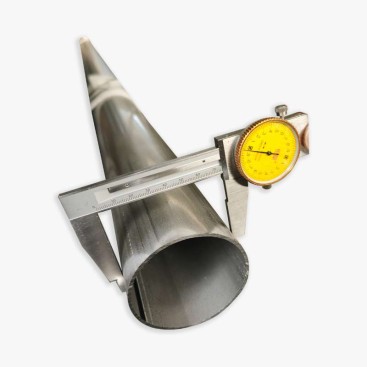
| Dimensions | Outside diameter × wall thickness × length | Defines finished tube size |
| External bead | Removed, retained, or controlled to an agreed limit | Controls outside profile and appearance |
| Internal bead | Removed, retained, or controlled to an agreed limit | Controls bore clearance and flow conditions |
| Weld seam coating | Repair coating, accepted uncoated seam, or specified post-weld coating | Defines protection at the heat-affected area |
| Inspection | Weld quality, dimensions, état du revêtement, et documentation | Establishes acceptance requirements |
A useful inquiry should ask one direct question about the seam: “How is the ERW weld area treated after welding, and what coating condition will be supplied?” This makes the expected result clear before production begins.
Recommended purchase description
ERW aluminized steel tube, specified steel grade, aluminum-based coating type, OD × WT × length, external and internal weld bead requirements, weld seam coating treatment, and agreed inspection criteria.
8. Teda Ganghua: ERW Tube Specification and Inspection Support
Teda Ganghua Metal is a steel stockist based in Tianjin TEDA, avec 20 years of steel stockist and export experience. The company supports international industrial buyers with steel sourcing, specification coordination, services de traitement, documentation de qualité, and export shipment arrangements.
For customers sourcing ERW aluminized steel tubes, Teda Ganghua can help coordinate the required steel grade, coating type, dimensions des tubes, and inspection conditions. Buyers can also clarify the expected weld bead condition and how the coating near the longitudinal seam should be treated.
Depending on product availability and confirmed manufacturing capabilities, purchasing support may include:
- Steel grade and substrate specification confirmation.
- Aluminum or aluminum-silicon coating requirement coordination.
- Outside diameter, épaisseur de paroi, and length confirmation.
- Weld bead removal and seam condition requirement coordination.
- Coupe, soudage, flexion, and other processing services where applicable.
- Material Test Certificates and material traceability documentation.
- Third-party inspection arrangements and shipment verification.
Teda Ganghua maintains substantial steel inventory and works with established steel mill partners to support different industrial purchasing requirements. The company emphasizes specification-based sourcing, accurate shipment quantity verification, and material quality documentation.
Buyers are welcome to arrange inspections before shipment to verify the agreed material, dimensions, quantité, weld condition, and coating requirements. For ERW coated tubes, confirming the seam treatment and bead-removal requirements before production helps prevent disagreements during final acceptance.
Foire aux questions
1. What does ERW mean in steel tube manufacturing?
ERW stands for Electric Resistance Welding. Steel strip is formed into a tubular shape, and electrical resistance heat combined with pressure joins the edges into a continuous longitudinal weld seam without adding filler wire in the standard process.
2. Does ERW welding damage the aluminized coating?
When pre-coated strip is welded, the high temperature at the joint can damage or remove the original coating near the seam. The affected area may require an agreed repair treatment or may be accepted under specified uncoated-seam conditions.
3. Must the ERW weld seam always be recoated?
Pas nécessairement. Seam treatment depends on the application, système de revêtement, environnement de service, and purchase agreement. Buyers and suppliers should agree whether repair coating is required or whether a defined uncoated seam is acceptable.
4. Should internal and external weld beads be removed?
It depends on the tube’s application. External bead removal can improve appearance and fit, while internal bead removal can provide a smoother bore for flow or assembly. Both requirements should be stated clearly in the purchase order.
5. What should buyers ask about the weld seam?
Ask how the seam is treated after welding, whether internal and external beads are removed, whether the coating is repaired, et quels critères d'inspection s'appliquent. Ces détails doivent être confirmés avant la production plutôt que laissés à l'hypothèse.