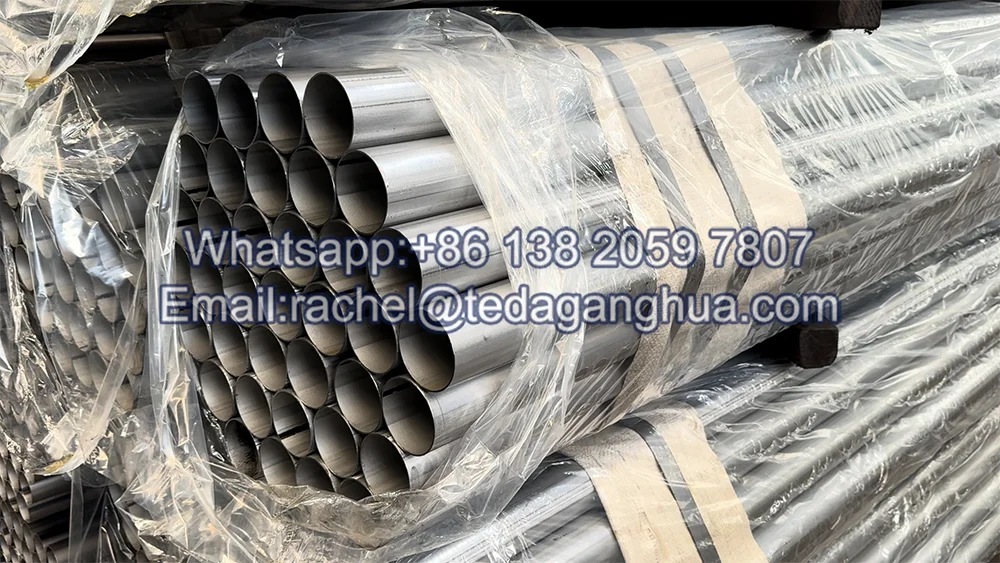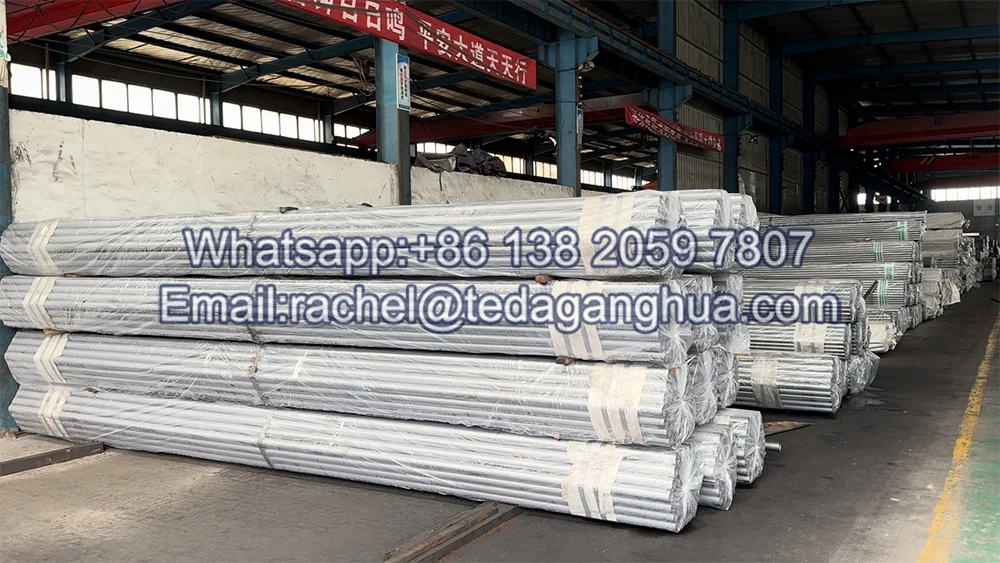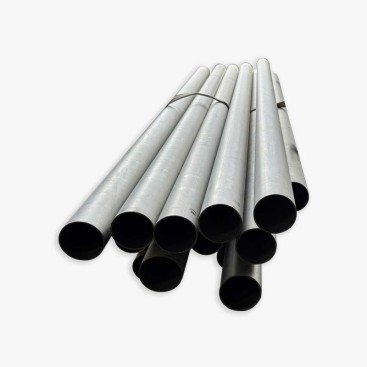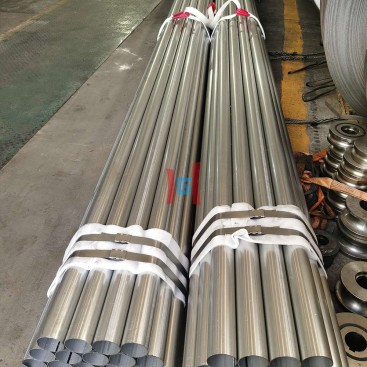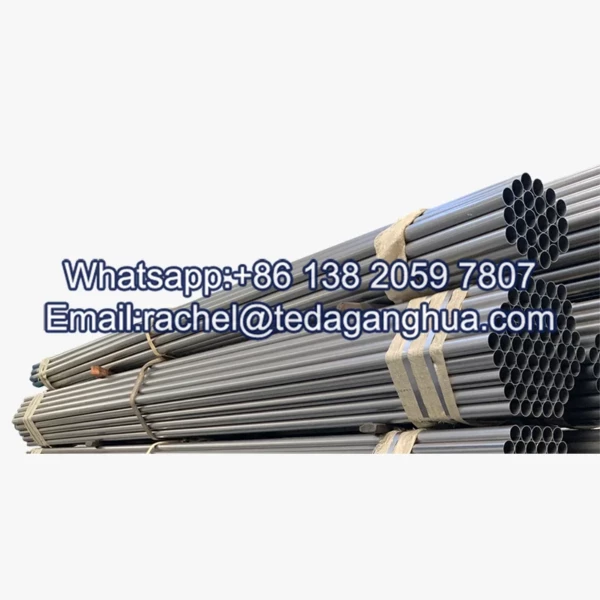
Go/T 36399 Tube en acier recouvert de silicium en aluminium à chaud
- Description
Description
GB/T 36399-2018 is a specification for continuously hot-dip aluminium-silicon alloy coated steel sheet and strip, not a standalone finished-tube standard. This distinction matters when purchasing or manufacturing hot-dip Al-Si coated steel tube: the coating substrate, coating weight, mechanical properties and flat-product tolerances can be controlled according to GB/T 36399, while tube outside diameter, épaisseur de paroi, longueur, ovality and tube-forming tolerances should be defined by the applicable tube standard or by the purchase agreement. The current national standard was issued on June 7, 2018 and implemented on March 1, 2019.
Procurement note: If a quotation says “GB/T 36399 hot-dip aluminium silicon coated tube,” ask the supplier to identify les deux the GB/T 36399-coated strip specification and the separate tube specification. This avoids treating a sheet-and-strip standard as though it directly defines finished pipe dimensions.
1. What GB/T 36399 Covers
GB/T 36399-2018 is officially titled Continuously Hot-dip Aluminum-silicon Alloy Coated Steel Sheet and Strip. Its scope covers continuously hot-dip Al-Si coated steel sheet and strip with a thickness of 0.30–3,0 mm, primarily for automotive, household-appliance and architectural applications. The standard covers classification, désignation, ordering information, dimensions, appearance, poids, technical requirements, test methods, inspection rules, conditionnement, marking and quality certificates.
| Article | GB/T 36399-2018 Position | Tube Procurement Meaning |
|---|---|---|
| Product form | Steel sheet and strip | Usually the coated feedstock before tube forming |
| Revêtement | Continuous hot-dip Al-Si alloy | Defines the coating system on the steel substrate |
| Covered thickness | 0.30–3,0 mm | Useful for selecting strip wall-thickness stock |
| Tube OD | Not a finished-tube dimension in this standard | Specify separately |
| Tube length | Not a finished-tube requirement | Specify separately |
2. Al-Si Coating: Continuous Hot-Dip Process
The coating defined by the standard is produced by continuously immersing pretreated steel strip into a molten Al-Si plating bath. The specified plating solution contains 5%–11% de silicium; excluding iron, impurity elements are limited to no more than 1%, with aluminium making up the balance.
Typical process control sequence
Steel strip → surface cleaning and pretreatment → annealing/activation → immersion in molten Al-Si bath → coating thickness control → cooling/solidification → optional skin-pass → surface treatment → inspection → slitting or cut-to-length.
For tube applications, the important point is that the coating is applied before tube forming when coated strip is used as the feedstock. Forming parameters therefore need to balance tube geometry with coating integrity. Excessive local deformation, sharp tooling or unsuitable forming radii can damage the coating even when the incoming strip has passed its coating-weight and appearance inspection.
3. Tube Wall Thickness, Outside Diameter and Length
A common specification mistake is to copy the 0.30–3,0 mm range from GB/T 36399 directly into a finished-tube specification. That range is the scope of the coated sheet and strip standard; it is not a complete tube wall-thickness range.
| Tube Requirement | How to Specify | Inspection Focus |
|---|---|---|
| Outside diameter | Nominal OD + applicable tube tolerance | Multiple circumferential points |
| Wall thickness | Nominal WT + thickness tolerance | End and body-wall measurements |
| Longueur | Fixed length or random length | Steel rule or calibrated length gauge |
| Ovality | Maximum OD difference or percentage | Maximum OD − minimum OD |
| Straightness | Tube-standard or purchaser requirement | Straightness gauge or specified measurement method |
For procurement, the cleanest description is therefore: qualité du substrat + GB/T 36399 Revêtement Al-Si + coating weight + tube OD × WT × length + tube dimensional tolerance + forming/welding requirements + documents de contrôle.
4. Dimensional Tolerance and Ovality Control
For the coated flat product, GB/T 36399 refers dimensional, forme, weight and allowable-deviation requirements to GB/T 25052-2010. Its order information also requires the purchaser and supplier to define specification and dimensional accuracy.
Once the coated strip becomes a tube, tube-forming variables become important. Strip width, longitudinal edge condition, forming-roll alignment, weld position and sizing all influence the final OD and ovality. For a round tube, a practical ovality calculation is:
Ovality (%) = (Maximum OD − Minimum OD) ÷ Nominal OD × 100
This calculation should not be confused with a universal GB/T 36399 tolérance. The purchaser should state the permitted ovality together with the applicable tube standard or technical agreement.
5. Propriétés mécaniques: Rendement, Tensile Strength and Elongation
GB/T 36399 uses designation systems that identify different substrate families. Par exemple, DX53D+AS identifies a cold-forming-oriented grade, alors que S350GD+AS identifies a structural grade with a specified minimum yield-strength level of 350 MPA. The designation “+AS” identifies the hot-dip aluminium-silicon alloy coating.
| Mechanical Item | Why It Matters for Tube | Procurement Check |
|---|---|---|
| Limite d'élasticité | Controls onset of permanent deformation | Match grade to forming and service load |
| Résistance à la traction | Indicates ultimate tensile capacity | Verify against MTC/test report |
| Élongation | Important for roll forming, bending and flaring | Select forming grade rather than only strength grade |
| r/n values where applicable | Useful for demanding sheet forming | Specify when deep-forming behavior is critical |
The standard references tensile testing under GB/T 228.1 and bend testing under GB/T 232, while sample location and preparation are covered through GB/T 2975.
6. Poids du revêtement, Adhesion and Bending Performance
Coating weight is a separate procurement parameter from steel thickness. The standard’s ordering information specifically requires coating weight to be stated, and its marking example uses a coating-weight code such as 150. Donc, a request for “Al-Si coated tube” without a coating-weight requirement leaves an important quality parameter undefined.
| Coating Control | What to Verify | Tube-Specific Concern |
|---|---|---|
| Poids du revêtement | Specified coating code/value and test result | Confirm required coating on the final tube route |
| Coating adhesion | Bend/forming performance without unacceptable coating damage | Check after forming when required |
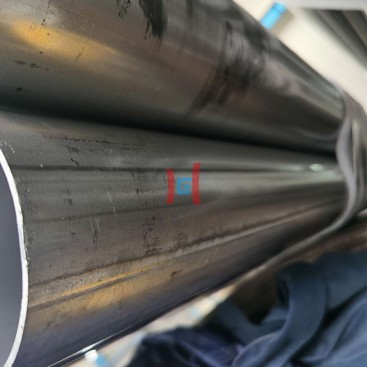
| Condition de surface | Bare spots, defects and appearance | Inspect OD and weld/forming zones |
| Surface treatment | Passivation/oiling or agreed treatment | Consider storage and downstream welding |
GB/T 36399 includes normative methods for measuring Al-Fe-Si alloy coating weight, including chemical removal methods and an X-ray fluorescence method. The XRF method determines coating weight from the fluorescent response of the coated surface against calibrated reference data.
7. Recommended Inspection Checklist
A production inspection plan for a hot-dip Al-Si coated tube should separate incoming coated strip inspection depuis finished tube inspection. This is especially important because GB/T 36399 itself is written for sheet and strip.
| Inspection Stage | Recommended Item | Typical Evidence |
|---|---|---|
| Raw material | Grade, chemistry, épaisseur, width | Mill test certificate |
| Revêtement | Al-Si coating weight and surface condition | Coating test report |
| Mechanical | Limite d'élasticité, tensile strength, élongation | Tensile test report |
| Formation | Bend/forming and coating adhesion | Bend test record |
| Finished tube | DEPUIS, WT, longueur, ovality, straightness | Dimensional inspection report |
| Weld/forming area | Weld appearance and local coating condition | Visual/production inspection record |
| Final delivery | Quantity, marking, packaging and documents | Packing list + quality certificate |
8. Sampling and Test Frequency
Sampling should be linked to the applicable inspection lot and the relevant standard requirements rather than using a single universal sample count for every tube order. GB/T 36399 contains dedicated inspection rules and references GB/T 2975 for the location and preparation of mechanical-test samples.
For procurement, the purchase specification should therefore define whether tests are performed per coil, per production lot, per heat, or at another agreed frequency. For finished tubes, dimensional checks can be performed at the tube-production stage, while coating-weight and substrate mechanical tests can be traced back to the coated strip batch when the contractual quality system permits this arrangement.
9. Delivery Condition and Packaging
GB/T 36399 includes packaging, marking and quality-certificate requirements. Its order information also allows the purchaser to specify coil internal diameter, maximum coil weight, total weight, packaging method and other special requirements. If no special requirement is stated, the standard provides default delivery provisions for ordinary dimensions and accuracy, including a 610 mm coil internal diameter and the supplier’s packaging method.
For coils
Specify ID, maximum coil weight, surface treatment, coating weight, marking and moisture/handling protection.
For tubes
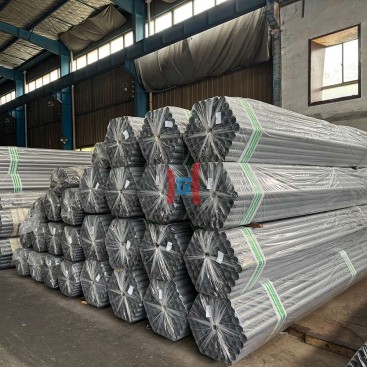
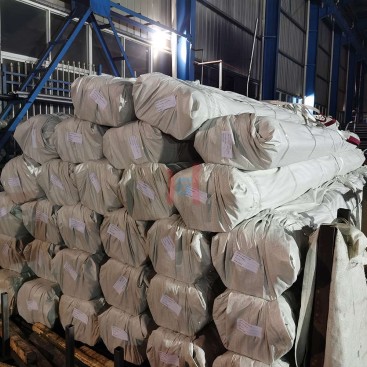
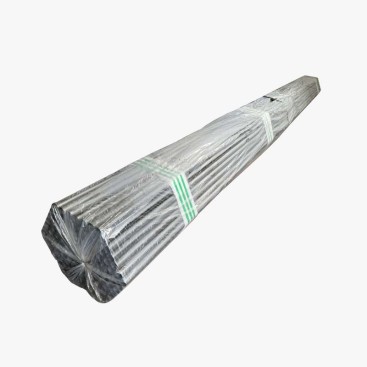
Specify bundle quantity, longueur du tube, end protection, separators, wrapping, labels and traceability.
For export
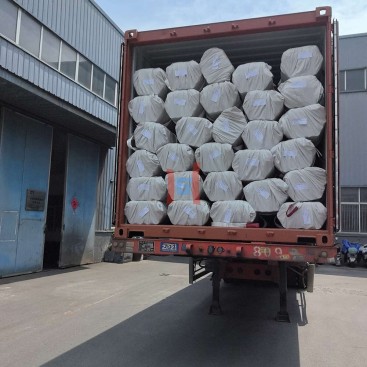
Confirm packing suitable for container handling, protection contre la corrosion, lifting points and document matching.
10. How to Write a Complete Purchase Specification
A technically complete inquiry should avoid simply writing “GB/T 36399 hot-dip aluminium silicon coated tube.” A clearer request identifies the coating standard and the finished-tube requirements separately.
Recommended structure:
GB/T 36399-2018 Al-Si coated steel feedstock + qualité du substrat + coating weight + nominal tube OD × wall thickness × length + tube dimensional tolerance + ovality limit + forming/welding requirement + surface treatment + inspection plan + MTC/quality certificate + packaging requirement.
This format gives the supplier enough information to quote the material, forming process and inspection scope without assuming that the sheet-and-strip standard automatically defines every finished-tube parameter.
11. Teda Ganghua Supply Support for Al-Si Coated Tubes
For projects that need a controlled combination of coated steel grade, tube dimensions and downstream fabrication, Teda Ganghua can organize the specification around the actual procurement route rather than treating the coating standard as the only requirement. The supply discussion can cover substrate selection, exigence de revêtement, tube OD and wall thickness, cut length, méthode de formage, documents de contrôle, packaging and export delivery.
For buyers comparing different Chinese and international specifications, the practical approach is to first lock the substrate grade and coating system, then verify mechanical properties and coating tests, and finally establish the finished-tube dimensional requirements. This makes the technical comparison more transparent when suppliers quote against different standards.
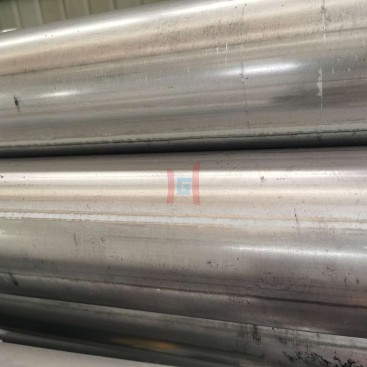
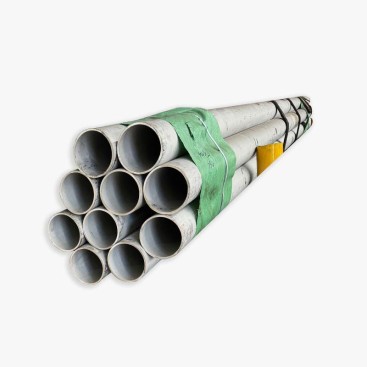
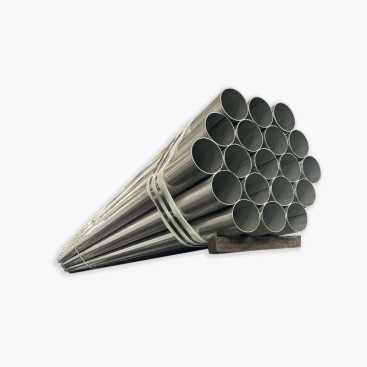
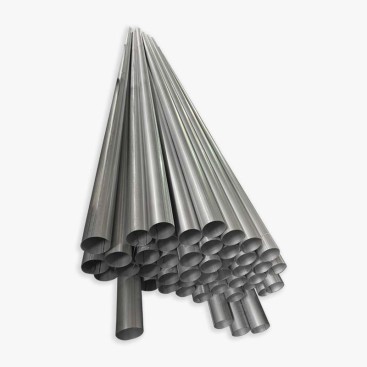
tubes en acier aluminisé can be evaluated according to the required OD, épaisseur de paroi, longueur, coating specification and inspection documentation for the application.
12. FAQs
Is GB/T 36399 a finished tube standard?
Non. GB/T 36399-2018 is a standard for continuously hot-dip aluminium-silicon alloy coated steel sheet and strip. It does not by itself define a complete finished-tube OD, wall-thickness, length or ovality specification.
What is the thickness range covered by GB/T 36399?
The standard applies to continuously hot-dip Al-Si coated steel sheet and strip with a thickness of 0.30–3,0 mm. A finished tube may require a separate tube specification for its wall-thickness tolerance and dimensional control.
What does “+AS” mean in a designation such as DX53D+AS?
“+AS” identifies the hot-dip aluminium-silicon alloy coating. The designation also identifies the substrate grade or grade family; for example, DX53D is associated with cold-forming use.
How is Al-Si coating weight tested?
GB/T 36399 provides normative coating-weight measurement methods based on chemical removal and an X-ray fluorescence method. The coating mass is determined from the measured coating-related mass change or calibrated XRF response.
Can a tube simply be certified as “GB/T 36399”?
For a finished tube, it is better to state the coated-strip standard together with the applicable tube standard or agreed tube requirements. This makes OD, épaisseur de paroi, longueur, ovality, mechanical properties, coating performance and inspection responsibilities unambiguous.
Remarque sur les normes: GB/T 36399-2018 reste répertorié comme une norme nationale recommandée actuelle. Un projet de révision nationale, 20260882-T-605, est en cours de rédaction et devrait remplacer GB/T 36399-2018 avec GB/T 2518-2019. Les contrats d'achat doivent donc identifier l'édition exacte invoquée.