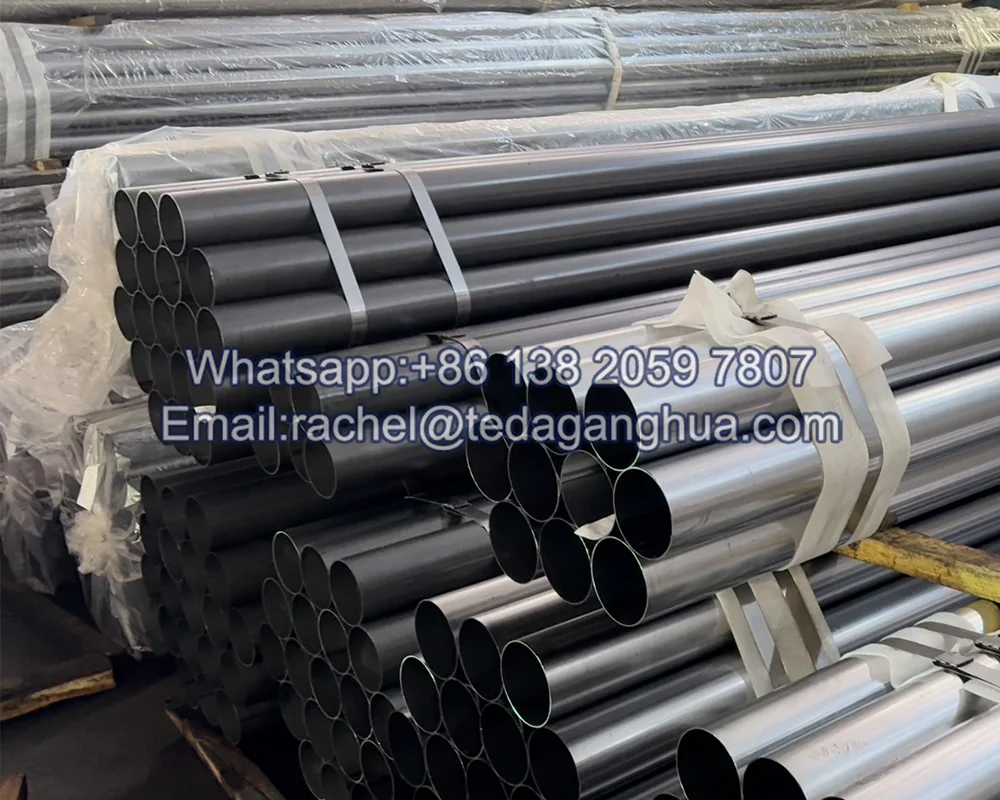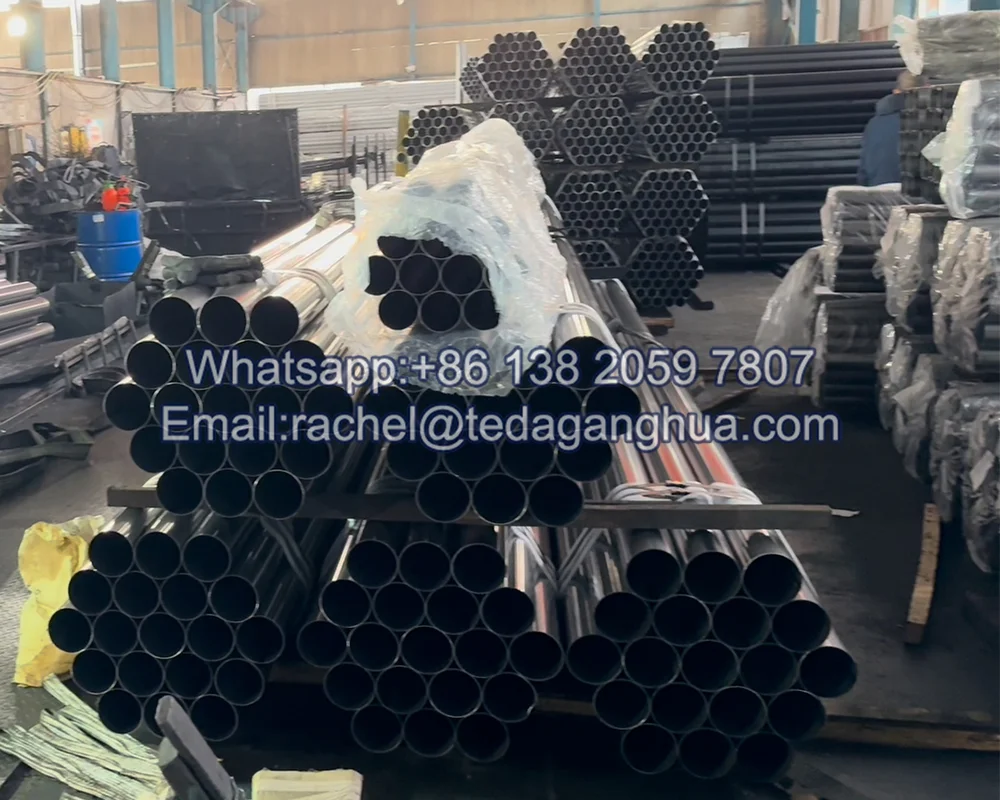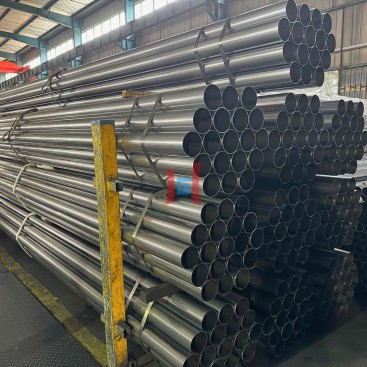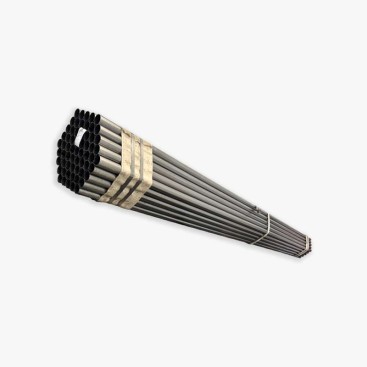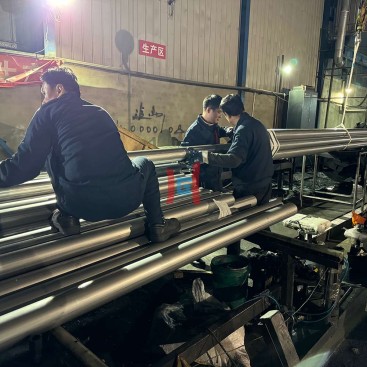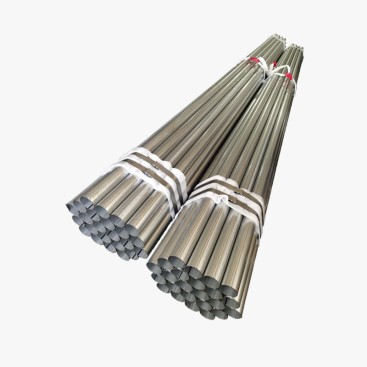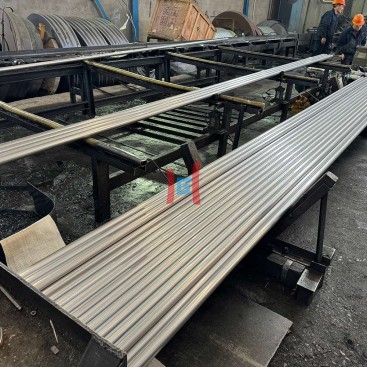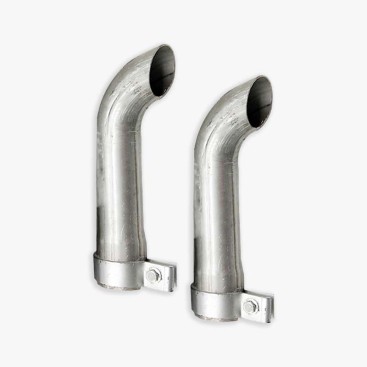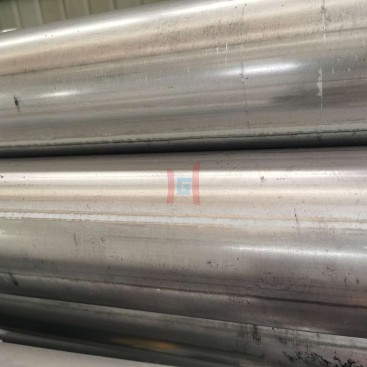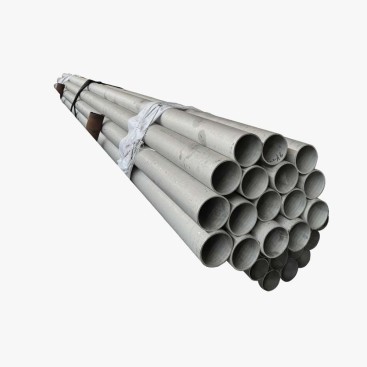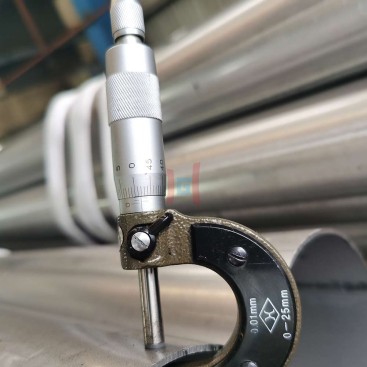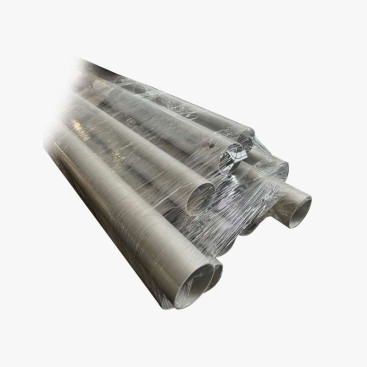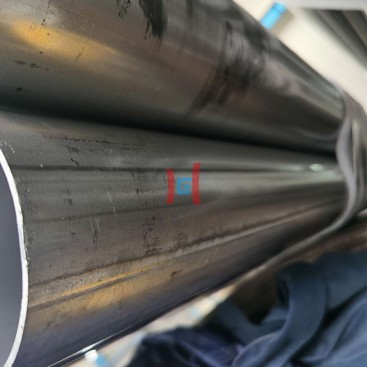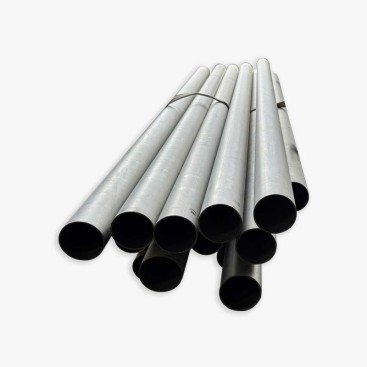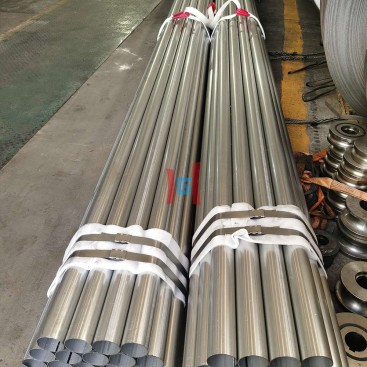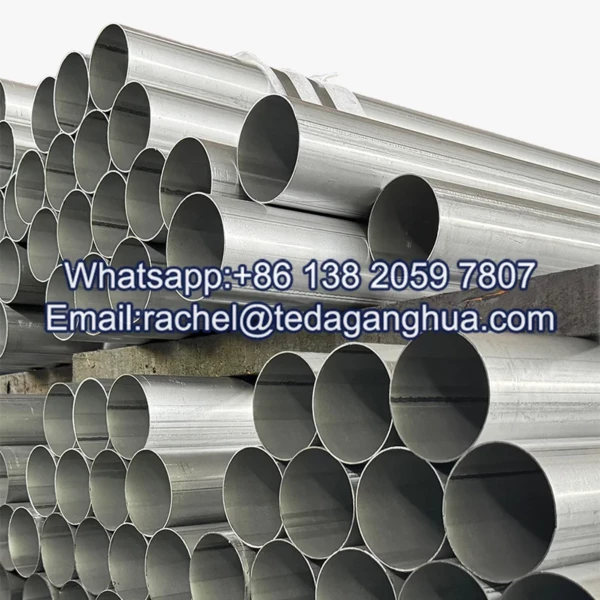
Tuyau d'acier enduit d'alliage de silicium en aluminium d'immersion chaude
- Description
Description
Hot dip aluminum silicon alloy coated steel pipe is designed to combine the mechanical properties of a steel substrate with the protective characteristics of an aluminum-based coating. One important feature of this coating system is the addition of silicon to the molten aluminum bath during the hot-dip coating process. Silicon is not simply an extra element in the coating. It plays an important role in controlling the reaction between molten aluminum and the steel substrate.
When aluminum reacts with iron during hot-dip coating, an iron-aluminum intermetallic layer forms at the interface. If this reaction is not properly controlled, the intermetallic layer can become excessively thick and brittle, potentially affecting forming performance and coating integrity. Silicon helps control this reaction and influences the final coating structure.
For buyers, understanding why silicon is added is useful, but the purchasing decision should ultimately focus on three verifiable requirements: coating type, coating mass, and coating adhesion testing.
1. Why Is Silicon Added to the Hot-Dip Aluminum Bath?
During hot-dip coating, the steel substrate passes through a molten aluminum-based bath. At the contact interface, iron and aluminum interact and form intermetallic compounds. This reaction is a natural part of the coating formation process.
Cependant, excessive growth of the intermetallic layer can create a relatively brittle interface. This may become a concern when the coated material undergoes bending, estampillage, or other deformation operations.
Adding silicon changes the reaction behavior at the steel-coating interface. Its main contributions can be understood through three process-related functions.
2. Three Important Functions of Silicon in the Coating Process
| Fonction | Process Mechanism | Potential Effect on Finished Material |
|---|---|---|
| Control of the iron-aluminum reaction | Modifies interfacial reactions and helps limit excessive intermetallic layer growth. | A more controlled interface can improve coating integrity during subsequent forming. |
| Influence on coating formation | Changes coating solidification and interfacial structure, influencing coating formation and uniformity. | Can support more consistent coating formation when bath and production parameters are properly controlled. |
| High-temperature oxidation performance | Contributes to the characteristics of the aluminum-based protective coating and its oxidation behavior. | Supports applications requiring resistance to high-temperature oxidation, such as exhaust and heating components. |
3. Function One: Controlling the Iron-Aluminum Intermetallic Layer
The interaction between iron and aluminum is central to hot-dip coating. When steel contacts molten aluminum, an intermetallic reaction layer develops between the steel substrate and the external coating.
This interface is necessary for coating formation and bonding. Cependant, excessive growth can result in a thicker, more brittle layer that may be vulnerable during mechanical deformation.
Silicon modifies the interfacial reaction and helps suppress excessive growth of the iron-aluminum intermetallic layer under appropriate coating conditions.
Why Does This Matter During Bending?
When a coated steel pipe is bent, the outer surface experiences tensile stress while the inner surface experiences compressive stress. If the coating system cannot accommodate the deformation, cracking or local separation may occur.
A more controlled interfacial structure can help reduce the risk of coating damage. Cependant, silicon does not make the coating immune to cracking. The final result also depends on substrate ductility, épaisseur de paroi, structure du revêtement, bending radius, and forming equipment.
Manufacturing insight: Silicon helps control the reaction between iron and aluminum. The purpose is not to eliminate the intermetallic layer, but to manage its growth and improve the characteristics of the coating interface.
4. Function Two: Influencing Coating Formation and Uniformity
Coating quality depends on more than the chemical composition of the molten bath. Bath temperature, immersion conditions, withdrawal speed, steel surface condition, and coating control equipment all influence the final result.
Silicon affects the reactions and solidification behavior within the coating system. Together with controlled production parameters, this helps manufacturers manage the coating structure and its consistency.
For products involving thin steel substrates or complex geometries, coating uniformity deserves particular attention. Variations in surface condition, local geometry, and processing conditions can influence the resulting coating.
What Should Buyers Understand?
The presence of silicon alone does not guarantee uniform coating thickness or perfect adhesion. Buyers should evaluate the finished product through agreed inspection requirements rather than assuming that a particular bath composition automatically ensures a uniform result.
For steel pipe, the inspection should consider the relevant surfaces, including the external coating, internal coating where applicable, and areas affected by welding or cutting.
5. Function Three: Supporting High-Temperature Oxidation Resistance
Aluminum-based coatings are widely used in applications where steel components experience elevated temperatures and oxidation exposure.
During high-temperature service, aluminum contributes to the formation of a protective aluminum-rich oxide layer on the coating surface. This layer can slow further oxidation and help protect the underlying steel.
Silicon influences the coating structure and the behavior of the coating during high-temperature exposure. The resulting aluminum-silicon coating system is therefore used in applications where high-temperature oxidation resistance is an important material-selection factor.
Typical Industrial Applications
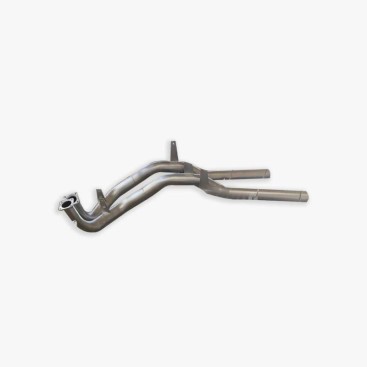
Systèmes d'échappement automobile
Components exposed to repeated heating and cooling, where oxidation resistance and coating durability are important.
Équipement de chauffage industriel
Steel components operating in elevated-temperature environments that require suitable oxidation protection.
Formed Heat-Resistant Parts
Fabricated components where coating condition must remain acceptable after forming and during service.
Actual service life cannot be determined from coating composition alone. Operating temperature, durée d'exposition, cyclage thermique, corrosive substances, and coating condition must all be considered.
6. Three Requirements Buyers Should Put into the Contract
Understanding the role of silicon is useful when selecting a coating system. Cependant, a buyer cannot use the explanation of a manufacturing process as a substitute for measurable acceptance criteria.
For industrial procurement, three items deserve explicit attention.
Requirement One: Specify the Coating Type
D'abord, identify whether the required coating is commercially pure aluminum or aluminum-silicon alloy. These are different coating systems and should not be treated as interchangeable.
If an aluminum-silicon coating is required, state the applicable coating designation and governing standard. Par exemple, ASTM A463/A463M Type 1 identifies an aluminum-silicon coating for the sheet products within its scope.
For a finished pipe, the buyer must also identify the applicable pipe manufacturing and product requirements. A coating designation for steel sheet does not independently establish every requirement for a finished tubular product.
Requirement Two: Specify Coating Mass
Coating mass is one of the most important acceptance items that buyers may overlook when purchasing aluminized steel pipe.
A description such as aluminum-silicon coated does not establish how much coating must be present. The purchase contract should state the agreed coating mass in g/m² and clarify its measurement basis.
In particular, buyers should confirm whether the specified value represents the combined coating mass on both surfaces rather than the mass on one surface.
A practical procurement point
Coating mass is a measurable contractual requirement. Writing it into the purchase order provides a clearer basis for inspection and acceptance than relying on general descriptions of coating durability.
Requirement Three: Specify the Adhesion Test Method
Coating adhesion should also be evaluated through an agreed test method, especially when the finished pipe will undergo bending, estampillage, or other mechanical processing.
Depending on the coating specification and product form, relevant evaluation methods may include:
- Bend testing: Evaluates coating behavior after the specimen undergoes a specified bending operation.
- Cupping testing: Evaluates coating behavior during localized deformation using an appropriate test procedure.
- Agreed alternative methods: A mutually specified inspection or testing procedure appropriate to the finished product.
The test method, préparation des échantillons, deformation conditions, inspection procedure, and acceptance criteria should be agreed upon before production. A test designed for coated sheet should not automatically be assumed suitable for every finished pipe geometry.
7. Coating Mass Is More Useful in a Contract Than General Durability Claims
In commercial discussions, buyers and suppliers sometimes spend considerable time debating whether a coating is durable enough for a particular application. Cependant, general descriptions such as heavy coating, excellent adhesion, or long service life do not provide a clear acceptance basis.
Masse de revêtement, by contrast, is a measurable parameter that can be included in the purchase contract. When combined with a defined coating type and an agreed adhesion test, it provides a more practical framework for material verification.
| Contract Item | What to Specify | But |
|---|---|---|
| Type de revêtement | Pure aluminum or Al-Si alloy | Establishes coating composition. |
| Masse de revêtement | Agreed g/m², with measurement basis | Provides a measurable coating acceptance requirement. |
| Adhesion testing | Bend, cupping, or mutually agreed method | Evaluates coating integrity under specified deformation. |
For suppliers, these requirements are also practical. A clearly written coating specification helps production teams understand what needs to be manufactured and gives both parties an objective basis for inspection.
8. Teda Ganghua Métal: Material Sourcing and Coating Specification Support
Teda Ganghua Metal is a Tianjin TEDA-based steel stockist with 20 years of stockist and export experience. The company supports international industrial buyers with steel sourcing, material specification communication, and export supply coordination.
For customers purchasing aluminum-silicon coated steel products, confirming the coating type, coating mass, and adhesion acceptance requirements is an important part of the inquiry process.
Teda Ganghua Metal works with established steel producers, including Baosteel, TISCO, Angang Steel, TPCO, and VALIN. Its inventory resources and sourcing network support different steel procurement requirements.
Our team can assist with material grade confirmation, coating specification discussions, dimensional requirements, material test certificates, and third-party inspection arrangements according to the confirmed order specifications.
Explorez notre tubes en acier aluminisé product category to discuss industrial material sourcing and technical requirements.
Teda Ganghua Metal welcomes customer inspections and encourages buyers to verify supplied materials against agreed specifications before shipment. Our focus is on transparent communication, material traceability, and clearly defined product requirements.
Foire aux questions
1. Why is silicon added to a hot-dip aluminum coating?
Silicon modifies the reaction between molten aluminum and the steel substrate. It helps control excessive growth of the iron-aluminum intermetallic layer and influences coating structure, forming behavior, and high-temperature oxidation performance.
2. Does silicon completely prevent coating cracking during bending?
Non. Silicon can contribute to a more controlled coating interface, but it does not eliminate the possibility of cracking or separation. Bending radius, substrate properties, structure du revêtement, and forming conditions remain important factors.
3. Why is coating mass important when purchasing aluminized steel pipe?
Coating mass provides a measurable requirement for material acceptance. Without an agreed value and measurement basis, descriptions such as heavy coating or enhanced protection can be interpreted differently by buyers and suppliers.
4. Which adhesion test should buyers specify?
Bend testing, cupping testing, or another mutually agreed method may be appropriate depending on the product form and intended application. Les conditions de test et les critères d'acceptation doivent être établis avant la production.
5. La spécification d'un revêtement aluminium-silicium est-elle suffisante pour un bon de commande complet?
Non. Les acheteurs doivent également préciser la norme applicable, coating mass, base de mesure, méthode de test d'adhérence, qualité du substrat, dimensions du tuyau fini, et les exigences d'inspection pertinentes. Cela crée une spécification d'achat plus complète et vérifiable.