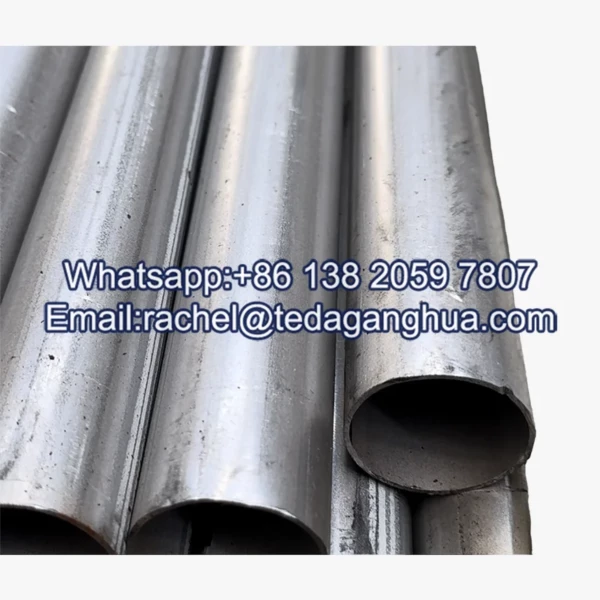
Tuyau en acier enduit d'aluminium plongé à chaud
- Description
Description
When purchasing hot-dipped aluminium coated steel pipe for the UK or European market, using British spelling is only one part of preparing an accurate technical specification. Buyers also need to consider metric dimensions, coating mass conventions, European coating designations, and pipe sizing practices. These details can become important when the same steel product is quoted to customers in different markets. A European buyer may specify an AS coating under EN 10346, while an American buyer may refer to an ASTM A463 Type 1 revêtement. Although both descriptions relate to aluminum-silicon coated steel, their designation systems and measurement conventions should not be assumed to be directly interchangeable.
1. British English Is More Than a Spelling Preference
In the United Kingdom and many European markets, aluminium is the preferred spelling, whereas aluminum is standard in American English. Both terms refer to the same chemical element. Cependant, international steel procurement involves more than choosing the correct regional spelling.
European purchasing documents commonly follow a broader set of conventions covering metric dimensions, coating mass, material designations, and product standards. When preparing an inquiry, quotation, technical data sheet, or inspection document, maintaining consistency across these conventions helps prevent misunderstandings.
| Specification Item | Common UK / European Practice | Purchasing Consideration |
|---|---|---|
| Spelling | Aluminium | Maintain consistent terminology across documents |
| Dimensions | Millimetres (mm) | Specify outside diameter and wall thickness |
| Masse de revêtement | Grams per square metre (g/m²) | Confirm whether the value represents both surfaces |
| Coating standard | DANS 10346, AS designation | Confirm the precise coating classification |
| Pipe dimensions | OD × WT, commonly in mm | Do not confuse actual dimensions with NPS or DN designations |
These are common market practices rather than absolute rules. Individual projects may use international standards or customer-specific specifications. The key is to identify the governing standard and measurement basis instead of relying on regional terminology alone.
2. Metric Dimensions vs. Imperial Measurements
UK and European steel purchasing generally uses the metric system. Pipe dimensions are commonly expressed in millimetres, while coating mass is frequently specified in grams per square metre. American specifications may use inches for dimensions and ounces per square foot for coating designations.
For tubular products, a typical European-style dimensional description includes:
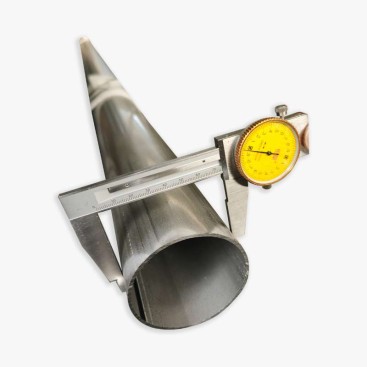
Diamètre extérieur (DEPUIS)
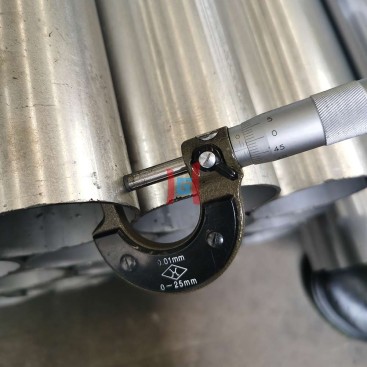
The external diameter of the pipe, expressed in millimetres.
Épaisseur de paroi (WT)
The thickness of the steel pipe wall, expressed in millimetres.
Longueur
The required straight length or delivery length, specified according to the project requirements.
Par exemple, a buyer may describe a product using an outside diameter and wall thickness rather than relying only on a nominal pipe size. This is particularly useful when the application requires precise fitting, fabrication, or connection to existing equipment.
NPS and DN are nominal sizing systems, not direct substitutes for measured outside diameter and wall thickness. Two pipes with similar nominal designations may have different dimensional requirements depending on the applicable standard and schedule.
For international quotations, the safest practice is to state actual OD, WT, and length in millimetres, even when a nominal designation is also provided.
3. Masse de revêtement: g/m² vs. oz/ft²
One of the most important differences between European and American coating specifications is the way coating mass is expressed. European documents commonly use grams per square metre (g/m²), while ASTM-based American documents may use ounces per square foot (oz/ft²) in coating designations.
Cependant, the unit is only part of the specification. Buyers must also establish whether the stated coating mass represents the combined coating on both surfaces or a value defined on another basis.
| Article | European Convention | American Convention |
|---|---|---|
| Common unit | g/m² | oz/ft² |
| Standard reference | DANS 10346 | ASTMA463/A463M |
| Relevant coating designation | COMME | Taper 1, including applicable coating class |
| Verification requirement | Check coating mass definition and measurement basis | Check the standard’s coating designation and applicable mass convention |
A frequent source of confusion occurs when a European customer specifies AS120 and an American customer requests T1-40 for what they believe is the same coating requirement.
Although both designations relate to aluminum-silicon coating requirements, they belong to different standard systems. The coating mass units, designation structures, and measurement conventions must be checked independently.
Important purchasing warning
Do not assume that AS120 and T1-40 are strictly equivalent. EN coating mass designations generally refer to the combined coating mass on both surfaces, whereas ASTM A463 coating designations and their stated values must be interpreted according to the applicable standard provisions. Confirm the measurement basis, coating class, and actual inspection results before accepting an equivalence claim.
For cross-market purchasing, the supplier should verify the original standard, coating designation, applicable edition, and actual test results. No conversion should be accepted solely because two commercial designations appear numerically similar.
4. DANS 10346 contre. ASTMA463: Different Standard Systems
DANS 10346 and ASTM A463/A463M are important references for hot-dip aluminum-coated steel products, but they are not interchangeable documents. Their scopes, designation systems, and technical requirements must be considered separately.
DANS 10346 covers continuously hot-dip coated steel flat products. Its AS designation identifies an aluminium-silicon alloy coating. This designation is particularly relevant to European purchasing documents for coated steel strip and sheet.
ASTM A463/A463M covers hot-dip aluminum-coated steel sheet and distinguishes Type 1 aluminum-silicon alloy coating from Type 2 commercially pure aluminum coating. In American procurement, buyers should identify the applicable Type and coating class according to the standard.
| Comparaison | DANS 10346 | ASTMA463/A463M |
|---|---|---|
| Main market association | European | American |
| Product scope | Continuously hot-dip coated flat steel products | Hot-dip aluminum-coated steel sheet |
| Al-Si identification | COMME | Taper 1 |
| Other aluminum coating | UN | Taper 2 |
| Documentation | EN designation and coating mass requirements | ASTM type, coating class, and applicable requirements |
One technical limitation deserves attention: both standards primarily address flat steel products. They should not automatically be treated as complete pipe manufacturing specifications. When purchasing finished steel pipe, buyers must separately confirm the pipe product standard, qualité du substrat, coating process, and acceptance requirements.
5. Pipe Dimensions: OD × WT vs. NPS and DN
European customers often describe tubular products using actual outside diameter and wall thickness in millimetres. American purchasing documents frequently use Nominal Pipe Size (NPS), while international projects may also use Diameter Nominal (DN).
These systems serve different purposes. OD × WT specifies actual physical dimensions, while NPS and DN are nominal size designations associated with defined dimensional standards.
| Dimension Term | Meaning | Procurement Use |
|---|---|---|
| DEPUIS | Outside diameter | Actual external dimension |
| WT | Wall thickness | Actual pipe wall dimension |
| NPS | Nominal Pipe Size | Common American pipe sizing system |
| DN | Nominal Diameter | Metric nominal size designation |
Par exemple, a project specification that requires a particular outside diameter and wall thickness should state both values directly rather than relying only on a nominal pipe size. This is especially important when the pipe must connect to existing fittings, equipment, or fabricated assemblies.
Buyers should also clarify dimensional tolerances, straightness, longueur, and end preparation. These requirements can influence installation compatibility and the final acceptance inspection.
6. How to Prepare a UK or European Purchase Specification
A well-prepared inquiry should combine British or European terminology with precise technical information. This helps suppliers understand the intended product without making assumptions based on regional spelling or coating designations.
Recommended specification checklist
- Product name: hot-dip aluminium-silicon coated steel pipe.
- Base steel grade and applicable material standard.
- Coating designation: DANS 10346 COMME, where applicable.
- Outside diameter and wall thickness in millimetres.
- Required pipe length and dimensional tolerances.
- Coating mass and confirmation of the measurement basis.
- Condition de surface, adhésion, et les exigences en matière d'inspection.
- Material Test Certificate and traceability requirements.
- Packaging, marking, and delivery documentation.
If the buyer also accepts ASTM-based materials, the inquiry should identify the ASTM edition, Taper 1 coating classification, applicable coating class, and required inspection basis. The supplier should not substitute an EN designation based on an assumed numerical equivalence.
For projects involving both European and American purchasing teams, preparing a shared technical specification is often more effective than maintaining two separate descriptions without a documented comparison.
7. Teda Ganghua: International Steel Supply and Technical Coordination
Teda Ganghua Metal is a steel stockist based in Tianjin TEDA, avec 20 years of steel stockist and export experience. The company supports international buyers with steel material sourcing, specification confirmation, processing coordination, and export documentation.
For customers sourcing hot-dip aluminium coated steel pipes, Teda Ganghua can help clarify product dimensions, exigences en matière de revêtement, normes applicables, and delivery conditions before order confirmation.
Purchasing support can include:
- Confirmation of base steel grades and product dimensions.
- Clarification of aluminum-silicon coating specifications and standard references.
- Coordination of cutting, soudage, flexion, and other fabrication requirements where applicable.
- Material Test Certificates (MTC) and relevant quality documentation.
- Third-party inspection arrangements and shipment verification.
- Export packaging, product identification, and delivery coordination.
Teda Ganghua emphasizes material traceability, specification-based quality control, and shipment verification. Buyers are welcome to arrange inspections before shipment to check material grades, dimensions, quantities, and agreed technical requirements.
For international projects, a consistent specification is particularly important when European and American purchasing teams use different measurement systems. Confirming the original standard and coating measurement basis helps ensure that the supplied material matches the project requirements.
Foire aux questions
1. Should UK buyers use aluminium or aluminum in product specifications?
Aluminium is the preferred British English spelling. Both spellings identify the same chemical element, but using aluminium consistently in UK-facing quotations, technical documents, and product descriptions improves terminology consistency.
2. What does AS mean in EN 10346?
AS identifies an aluminium-silicon alloy coating under EN 10346. It is a coating designation for continuously hot-dip coated flat steel products, not a complete specification for every finished pipe.
3. Are AS120 and ASTM T1-40 equivalent?
They should not automatically be considered equivalent. They belong to different standard systems and may use different coating mass conventions and measurement bases. The original standard requirements and actual inspection results must be checked before comparing them.
4. What is the difference between OD × WT and NPS?
OD × WT spécifie le diamètre extérieur réel et l'épaisseur de paroi. NPS est un système de dimensionnement nominal des tuyaux et n'indique pas directement les deux dimensions réelles. Les acheteurs doivent fournir les dimensions réelles lorsqu'une compatibilité précise est requise.
5. Peut FR 10346 être utilisé comme norme complète pour les tuyaux en acier revêtus d'aluminium?
Pas automatiquement. DANS 10346 couvre les produits en acier plat revêtus à chaud en continu. Les tuyaux finis nécessitent une confirmation de la norme de produit de tuyau applicable, matériau de base, coating process, dimensions, et les exigences en matière d'inspection.