
- Descrizione
Descrizione
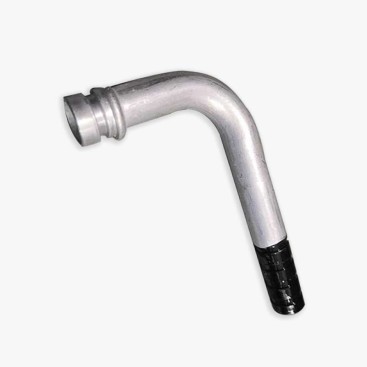
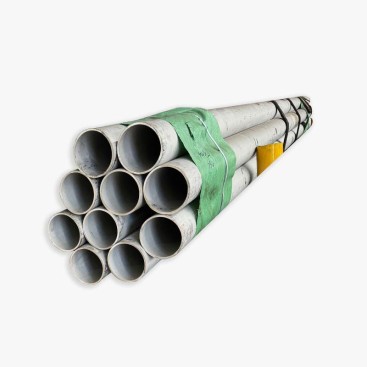
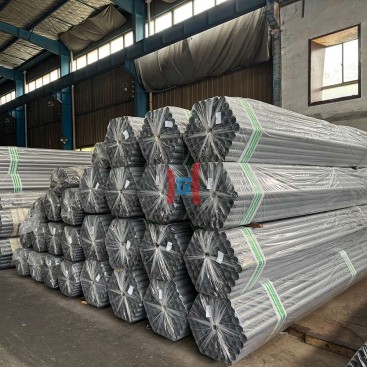
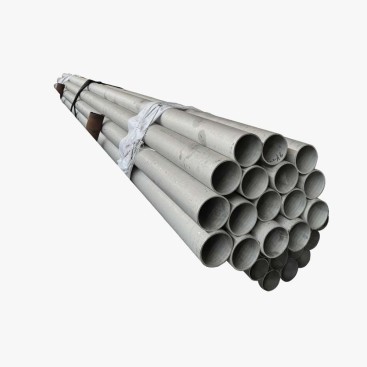
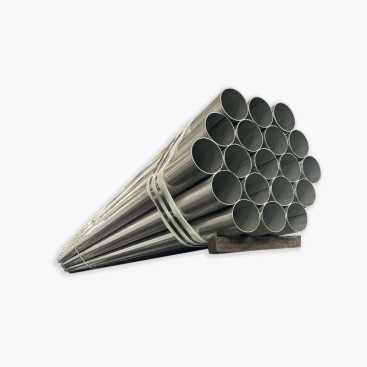
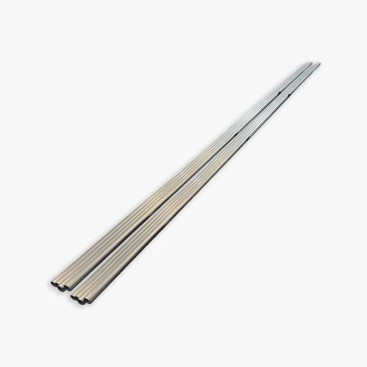
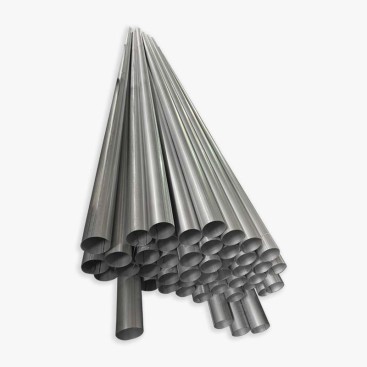
AS60 is an entry industrial coating level for aluminized steel pipe. With a nominal coating weight of about 60 g/m², it provides a step up from AS40 while keeping coating consumption relatively low. It can fit general exhaust, Hvac, and light outdoor applications. Tuttavia, AS60 should not be treated as a substitute for stainless steel when long-term corrosion resistance is the main requirement.
What Does AS60 Mean?
In aluminized steel product specifications, IL AS number identifies the coating weight grade. AS60 generally refers to a nominal coating weight of approximately 60 g/m² total for both sides.
| Grado | Nominal coating weight | Position | Typical service |
|---|---|---|---|
| AS40 | ~40 g/m² | Light coating | Dry and light-duty conditions |
| AS60 | ~60 g/m² | Entry industrial | General industrial and mild outdoor service |
| AS80 | ~80 g/m² | Higher protection | More demanding environments |
The exact coating weight, tolleranza, and measurement method depend on the applicable standard. Perciò, an order should state the standard and coating requirement clearly instead of relying only on the AS designation.
AS60 Coating Thickness: What Does 60 g/m² Mean?
Coating weight and coating thickness are related, but they are not the same measurement. The coating is an aluminum-silicon system formed on the steel substrate. Its final thickness depends on coating chemistry, process control, densità, and measurement location.
For a light aluminized coating around the AS60 level, the effective coating thickness is generally in the low tens of micrometers. A rough engineering estimate may place it around 10–20 μm per coated side, but this should not be used as a contractual value.
Why Is AS60 Called an Entry Industrial Grade?
AS60 sits between the light AS40 level and the heavier AS80 level. It is therefore useful when AS40 provides too little environmental margin, but AS80 is not required by the application.
The additional coating provides more material reserve against surface degradation. In practical procurement, this can make AS60 a reasonable middle option for applications where the pipe experiences occasional moisture, moderate temperature, or normal industrial exposure.
AS40
Choose when the environment is mild and coating cost needs to be minimized.
AS60
Choose when a basic industrial protection margin is required.
AS80
Choose when exposure is more demanding and a heavier coating is justified.
Typical Applications for AS60 Aluminized Pipe
AS60 is often considered for applications where the tube or pipe needs better surface protection than ordinary bare carbon steel, but the project does not require stainless steel.
| Applicazione | AS60 suitability | Main consideration |
|---|---|---|
| General exhaust components | Good for suitable temperature ranges | Temperatura, condensate, and gas chemistry |
| HVAC ducts and components | Bene | Indoor/outdoor exposure and condensation |
| Light outdoor structures | Possible | Humidity and atmospheric corrosion |
| Marine or high-salt exposure | Not the first choice | Chloride exposure can accelerate degradation |
| Strong chemical environments | Requires specific evaluation | Chemical compatibility must be verified |
AS60 vs AS40 vs AS80: The Upgrade Logic
The most useful way to compare these grades is not to ask which one is universally best. Invece, ask whether the additional coating provides enough value for the actual environment.
| Decision | Upgrade path | Perché |
|---|---|---|
| Dry indoor use | AS40 → AS60 only if needed | AS40 may already provide enough protection |
| General industrial use | AS40 → AS60 | Adds coating reserve without moving to a heavier grade |
| Regular outdoor exposure | AS60 → AS80 | A higher coating level can provide more environmental margin |
| Severe corrosion | Beyond AS80 evaluation | Material and coating system should be selected from the full service conditions |
In other words, AS60 is a middle step, not an automatic final answer. If the environment becomes more aggressive, AS80 or another coating/material system may be more appropriate.
Salt Spray Testing: Do Not Turn Hours Into Service Life
Salt spray testing can be useful for comparing coated samples under a controlled laboratory method. Tuttavia, salt spray hours should not be converted directly into outdoor service years.
AS40, AS60, and AS80 may show different resistance under the same test conditions because their coating weights are different. Yet the result is also affected by coating uniformity, substrate condition, cut edges, surface damage, test method, and evaluation criteria.
| Test consideration | What it tells you | What it does not tell you |
|---|---|---|
| Salt spray exposure time | Relative laboratory resistance under a defined method | Exact outdoor service years |
| Peso di rivestimento | Amount of protective coating | Guaranteed service life |
| Surface inspection | Visible coating uniformity and defects | Long-term performance in every environment |
For procurement, a better approach is to compare the same test method, same specimen preparation, same failure criterion, and same coating system. Avoid comparing isolated salt-spray numbers from different suppliers.
Common Mistake: AS60 Is Not Stainless Steel
One of the most important purchasing distinctions is that aluminized steel and stainless steel are different material systems.
AS60 protects a carbon-steel substrate with an aluminum-silicon coating. Stainless steel obtains its corrosion resistance mainly from its alloy composition and chromium-rich passive surface. Perciò, increasing an aluminized coating grade does not turn the underlying steel into stainless steel.
What Determines the Real Service Life?
No single coating number can predict service life. The actual life of AS60 pipe depends on several variables.
- Umidità: repeated condensation and wet-dry cycles increase corrosion demand.
- Atmosphere: sale, pollutants, and industrial contaminants can accelerate degradation.
- Temperatura: elevated temperature changes coating performance and may become critical in exhaust applications.
- Mechanical damage: scratches, dents, and forming damage can expose the substrate.
- Cut edges: fabricated areas may behave differently from the intact coated surface.
- Maintenance: inspection and environmental control can affect the useful service period.
AS60 Pipe Procurement Checklist
Before placing an order, buyers should define the complete application rather than specifying only “AS60.”
Confirm the applicable material and coating standard.
Specify AS60 or the required coating weight and tolerance.
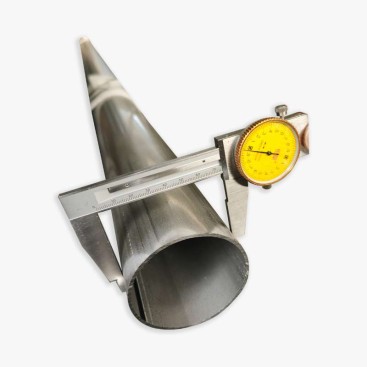
State outside diameter, spessore della parete, lunghezza, and dimensional tolerances.
Describe humidity, temperatura, outdoor exposure, prodotti chimici, and salt conditions.
Confirm coating-weight testing, dimensional inspection, requisiti di superficie, and certificates.
How Teda Ganghua Supports Aluminized Pipe Sourcing
Teda Ganghua supplies coated steel products for international industrial and fabrication projects. For aluminized pipe requirements, buyers can define the pipe size, spessore della parete, grado di acciaio, coating level, requisiti di superficie, quantità, and inspection documentation.
The sourcing process can also be matched to the actual service environment. This is useful when a buyer is deciding between AS40, AS60, and AS80. Instead of automatically selecting the heaviest coating, the specification can be reviewed according to moisture, temperatura, esposizione alla corrosione, fabbricazione, and expected service conditions.
For projects requiring aluminized tube and pipe products, buyers can review the available tubi in acciaio alluminato and provide the required coating grade and dimensions for a project-specific quotation.
AS60 Aluminized Pipe FAQs
1. What is AS60 aluminized pipe?
AS60 aluminized pipe uses an aluminum-silicon coating with a nominal coating weight of about 60 g/m² total for both sides, subject to the applicable product standard and tolerance.
2. Is AS60 better than AS40?
AS60 provides a higher coating weight and therefore a larger coating reserve. It can be a better choice when the environment is more demanding than the conditions suitable for AS40.
3. Is AS60 suitable for exhaust pipes?
It can be suitable for certain exhaust applications, but temperature, condensate, gas chemistry, spessore della parete, and expected service conditions must be checked before selection.
4. Does AS60 have a fixed salt-spray life?
NO. Le prestazioni in nebbia salina dipendono dal metodo di prova, preparazione del campione, qualità del rivestimento, criterio di fallimento, e altri fattori. Le ore di nebbia salina non devono essere trattate come una previsione diretta della durata di servizio all'aperto.
5. L'acciaio alluminato AS60 è uguale all'acciaio inossidabile?
NO. AS60 è acciaio rivestito con uno strato protettivo di alluminio-silicio. L'acciaio inossidabile è un sistema di leghe diverso. L'AS60 dovrebbe quindi essere selezionato in base alle sue prestazioni in termini di corrosione e temperatura piuttosto che trattato come un sostituto dell'acciaio inossidabile.