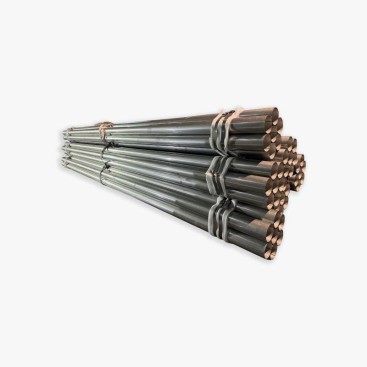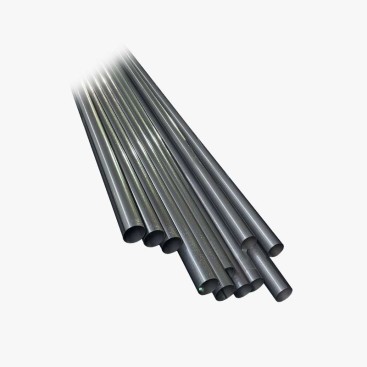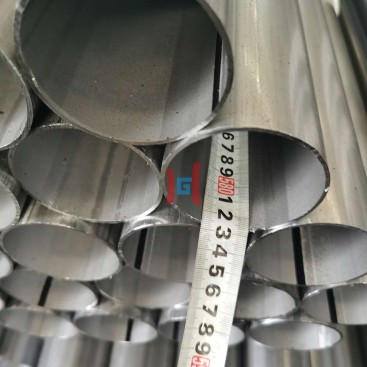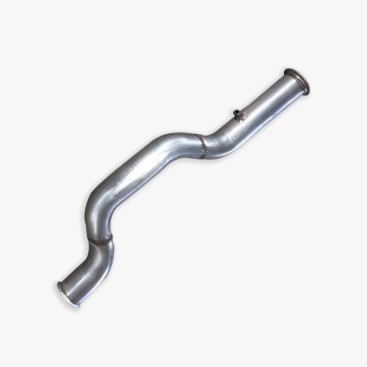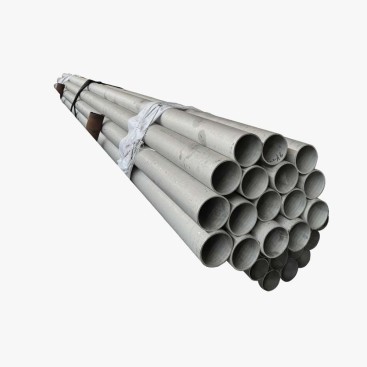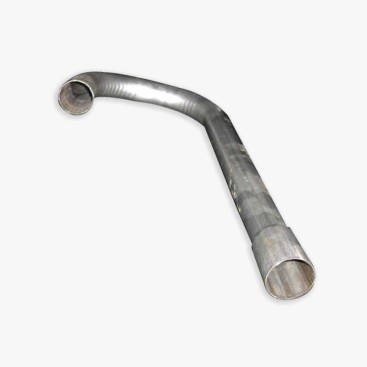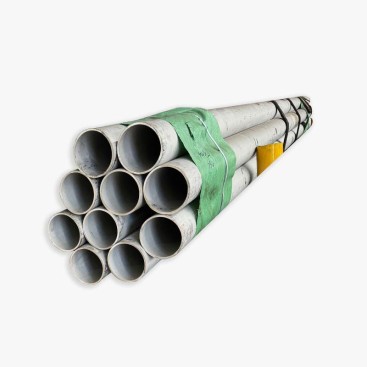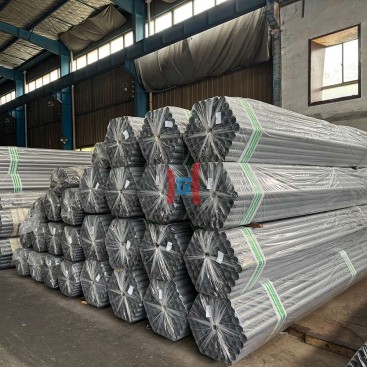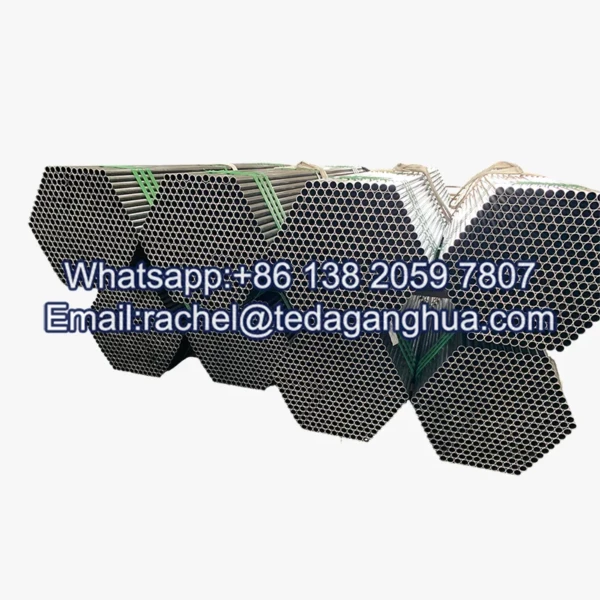
Tipo ASTM A463 2 Tubo in acciaio alluminato
- Descrizione
Descrizione
Tipo ASTM A463 2 is often misunderstood in aluminized tube specifications. The first point to clarify is that ASTM A463 Type 2 is the commercially pure aluminum coating type, mentre Tipo 1 is the aluminum-silicon alloy coating. Perciò, Tipo 2 should not be described as an Al-Si 5–10% coating under ASTM terminology. This distinction is important when selecting material for bending, deep forming, componenti di scarico, forni, and other fabricated tube applications. ASTM A463 covers hot-dip aluminum-coated steel sheet in coils and cut lengths, with different coating types and coating masses. :contentReference[pecora:0]{indice=0}
Specification correction: If a supplier describes “A463 Type 2” as an Al-Si coating containing 5–10% silicon, confirm the designation carefully. In ASTM A463, Tipo 1 is the Al-Si alloy coating, mentre Tipo 2 is commercially pure aluminum. Commercial AS terminology can differ from ASTM Type terminology, so the purchase order should state the exact standard and coating designation.
Che cos'è il tipo ASTM A463 2?
ASTM A463/A463M is a material specification for steel sheet aluminum-coated by the hot-dip process. It is not, by itself, a finished pipe or tube standard. The specification covers coils and cut lengths and establishes requirements for the coated sheet, including coating mass and bend testing. :contentReference[pecora:1]{index=1}
Within this standard, Tipo 2 uses a commercially pure aluminum coating. Tipo 1 is the Al-Si alloy route. This difference affects the coating structure, forming behavior, resistenza al calore, and the applications for which the coated sheet is normally selected.
Tipo 2
Commercially pure aluminum coating. The main selection logic is corrosion protection and a ductile aluminum surface suitable for forming applications.
Tipo 1
Rivestimento in lega di alluminio-silicio. The Al-Si coating is associated with improved high-temperature performance and is widely considered for heat-exposed components.
Why the Type 2 Bending Question Matters
For a tube manufacturer, coating ductility is critical because the coated strip may be slit, roll-formed and longitudinally welded before becoming the finished tube. The coating has to tolerate repeated deformation without excessive cracking, peeling, or loss of protective coverage.
Type 2’s commercially pure aluminum surface is highly relevant when forming behavior is a major procurement concern. Tuttavia, it would be inaccurate to claim that Type 2 never cracks or flakes. Actual performance depends on coating mass, grado del substrato, adesione del rivestimento, bend radius, sheet thickness, forming sequence, tooling condition, and the severity of deformation.
ASTM A463 itself includes bend-test requirements, which is a better way to evaluate coating-forming performance than relying only on the words “Type 2.” :contentReference[pecora:2]{index=2}
Practical rule: A coating that survives a simple bend test is not automatically suitable for every deep-drawing operation. For a formed tube or complex component, specify the substrate grade, spessore, forming radius, coating designation and final geometry together.
Tipo 1 rispetto al tipo 2 for Formed Tube
| Selection factor | A463 Type 1 | A463 Type 2 |
|---|---|---|
| Coating chemistry | Lega di alluminio-silicio | Commercially pure aluminum |
| Main strength | Heat resistance plus corrosion protection | Corrosion protection and ductile aluminum coating |
| Forming consideration | Can be formed, but coating behavior must be checked for severe deformation | Often attractive when coating ductility and forming are important |
| Deep forming | Application-dependent | Suitable candidate when forming requirements and bend performance are compatible |
| Heat-exposed service | Generally the stronger candidate | Select only after confirming service temperature and environment |
| Typical decision | Prioritize thermal performance | Prioritize corrosion protection and forming requirements |
Tipo 2 for Bending and Deep Forming
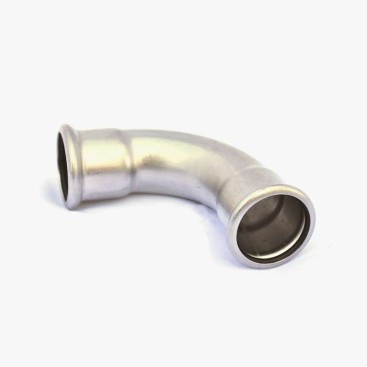
Tipo 2 becomes particularly interesting when an aluminum-coated steel component must undergo substantial forming after coating. Examples can include curved sections, formed brackets, duct components, appliance parts, and tube profiles produced from coated strip.
Per flessione, the engineering question is not simply whether the steel substrate can reach the required radius. The coating must also remain sufficiently continuous after deformation. A hard or brittle coating system can show surface cracking even when the steel itself completes the bend successfully.
Per deep forming, the deformation becomes more complex. Draw depth, punch radius, die radius, lubrication, blank-holder force, substrate elongation and coating mass all influence the result. A purchaser should therefore avoid specifying a coating type without also specifying the required forming performance.
Low deformation
Simple bends and relatively open radii are generally easier to control.
Medium deformation
Confirm bend radius, coating mass and substrate forming grade.
Severe forming
Request forming trials or bend-test evidence before volume production.
Where Type 2 Fits in Tube Applications
When A463-coated sheet is converted into tube, the original sheet specification becomes part of a larger tube specification. The manufacturer needs to control slitting, roll forming, saldatura, sizing and cutting while preserving the required coating performance.
| Tube application | Why Type 2 may be considered | Main check |
|---|---|---|
| Bent tube sections | Formability of the aluminum coating | Bend radius and coating continuity |
| Formed brackets | Corrosion protection after deformation | Substrate grade and forming method |
| Oven components | Aluminum surface protection | Actual operating temperature |
| Exhaust-related tube | Possible corrosion-resistant tube route | Temperature profile, condensate and Type 1 rispetto al tipo 2 suitability |
| Deep-formed components | Potentially favorable coating-forming combination | Drawing ratio, tooling and coating adhesion |
A463 Type 2 Is Not the Same as “Al-Si 5–10%”
This is one of the most important SEO and procurement distinctions in the aluminized steel market. Search results and commercial catalogs sometimes use “Type 2,” “AS120,” “Al-Si coating,” and other terms inconsistently. Tuttavia, the ASTM designation should take priority when an order specifically calls for A463.
Under ASTM A463, Tipo 1 is the Al-Si coating route. The specification describes two aluminum coating types and multiple coating weights or masses. :contentReference[pecora:3]{index=3}
Perciò, if a buyer needs an Al-Si coating containing approximately 5–10% silicon, the inquiry should be checked against the applicable Type 1 requirement rather than automatically writing “A463 Type 2.” This single correction can prevent a material mismatch between the quotation, MTC and actual production material.
How to Specify an A463 Type 2 Tube
A strong purchasing description should define the complete material chain instead of relying on the keyword alone.
Recommended inquiry checklist
• ASTM A463/A463M edition required by the project
• Aluminum coating Type 2
• Required coating designation or coating mass
• Base steel grade and forming category
• Outside diameter and wall thickness
• Straight length or cut length
• Bend radius and forming sequence
• Longitudinal welding requirements
• Surface and post-weld protection requirements
• MTC, dimensional inspection and coating-test requirements
If the intended requirement is actually an Al-Si coating, the purchase order should explicitly identify the corresponding Type 1 requirement instead of using “Type 2” as a generic term for aluminized steel.
Teda Ganghua Support for Aluminized Tube Procurement
For buyers developing formed, bent or welded aluminized tube, Teda Ganghua can support inquiries by reviewing the coating type, grado del substrato, tube dimensions and application together. This is particularly useful when the customer specification originates from a sheet standard but the required product is a finished tube.
When requesting a quotation, provide the ASTM designation, coating type, requisito del rivestimento, grado di acciaio, diametro esterno, wall thickness and tube length. For tube sourcing, you can review A463 Type 2 tubo in acciaio alluminato and include the required forming or bending conditions in the inquiry. This helps avoid confusion between ASTM coating types and commercial Al-Si or AS-series terminology.
Punti chiave
✓ ASTM A463 covers hot-dip aluminum-coated steel sheet, not a finished tube standard. :contentReference[pecora:4]{index=4}
✓ ASTM Type 2 means commercially pure aluminum coating.
✓ ASTM Type 1 is the aluminum-silicon alloy coating.
✓ Type 2 can be attractive where coating formability and corrosion protection are important, but no coating should be assumed to be immune to cracking under severe forming.
✓ For tube production, grado del substrato, coating mass, bend radius and welding process must be evaluated together.
✓ If an inquiry specifies “A463 Type 2 Al-Si 5–10%,” ask for clarification before production because those terms do not match ASTM’s Type 1/Type 2 definitions.
FAQs About A463 Type 2 Aluminized Tube
Is A463 Type 2 an Al-Si coating?
NO. Under ASTM A463, Tipo 2 is commercially pure aluminum. Tipo 1 is the aluminum-silicon alloy coating. :contentReference[pecora:5]{indice=5}
Perché è Tipo 2 considered for bending?
The commercially pure aluminum coating is a relevant option when coating ductility and forming performance are important. Actual bending performance still depends on substrate, coating mass, spessore, bend radius, tooling and forming conditions.
Can Type 2 be used for deep drawing?
It can be considered for forming applications, but the correct material should be selected from the combination of coating type, base-steel forming grade and actual drawing geometry. In caso di deformazioni gravi è consigliabile una prova di formatura in produzione.
È tipo 1 meglio di Tipo 2 per applicazioni di scarico?
Non automaticamente. Il rivestimento Al-Si di tipo 1 è generalmente il percorso A463 più rilevante quando le prestazioni a temperature elevate sono un requisito importante. Tipo 2 può essere preso in considerazione laddove la protezione dalla corrosione e la formazione di residui sono più importanti. Il ciclo di temperatura effettivo e l'ambiente di servizio dovrebbero determinare la selezione.
Come dovrei ordinare un tipo A463 2 tubo?
Specificare ASTM A463/A463M, Tipo 2, la designazione o la massa del rivestimento richiesto, grado del substrato, diametro esterno, spessore della parete, lunghezza, requisiti di saldatura e condizioni di formatura. Se il rivestimento previsto è in realtà Al-Si, confermare se la specifica deve invece richiedere Type 1.