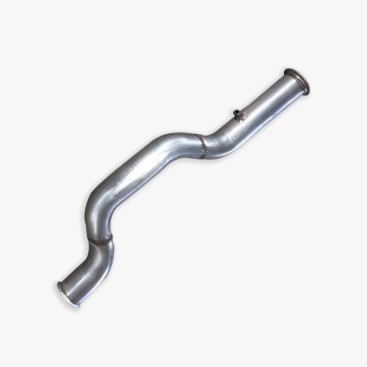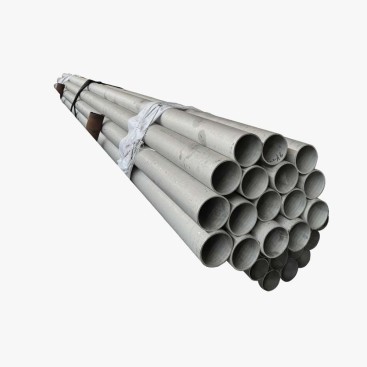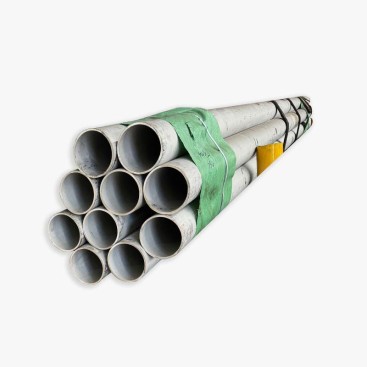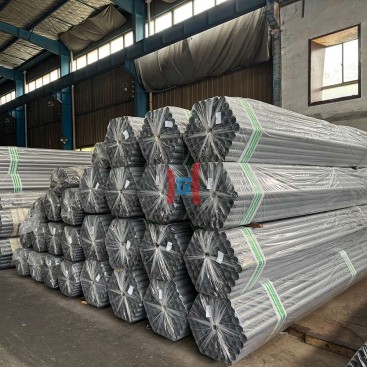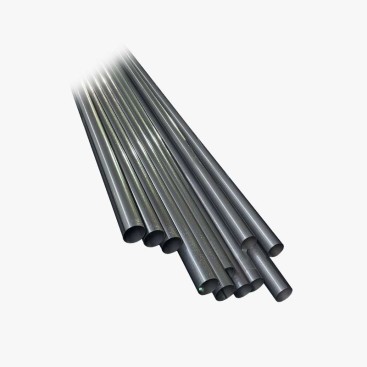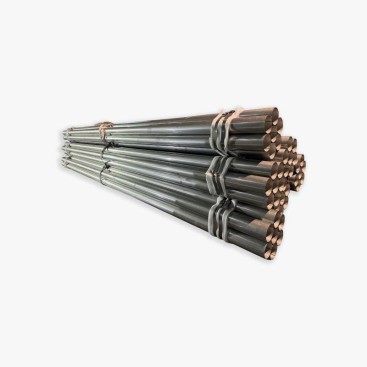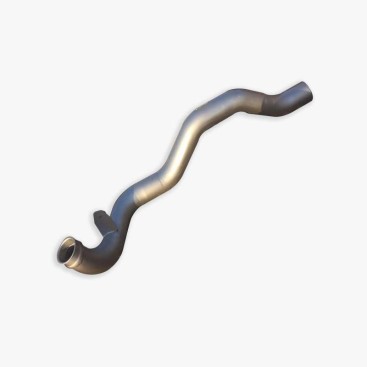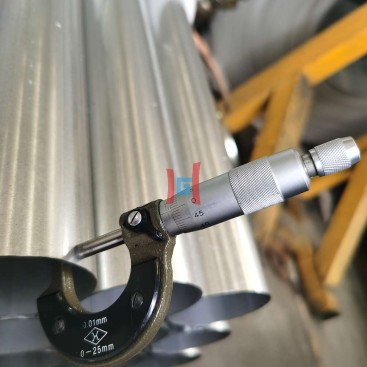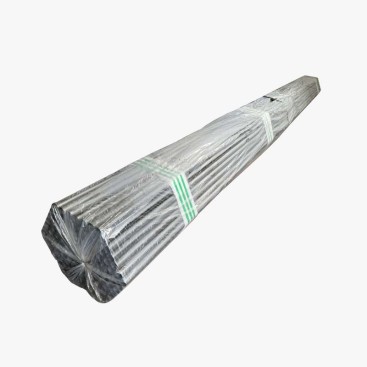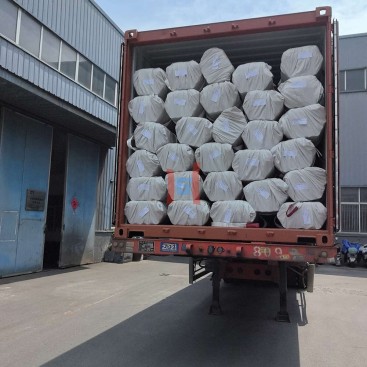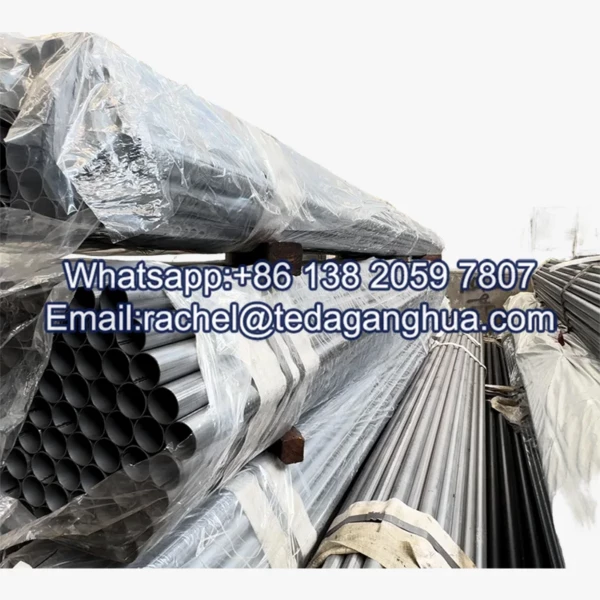
Tubi in acciaio alluminato a caldo
- Descrizione
Descrizione
When sourcing hot-dipped aluminized steel products, buyers often use the words tube and tubing interchangeably. Tuttavia, these two terms can communicate different purchasing expectations. A tube generally refers to an individual tubular product with defined dimensions and a specified length, while tubing often describes tubular material supplied for further processing, taglio, or bending. Understanding this distinction helps buyers communicate product requirements more accurately, avoid quotation misunderstandings, and select the right supply format for their applications.
1. Tube vs. Tubazione: What Is the Difference?
In industrial purchasing, tube and tubing are closely related terms, but they can emphasize different aspects of a product. Tube usually identifies the finished tubular item, whereas tubing often emphasizes the material itself and its suitability for additional fabrication.
| Term | Typical Meaning | Purchasing Implication |
|---|---|---|
| Tube | An individual tubular product with specified dimensions and delivery length | Often quoted by piece, with fixed lengths and defined end conditions |
| Tubazione | Tubular material supplied in straight lengths, long lengths, or coils where applicable | Often quoted by length or weight, with further cutting or forming anticipated |
This distinction is not simply a British English versus American English difference. It is a practical distinction in how buyers describe the product and its intended use. Nevertheless, the terminology is not universally standardized across all industries. Some manufacturers use tube and tubing interchangeably, so the actual dimensions, delivery condition, and processing requirements should always be stated.
Purchasing principle: Use tube when specifying an individual finished product. Use tubing when emphasizing material supply and further processing requirements. Never rely on the product name alone to determine the quotation basis.
2. Why Does the Terminology Affect a Supplier’s Quotation?
The difference becomes important when a supplier calculates material consumption, cutting operations, confezione, processing costs, and delivery quantities. A customer ordering finished straight sections has different requirements from a customer purchasing long tubular material for subsequent fabrication.
Scenario A: Finished Straight Tubes
If the customer needs individual straight sections for immediate installation, the supplier should quote the finished tube specification. The quotation should account for the required number of pieces, fixed length, cutting tolerance, deburring, and end preparation.
Typical quotation information
- Outside diameter and wall thickness
- Required length per piece
- Total number of pieces
- Cutting tolerance and end finishing
- Individual or bundled packaging requirements
Scenario B: Long-Length or Coil Supply
If the customer intends to cut, curva, or fabricate the material independently, the supplier should quote the tubular material according to its supply condition. Depending on the manufacturing process and product design, this may involve long straight lengths or coiled material.
Typical quotation information
- Outside diameter and wall thickness
- Total required length or weight
- Straight or coiled delivery condition
- Length tolerance and allowable variation
- Requirements for subsequent cutting and forming
| Customer Requirement | Recommended Supply Description | Quotation Basis |
|---|---|---|
| Fixed-length straight sections | Finished tube | Pieces or agreed unit weight |
| Long straight material for fabrication | Long-length tubing | Length or weight |
| Continuous coiled material | Coiled tubing, if available for the specification | Coil weight or total length |
| Cut-to-size installation components | Processed tubes | Finished pieces with processing requirements |
For accurate quotations, buyers should specify whether the requested quantity refers to finished pieces, total linear length, or total theoretical or actual weight. This avoids differences between raw material quantities and finished delivery quantities.
3. Does Tubing Automatically Mean It Can Be Bent?
Non necessariamente. Although tubing is frequently associated with further fabrication, the word itself does not guarantee that a product is suitable for bending. Bending performance depends on the steel grade, spessore della parete, diametro esterno, metodo di produzione, coating characteristics, and forming conditions.
This consideration is particularly important for aluminum-coated steel products. The steel substrate may have sufficient ductility for a particular bending operation, but the coating and the interfacial reaction layer may respond differently to deformation.
Potential bending-related problems include:
- Coating cracking: Excessive tensile strain on the outer bend surface may cause cracks in the coating.
- Coating separation: Severe deformation or an unsuitable coating structure may affect the integrity of the coating-substrate interface.
- Wrinkling and deformation: The inner bend surface may develop wrinkles or local distortion, particularly with thin-wall tubing.
- Dimensional changes: Bending can cause ovality, wall thinning, and changes in the final bend geometry.
- End damage: Cutting and subsequent forming may expose uncoated steel at cut edges or create local coating damage.
The acceptable deformation level must be evaluated according to the coating system and substrate properties. A bending test using representative production material is recommended when coating integrity is important to the finished component.
4. What Bending Information Should Be Included in an Order?
If a project requires bending, the purchase order should contain more than a general statement such as bendable tubing. The supplier needs sufficient information to evaluate the forming conditions and determine whether the requested product is suitable.
| Specifica | What to Confirm | Why It Matters |
|---|---|---|
| Raggio di curvatura | Inside radius or centerline radius | Determines the severity of deformation |
| Bending direction | Orientation relative to the tube seam and coating surface | Helps assess local strain and coating behavior |
| Bend angle | Required angle and bend geometry | Defines the forming operation |
| Dimensioni del tubo | Outside diameter and wall thickness | Influences ovality, wall thinning, and cracking risk |
| Coating requirements | Coating type and acceptable surface condition after bending | Establishes coating integrity criteria |
| Inspection method | Visual inspection, dimensional checks, and agreed coating assessment | Provides measurable acceptance requirements |
The bending direction should be clearly illustrated when necessary, especially for welded tubing. Buyers should also clarify whether the weld seam must be positioned on the neutral axis, inside radius, or outside radius during bending.
A practical requirement is to test a sample using the intended bending equipment and tooling before starting large-scale production. This helps identify coating cracks, separation, excessive ovality, or other forming defects before the full order is processed.
5. Straight Lengths or Coiled Tubing: Which Supply Form Is Better?
The correct delivery form depends on the manufacturing route, dimensioni del tubo, spessore della parete, and final application. Coiled delivery is not suitable for every tubular product, particularly when larger diameters, thicker walls, or coating limitations prevent practical winding.
Straight Length Supply
Suitable for applications requiring defined lengths, easier handling, and relatively straightforward installation. It is also a practical option for rigid tubular products and components requiring dimensional consistency.
Coiled Supply
Suitable for certain smaller-diameter, thin-wall products specifically manufactured and qualified for coiling. It can reduce handling and joining operations in some continuous processing applications, but coil diameter, winding tension, and coating integrity must be considered.
Before choosing a supply format, buyers should evaluate material handling, trasporto, storage space, processing equipment, and the required finished length. The lowest-waste option is not necessarily the most economical if additional straightening, taglio, or coating repair is required.
6. How to Specify the Correct Product When Ordering
A clear inquiry should describe the product in measurable technical terms rather than relying entirely on the words tube or tubing. This is particularly important for international purchasing, where different suppliers may interpret commercial terminology differently.
Recommended purchasing checklist
- Steel grade and substrate specification
- Coating type and applicable coating standard
- Outside diameter and wall thickness
- Straight length, long length, or coil delivery
- Quantity by pieces, lunghezza, or weight
- Taglio, deburring, and end finishing requirements
- Raggio di curvatura, bending direction, and bend angle if applicable
- Dimensional and coating inspection requirements
- Packaging, identification, and material certification
Per esempio, instead of submitting an inquiry that only states hot-dipped aluminized steel tubing, a buyer can specify the steel grade, diametro esterno, spessore della parete, required straight length, coating designation, and whether the material must pass a defined bending test.
7. Teda Ganghua: Tubular Material Sourcing and Processing Support
Teda Ganghua Metal is a steel stockist based in Tianjin TEDA, con 20 years of steel stockist and export experience. The company supports international buyers with steel material sourcing, specification confirmation, processing coordination, and quality documentation.
For customers purchasing hot-dipped aluminized steel tubing, Teda Ganghua can assist with clarifying the difference between finished tube requirements and tubular material intended for further fabrication.
Depending on the available product specification and production arrangement, purchasing support can cover:
- Confirmation of steel grades, dimensioni, and coating requirements.
- Coordination of fixed-length cutting and dimensional tolerances.
- Processing arrangements for cutting, saldatura, flessione, and other fabrication requirements where applicable.
- Material Test Certificates (MTC) and relevant inspection documentation.
- Third-party inspection coordination and shipment verification.
- Export packing, product identification, and delivery coordination.
Teda Ganghua emphasizes material traceability and specification-based quality control. Buyers are welcome to arrange inspections before shipment to verify the material, dimensioni, quantities, and agreed technical requirements.
Whether a project requires individual straight tubes or tubular material for additional processing, clearly defining the delivery form and fabrication conditions helps reduce misunderstandings and supports more accurate procurement.
Domande frequenti
1. Are tube and tubing the same product?
They refer to closely related tubular products, but their commercial emphasis can differ. Tube often identifies an individual finished product, while tubing often describes material supplied for further processing. The actual specification and delivery condition are more important than the terminology alone.
2. Is tubing always supplied in coils?
NO. Tubing can be supplied in straight lengths, long lengths, or coils depending on its dimensions, material properties, processo di produzione, e l'applicazione prevista. Coiled delivery must be confirmed with the supplier.
3. Can hot-dipped aluminized tubing be bent?
Some products can be bent, but suitability depends on the substrate ductility, struttura del rivestimento, dimensioni del tubo, bend radius, and forming method. A representative bending test is recommended to evaluate coating cracking or separation.
4. What information should buyers provide for a tubing quotation?
Fornire la qualità dell'acciaio, coating type, diametro esterno, spessore della parete, total length or quantity, delivery form, norma applicabile, and any cutting or bending requirements. For bending applications, also specify the bend radius, angle, and direction.
5. Should tubes and tubing be quoted by different units?
Non necessariamente. Finished tubes are often quoted by piece, while tubular material may be quoted by length or weight. Tuttavia, suppliers can use different commercial units. Buyers should confirm the unit of measurement, finished quantity, and any processing charges in the quotation.