- 説明
説明
Cut-to-length service is not simply a matter of cutting a tube to a specified number of millimeters. For aluminized steel pipe, the cutting process also creates a new exposed end where the coating has been interrupted. Procurement managers therefore need to define both the dimensional requirement and the condition of the cut end before placing a processing order.
For industrial applications, a good cut-to-length specification should cover the required length, allowable tolerance, cutting method, end condition, coating treatment at the cut, 梱包, 量, and measurement or weighing method. These details determine whether the finished pieces can be used directly or require additional preparation after delivery.
What Does Cut to Length Mean?
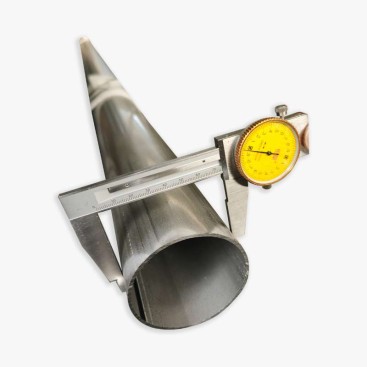
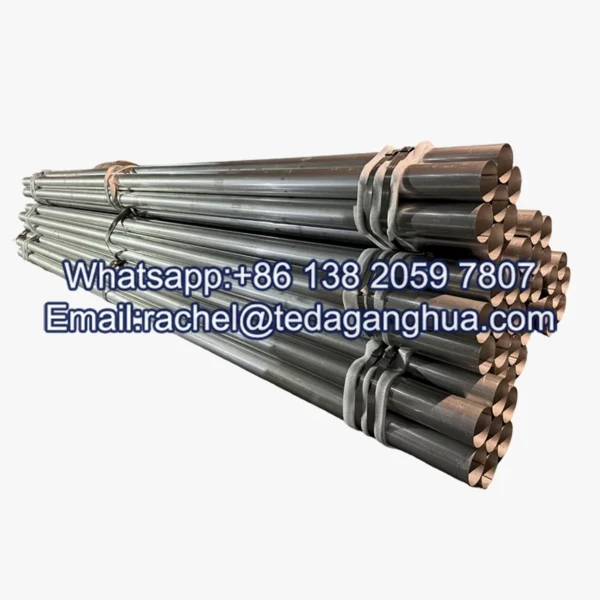
Cut to length, commonly abbreviated as CTL, means cutting supplied tube or pipe into individual pieces according to the customer’s specified lengths. The service is commonly performed by a processing center, stockist, distributor, or other supplier with suitable cutting equipment.
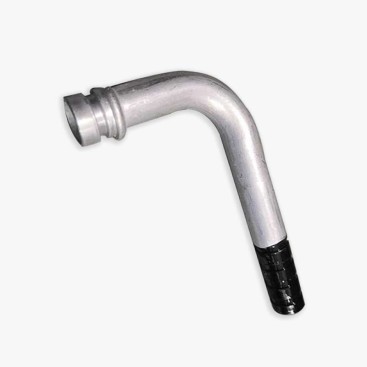
例えば, a buyer may receive standard-length tube but require finished pieces for fabrication, assembly, 排気部品, structural modules, or other production operations. Instead of performing the cutting after receipt, the supplier prepares the material to the required length before shipment.
CTL is a specification, not just a service name
A useful order should define target length + length tolerance + cutting method + end condition + coating treatment + 量 + 梱包. “Cut to length” alone leaves several technically important questions unanswered.
How Different Cutting Methods Affect the Tube End
The appropriate cutting method depends on tube dimensions, material characteristics, production volume, required tolerance, available equipment, and the acceptable condition of the finished end. No single cutting process is automatically best for every CTL order.
| Cutting Method | Typical Consideration | Potential End-Quality Issue | Best Choice Depends On |
|---|---|---|---|
| Saw cutting | Mechanical separation with controlled tooling | Burrs, saw marks, heat or deformation depending on equipment | Tube dimensions, volume, tolerance and required finish |
| 剪断 | Fast mechanical cutting where equipment is suitable | End deformation or distortion may require consideration | Wall thickness, diameter and acceptable end condition |
| プラズマ切断 | Thermal cutting suitable for certain applications | Heat-affected area, dross and thermal effects | Material size and required thermal-cut quality |
| レーザー切断 | Controlled thermal cutting with high process precision when properly configured | Heat effects and edge condition depend on parameters | Dimension, 壁の厚さ, tolerance and equipment capability |
In practice, the cutting method should be agreed with the supplier rather than selected solely from a generic equipment list. Tube diameter, 壁の厚さ, production quantity, required length tolerance, end-use requirements, and coating condition all influence the appropriate process.
The Critical Issue: What Happens to the Coating at the Cut?
An aluminized surface protects the steel over the coated area. When the tube is cut, the cutting plane passes through the coated wall. The newly created end therefore does not retain the same continuous external coating structure as the original tube surface.
The cut end should consequently be treated as a separate corrosion-control consideration. This is especially relevant when cut pieces are stored before fabrication, transported through humid conditions, or exposed to moisture before they are incorporated into the final assembly.
The issue is easy to overlook because the outside surface may still look intact. The cut itself, しかし, exposes the underlying steel at the cut plane and can become a preferential site for corrosion if the application and storage environment require additional protection.
Do not assume the cut is automatically protected
The purchase specification should explicitly state whether the cut ends require touch-up coating, end sealing, temporary corrosion protection, or another agreed treatment. The correct solution depends on the application, storage period, 環境, and supplier’s qualified process.
Three Questions to Define for the Cut End
1. Will the Cut End Be Recoated?
If the application requires corrosion protection at the exposed end, specify whether the supplier is responsible for a compatible post-cut treatment. Do not simply write “coating required” because this may be interpreted as referring only to the original tube surface.
2. Is End Protection Required During Storage?
If the pieces will not be welded or assembled immediately, temporary protection may be important. The packaging method, 湿気への曝露, 換気, storage duration, and environmental conditions should be considered together.
3. What Happens Before Welding?
If the cut pieces will subsequently be welded, the treatment around the joint area must be compatible with the welding procedure. Coating removal, 換気, cleanliness, joint preparation, and post-weld corrosion protection should be addressed according to the applicable welding procedure and safety requirements.
For aluminized exhaust-related tube applications, the coating near a weld can require specific preparation because the thermal process affects the coated area. The cut-to-length specification should therefore be coordinated with the downstream welding procedure rather than treated as an isolated cutting operation.
Cutting Tolerance: “To Length” Does Not Mean Zero Variation
One of the most common purchasing misunderstandings is treating a nominal length as an exact physical dimension. A CTL order normally requires a stated tolerance. The supplier’s equipment, measuring method, material size, cutting sequence, thermal effects, and production conditions can influence the achievable result.
Instead of specifying only “cut to 1,000 mm,” define the acceptable range. The actual tolerance should be agreed with the supplier according to the equipment and application requirements.
| CTL Item | What to Specify | Why It Matters |
|---|---|---|
| Nominal length | Required finished length | Defines the target dimension |
| Length tolerance | Permitted positive and negative deviation | Prevents disagreement during inspection |
| End squareness | Required perpendicularity or applicable tolerance | Important for assembly and welding fit-up |
| Burr condition | Allowed burr level or deburring requirement | Affects handling and downstream fabrication |
| Cut-end coating | Protection, treatment, or no additional treatment | Controls exposed steel at the cut |
Cutting Loss and How the Order Is Weighed
CTL processing changes the way material quantity should be discussed. Cutting produces kerf or processing loss, and the relationship between supplied material, finished pieces, remnants, and shipped weight should be agreed before production.
For larger orders, specify whether the commercial quantity is based on theoretical weight, actual weighed weight, finished-piece count, or another agreed measurement method. If remnants remain after cutting, also establish whether they belong to the buyer, are included in the material balance, or are treated as processing scrap.
A useful purchasing clause
Specify the finished-piece quantity, nominal length, allowable length tolerance, cutting method, acceptable end condition, treatment of remnants, and agreed weighing method. This prevents a dimensional dispute from becoming a quantity dispute later.
CTL Processing vs Factory-Length Material
Buyers often need to choose between purchasing standard or factory-specified lengths and having the supplier cut them after procurement. The better option depends on the application and supply constraints.
| 考慮 | Supplier CTL | Factory-Specified Length |
|---|---|---|
| Length flexibility | Usually higher | Limited to available production specifications |
| Downstream cutting | Reduced or eliminated | Buyer may need to cut after receipt |
| Cut-end management | Must be defined with supplier | Buyer controls subsequent cutting |
| Processing convenience | Higher for repetitive production | More work for buyer |
| Specification availability | Depends on processing capability | Depends on original production range |
CTL is particularly attractive when the required finished length is closely linked to the buyer’s assembly process. しかし, if the supplier has limited processing capability or the required lengths are already standard production dimensions, purchasing factory-length material may simplify the supply chain.
What to Put on the Purchase Order
A clear CTL purchase order should remove ambiguity before the cutting line starts. The following structure is practical for procurement teams:
- Tube specification: grade, 適用規格, 外径, wall thickness and coating requirement.
- Finished length: nominal length for each cutting batch or item.
- 許容範囲: agreed permissible deviation from nominal length.
- Cutting method: supplier-selected method or buyer-specified method where technically necessary.
- End quality: burr, deformation and end-squareness requirements.
- Cut-end protection: treatment, sealing, touch-up, or temporary protection requirements.
- Packaging: bundle protection, separators, moisture protection and identification.
- Quantity: finished-piece quantity by specification.
- Weight basis: actual, theoretical, or another agreed method.
- Inspection: dimensional inspection and documentation requirements.
How Teda Ganghua Can Support Cut-to-Length Tube Procurement
Teda Ganghua can support procurement managers who need tube supplied according to defined dimensions rather than only standard stock lengths. For a CTL requirement, the practical approach is to provide the tube specification together with finished length, 許容範囲, 量, コーティング要件, end condition, 梱包, inspection needs, and delivery schedule.
This allows the processing requirement to be evaluated together with material sourcing and export coordination. For coated tube, the cut-end treatment and storage protection should be agreed before production so that the finished pieces arrive in a condition consistent with the intended application.
アルミメッキ鋼管 can be supplied or discussed according to dimensional, コーティング, 切断, 検査, 梱包, and shipment requirements.
The Bottom Line
Cut-to-length processing creates a more convenient finished product, but it also creates a new technical interface at every cut end. For aluminized steel pipe, the buyer should therefore treat length accuracy and coating continuity at the cut as two separate purchasing issues.
The safest specification is not simply “cut to length.” Define the target length and tolerance, agree on the cutting method and acceptable end quality, clarify how the exposed cut will be protected, and establish how cutting loss and final weight will be measured.
When those points are agreed before processing, CTL can reduce downstream labor without transferring unexpected cutting, corrosion-control, or dimensional problems to the buyer.
よくある質問
What does cut to length mean for steel pipe?
It means supplying individual pipe pieces cut to a customer-defined nominal length rather than delivering only standard or production lengths. The order should also define the permitted length tolerance and required end condition.
Does cutting damage the aluminized coating?
The cutting plane interrupts the original coating structure and exposes the steel at the cut section. Whether additional treatment is required depends on the application, 環境, storage period, and agreed corrosion-protection procedure.
Should cut ends be recoated?
自動的ではありません. The requirement should be determined by the intended service environment and downstream process. If protection is required, the purchase specification should clearly state the agreed treatment rather than assuming the original coating automatically covers the cut.
What cutting tolerance should I specify?
There is no universal CTL tolerance suitable for every tube and cutting process. The required tolerance should be agreed according to tube dimensions, equipment capability, production volume, measurement method, and the final assembly requirement.
Is it better to buy factory-length pipe or use CTL?
Factory-length material can be practical when the available lengths already match the application and no additional processing is required. CTL provides greater flexibility when the buyer needs specific finished lengths and wants to reduce downstream cutting work. The cut-end treatment and processing tolerance should be considered before choosing.