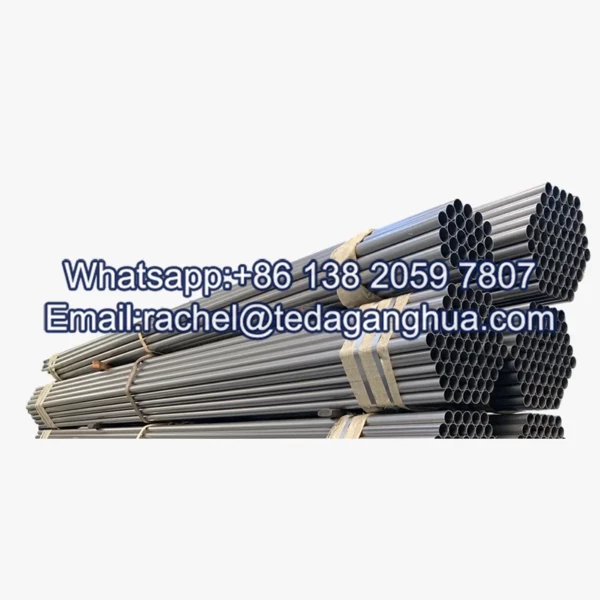
- 説明
説明
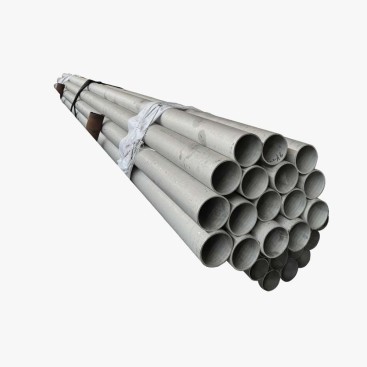
Aluminized round tube and aluminized pipe may look almost identical, but the terminology and sizing logic can be different. In international metal purchasing, “tube” is commonly used when the product is specified by its actual outside diameter and wall thickness. “Pipe” is more often associated with nominal pipe size, pressure or fluid service, and standardized connection systems.
For buyers, the safest approach is simple: always state the actual OD × wall thickness. This removes most confusion when different suppliers use “tube” and “pipe” differently.
Quick answer: 使用 tube when discussing a round product for mechanical, 構造的な, 自動車, or fabricated applications that is controlled by precise OD × WT 寸法. 使用 パイプ when the product is part of a piping system and is identified through DN/NPS, schedule, pressure service, or pipe standards. When in doubt, write both the commercial name and the exact OD × WT.
Tube vs Pipe: The Core Difference
The physical product may be round in both cases. The difference is mainly the engineering and purchasing convention.
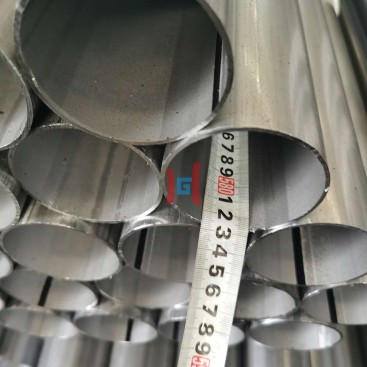
A round tube is normally ordered using its actual 外径 (の) そして 壁の厚さ (WT). These dimensions are important for mechanical design, 曲げ, 製造, and component fit.
Pipe is traditionally specified using a nominal diameter, such as DN or NPS, together with a wall designation such as schedule or a standard-specific thickness. The nominal size does not necessarily equal the measured OD.
| アイテム | Round Tube | パイプ |
|---|---|---|
| Main sizing | Actual OD × WT | DN/NPS + wall or schedule |
| 一般的な使用方法 | Structural and mechanical components | Fluid, ガス, and process systems |
| Dimensional focus | Precise physical dimensions | Standardized nominal system |
| Connections | Mechanical fittings or fabricated joints | フランジ, fittings, valves, and piping systems |
| Common wording | Tube, mechanical tube, structural tube | パイプ, process pipe, pressure pipe |
The Practical Rule
The word “tube” does not automatically mean better dimensional accuracy, and “pipe” does not automatically mean lower accuracy. The applicable product standard controls the actual tolerances. The important difference is how the product is normally defined and used.
How Round Tube Is Sized
For round tube, the most useful specification format is:
OD × WT × Length
例: 38 × 1.2 × 6000 mm
This means:
- 38 mm: 外径
- 1.2 mm: nominal wall thickness
- 6000 mm: supplied straight length
For a mechanical or structural component, this format is usually much clearer than simply writing “1-inch aluminized pipe.” The supplier can immediately understand the required physical dimensions.
Why OD × WT Is Safer for International Purchasing
Different markets use different pipe-sizing conventions. A buyer in Europe may use DN. A buyer in North America may use NPS. A tube manufacturer may use millimeters for the actual OD and wall thickness.
If only a nominal size is given, the supplier may interpret the requirement according to a different standard. This can result in an incorrect outside diameter, 壁の厚さ, internal diameter, or fitting compatibility.
したがって, OD × WT should be written even when DN or NPS is also required.
| Less clear | Better specification |
|---|---|
| Aluminized 1-inch tube | Round tube, OD × WT clearly stated |
| 50 mm pipe | の 50 × WT 1.5 mm |
| アルミメッキパイプ, 2 mm | の 60 × WT 2.0 mm |
| 6 m tube | OD × WT × 6000 mm |
When Should You Say “Tube”?
“Tube” is the more natural term when the round product is treated as a mechanical or fabricated component.
Structural Tube
Round structural tube is used for supports, frames, guards, 括弧, equipment structures, agricultural machinery, and other load-bearing or semi-structural components. OD and wall thickness are usually central to the design.
Automotive Tube
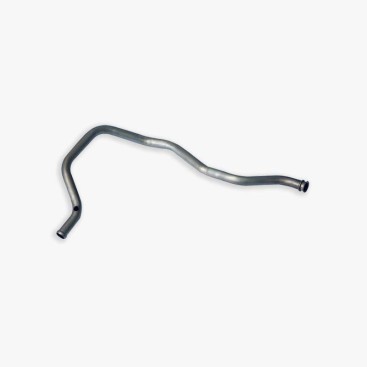
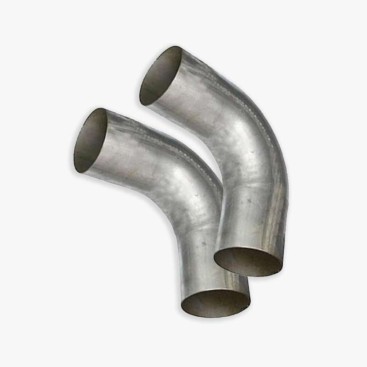
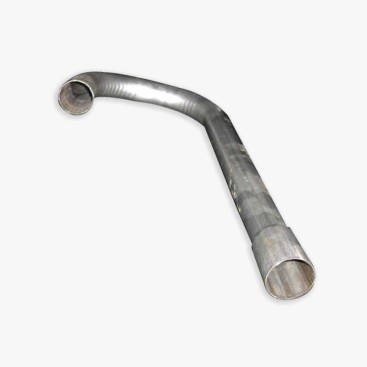
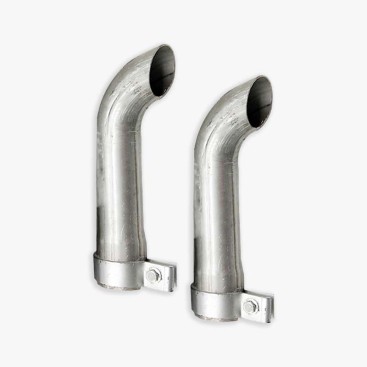
Automotive components often require controlled dimensions for bending, 溶接, 形にする, and assembly. In this context, “tube” is commonly used for exhaust components, supports, ダクト, and other fabricated parts.
Mechanical Tube
Mechanical tube is normally selected according to actual dimensions, 公差, 成形要件, および機械的特性. It is not necessarily intended for pressure piping.
構造
Frames, supports, guards, agricultural machinery.
自動車
排気系パーツ, 括弧, ダクト, and fabricated assemblies.
Mechanical
Components where OD, WT, 許容範囲, and forming are critical.
When Should You Say “Pipe”?
“Pipe” is more natural when the product is part of a fluid or gas handling system. In this context, the internal flow area, pressure rating, fittings, valves, and connection standard become important.
例えば, a process line may be specified by DN, schedule, material standard, and pressure requirements. A supplier must then match the product to the relevant piping system rather than simply supplying a tube with a similar OD.
しかし, terminology is not universal. Some manufacturers and markets use “pipe” for almost any round hollow section. This is another reason why the actual dimensions and applicable standard should always be included in the inquiry.
Common Aluminized Round Tube Sizes
The following are common example dimensions for aluminized round tube. They are useful for quotation requests and product planning. Actual stock availability varies by substrate, coating grade, production route, and market.
| の (mm) | Example WT (mm) | Example length | 一般的な使用方法 |
|---|---|---|---|
| 16 | 0.8–1.2 | 6000 mm | Small components and ducts |
| 20 | 0.8–1.5 | 6000 mm | Exhaust and mechanical parts |
| 25 | 0.8–1.5 | 6000 mm | Automotive and equipment parts |
| 32 | 1.0–2.0 | 6000 mm | Exhaust and support components |
| 38 | 1.0–2.0 | 6000 mm | Automotive and industrial applications |
| 48 | 1.0–2.0 | 6000 mm | Heat-transfer and structural parts |
| 60 | 1.2–2.5 | 6000 mm | Ducts and equipment supports |
| 76 | 1.5–2.5 | 6000 mm | Exhaust and conveying systems |
| 89 | 1.5–3.0 | 6000 mm | Industrial and structural use |
| 114 | 2.0–3.0 | 6000 mm | Larger supports and industrial components |
These dimensions should be treated as example commercial sizes, not as a universal standard series. If a project has a specific OD and wall tolerance, that requirement should be stated directly in the RFQ.
の, Wall Thickness and Inner Diameter
Once OD and wall thickness are known, the approximate internal diameter can be calculated as:
約. ID = OD − 2 × WT
例えば, a tube with an OD of 50 mm and a wall thickness of 1.5 mm has an approximate internal diameter of 47 mm, before considering dimensional tolerances and actual measured dimensions.
This relationship is especially useful for conveying applications because the wall thickness affects both the available flow area and the material weight.
Do Not Specify Only the Coating
“Aluminized” describes the surface coating system, not the complete tube specification. A purchasing order should also identify the steel substrate and coating class.
例えば, an inquiry might specify a suitable EN substrate together with an AS coating level such as AS80, AS120, AS150, or AS200, depending on the required heat, 酸化, and corrosion performance.
| Specification item | 例 |
|---|---|
| 製品 | Round aluminized steel tube |
| 基板 | Specified EN steel grade |
| コーティング | AS120 |
| サイズ | の 48 × WT 1.2 mm |
| 長さ | 6000 mm |
| Quantity | 20 トン |
| 応用 | 自動車排気部品 |
泰達江華: Clear Specifications for B2B Tube Purchasing
Teda Ganghua supports international buyers sourcing aluminized steel tube and pipe from China. For round products, we recommend that customers provide the exact OD × WT instead of relying only on terms such as “1-inch pipe” or “50 mm tube.” This makes material matching and quotation more efficient.
We can evaluate requirements including steel substrate, Al-Si coating grade, の, 壁の厚さ, 長さ, 量, 形にする, 切断, そして溶接. Standard sizes can be checked for stock supply, while special dimensions can be evaluated for production orders.
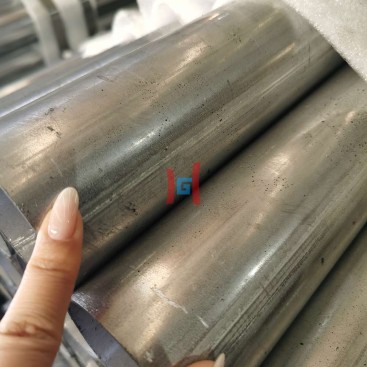
私たちの アルミメッキ鋼管 can be considered for automotive exhaust systems, agricultural machinery, equipment components, heat-related applications, and selected structural uses.
For an RFQ, the simplest format is: OD × WT × length + 基板グレード + coating grade + 量 + 応用. This gives the supplier the key information needed for a more accurate quotation.
FAQs
What is the main difference between tube and pipe?
Tube is commonly specified by its actual OD and wall thickness and is often used for mechanical or structural applications. Pipe is more commonly associated with nominal size systems and fluid or gas service. The exact terminology depends on the applicable standard and market.
Why should I give OD × WT when ordering?
OD × WT removes ambiguity between different DN, NPS, and tube-sizing systems. It also allows the supplier to understand the actual physical dimensions required for fabrication or assembly.
What does 48 × 1.2 mm mean?
It means an outside diameter of 48 mm and a nominal wall thickness of 1.2 mm. If the required length is 6000 mm, the complete dimension can be written as 48 × 1.2 × 6000 mm.
アルミメッキされた管はパイプと呼べるのでしょうか??
はい. 商業用語はさまざまです. 丸い中空部分は、供給者によってチューブまたはパイプと呼ばれる場合があります。. 最も安全な購入文書には、実際の寸法、適用される材料および製品規格が記載されています。.
RFQ にはどのような情報を含める必要がありますか?
基材グレードを記載してください, coating grade, の, 壁の厚さ, 長さ, 量, 許容範囲, 表面要件, 成形または溶接の要件, そしてアプリケーション. 圧力または流体サービス用, 関連するパイプ規格も提供します, DN/NPS, プレッシャー, および接続要件.