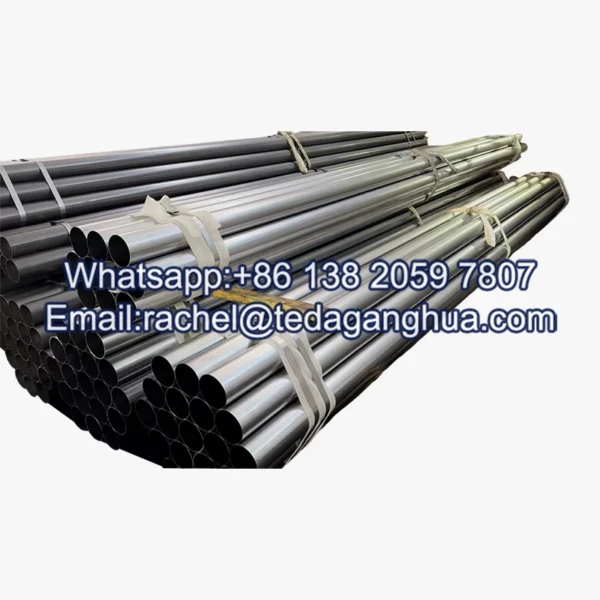
- 설명
설명
Choosing a China aluminized pipe supplier should be treated as a screening process, not a simple quotation comparison. A supplier may offer the required diameter and coating mass, yet still differ substantially in production capability, standard control, inspection depth, 리드타임, 포장, and export execution. For procurement managers, a four-step workflow can reduce the risk of selecting a supplier that looks suitable on paper but cannot consistently meet the actual purchase specification.
The Four-Step Supplier Screening Workflow
A practical screening process can be divided into four stages: initial qualification, technical verification, commercial verification, and trial-order validation. Each stage should eliminate a different type of purchasing risk.
| Stage | Main Check | Evidence to Request |
|---|---|---|
| 1. Initial screening | Company qualification and production capability | Business license, company profile, production-line information, product scope |
| 2. Technical verification | 표준, substrate, coating and testing | Specification sheet, test reports, MTC, 코팅 정보 |
| 3. Commercial verification | MOQ, 리드타임, payment and logistics | Formal quotation, production schedule, 지불 조건, packing proposal |
| 4. Trial order | Actual product and delivery performance | Pre-shipment inspection, dimensional records, coating checks and receiving inspection |
단계 1: Initial Screening — Qualification and Production Line
The first step is to determine whether the company can actually supply the product you are buying. Do not rely only on a website product page or a sales quotation.
Check these points first:
• Legal company name and invoicing entity
• Product range and available dimensions
• Substrate sourcing and material grades
• Tube forming, 용접, cutting and finishing capability
• Whether coating is produced internally or sourced from another processor
• Export experience and destination markets
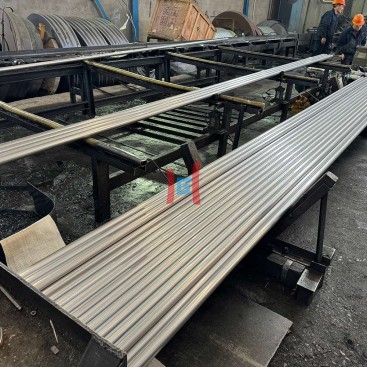
A supplier claiming to be a factory should be able to explain the actual production route. For coated pipe, this may involve purchasing coated strip or coil and then forming and welding it into tubes. In another supply model, the supplier may arrange coating through an external facility. Neither model is automatically unacceptable, but the procurement team should know exactly where each production step takes place.
단계 2: Technical Verification — Standards, Coating and Testing
Once the supplier passes the initial screening, verify whether its technical specification matches your purchase requirement. The word “aluminized” alone is not a sufficient technical specification.
Ask the supplier to confirm the applicable standard, coating type, coating mass, 기질 등급, 치수, tolerance and inspection method. Depending on the project and destination, specifications may reference standards such as GB/T, 그는입니다, ASTM or EN requirements.
| 목 | Questions for the Supplier |
|---|---|
| 기준 | Which product and material standard applies to the order? |
| 코팅 | What coating type is supplied, and what is the specified coating mass? |
| 기판 | Which steel grade and mechanical properties are used? |
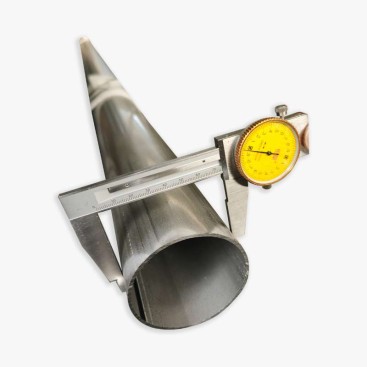
| Dimensions | What are the OD, 벽 두께, length and dimensional tolerances? |
| 점검 | Which tests are performed for dimensions, 코팅, weld quality and mechanical properties? |
| Documents | Can the supplier provide MTCs, test reports and inspection records? |
| Packaging | How are tube ends, coating surfaces and bundles protected during transport? |
Pay particular attention to coating mass. AS values such as AS60, AS120 or AS150 describe coating-mass requirements in the relevant specification system; they should not be interpreted as direct temperature ratings. The supplier should state the coating designation and test basis clearly rather than using a generic statement such as “high-temperature coating.”
What Testing Evidence Should Be Requested?
Testing documentation should correspond to the actual material and production batch whenever possible. A generic laboratory report from an unrelated product does not provide the same level of verification as a traceable production record.
Useful technical evidence includes:
- Material Test Certificate for the substrate
- Coating-mass or coating-thickness test records
- Dimensional inspection records
- Mechanical-property results where specified
- Weld or tube-forming inspection records where applicable
- Surface and coating-adhesion inspection results
- Batch or heat-number traceability
The purpose is not to collect documents for their own sake. Each document should answer a specific question in the purchasing specification and make the delivered material traceable.
단계 3: Commercial Verification — MOQ, Lead Time and Payment
A technically qualified supplier still needs to pass the commercial screening stage. Request the same information from each shortlisted supplier so that quotations can be compared on equivalent terms.
| Commercial Item | What to Confirm |
|---|---|
| MOQ | Minimum quantity per size, grade and coating specification |
| Lead time | Production time, inspection time and estimated dispatch schedule |
| Payment | Deposit, balance, payment method and applicable conditions |
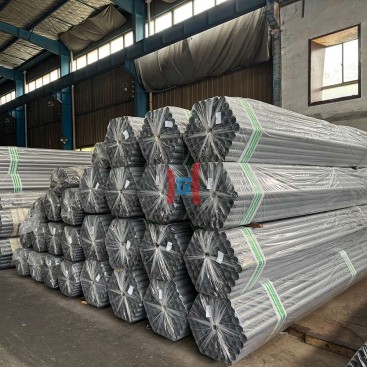
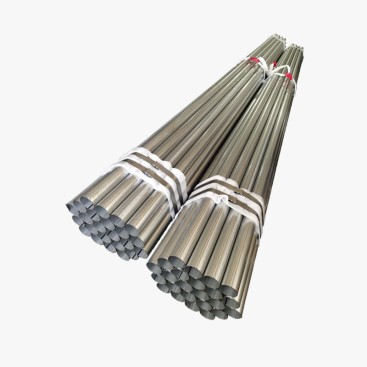
| Packaging | Bundle method, protective material, tube-end protection and container loading |
| Shipping | Port, loading plan, shipping term and documentation responsibility |
Lead time should be separated into production and logistics time. A supplier may have material available but still require additional time for cutting, bundling, inspection, packing or container loading. Ask for a realistic production schedule rather than relying on a single number in a quotation.
단계 4: Trial Order — Verify the Supplier With Real Material
A trial order is the final screening stage because documents and quotations cannot fully demonstrate production consistency. The trial should use the same or a closely representative specification as the intended regular order.
Before production, confirm the approved specification in writing. 생산 중, verify material identification, 치수, coating requirements and packaging. Before shipment, arrange an inspection when the order value or application risk justifies it.
A practical trial-order acceptance checklist:
1. Confirm substrate grade and heat/batch traceability.
2. Check OD, wall thickness and length against the approved tolerance.
3. Inspect coating appearance and obvious surface defects.
4. Verify coating mass or thickness according to the agreed inspection method.
5. Inspect tube ends for deformation, burrs and cutting quality.
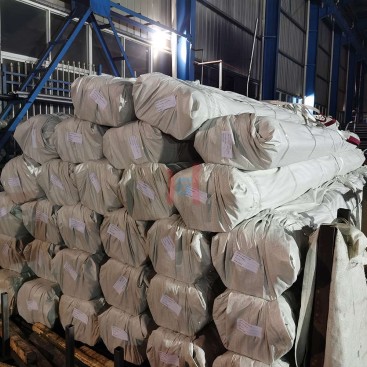
6. Check bundle stability and protective packaging.
7. Compare shipping documents with the actual material identification.
How to Distinguish a Factory From a Trading Company
The factory-versus-trader question should be handled through evidence rather than assumptions. A trading company can sometimes provide a useful supply-chain service, while a manufacturer may have stronger control over production. The important point is to understand which entity is responsible for each process.
| Verification Method | What to Look For |
|---|---|
| Invoice / contract entity | Does the contracting company match the stated supplier identity? |
| Production-line video | Can the supplier show forming, 용접, 절단, inspection and packing operations? |
| Outsourcing statement | Which processes are performed by subcontractors, and who controls their quality? |
| Inspection records | Are batch records traceable to the supplied material? |
| Factory visit or video call | Can the supplier demonstrate the relevant facility and current production activity? |
For a trading company, ask for the name and location of the actual manufacturer when this information is necessary for technical approval. For a claimed factory, ask which operations are genuinely performed in-house. This approach is more useful than simply asking, “Are you a factory?”
Video Verification and Third-Party Inspection
Remote verification can be practical when an overseas procurement team cannot visit the facility. A live video call is more informative than a pre-recorded promotional video because the buyer can request specific views and production details.
During a live video inspection, ask the supplier to show the material identification, production equipment, current order, measuring instruments, inspection area and finished bundles. If necessary, request close-up views of tube surfaces and ends.
For higher-risk orders, an independent third-party inspection can add another verification layer. The inspection scope should be agreed before production or shipment and should reference the purchase specification rather than using a generic checklist.
The Supplier Questionnaire Procurement Teams Can Reuse
Instead of sending a general inquiry such as “Please quote aluminized pipe,” provide a structured questionnaire. This makes supplier responses easier to compare and reduces clarification cycles.
1. What product standard will you supply?
2. What is the substrate grade and applicable material standard?
3. What coating type and coating mass are available?
4. Is the coating produced in-house or outsourced?
5. What OD, wall thickness and length tolerances can you guarantee according to the agreed specification?
6. Which inspection items are included before shipment?
7. Can you provide traceable MTC and test documentation?
8. What is the MOQ for each size and specification?
9. What is the production lead time after order confirmation?
10. How will the tubes be bundled, protected and loaded?
Why the Specification Should Come Before the Supplier
A common procurement mistake is to shortlist suppliers before defining the acceptance criteria. This makes every quotation look different because each supplier may interpret “aluminized pipe” differently.
A better sequence is to define the required standard, substrate, coating designation and mass, 의, 벽 두께, 길이, 공차, 검사 요구 사항, documentation and packaging first. The supplier is then evaluated against the same technical baseline.
This also makes future supplier development easier. Once a supplier passes the initial screening and trial order, the same specification can be reused for subsequent RFQs and periodic supplier audits.
테다강화: Procurement-Oriented Supply Verification
Teda Ganghua supports buyers who need a structured approach to coated steel tube procurement rather than a quotation based only on size and quantity. Our sales team can discuss the required standard, 기질 등급, 코팅 사양, 튜브 치수, 검사 요구 사항, packaging and export documentation before order confirmation.
For buyers comparing multiple sources, the inquiry can be organized around the same technical and commercial checklist: material specification, coating mass, dimensions and tolerances, inspection records, MOQ, production schedule and packing method. This helps establish a clear acceptance basis before a trial order or regular shipment.
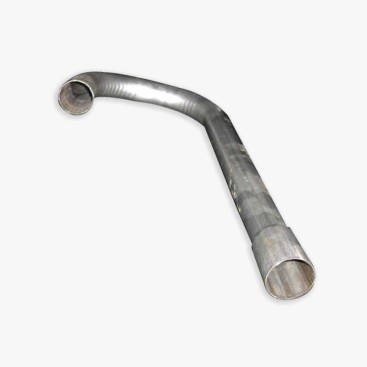
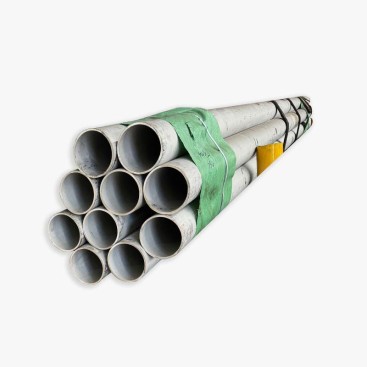
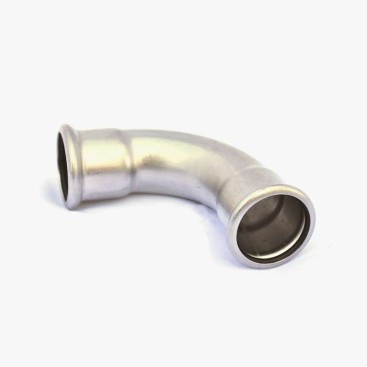
If you are sourcing different sizes or need a customized specification, you can review our 알루미늄 도금 강철 튜브 supply range and send the required dimensions, 기준, coating and quantity for technical confirmation.
FAQs
What should I check first when screening a China supplier?
Start with the legal company entity, production capability, product scope and actual manufacturing route. Confirm whether coating, 튜브 성형, welding and cutting are performed in-house or outsourced.
What coating information should be included in an inquiry?
Specify the coating system or applicable standard, coating designation and required coating mass. Do not use a generic term such as “heavy aluminized coating” without defining the acceptance requirement.
How can I verify whether a supplier is really a factory?
Compare the contracting or invoicing entity with the stated manufacturer, request a live production-line video, ask about outsourced processes and review traceable inspection records. A factory visit or third-party verification can provide additional evidence when required.
Is a trial order necessary for every supplier?
꼭 그런 것은 아니다, but a trial order is useful when the supplier is new, the specification is customized, or the application has significant quality requirements. It provides evidence of actual production, inspection, packaging and delivery performance.
What should a pre-shipment inspection cover?
The inspection should reflect the purchase specification and may include material identification, 의, 벽 두께, 길이, 코팅, 표면 상태, tube ends, 수량, packaging and document traceability.