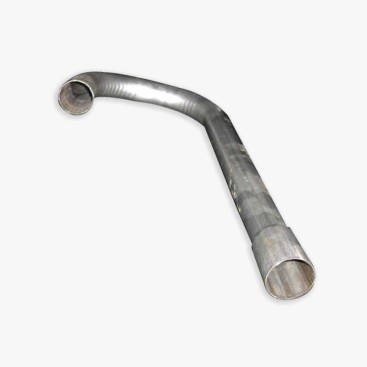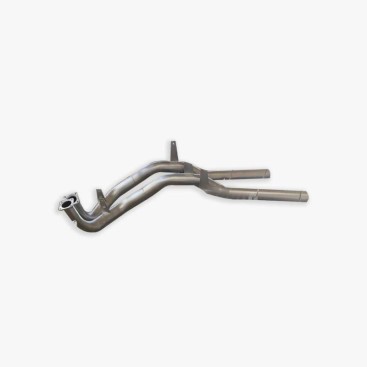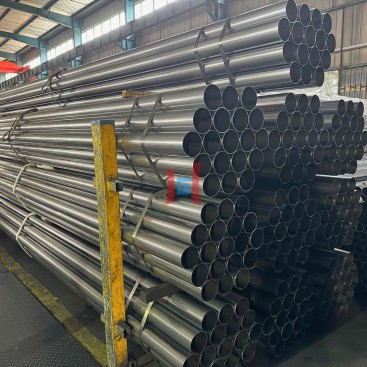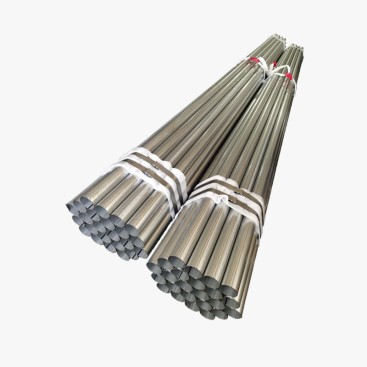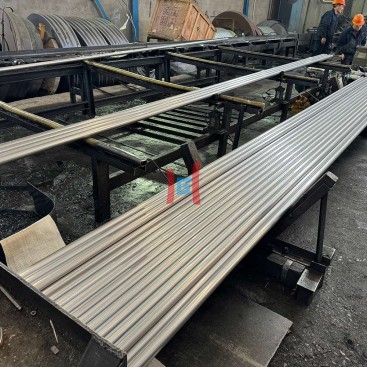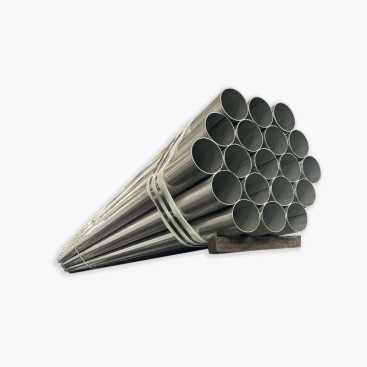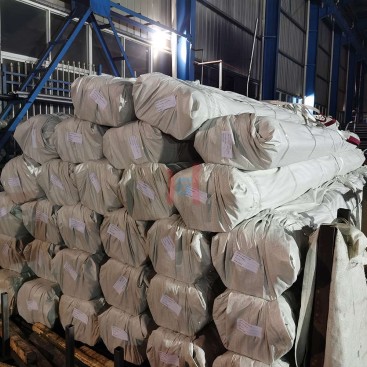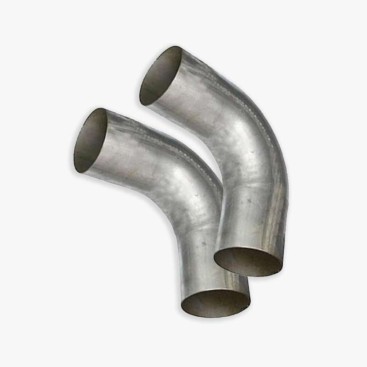
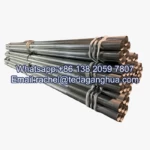
Aluminized Steel Pipe Stockist
- 설명
설명
A stockist is defined by physical inventory, not by the word “stock” on a quotation. For procurement managers, the important question is whether the supplier actually holds the specified material, whether that material is available for release, and whether its condition and documentation are suitable for shipment. A supplier can advertise a broad product range while still purchasing material only after receiving an order.
In industrial tube distribution, genuine inventory is normally associated with a clear stock position, identifiable material, warehouse control, and a realistic dispatch commitment. 하지만, inventory availability alone does not guarantee that the material is ready for use. For coated tube, storage conditions, 포장, 표면 상태, and traceability also deserve attention.
What Is a Stockist?
A stockist is a supplier that purchases and physically holds products before receiving a specific customer order. The purpose is to make commonly requested specifications available for relatively quick release, including smaller quantities that may not justify a new production run.
This is different from a supplier that receives your enquiry, checks another company’s warehouse, and then purchases the material on your behalf. That sourcing model can still be useful, but it should not automatically be treated as owned or controlled inventory.
The key test
Ask: “Is the exact specification and quantity physically available for my order now, and can you identify the material that will be shipped?” A credible answer should be more specific than simply “in stock.”
Inventory Is More Than a Product List
A website catalogue can show dozens or hundreds of dimensions, 성적, and configurations. That does not mean every combination is physically stored in a warehouse. Real inventory should be connected to identifiable material and a current quantity.
For procurement purposes, a useful stock record should ideally connect the product specification with the quantity, batch or heat identification where applicable, warehouse location, and release status.
| Inventory Information | What It Helps Verify | Why It Matters |
|---|---|---|
| Outside diameter | Actual dimensional match | Prevents substitution with a similar size |
| 벽 두께 | Exact specification availability | Avoids accepting a catalogue-only specification |
| Available quantity | Usable inventory | Shows whether the complete order can be released |
| 열, batch or lot identification | Traceability | Connects physical material with documentation |
| Storage condition | Material usability | Helps identify moisture, handling, or packaging concerns |
Established distribution operations commonly distinguish physical inventory from products that require additional sourcing, and some stocking facilities also provide processing and delivery services. :chatgpt-content-reference{index=”0″}
Why Coated Tube Inventory Needs Extra Verification
Coated steel products require more attention than bare steel when evaluating stored material. An aluminized surface is part of the product’s corrosion-protection system, so the buyer should not evaluate inventory only by quantity and dimensions.
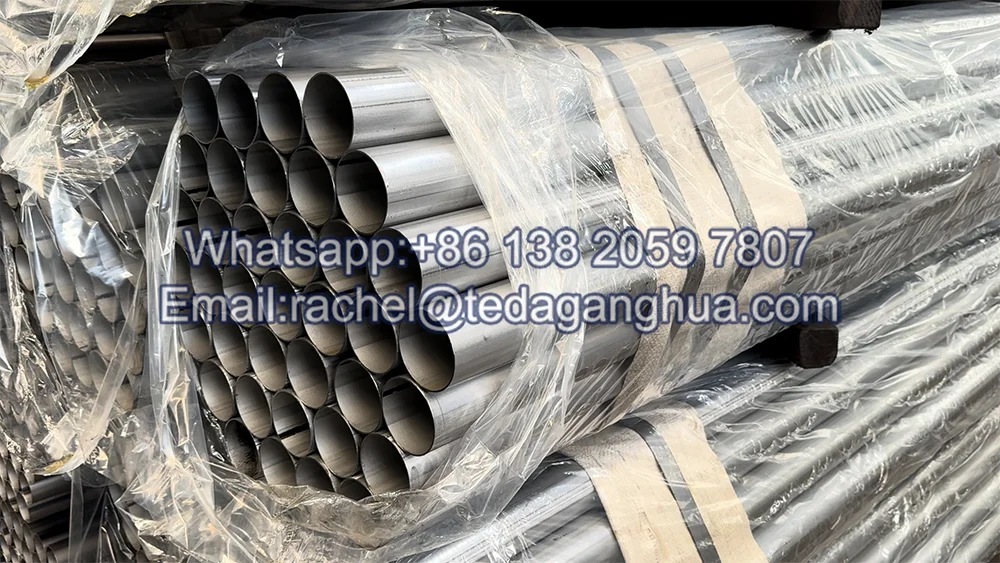
During storage and handling, the coating can be exposed to moisture, 응축, abrasion, impact, contamination, or damage from unsuitable stacking and movement. Packaging and separation therefore matter alongside the physical stock position.
“In stock” does not automatically mean “ready to ship in acceptable condition.” Ask to see how the material is stored, how bundles are protected, whether packaging remains intact, and whether the supplier has inspected the material before release.
Quantity
Is the required amount physically available and unallocated?
Condition
Has the coating and surface been protected from moisture and mechanical damage?
Traceability
Can the physical bundle be matched with its material and coating documentation?
Five Ways to Verify Real Inventory
1. Request a Current Inventory Sheet
Ask for a current stock list covering the exact specifications you need. It should contain more than a generic product catalogue. 최소한, request dimensions, 수량, and an identification reference such as a heat, batch, or lot number where applicable.
For a mixed requirement, ask the supplier to identify each specification separately. A statement such as “we have sufficient stock” is much less useful than a table showing exactly how much of each required size is available.
2. Request Warehouse Photos or Video
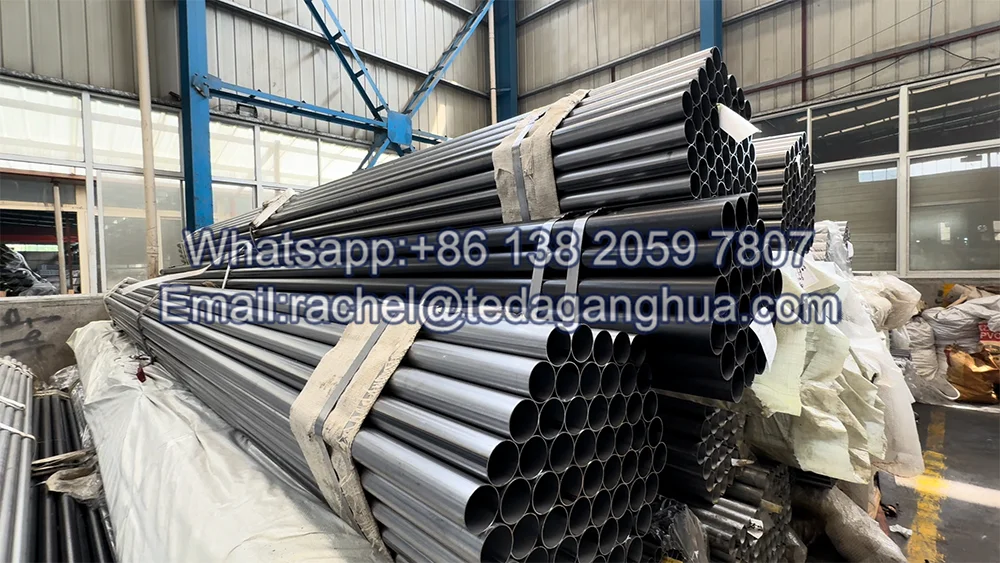
Photos or a short warehouse video can provide useful supporting evidence when purchasing remotely. Ask the supplier to show the actual bundles rather than only a showroom, product catalogue, or previously prepared marketing image.
The most useful view includes the material, bundle markings, protective packaging, supports or separators, and surrounding storage conditions. If the supplier is claiming current inventory, a recent photo with identifiable markings is more informative than a generic product photograph.
3. Request Material and Coating Documentation
Material certificates and coating-quality records help connect the physical product with its specified grade and surface requirements. Depending on the purchase specification, documentation may include chemical composition, mechanical properties, 치수, 코팅 정보, inspection results, and traceability references.
The critical point is consistency: the identification shown on the documentation should correspond to the material being offered for shipment.
4. Ask for a Specific Dispatch Commitment
Do not stop at the phrase “available from stock.” Ask when the goods can actually leave the warehouse.
A useful response should distinguish between physically available, available after inspection or processing, 그리고 available after replenishment. A supplier that genuinely controls inventory should normally be able to provide a concrete dispatch schedule based on the order details.
| Supplier Statement | What You Should Ask Next |
|---|---|
| “In stock” | How many pieces or tonnes are available for my exact specification? |
| “Ready to ship” | On which date can the material be dispatched? |
| “Available immediately” | Is inspection, 절단, 포장, or documentation still required? |
| “Can supply quickly” | Is the material physically held or does it need to be sourced first? |
5. Use a Small Trial Order
For a new supplier, a small trial order can be more informative than a long sales presentation. It tests whether the promised specification, documentation, 포장, delivery schedule, and physical condition match the quotation.
A trial should use one representative specification from the planned purchasing program. After receiving the material, compare the identification, 치수, 코팅상태, 포장, 인증서, and delivery performance with the original enquiry.
The Warning Signs of “Fake Inventory”
Not every vague stock statement indicates dishonest behavior. Inventory can change rapidly, and some suppliers source material through partner warehouses. Nevertheless, several patterns should trigger additional verification.
- Only a quotation is provided. The supplier discusses commercial terms but avoids answering specific inventory questions.
- The delivery statement is vague. Words such as “soon,” “immediately,” or “fast shipment” replace a specific dispatch schedule.
- The catalogue appears too perfect. Every dimension shown in the catalogue is supposedly available, but no batch, lot, or stock reference can be provided.
- The stock list never changes. A supposedly real-time inventory document remains identical despite repeated enquiries or orders.
- Photos cannot identify the material. The supplier provides polished product images but cannot show bundle markings, 포장, or the actual warehouse condition.
- Documentation is disconnected from the material. Certificates are supplied, but the identification cannot be matched to the physical bundles.
- “Stock” becomes “production” after ordering. The supplier initially confirms immediate availability but later introduces a manufacturing lead time.
A simple credibility test
Ask for specification + available quantity + material identification + current warehouse evidence + dispatch date. A genuine inventory position should be explainable through these five elements.
Inventory Verification Checklist
| Check | Evidence to Request | Pass Condition |
|---|---|---|
| Physical stock | Current inventory record | Exact specification and quantity identified |
| Material identity | Bundle markings and heat/batch/lot reference | Physical material can be traced |
| 표면 상태 | Recent warehouse photos or inspection evidence | No unacceptable storage or handling concerns |
| Documentation | Material and coating records | Documents correspond to the offered material |
| Dispatch | Specific shipping date or lead time | Schedule is clear and achievable |
| Trial order | First shipment performance | Delivered product matches the quotation |
Stockist or On-Demand Supplier?
The distinction becomes especially important when the project has a tight delivery window. A stockist can potentially release material from an existing warehouse position, while an on-demand supplier must first locate, purchase, manufacture, or transfer the required material.
Neither model is inherently better. For unusual dimensions or large project requirements, sourcing after the order may be perfectly reasonable. The procurement mistake is assuming that a catalogue listing represents physical inventory when it actually represents sourcing capability.
Modern distribution operations often combine inventory with cutting, 포장, logistics, and other value-added services. This means the buyer should evaluate not only whether material exists, but also whether it can be prepared and dispatched in the required form. :chatgpt-content-reference{index=”1″}
How Teda Ganghua Can Support Inventory-Based Procurement
For buyers evaluating an overseas supply source, Teda Ganghua can support procurement of aluminized steel tube by coordinating specifications, material documentation, 검사 요구 사항, processing details, 포장, and export shipment arrangements. This is particularly useful when the buyer needs more than a catalogue quotation and wants the offered material to be checked against a defined purchasing specification.
For a first enquiry, procurement managers can provide the complete dimensional list, required material and coating specification, quantity by size, documentation requirements, 목적지, and target delivery schedule. Teda Ganghua can then evaluate the appropriate supply and processing arrangement instead of treating the enquiry as a generic request.
알루미늄 도금 강철 튜브 can be discussed according to required dimensions, 코팅 요구 사항, documentation, inspection, 포장, and shipment conditions.
The Bottom Line
A real stockist should be able to demonstrate more than a product catalogue. The strongest evidence is a combination of current inventory information, identifiable physical material, suitable storage and packaging, matching documentation, and a specific dispatch commitment.
For coated tube, condition is just as important as quantity. Moisture exposure, handling damage, unsuitable packaging, or missing traceability can turn nominal inventory into material that is not immediately suitable for your project.
The safest procurement approach is therefore simple: verify the stock before relying on the stock claim. If the supplier can show what it has, identify it, document it, protect it, and commit to a clear dispatch schedule, you have much stronger evidence that its inventory is genuinely usable.
자주 묻는 질문
What makes a supplier a genuine stockist?
A genuine stockist physically holds material before receiving a specific customer order and should be able to identify the available specification, 수량, and material traceability information. Physical inventory, rather than a catalogue listing, is the defining characteristic.
How can I verify whether a supplier really has stock?
Request a current inventory sheet, exact available quantity, batch or heat identification where applicable, recent warehouse evidence, relevant certificates, and a specific dispatch date. A small trial order can provide an additional practical verification.
Why does storage matter for aluminized steel tube?
The coating is part of the tube’s corrosion-protection system. 수분, 응축, abrasion, impact, and poor handling can affect surface condition, so buyers should verify both inventory quantity and storage and packaging conditions.
Is a catalogue proof that the product is in stock?
아니요. A catalogue normally describes the supplier’s product range and does not prove that every listed specification is physically available. Current stock information and identifiable material provide much stronger evidence.
What is the biggest warning sign of false inventory?
A combination of vague availability claims, no identifiable stock information, no current warehouse evidence, and an undefined dispatch schedule is a significant warning sign. If the supplier can only discuss the product in general terms, verify availability before placing a substantial order.