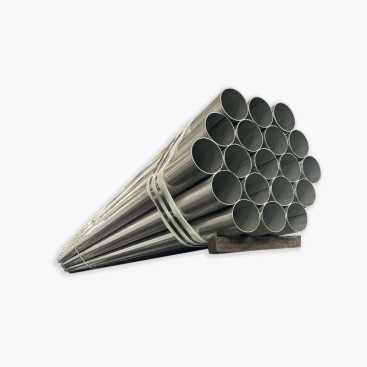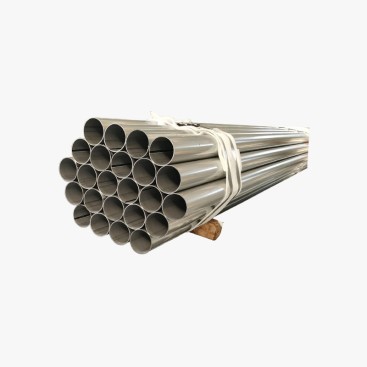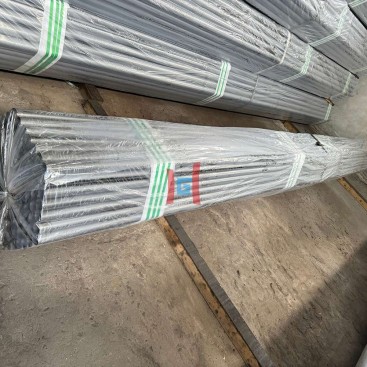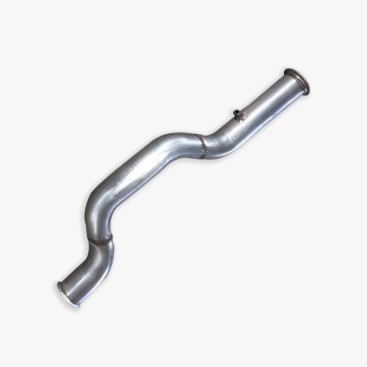
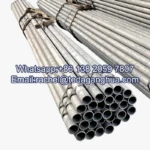
- 설명
설명
ASTM A463, JIS G3314 and EN 10346 all cover continuously hot-dip aluminium-silicon coated steel, but their designation systems, coating-mass conventions, substrate grades and mechanical requirements are not identical. For aluminized pipe procurement, the safest approach is to compare the complete material definition—substrate grade, Al-Si coating type, coating mass, 두께, forming requirements and applicable tube dimensions—rather than treating one grade code as an automatic equivalent of another.
Key rule: ASTM A463 유형 1, JIS G3314 AS grades and EN 10346 +AS designations describe related Al-Si coated steel products, but a cross-standard substitution should be approved from the complete specification rather than from the coating number alone.
1. A463 vs JIS G3314 vs EN 10346: What Each Standard Covers
ASTM A463 is the U.S. specification for steel sheet and strip coated with aluminium by the hot-dip process. JIS G3314 covers hot-dip aluminium-coated steel sheet and strip in the Japanese system, including the SA1C, SA1D and related forming grades. 안에 10346 is the European standard for continuously hot-dip coated steel flat products and includes aluminium-silicon alloy coating designated by +처럼. 안에 10346 therefore contains a broader family of metallic coatings, while +AS identifies the Al-Si coating route within that system. :내용참조[양:0]{인덱스=0}
| 기준 | Main Product Scope | Al-Si Identification | Typical Forming System |
|---|---|---|---|
| ASTM A463 | Hot-dip aluminium-coated steel sheet and strip | 유형 1 / 유형 2 | Commercial, drawing and deeper forming grades depending on specification |
| HE G3314 | Hot-dip aluminium-coated steel sheet and strip | AS coating system with coating-mass designations | SA1C, SA1D and higher forming grades |
| 안에 10346 | Continuously hot-dip coated flat steel products | +처럼 | DX51D–DX57D and other grade families according to application |
Important for pipe buyers: these are primarily flat-product standards. If coated strip is roll-formed or welded into tube, the finished tube’s outside diameter, 벽 두께, 길이, ovality, straightness and weld requirements should be specified separately.
2. 코팅 유형: 유형 1, 유형 2 and +AS Are Not Interchangeable Labels
One of the most common cross-standard mistakes is assuming that the words “aluminized steel” define the same coating chemistry in every standard. ASTM A463 distinguishes 유형 1 그리고 유형 2; JIS G3314 uses its own Al coating classification and coating-mass system; 안에 10346 identifies aluminium-silicon alloy coating with the +처럼 suffix.
유형의 경우 1 재료, the aluminium coating contains silicon as part of the controlled coating chemistry and is widely used where heat resistance and general aluminized-steel performance are required. 유형 2 is associated with a different aluminium coating formulation and is commonly selected where corrosion and forming requirements call for that specific coating system. The buyer should therefore state the exact ASTM coating type instead of writing only “ASTM aluminized steel.”
How the designations should be read
ASTM: substrate/forming grade + 유형 + coating designation or mass as required.
그는입니다: substrate/forming grade such as SA1C or SA1D + specified Al coating mass.
안에: substrate grade such as DX51D or DX53D + 처럼 + coating mass such as AS080, AS100, AS120 or AS150.
안에 10346 explicitly lists +AS as the aluminium-silicon alloy coating symbol and provides AS060, AS080, AS100, AS120 and AS150 coating-mass designations in its coating-mass table. :내용참조[양:1]{index=1}
3. Coating Weight Comparison
Coating mass is normally expressed as the total mass on both surfaces, but the exact test method, designation and acceptance criteria differ by standard. The following table is therefore a procurement comparison, not a declaration that every number is automatically equivalent across standards.
| 대략. Total Coating Mass | ASTM A463 Example | JIS G3314 Example | 안에 10346 +처럼 |
|---|---|---|---|
| 40 g/m² | 유형 1 T1-13 class is commonly referenced | 40 g/m² | Not an AS designation in the cited EN table |
| 60 g/m² | Check exact A463 designation | 60 g/m² | AS060 |
| 75–80 g/m² | T1-25 is associated with 75 g/m² minimum | 80 g/m² | AS080 |
| 100 g/m² | Check exact A463 coating designation | 100 g/m² | AS100 |
| 120 g/m² | T1-40 is associated with 120 g/m² | 120 g/m² | AS120 |
| 150 g/m² | Verify exact Type and designation | Verify exact JIS designation | AS150 |
안에 10346 gives AS coating masses of 60, 80, 100, 120 그리고 150 g/m² as minimum total coating masses on both surfaces in its coating-mass table. :내용참조[양:2]{index=2} Industry comparison tables also show why numerical matching alone can be misleading: ASTM designations such as T1-25 and T1-40 use their own acceptance conventions, while JIS and EN use different naming systems. :내용참조[양:3]{index=3}
4. Substrate Grade Systems: A463 vs SA1C/SA1D vs DX51D–DX56D
The substrate designation is just as important as the coating. A tube that needs roll forming, bending or flaring may require a drawing-quality substrate rather than a commercial-quality grade.
| Forming Level | ASTM A463 | HE G3314 | 안에 10346 |
|---|---|---|---|
| Commercial forming | CS / commercial-quality family, subject to exact specification | SA1C | DX51D+AS |
| 그림 | Drawing-quality family | SA1D | DX52D/DX53D+AS |
| 딥 드로잉 | DDQ / deeper forming categories depending on specification | SA1E and higher forming categories where specified | DX54D–DX56D+AS |
| Very high forming demand | Check exact A463 grade and supplementary requirements | Use the applicable higher forming grade | DX57D+AS where available and applicable |
안에 10346 lists DX51D through DX57D as forming grades with different mechanical-property windows. 예를 들어, published EN 10346 data show increasing minimum elongation requirements as the grade moves from DX51D toward deeper-drawing grades such as DX54D and DX56D. :내용참조[양:4]{index=4} Cross-standard comparison tables similarly associate SA1C with commercial quality, SA1D with drawing quality, and SA1E with deeper drawing requirements. These associations should be treated as procurement starting points rather than automatic certificates of equivalence. :내용참조[양:5]{인덱스=5}
5. Mechanical Requirements Are Not Automatically Equivalent
A frequent purchasing error is to compare only the minimum tensile strength. Formability depends on the complete mechanical-property window, including yield strength, tensile strength and elongation, and in some deep-drawing applications additional forming parameters are relevant.
| 재산 | Why It Matters | Cross-Standard Check |
|---|---|---|
| 항복 강도 | Resistance to permanent deformation | Compare specified range, not only nominal grade name |
| 인장강도 | Ultimate tensile capacity | Verify the complete minimum/maximum requirement |
| 연장 | General indication of ductility | Check gauge length and thickness corrections |
| Forming parameters | Important for deep drawing and severe tube forming | Specify when the application is forming-critical |
예를 들어, 안에 10346 data show DX51D with a tensile-strength range of approximately 270–500 MPa and a minimum elongation of 22%, while deeper-forming grades have different strength and elongation windows. :내용참조[양:6]{index=6}
6. Dimensional Tolerances: Flat Strip vs Finished Pipe
All three standards primarily define the coated flat product. 그러므로, a dimensional comparison must distinguish strip tolerance ~에서 finished-tube tolerance.
| Dimension | Flat Product | Finished Tube |
|---|---|---|
| 두께 | Controlled according to the flat-product standard | Tube wall-thickness tolerance must be specified |
| 너비 | Controlled as sheet/strip width | Usually becomes tube circumference/forming input |
| 의 | Not applicable | Tube-standard requirement |
| Ovality | Not a finished round-tube parameter | Must be specified or taken from the tube standard |
| 길이 | Sheet/coil length format | Fixed/random tube length as ordered |
7. Can ASTM, JIS and EN Materials Be Interchanged?
They can sometimes be technically comparable, but the designation alone does not establish interchangeability. A supplier converting an ASTM requirement into EN or JIS terminology should prepare a documented cross-reference based on at least five parameters:
Steel grade and chemistry
Type and Al-Si chemistry
Total or surface-specific requirement
생산하다, tensile and elongation
Thickness and finished-tube tolerances
For a pipe application, add a sixth category: forming and welding performance. A material can have a similar coating mass yet behave differently during roll forming, 굽힘, flaring or welding because its substrate grade and coating system are different.
8. How to Handle a Cross-Standard Order
If a customer specifies one standard but the mill normally produces another, do not silently replace the designation. Use a controlled conversion statement.
Example procurement format:
“Original requirement: ASTM A463, 유형 1, drawing-quality substrate, specified coating mass. Proposed alternative: 안에 10346 DX53D+AS with AS coating mass __ g/m². Supplier shall provide chemical composition, 항복강도, tensile strength, 연장, coating-mass test result and tube dimensional inspection for customer approval before production.”
This approach is safer than writing “ASTM A463 = EN 10346” in a purchase order. It records the original requirement and makes the proposed substitution technically reviewable.
9. Common Cross-Standard Mixing Errors
| Common Error | Why It Is Risky | Better Practice |
|---|---|---|
| Treating AS120 as universally equivalent to every 120 g/m² coating | Different standards use different designation and test rules | State standard + 코팅 명칭 + required mass |
| Writing “Type 1” without ASTM identification | Type terminology is standard-specific | Write the complete ASTM designation |
| Equating SA1C with DX51D automatically | Forming category similarities do not replace full mechanical and chemical verification | Compare MTC values and contractual limits |
| Using sheet tolerance as tube tolerance | Tube forming changes OD, ovality and dimensional control | Specify finished-tube tolerances separately |
| Checking only coating weight | Substrate strength and formability can be different | Verify coating + chemistry + mechanics + 치수 |
10. Teda Ganghua Cross-Standard Supply Support
For buyers sourcing Al-Si coated tube for automotive, exhaust, heating, appliance or fabrication applications, Teda Ganghua can organize the quotation around the actual technical specification rather than relying on a single standard name. The inquiry can identify the required substrate grade, coating mass, 튜브 외경, 벽 두께, 길이, forming route, surface treatment, inspection documents and packaging requirements.
This is particularly useful when a project moves between ASTM, JIS and EN documentation. Instead of treating the three standards as interchangeable labels, the material can be checked parameter by parameter and the final purchase specification can state the accepted standard, grade and inspection basis.
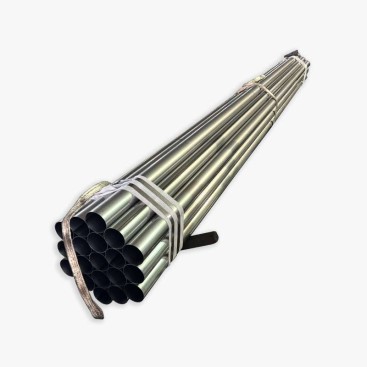
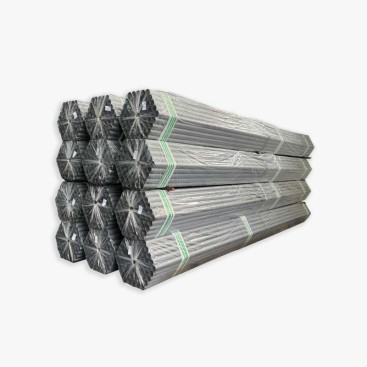
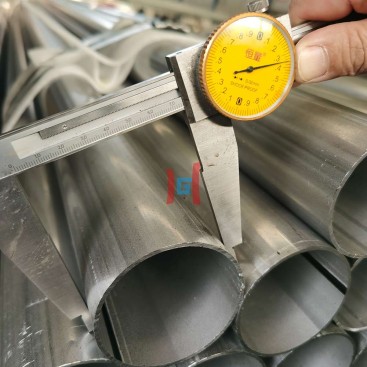
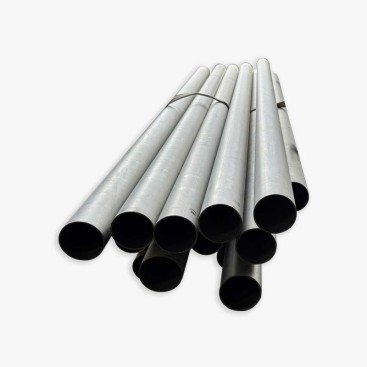
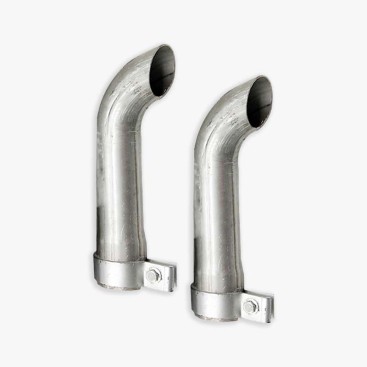
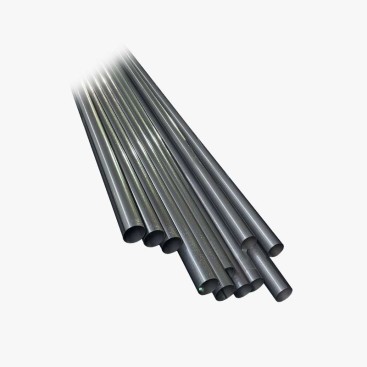
알루미늄 도금 강철 튜브 can be specified with the required coating system, 기질 등급, tube dimensions and inspection documentation for cross-standard procurement.
11. FAQs
Is ASTM A463 Type 1 the same as EN 10346 +처럼?
They describe related aluminium-silicon coated steel systems, but the designations are not identical. A technical comparison should verify the substrate grade, coating mass, mechanical properties, dimensions and applicable test requirements before substitution.
Is JIS G3314 SA1C equivalent to EN DX51D+AS?
They are commonly compared as commercial-forming grades in supplier cross-reference tables, but that does not by itself establish contractual equivalence. Chemical composition, mechanical properties, coating mass and test requirements should be checked against the actual order specification. :내용참조[양:7]{index=7}
Does AS120 mean exactly the same thing in every standard?
아니요. 안에 10346 uses AS120 as a defined Al-Si coating-mass designation. Other standards may express coating requirements differently, so the standard number and complete coating designation should always accompany the nominal coating mass. :내용참조[양:8]{index=8}
Can I specify an aluminized pipe only by ASTM A463, JIS G3314 or EN 10346?
Not for a complete finished-tube specification. These standards primarily describe coated flat steel. The finished tube should additionally identify OD, 벽 두께, 길이, ovality, straightness, 용접/성형 요구사항 및 검사 기준.
ASTM에서 JIS 또는 EN으로 변경할 때 비교해야 할 사항?
기판 등급 비교, 코팅 화학/유형, coating mass, 항복강도, tensile strength, 연장, 치수 공차, 성형 성능 및 시험 방법. 용접된 튜브의 경우, 또한 성형 및 용접 경로를 확인하십시오..