- Penerangan
Penerangan
Specifying DX55D+AS120 aluminized steel tube can create a demanding balance between forming performance and coating requirements. The substrate must accommodate the deformation needed to produce a complex tube or formed component, while the aluminum-silicon coating must retain acceptable integrity under the same processing conditions. AS120 represents a nominal combined coating mass of 120 g/m² across both sides of the coated flat product, rather than 120 g/m² setiap sisi. When substantial forming and a relatively high coating mass are required together, material selection, manufacturing sequence, and production validation become especially important.
The key procurement challenge
DX55D+AS120 should be treated as a demanding material-and-process combination, not as a universally unsuitable specification. Availability and repeatability depend on the exact grade definition, keperluan salutan, product form, forming severity, and supplier process capability. A small-batch trial is a prudent way to confirm whether the proposed route meets the finished component’s requirements.
1. Why DX55D+AS120 Is a Difficult Combination
The challenge comes from having to satisfy two different requirements at the same time. The steel substrate must support the intended forming operation, while the coating must withstand the strain imposed on it during forming and subsequent processing. A higher coating mass does not automatically make a coating brittle, and cracking is not inevitable. Namun begitu, struktur salutan, ketebalan, lekatan, and local deformation can interact in ways that make a heavily coated, severely formed component more difficult to qualify.
One important point needs to be confirmed before placing an order: DX55D must be verified against the exact material standard and supplier specification being used. Grade designations are not interchangeable across all standards and product categories. Do not assume that a DX55D designation automatically means a higher formability level than DX54D under EN 10346 unless the supplier can identify the governing standard and document the relevant properties. For coated flat products, DALAM 10346 is the relevant European standard family, but the actual designation and guaranteed requirements must be checked carefully.
| Design requirement | Technical challenge | What to verify |
|---|---|---|
| Complex forming | The substrate must accommodate the required strain without unacceptable splits, wrinkles, or dimensional defects. | Grade definition, mechanical properties, forming geometry, perkakasan, and trial results. |
| AS120 coating target | The coating must retain acceptable integrity during forming and later service. | Jisim salutan, distribution, struktur salutan, lekatan, and post-forming condition. |
| Repeatable production | A successful sample must translate into stable production across batches. | Process capability, kriteria pemeriksaan, traceability, and agreed acceptance limits. |
These interacting requirements explain why stable production may require more specialized process control than a less demanding grade-and-coating combination. They do not prove that a particular mill or tube producer can or cannot manufacture the product. Supplier capability should be evaluated through documented specifications, trial evidence, and inspection results rather than assumptions based on the designation alone.
2. What AS120 Means for Coating Selection
The “+AS” designation identifies an aluminum-silicon coating system. Under the usual coating-mass convention, AS120 indicates a nominal combined coating mass of 120 g/m² across both sides of the coated flat steel product. If distributed evenly, this is approximately 60 g/m² setiap sisi. Actual coating distribution and tolerances depend on the applicable specification and should be confirmed in the order documentation.
Compared with a lower coating-mass option such as AS80, AS120 provides a higher nominal coating mass, but it does not guarantee a particular service life or superior performance in every environment. Service temperature, atmosphere, berbasikal haba, kesinambungan salutan, edge condition, and fabrication damage all affect performance. The correct target is the coating level that meets the real service requirement while remaining compatible with the manufacturing route.
| Coating designation | Nominal combined coating mass | Typical selection question |
|---|---|---|
| AS60 | 60 g/m² | Can a lower coating mass meet the required service conditions while supporting the forming process? |
| AS80 | 80 g/m² | Does this provide an appropriate balance between coating requirements and forming feasibility? |
| AS120 | 120 g/m² | Can the required coating target withstand the actual deformation and joining sequence? |
| AS150 | 150 g/m² | Is the additional nominal coating mass justified by service requirements, and can the manufacturing route accommodate it? |
The values above explain the nominal coating-mass designations; they are not a guarantee that every supplier offers every coating level or that each level is equally suitable for a given tube-forming process. Confirm availability, toleransi, and product-specific requirements before procurement.
3. Choose the Route That Matches the Real Requirement
When a specification combines complex forming with a relatively high coating mass, the most useful response is to identify which requirement is essential and evaluate alternatives accordingly. A lower coating mass may improve process feasibility in some applications, while a simpler component geometry may make a higher coating mass practical. Where both severe forming and high coating mass are mandatory, changing the manufacturing sequence may be worth investigating.
| Customer’s primary requirement | Possible route to evaluate | Important qualification |
|---|---|---|
| Complex forming | Evaluate AS80 or AS60, or assess a suitable drawing-grade alternative such as SA1D+AS80 when the relevant standard and requirements support it. | Confirm that the revised coating and grade meet the actual service and dimensional requirements. SA1D belongs to a different designation system and is not a direct substitution without specification review. |
| Hayat perkhidmatan yang panjang | Simplify the geometry or reduce the forming severity while retaining AS120 or evaluating AS150. | Confirm that the selected coating system is appropriate for the actual temperature, atmosphere, and expected service conditions. |
| Both complex forming and high coating mass | Consider forming before coating where technically and commercially feasible, or qualify pre-coated forming with agreed post-process repair procedures. | Post-forming coating, local repair, and weld-area treatment must be compatible with the service environment and approved quality requirements. |
These options are not universal recommendations. They are routes for engineering and procurement teams to compare against the actual component design. If local coating damage is accepted, the acceptance limits and repair method should be agreed in advance. Welding and repair coatings must also be assessed for temperature resistance, lekatan, and compatibility with the surrounding aluminum-silicon coating.
4. When DX55D+AS120 May Be Worth Evaluating
Where the combination is technically feasible and can be qualified, it may be considered for specialized formed components that need both a demanding geometry and a relatively high coating mass. The final suitability depends on the confirmed substrate specification, product form, process sequence, and service requirements.
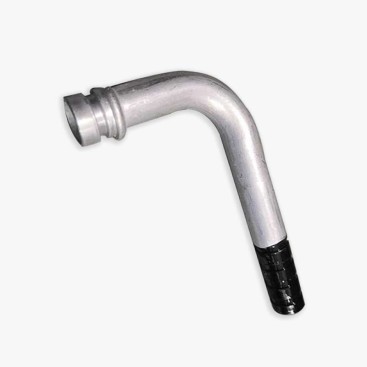
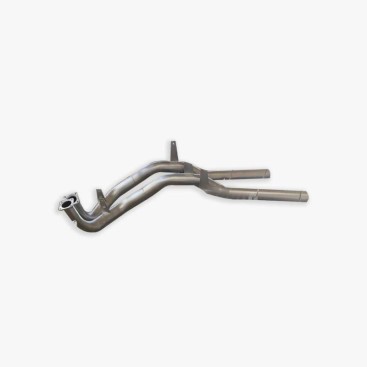
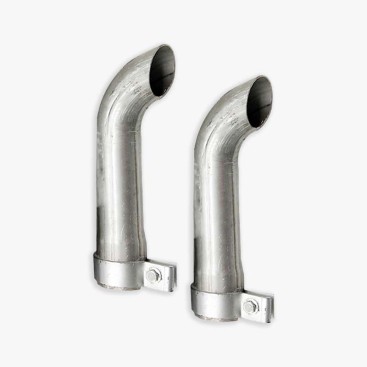
Complex exhaust-system parts
Formed sections with demanding profiles may require careful control of coating condition around draw radii, edges, and joining areas.
Long-life formed tube components
Components designed for extended service should be assessed for both forming-related damage and the actual operating environment.
Specialized heat-resistant components
Applications involving elevated temperature or thermal cycling require service-specific validation rather than selection by coating mass alone.
For tube products, distinguish between a tube formed from pre-coated strip and a tube or component coated after forming. The two routes can have different implications for seam welding, kesinambungan salutan, dimensional control, dan pemeriksaan. A flat-product designation by itself does not define the complete finished-tube specification.
5. Why a Small-Batch Trial Matters
For DX55D+AS120, a small-batch trial is a practical risk-control step rather than an indication that the specification cannot be produced. It helps both buyer and supplier establish whether the chosen material and process can achieve repeatable forming results while meeting the coating acceptance criteria.
Suggested trial checklist
- Confirm the governing material standard, exact grade designation, and guaranteed mechanical properties.
- Verify the AS120 coating-mass convention, toleransi, and side-specific requirements.
- Run a representative forming trial using production-relevant tooling, lubrication, and process settings.
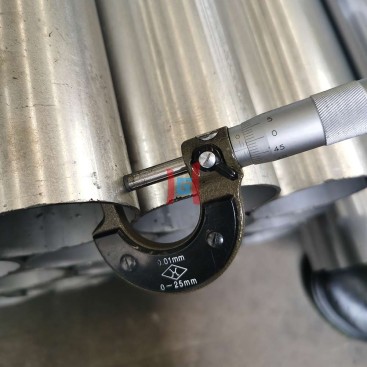
- Inspect highly strained regions, cut edges, seams, and joining areas for coating cracks, flaking, or exposed substrate.
- Define whether local coating damage is acceptable and, if so, specify the repair method and inspection criteria.
- Record trial results and agree on acceptance limits before authorizing full production.
Where coating continuity is essential to the component’s function, visual inspection alone may not be sufficient. The buyer and supplier should determine whether additional coating, kakisan, thermal, or other performance testing is needed for the intended service environment.
6. Procurement Details to Confirm Before Ordering
A detailed inquiry can help suppliers assess the feasibility of this demanding combination without making assumptions about the part’s requirements. Include the following information whenever possible.
| Inquiry item | Details to provide |
|---|---|
| Material specification | Exact grade, governing standard and edition, mechanical-property requirements, and certificate expectations. |
| Coating specification | AS120 target, combined coating mass, distribution, toleransi, and any post-forming requirements. |
| Product form and dimensions | Coated strip or finished tube, ketebalan, diameter luar, ketebalan dinding, panjang, toleransi, and edge condition. |
| Manufacturing route | Forming sequence, draw severity, welding or joining, trimming, and any post-forming coating process. |
| Service conditions | Operating temperature, atmosphere, berbasikal haba, pendedahan kakisan, dan hayat perkhidmatan yang diperlukan. |
| Trial and inspection | Trial quantity, critical inspection locations, acceptable coating condition, repair requirements, and performance tests. |
7. Sourcing Aluminized Steel Tubes From Teda Ganghua
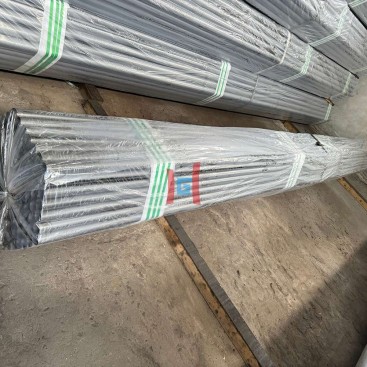
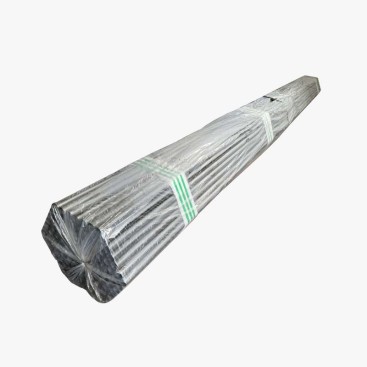
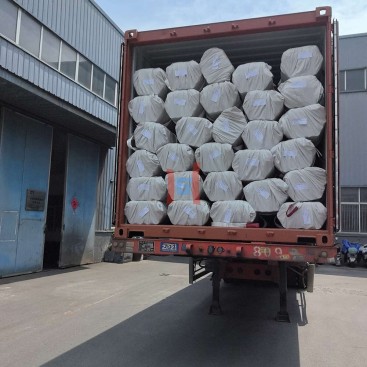
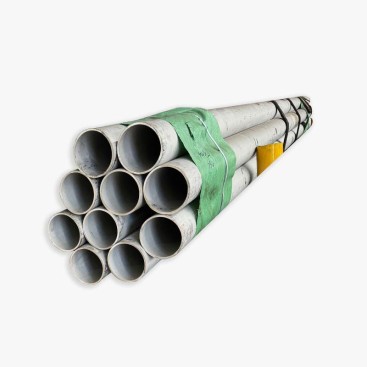
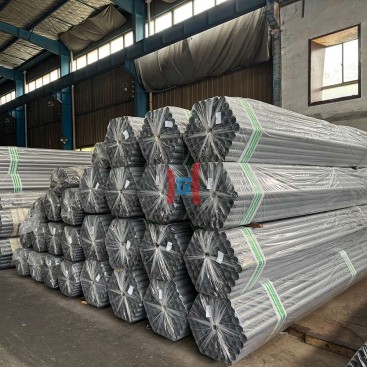
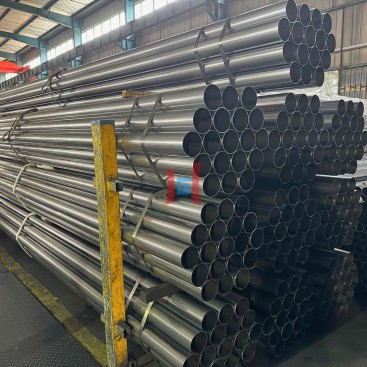
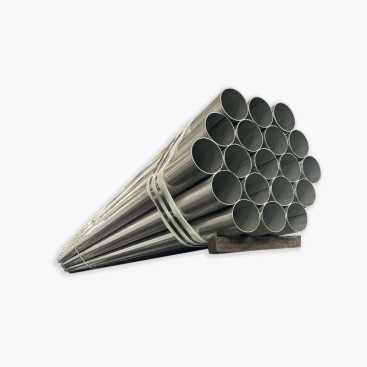
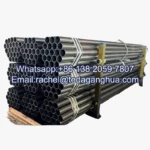
Teda Ganghua supports B2B inquiries for steel products and coated-steel applications. For buyers sourcing tiub keluli beraluminium, a useful inquiry should identify the intended application, gred bahan, coating target, dimensi, order quantity, forming route, and operating environment.
For a specification as demanding as DX55D+AS120, provide a component drawing or sample requirements when available. The inquiry should also clarify whether the requested grade designation is tied to EN 10346 or another material standard. This allows the technical discussion to focus on specification compatibility, product form, keperluan salutan, and trial planning instead of relying on a designation alone.
Request a feasibility review
Share your grade and coating specification, dimensi tiub, permohonan, forming details, kuantiti, and acceptance criteria. A small-batch validation plan can help establish coating integrity and process repeatability before full production.
Soalan yang sering ditanya
1. Why is DX55D+AS120 considered a demanding combination?
It combines a forming requirement with a relatively high aluminum-silicon coating-mass target. The substrate must tolerate the intended deformation while the coating retains acceptable integrity. The actual difficulty depends on the verified grade, struktur salutan, forming severity, and production process.
2. Does AS120 mean 120 g/m² on each side?
Tidak. Under the usual convention, AS120 denotes a nominal combined coating mass of 120 g/m² across both sides of the coated flat product. An even distribution would be approximately 60 g/m² setiap sisi, subject to the applicable specification and tolerances.
3. Should I reduce AS120 to AS80 or AS60 for complex forming?
That is one possible route to evaluate if the lower coating mass still meets the component’s service requirements. It is not an automatic recommendation. The appropriate coating target should be chosen by balancing forming feasibility, coating integrity, and the intended operating environment.
4. What if both complex forming and high coating mass are mandatory?
Consider a qualified manufacturing route such as forming before coating, if technically feasible, or conduct trials with pre-coated material and agree on post-forming inspection and repair requirements. Any alternative must be checked for compatibility with the final service conditions.
5. Should a buyer request a trial before mass production?
Ya. For this type of demanding combination, a small-batch trial is a sensible way to check forming behavior, coating condition, ketepatan dimensi, and repeatability. Agree on inspection locations and acceptance criteria before production release.
DX55D+AS120 is best approached as a specification that requires joint evaluation of substrate, salutan, forming route, dan syarat perkhidmatan. Rather than rejecting the combination outright or assuming it will work, procurement teams can reduce risk by comparing practical alternatives and validating the selected route through a controlled trial.