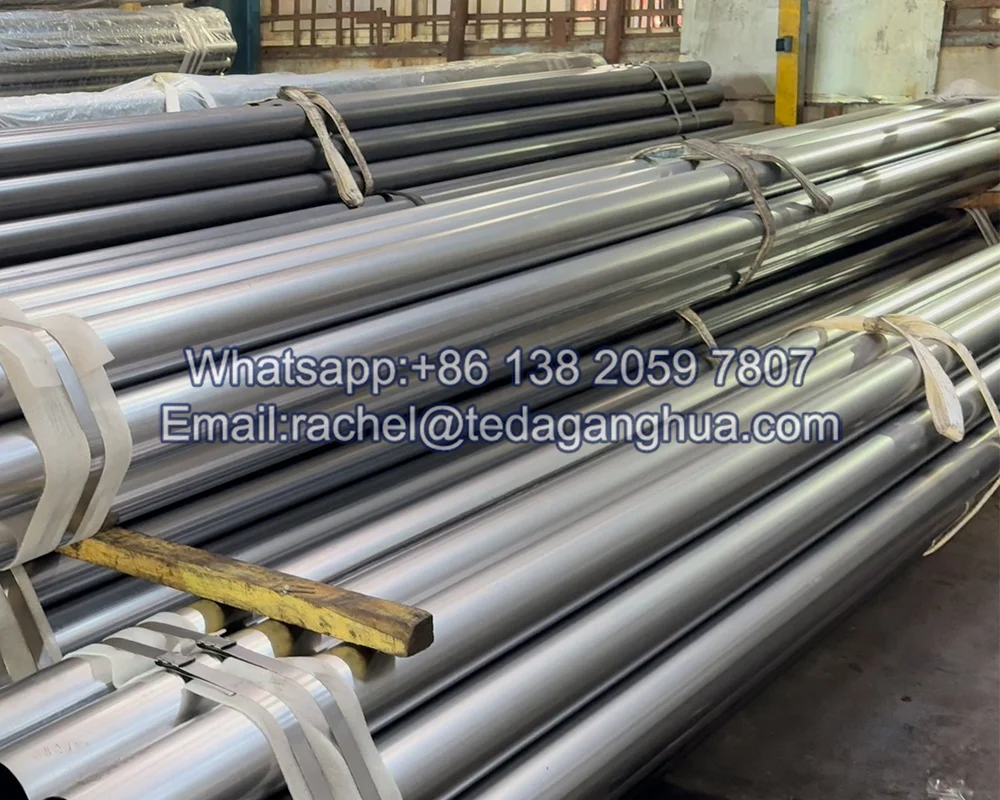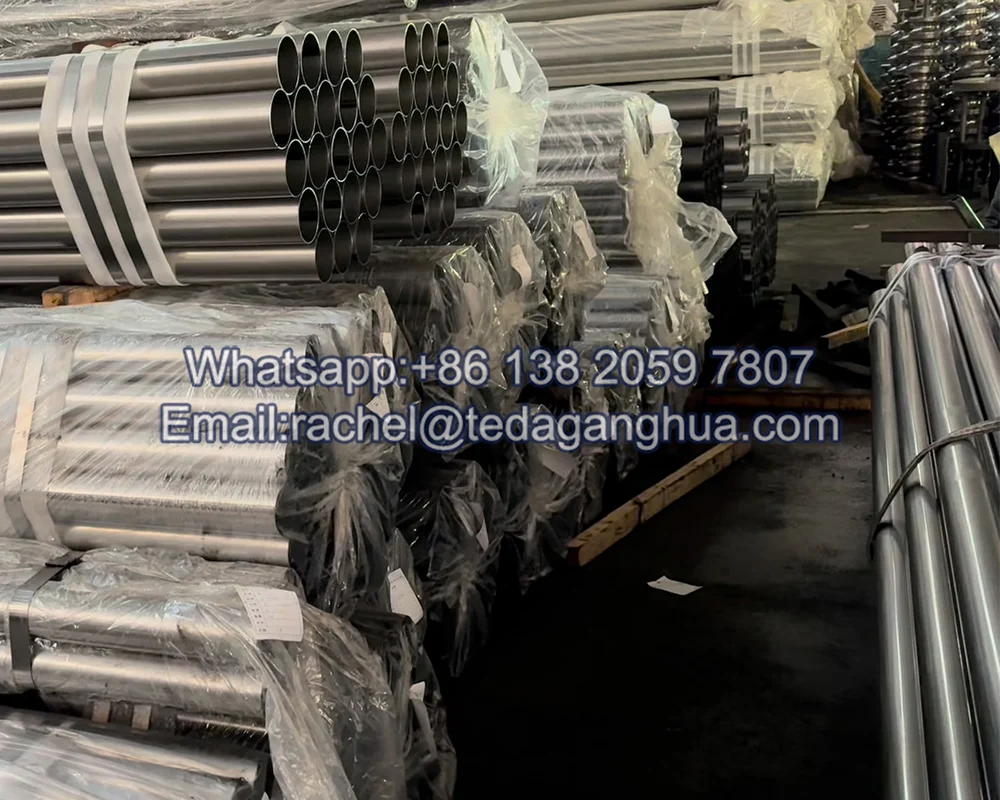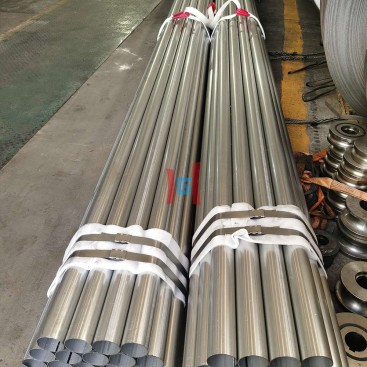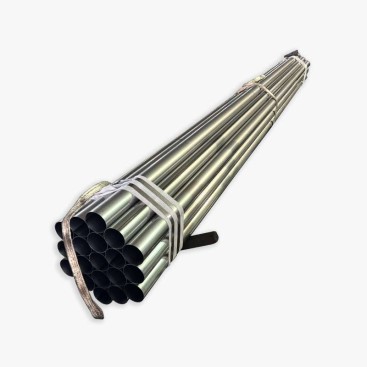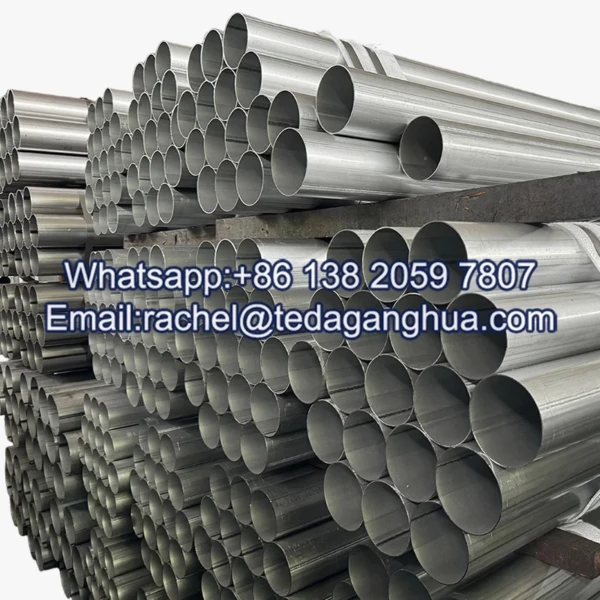
Tiub Keluli Beralumi Erw
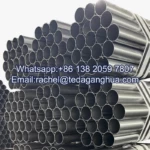
- Penerangan
Penerangan
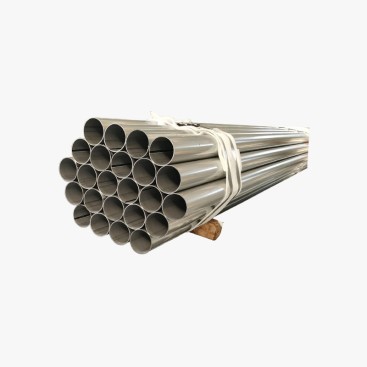
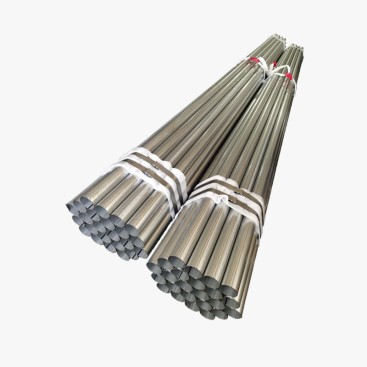
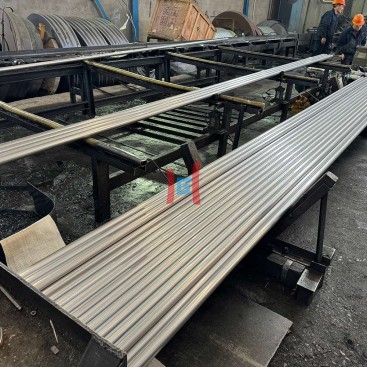
ERW aluminized steel tube is manufactured by forming steel strip into a tubular shape and joining the edges through electric resistance welding. The process creates a continuous longitudinal weld seam, which gives buyers a clear starting point for quality inspection: the weld itself, the heat-affected areas on both sides, and the internal and external weld flash.
ERW does not automatically mean that a tube has poor weld quality. Its value from a procurement perspective is that the manufacturing process identifies specific locations where inspection requirements should be focused. For aluminized products, one additional issue deserves particular attention: how the coating is treated around the weld seam.
When pre-coated steel strip is formed and welded into a tube, the coating at the cut edges is interrupted by the manufacturing process. The weld area may also experience coating damage or discoloration from heat. Buyers therefore need to specify not only how the weld is inspected, but also how the affected coating area is treated.
1. What ERW Tells Buyers About Inspection
Electric resistance welding joins the edges of formed steel strip by applying electrical current and pressure. The process produces a longitudinal weld seam along the tube.
Unlike a seamless tube, an ERW tube has a defined joining location. This does not make the product unsuitable; it simply means that the weld seam and its surrounding areas should be included in the inspection plan.
For an aluminum-coated tube made from pre-coated strip, inspection should focus on three locations:
| Inspection Location | Potential Condition | Relevant Inspection or Action |
|---|---|---|
| Weld seam itself | Incomplete bonding, lack of fusion, or inclusions where relevant to the welding process. | Flattening test, flaring test, hydrostatic test, or leak test as required by the product specification. |
| Heat-affected areas on both sides of the seam | Coating damage, discoloration, or changes caused by tube forming and welding heat. | Visual inspection and an agreed coating repair or treatment procedure. |
| Internal and external weld flash | Excess weld flash or burrs; internal flash may affect flow and cleaning. | Define whether internal and external flash must be removed and specify the required condition. |
2. Location One: The Weld Seam Itself
The weld seam is the primary joining area of an ERW tube. Its integrity depends on the steel grade, edge preparation, forming alignment, welding current, tekanan, production speed, and process control.
Potential weld discontinuities may include incomplete bonding or lack of fusion. Other defects can occur depending on the process and material condition. The inspection plan should be selected according to the tube’s intended application and the applicable product requirements.
Which Weld Tests Should Buyers Consider?
Several tests may be used to evaluate weld integrity, but they do not all assess the same property.
- Flattening test: The tube is subjected to compressive deformation to evaluate its behavior, including the weld area, under the specified test conditions.
- Flaring test: The tube end is expanded to assess its ability to withstand localized deformation without unacceptable failure.
- Hydrostatic test: The tube is tested with internal liquid pressure when required by the applicable product specification.
- Leak or gas-tightness test: A suitable method is used to assess leakage where the intended application requires it.
These tests should not be treated as interchangeable. Flattening and flaring evaluate deformation behavior, while hydrostatic and leak testing address pressure containment or leakage performance. The buyer should select the relevant combination rather than listing every test without considering the application.
Procurement note: Do not rely on the words ERW or welded as proof of weld acceptance. Specify the required test, applicable procedure, sampling basis, and acceptance criteria in the order.
3. Location Two: The Heat-Affected Areas Beside the Weld
For aluminized steel tube made from pre-coated strip, the coating condition around the weld is a separate issue from the mechanical integrity of the weld itself.
Before tube forming, the steel strip already has an aluminum-based coating. When the strip edges are prepared and joined, the original coating is interrupted at the joining area. Welding heat can also affect the coating near the seam, causing discoloration or local coating damage.
This is an expected manufacturing consideration when pre-coated strip is converted into welded tube. It does not automatically mean that the weld is defective, but it does mean that coating continuity around the seam must be addressed.
What Should Be Inspected?
- Visible coating damage around the weld seam.
- Discoloration or surface changes in the heat-affected area.
- Exposed steel or other areas where the original coating is interrupted.
- The condition of any repaired or treated area after the agreed process.
Visual inspection can identify visible coating conditions, but it cannot independently establish every aspect of coating adhesion or corrosion performance. Where additional verification is required, the buyer and supplier should agree on the appropriate inspection method.
How Should Weld-Area Coating Be Treated?
The purchase specification should state whether coating repair is required and, if so, how it should be carried out. The repair method should be suitable for the coating system, intended service environment, and finished-tube requirements.
Possible approaches may include an agreed zinc-free or aluminum-compatible repair coating, a suitable thermal spray process, or another qualified method selected for the application. The actual procedure must be confirmed by the manufacturer and buyer; no single repair method should be assumed suitable for every aluminum-based coating.
Buyers should also clarify whether the repaired area needs a separate appearance inspection, adhesion evaluation, or other acceptance check.
4. Location Three: Internal and External Weld Flash
During ERW production, excess material can form along the weld area. This is commonly referred to as weld flash or weld burr. Depending on the manufacturing arrangement, internal and external flash may require different treatment.
External flash may affect the tube’s appearance, surface contact, or subsequent processing. Internal flash can be more important in applications involving fluid flow, cleaning, or the movement of components through the tube.
Why Does Internal Flash Matter?
Excess material inside the tube can reduce the available flow area and create locations where deposits or contaminants may collect. It can also interfere with cleaning or downstream assembly in applications with strict internal surface requirements.
Namun begitu, internal flash removal is not automatically required for every tube. The decision depends on tube dimensions, ketebalan dinding, permohonan, manufacturing capability, and the applicable product specification.
Buyers should clearly state whether internal flash must be removed, whether external flash must be removed, and what finished condition is acceptable. If the tube will be used for fluid transport or requires internal cleanliness, this requirement deserves particular attention.
5. The Most Important Issue: How Is the Coating at the Weld Treated?
For aluminized tube made by forming and welding pre-coated strip, the weld seam is not simply a question of whether a weld exists. The original coating is interrupted where the strip edges are joined, and welding heat may affect the nearby coating.
This is why the weld-area coating treatment should be part of the purchase specification. A mechanically acceptable weld does not automatically mean that the coating around it has been restored to the required condition.
Buyers should distinguish between two separate acceptance questions:
Integriti Kimpalan
Does the seam meet the required mechanical, tekanan, or leakage test criteria?
Coating Condition
How is the coating interruption and heat-affected area treated, inspected, and accepted?
Both questions matter, but they require different inspection methods and acceptance criteria. A complete order specification should not use one as a substitute for the other.
6. Three Weld-Related Items to Include in the Purchase Order
For procurement, the key is to convert the three inspection locations into clear contractual requirements. The following table provides a practical checklist.
| Purchase Order Item | What to Specify | Why It Matters |
|---|---|---|
| Weld inspection | Select flattening, menyala, hydrostatic, leak testing, or a defined combination as applicable. | Establishes how weld integrity and product performance will be evaluated. |
| Internal flash treatment | State whether internal flash must be removed and define the acceptable internal condition. | Helps prevent flow, cleaning, and assembly problems. |
| Weld-area coating repair | Define repair method, coverage area, appearance requirements, and any additional inspection. | Addresses coating interruption and heat-related damage around the seam. |
Example Inquiry Wording
Weld inspection: Specify the required flattening, menyala, hydrostatic, or leak test according to the agreed product standard and application.
Internal flash: State whether internal weld flash removal is required and define the acceptable finished condition.
Weld-area coating: Specify the coating repair or treatment method for the weld seam and adjacent heat-affected areas, including applicable visual and performance acceptance requirements.
This wording gives the manufacturer a clear production target and gives the buyer a defined basis for inspection. Test procedures and acceptance criteria should be agreed before production rather than decided after a disagreement occurs.
7. What Buyers Should Confirm About the Manufacturing Route
Not every aluminized tube is produced through the same sequence. One important distinction is whether the steel strip is coated before tube forming or whether the tube is manufactured first and coated afterward.
With pre-coated strip, the coating is present before forming and welding. The joining process therefore interrupts the original coating at the edges, and the weld area requires an agreed treatment approach.
When coating is applied after tube fabrication, the coating process and coverage requirements are different. Buyers should not assume that the two routes produce identical coating conditions, especially around the weld seam and internal surface.
The inquiry should identify the required manufacturing route where it affects coating coverage, pemeriksaan, or service performance. The supplier should also clarify how the internal and external surfaces are handled.
8. Teda Ganghua Metal: ERW Aluminized Tube Supply Coordination
Teda Ganghua Metal is a steel stockist based in Tianjin TEDA, dengan 20 years of stockist and export experience. The company supports industrial buyers with steel sourcing, material specification communication, and export supply coordination.
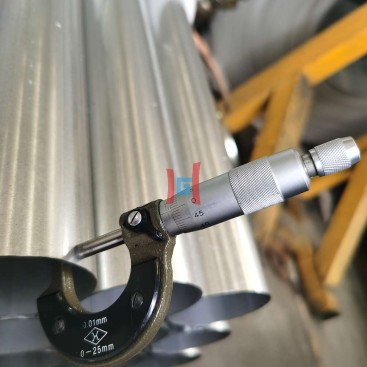
For ERW aluminized tube projects, buyers should confirm the steel grade, dimensi tiub, coating type, keperluan pemeriksaan kimpalan, internal flash treatment, and weld-area coating repair before order confirmation.
Teda Ganghua Metal can coordinate material test certificates, dimensional documentation, and third-party inspection arrangements according to the agreed order requirements. Buyers are welcome to arrange inspections to verify the supplied material and finished product against the contract.
Explore our tiub keluli beraluminium product category to discuss ERW manufacturing requirements, spesifikasi salutan, and project-specific inspection needs.
Our focus is on clear communication between buyer and supplier, traceable material documentation, and practical acceptance requirements. Defining weld integrity and weld-area coating treatment separately helps avoid misunderstandings during production and delivery.
Soalan yang sering ditanya
1. What does ERW mean in aluminized steel tube?
ERW means electric resistance welded. Steel strip is formed into a tubular shape, and its edges are joined by electric resistance welding to create a longitudinal seam.
2. Which areas should be inspected on an ERW aluminized tube?
Three areas deserve particular attention: the weld seam itself, the heat-affected areas beside the seam, and the internal and external weld flash. Each area requires a different inspection or treatment approach.
3. Does an acceptable weld test prove that the coating is also acceptable?
Tidak. Weld tests evaluate the relevant mechanical, tekanan, or leakage performance. They do not automatically establish the condition of the aluminum-based coating around the seam. Coating treatment and inspection should be specified separately.
4. Is internal weld flash removal always necessary?
Tidak. It depends on the tube’s intended use, internal flow requirements, cleaning needs, dimensi, and product specification. Buyers should state whether internal flash removal is required and define the acceptable internal condition.
5. Why does a pre-coated strip have a coating interruption at the weld?
During tube forming, the strip edges are prepared and joined. This joining process interrupts the original coating at the seam, while welding heat may also affect nearby coating. Spesifikasi pembelian harus menentukan cara kawasan ini dirawat dan diperiksa.