- Description
Description
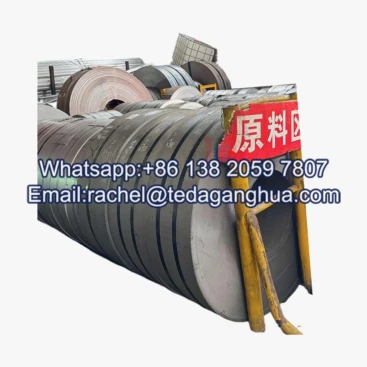
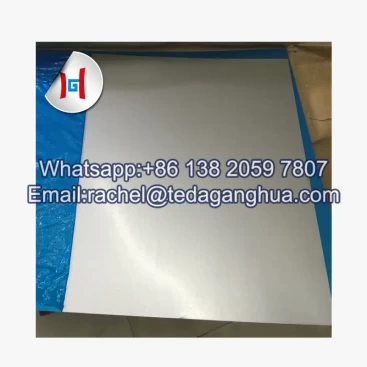
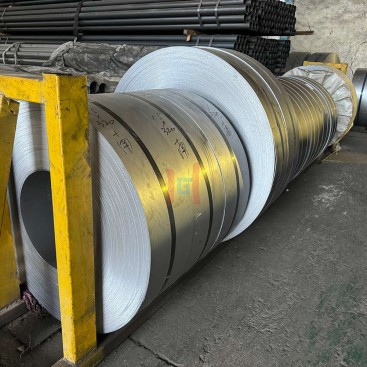
Wholesale purchasing of aluminized steel coil is mainly a matter of matching quantity, specification, coating class, coil configuration, and shipment plan. A practical buying structure can separate trial quantities, regular tonnage orders, and full-container shipments so that procurement teams can compare offers on the same technical basis. Common commercial ranges include 0.4–2.0 mm thickness, 600–1250 mm width, and AS40–AS200 coating classes, while actual availability depends on the selected base steel, standard, coating requirement, and production schedule. :contentReference[oaicite:0]{index=0}
1. How Wholesale Coil Purchasing Is Structured
Unlike a single-coil purchase, wholesale procurement normally evaluates the total order structure. The key variables are total tonnage, repeat-order potential, coil weight, width combinations, coating mass, base-steel grade, processing requirements, and shipping configuration.
A useful purchasing model divides orders into three practical quantity bands. The exact commercial terms should be confirmed against the supplier’s production capacity and the requested specification rather than treating the bands as universal industry rules.
| Order Band | Typical Quantity | Procurement Focus | Recommended Arrangement |
|---|---|---|---|
| Trial / Small Wholesale | 1–5 t | Specification verification and application testing | Keep grades and widths simple |
| Regular Wholesale | 5–20 t | Repeat supply, coil consistency, processing | Combine standard specifications where practical |
| Container Load | Approx. 20–25 t | Container utilization and logistics efficiency | Plan coil weights, widths, packing, and mixed specifications before production |
These bands should be treated as procurement planning categories rather than fixed market rules. Coil suppliers may accept different minimum quantities depending on whether the material is standard stock, production material, or a specially processed specification.
2. Tiered Purchasing: What Changes as Tonnage Increases?
For a 1–5 t requirement, the main objective is usually to avoid unnecessary customization. A standard base grade, standard width, standard coating, and conventional coil ID can simplify production and reduce the number of variables that need to be verified.
At 5–20 t, buyers can normally build a more structured order around several related specifications. For example, different widths can be planned around the customer’s downstream slitting or forming requirements, while several coils can share the same base grade and coating class.
At container-load volume, procurement becomes a logistics exercise as well as a material purchase. The buyer should define the complete loading list before production: coil number, nominal weight, width, thickness, coating designation, coil ID, OD limit, packing direction, and total shipment weight.
Procurement principle: A larger order does not automatically mean every specification should be mixed together. Standardizing the base material and coating while limiting unnecessary width variations often makes production, inspection, and loading easier to control.
3. Container-Load Planning for Coil Shipments
A 20GP container is often planned around roughly 22–25 t of steel coil, but the actual permissible loading weight depends on the container, carrier, route, local regulations, packaging, and cargo configuration. Therefore, “full container” should be confirmed from the final packing list rather than treated as a guaranteed fixed tonnage.
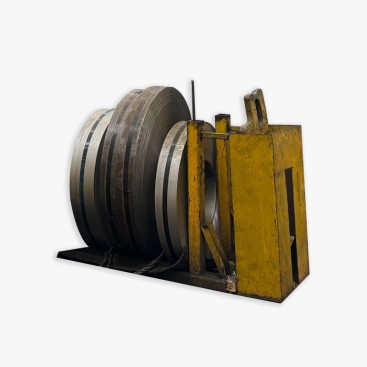
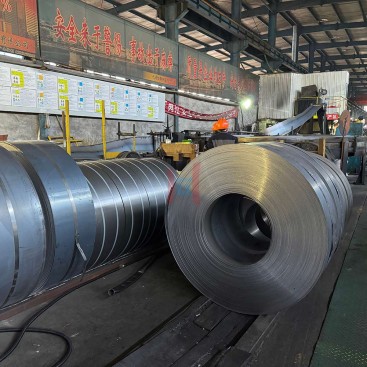
Coil geometry also matters. A shipment containing narrow, heavy coils may use container space differently from a shipment containing wider coils. Coil OD, ID, individual coil weight, orientation, support method, and securing arrangement should therefore be confirmed before loading.
| Loading Item | What to Confirm | Why It Matters |
|---|---|---|
| Total cargo weight | Net and gross weight | Avoid exceeding transport limitations |
| Individual coil weight | Target range per coil | Affects handling and unloading equipment |
| Coil dimensions | Width, ID, OD | Determines loading compatibility |
| Loading orientation | Eye-to-sky or eye-to-side as required | Influences handling and cargo stability |
| Protection | Waterproof paper, steel protection, straps, skids | Reduces transport and moisture-related risks |
Manufacturer packaging references commonly identify coil labels, coil numbers, coating mass, dimensions, net mass, gross mass, and inspection information as part of shipment traceability. :contentReference[oaicite:1]{index=1}
4. Common Wholesale Specification Matrix
A practical stock planning range is 0.4–2.0 mm thickness and 600–1250 mm width, with coating classes from AS40 through AS200. Wider ranges are also commercially available, but keeping a defined wholesale matrix makes inventory planning and quotation comparison easier. Published supplier specifications show that widths around 600–1500 mm and coating ranges extending to AS200 are available for related coated-steel products. :contentReference[oaicite:2]{index=2}
| Parameter | Planning Range | Typical Procurement Consideration |
|---|---|---|
| Thickness | 0.4–2.0 mm | Select according to forming, structural and thermal requirements |
| Width | 600–1250 mm | Standard widths simplify stocking; slitting can create narrower strips |
| Coating | AS40–AS200 | Higher coating mass is selected according to corrosion and service requirements |
| Coil form | Standard or customized | Confirm ID, OD, coil weight and winding direction |
| Processing | Mill coil, slit coil, cut-to-length | Specify whether processing is required before shipment |
5. Base Steel and Coating Combinations
The coating designation should never be evaluated separately from the base steel. Wholesale buyers should specify the steel grade, applicable standard, mechanical requirements, coating class, surface condition, and intended processing route as one package.
Depending on the market and application, procurement specifications may combine cold-rolled or forming-grade bases with different aluminizing requirements. Examples found in commercial specifications include grades such as DX51D through higher forming grades and JIS-based SA designations. :contentReference[oaicite:3]{index=3}
Choose a suitable commercial or forming-grade base when the downstream process involves bending, roll forming, or moderate shaping.
Use a specified deep-drawing grade when significant deformation is expected rather than substituting a general-purpose base.
Confirm the aluminizing type, coating mass, base grade, forming process, and actual service temperature together.
6. Wholesale MOQ and Payment-Term Planning
Minimum order quantity should be linked to production practicality rather than treated as a universal number. A small trial order can be appropriate for specification validation, while repeat wholesale programs can use larger releases to improve production planning.
For payment terms, buyers commonly need to distinguish between a trial transaction and an established supply relationship. Depending on supplier qualification, destination, credit arrangements, and order history, the commercial structure may use advance payment, balance before shipment, documentary payment, or an agreed credit period.
For procurement teams requesting account terms, it is useful to prepare a basic supplier package: company information, expected annual volume, target markets, previous purchasing history, trade references where applicable, and the proposed payment structure. This allows the supplier to evaluate credit exposure without changing the technical specification.
7. Mixed Loading and Slitting Strategy
Mixed loading can be useful when one container needs to serve several downstream customers or applications. However, excessive specification fragmentation can make production and loading less efficient.
A practical mixed-load plan can group products by thickness, coating, or base grade. For example, several widths may share one base grade and coating class, while narrower strips can be produced through slitting when the required edge condition and dimensional tolerance are suitable.
| Requirement | Better Planning Approach |
|---|---|
| Several widths, same material | Consider master coils plus slitting where technically suitable |
| Several coating classes | Separate coil groups clearly in the purchase order |
| Different base grades | Use separate material codes and inspection records |
| Container optimization | Finalize individual coil weights before loading |
8. Teda Ganghua Wholesale Supply and Processing Support
Teda Ganghua can support procurement programs that require more than a single standard coil. For wholesale buyers, the practical workflow can combine material selection, specification confirmation, coil preparation, processing coordination, inspection documentation, and export packing.
For customers purchasing aluminized steel for tube and pipe applications, Teda Ganghua can also coordinate related aluminized steel tubes according to the required dimensions, grade, coating specification, and downstream fabrication needs.
A wholesale inquiry should ideally include thickness, width, base-steel grade, applicable standard, coating class, total quantity, coil ID, maximum coil weight, slitting requirements, packing requirements, destination port, and inspection-document requirements. A complete specification reduces repeated clarification and makes the supplier’s production and loading plan easier to prepare.
Wholesale Inquiry Checklist
- Material standard and base-steel grade
- Thickness and thickness tolerance
- Width and width tolerance
- Coating designation and required coating mass
- Total tonnage and expected repeat-order volume
- Coil ID, OD and individual coil-weight requirement
- Master coil or slitting requirement
- Mixed-loading requirements
- Packaging and loading orientation
- Inspection certificates and traceability documents
- Destination port and preferred shipping configuration
- Payment and account-term requirements
9. Frequently Asked Questions
What quantity is suitable for a first wholesale order?
A 1–5 t trial order can be used to verify grade, coating, forming behavior, dimensions, and surface requirements before moving to regular 5–20 t orders or container-load purchasing.
How much aluminized steel coil can a 20GP container carry?
A planning figure of approximately 22–25 t is commonly used for a 20GP steel-coil shipment, but the final allowable cargo weight must be confirmed against the container, carrier, route, packaging, and loading arrangement.
Can different widths be mixed in one wholesale shipment?
Yes. Mixed widths can be arranged when the production plan and loading configuration permit it. For repeated narrow-width requirements, master-coil slitting may also be considered.
Should the coating class be specified separately from the steel grade?
No. The purchase specification should identify both the base steel and coating requirement. Mechanical properties, forming behavior, corrosion environment, and service temperature can all affect the appropriate combination.
What information should be included in a wholesale inquiry?
At minimum, provide the material standard, base grade, thickness, width, coating class, quantity, coil dimensions, processing requirements, packing method, destination, and required inspection documents. This gives the supplier enough information to prepare a technically comparable quotation and loading plan.