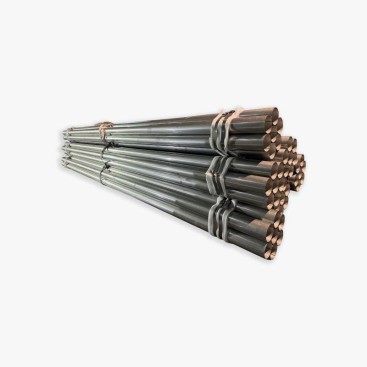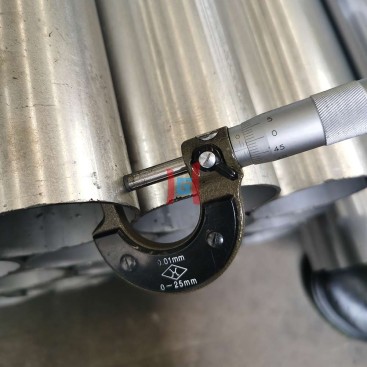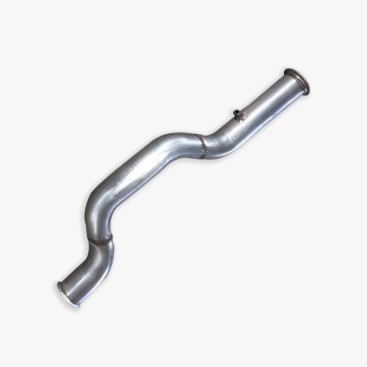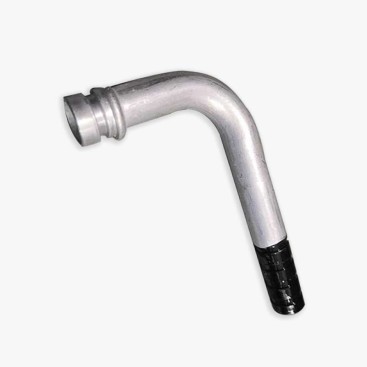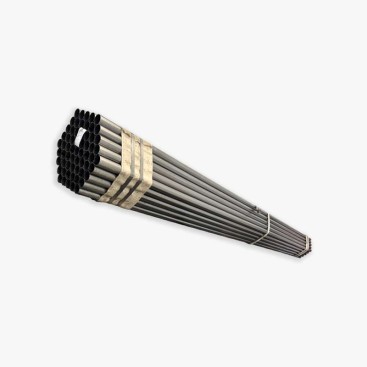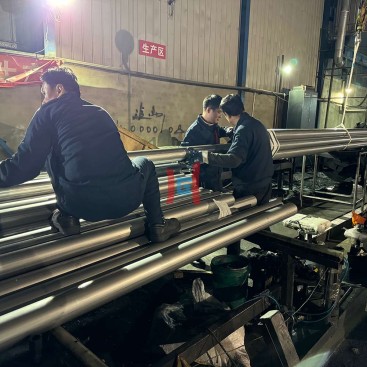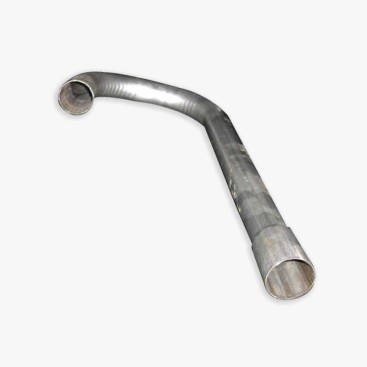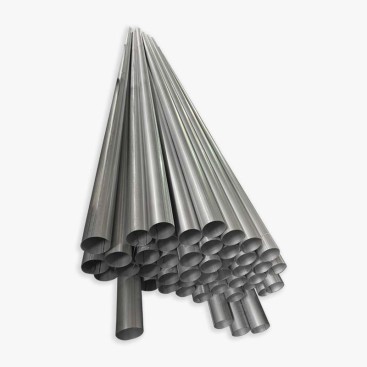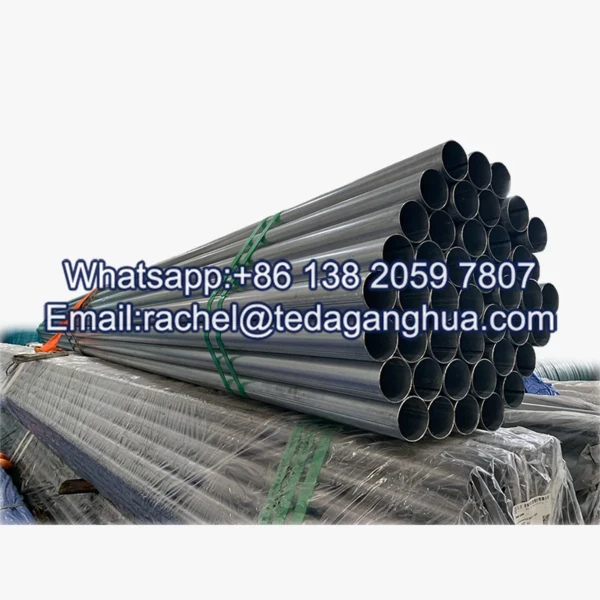
Aluminizado 409 Tubo de escape de aço inoxidável
- Descrição
Descrição
“Aluminized 409 stainless steel exhaust pipe” can describe two different material routes rather than one standard alloy. Tipo 409 is already a titanium-stabilized ferritic stainless steel developed for exhaust applications, while aluminized exhaust tubing normally uses a carbon-steel substrate protected by an aluminum-silicon coating. Treating them as separate material systems makes temperature, corrosão, soldagem, vida útil, and lifecycle selection much easier to evaluate.
Key clarification: 409 stainless steel does not need an aluminized coating to obtain its basic heat and corrosion resistance. Its approximately 10.5–11.75% chromium content and stabilization with titanium, with some specifications also using niobium, are fundamental to the grade. Aluminized steel is a different construction: a steel substrate receives an aluminum-silicon protective coating.
Two Material Routes for Long-Life Exhaust Systems
The practical comparison is therefore between Route A: 409 stainless tubing e Route B: aluminized carbon-steel tubing. Both can be effective, but they solve the durability problem differently.
Route A — 409 Inoxidável
The corrosion-resistant alloy is built into the steel itself. There is no external metallic coating that must remain intact for the substrate to retain its stainless character.
- Titanium-stabilized ferritic structure
- Aproximadamente 11% cromo
- Strong resistance to exhaust-gas oxidation
- Suitable for welded exhaust components
- Widely used from exhaust pipes to mufflers and tail pipes
Route B — Aluminized Steel
The corrosion and oxidation barrier is supplied primarily by the aluminum-silicon coating. The underlying carbon steel remains dependent on coating integrity for long-term protection.
- Carbon-steel substrate
- Aluminum-silicon protective layer
- Good oxidation protection for moderate exhaust temperatures
- Efficient forming and welding route
- Often attractive for cold-end exhaust components
409 Aço inoxidável: Heat and Corrosion Behavior
Tipo 409 is a ferritic stainless steel specifically associated with automotive exhaust systems. Technical references report scaling resistance around 675°C in continuous service and up to approximately 815°C in intermittent conditions, although the actual allowable temperature depends on atmosphere, ciclagem térmica, grossura, fabricação, and component geometry.
Isso faz 409 particularly useful when the exhaust component experiences repeated heating and cooling, external road exposure, and internal exhaust-gas corrosion. It is also significantly more resistant to general atmospheric and exhaust corrosion than ordinary carbon steel. :referência de conteúdo[ovelha:3]{index=3}
One important qualification is that 409 is not a decorative stainless steel. Its surface can develop discoloration or light surface oxidation, which is normally acceptable for exhaust components hidden below a vehicle. The engineering objective is functional corrosion and oxidation resistance rather than a bright architectural appearance.
Aço Aluminizado: Why the Coating Matters
Aluminized exhaust tubing takes a different approach. Instead of increasing chromium throughout the steel, an aluminum-silicon coating provides a protective surface over a carbon-steel substrate. Historical exhaust-material studies identify aluminized steel and Type 409 as established material choices for exhaust applications above uncoated carbon steel.
The coating can provide effective resistance to oxidation and external corrosion at moderate exhaust temperatures. No entanto, the durability mechanism is different from stainless steel: coating damage, soldagem, formando, scratches, and localized coating loss can expose the underlying steel. This is especially important around joints, colchetes, bends, clamps, and welded areas.
Important temperature note: Do not select an exhaust material from a single headline temperature number. Hot-end exhaust components can experience temperatures substantially above the normal operating range of mufflers and tail pipes. Component temperature, peak exposure, ciclagem térmica, condensação, espessura da parede, condição do revestimento, and weld design should all be evaluated together.
409 Stainless vs Aluminized Steel Exhaust Pipe: Engineering Comparison
| Selection Factor | 409 Stainless Route | Aluminized Steel Route | Engineering Implication |
|---|---|---|---|
| Material system | Ferritic stainless steel | Carbon steel plus Al-Si coating | Different corrosion mechanisms |
| Typical thermal capability | Suitable for high-temperature exhaust duty; reported continuous scaling resistance around 675°C and intermittent exposure around 815°C | Generally suited to moderate-temperature exhaust sections within the coating’s design limits | Verify actual component temperature rather than using a generic rating |
| Condensation corrosion | Better resistance than ordinary carbon steel | Strongly dependent on coating integrity | Important for mufflers and tail sections |
| Surface protection | Alloy-based corrosion resistance | Coating-based protection | Damage has different consequences |
| Soldagem | Good fabricability and weldability when the grade and procedure are properly selected | Readily welded, but coating effects and local coating restoration must be considered | Weld procedure affects durability |
| Peso | Can be lightweight at optimized wall thickness | Can also achieve low system mass | Wall thickness and component design matter more than alloy name alone |
| Service-life potential | Strong potential for long service where temperature and corrosion are within grade capability | Strong potential in moderate-temperature sections when coating remains effective | Actual life depends heavily on environment and design |
| Lifecycle selection | Higher material investment can be justified by durability requirements | Efficient where thermal and corrosion requirements are moderate | Evaluate replacement, downtime, fabrication and maintenance together |
Observação: Exhaust-system service life cannot responsibly be assigned as a universal number of years. Sal de estrada, moisture retention, operating cycles, condensação, espessura da parede, coating damage, welding quality, engine calibration and component location can change service life substantially.
Why the Exhaust System Should Not Use One Material Everywhere
An exhaust system is a temperature gradient rather than a uniform environment. The manifold and front pipe see substantially more thermal load than the muffler and tail pipe. Ao mesmo tempo, the rear sections experience more condensation and can spend longer periods at relatively low temperatures.
| Exhaust Section | Primary Risk | Preferred Material Direction | Reason |
|---|---|---|---|
| Manifold / very hot front end | Peak temperature, ciclagem térmica, oxidação | Heat-resistant stainless grades selected for the actual duty | Thermal margin is the first priority |
| Front and intermediate pipe | Temperature plus vibration | 409 stainless is a common engineering route | Balances oxidation resistance, fabrication and durability |
| Silencioso / center section | Condensation and external corrosion | 409 stainless or appropriately specified aluminized steel | Selection depends on thermal profile and corrosion environment |
| Tail pipe | Low-temperature condensation and road exposure | Material can often be optimized toward corrosion and forming requirements | Thermal demand generally decreases toward the outlet |
Research on automotive exhaust materials similarly distinguishes hot-end components from cold-end components. Hot-end parts can exceed 600°C, while mufflers and tail pipes operate at substantially lower temperatures and may experience dew-point corrosion. This is one reason material selection can change along the exhaust system instead of relying on one specification throughout.
How to Choose Between the Two Routes
Choose 409 Stainless When:
- The component operates at relatively high exhaust temperatures.
- Long-term corrosion resistance is more important than minimum initial material consumption.
- The component sees repeated heating and cooling cycles.
- Condensation and road-salt exposure are significant concerns.
- The exhaust assembly requires a durable welded tubular structure.
Consider Aluminized Steel When:
- The component is located in a moderate-temperature exhaust section.
- The coating specification is appropriate for the expected thermal environment.
- External corrosion protection is required without using stainless throughout the system.
- Forming and fabrication requirements favor a coated carbon-steel substrate.
- The engineering team can adequately control coating damage during manufacturing.
Welding and Fabrication Considerations
Welding should be evaluated as part of the material system rather than treated as a separate production step. Para 409, stabilization is important because exhaust welds experience repeated thermal exposure. Technical literature has documented sensitization and intergranular-corrosion risks in some stabilized 11% chromium ferritic stainless conditions, making grade chemistry and welding procedure important for demanding applications.
For aluminized tubing, forming and welding can locally disturb the protective coating. The engineering review should therefore include bend radii, weld geometry, heat input, coating condition after fabrication, and any required post-weld protection. A material that performs well as supplied can have a very different local corrosion behavior after aggressive forming or welding.
Lifecycle Thinking: Initial Material Is Not the Whole Cost
A lower material input does not automatically create the lowest lifecycle cost. Exhaust-system procurement should consider material utilization, formação de tubo, welding productivity, integridade do revestimento, expected replacement interval, warranty exposure, vehicle operating environment, and downtime.
For a high-temperature front section, selecting a material with insufficient thermal or corrosion margin can create premature failure even if the initial material selection appears efficient. Conversely, using a higher-performance stainless material throughout a low-temperature rear section may provide limited additional engineering value if a properly specified coated steel system already meets the required service conditions.
Procurement rule: Compare materials by component and service environment, not simply by material name. A well-designed exhaust system may use different material grades or coating levels from the hot end to the cold end.
Teda Ganghua Supply Option for Aluminized Tubes
For projects that require the coated-steel route, Teda Ganghua can support procurement of aluminized steel tubes for exhaust and thermal applications, with attention to substrate grade, dimensões do tubo, espessura da parede, especificação de revestimento, formando requisitos, and application environment. This is particularly useful when procurement teams want to evaluate coated tubing as an alternative to using stainless throughout a complete exhaust assembly.
tubos de aço aluminizados can be reviewed according to the required tube geometry and service conditions rather than selected only by nominal coating designation.
Practical Selection Checklist
- Measure or estimate the real wall temperature at the component location.
- Separate continuous temperature from short-duration peak temperature.
- Identify whether condensation or road-salt exposure is significant.
- Check the required wall thickness and forming radius.
- Review welding method, heat input and post-weld surface condition.
- For coated steel, specify coating type and coating mass or thickness according to the applicable standard.
- For stainless, verify the exact grade and stabilization requirements.
- Compare expected service life rather than only initial material consumption.
- Evaluate the manifold, front pipe, muffler and tail pipe separately.
Perguntas frequentes
É 409 stainless steel the same as aluminized steel?
Não. 409 is a ferritic stainless steel with chromium-based corrosion and oxidation resistance built into the alloy. Aluminized steel is generally a carbon-steel substrate protected by an aluminum-silicon coating. They are two different material systems.
Does 409 stainless steel need an aluminum coating for exhaust use?
Não. Its chromium and stabilizing additions provide the fundamental oxidation and corrosion resistance. The grade was specifically developed for exhaust-system applications.
Which material is better for a high-temperature exhaust section?
The answer depends on the actual thermal profile and design. 409 is widely used in exhaust systems and provides substantial oxidation resistance, while aluminized steel is generally more appropriate when the coating’s thermal and corrosion limits are compatible with the component.
Why can an exhaust system use different materials in different sections?
Temperatura, condensation and corrosion conditions change from the manifold toward the tail pipe. Hot-end sections prioritize thermal resistance, while cold-end sections can place greater emphasis on condensation and external corrosion.
O aço aluminizado pode substituir 409 stainless everywhere?
Não automaticamente. A decisão deve ser tomada componente por componente usando a temperatura real, ciclagem térmica, exposição à corrosão, integridade do revestimento, requisitos de fabricação e vida útil necessária. Uma solução de aço revestido pode ser eficaz em seções adequadas, mas não deve ser selecionado além do seu envelope de design.