- Descrição
Descrição
Aluminized vs Galvanized Steel Pipe: The Definitive Comparison for High-Temperature Applications
Aluminized steel pipe e tubo de aço galvanizado are two of the most widely used corrosion-resistant steel products, but they are designed for fundamentally different service environments. The key difference lies in their protective coating chemistry and temperature resistance limits.
This guide provides a deep engineering comparison covering temperature resistance, desempenho de corrosão, welding behavior, cost structure, and selection logic.
1. Core Difference: Coating System
| Item | Tubo de aço aluminizado | Tubo de aço galvanizado |
|---|---|---|
| Material de revestimento | Aluminum or Al-Si alloy (mergulho quente) | Zinco (hot-dip galvanizing) |
| Protection mechanism | Al₂O₃ oxide barrier at high temperature | Zn sacrificial corrosion protection |
| Função principal | Alta temperatura + resistência à oxidação | Atmospheric corrosion protection |
2. Temperature Resistance Comparison (Key Differentiator)
| Performance Factor | Tubo Aluminizado | Tubo galvanizado |
|---|---|---|
| Maximum service temperature | Up to ~800°C | ~200–250°C (zinc begins to degrade) |
| Resistência à oxidação em alta temperatura | Excelente (Al₂O₃ protective film) | Pobre (zinc volatilization & oxidação) |
| Thermal cycling stability | Alto | Baixo |
Em temperaturas elevadas, zinc coatings rapidly degrade, while aluminized coatings form a stable protective oxide layer.
3. Resistência à corrosão (Salt Spray & Environment)
| Test / Environment | Aço Aluminizado | Aço Galvanizado |
|---|---|---|
| Salt spray resistance | Alto (stable Al₂O₃ barrier) | Médio (sacrificial zinc consumption) |
| Industrial atmosphere | Excellent for high-temp gases | Good for ambient corrosion |
| Marine environment | Bom (better at elevated temp) | Moderado (zinc depletion over time) |
4. Soldagem & Fabrication Performance
| Factor | Tubo Aluminizado | Tubo galvanizado |
|---|---|---|
| Soldabilidade | Bom (requires coating control) | Good but zinc fumes hazardous |
| Post-weld protection | Al-Si coating can self-protect partially | Requires zinc-rich paint repair |
| Health & safety | Lower fume toxicity | Zinc oxide fumes require ventilation |
In welding applications, galvanized steel requires stricter safety controls due to zinc vaporization.
5. Cost Structure Comparison
| Cost Factor | Tubo Aluminizado | Tubo galvanizado |
|---|---|---|
| Raw material cost | Mais alto (Al or Al-Si bath) | Mais baixo (revestimento de zinco) |
| Processing complexity | Mais alto (hot-dip aluminizing line) | Mais baixo (standard galvanizing line) |
| Lifecycle cost | Lower in high-temp use | Higher in high-temp failure risk |
6. Application Decision Tree
| Condition | Recommended Material |
|---|---|
| Temperatura > 300°C | Aluminized steel pipe |
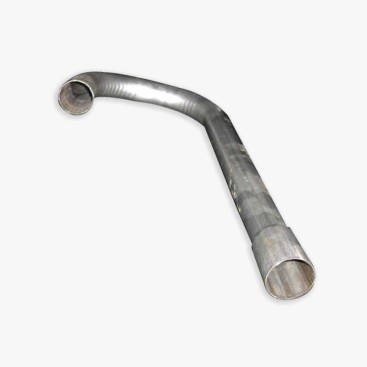
| Sistemas de exaustão automotivos | Aluminized steel pipe |
| Outdoor structural use (ambient temp) | Galvanized steel pipe |
| Hvac / sistemas de ventilação | Qualquer (depends on temperature) |
| Corrosive + high heat environment | Aluminized steel pipe (preferred) |
7. Typical Industry Applications
| Indústria | Tubo Aluminizado | Tubo galvanizado |
|---|---|---|
| Automotivo | Sistemas de exaustão, catalytic housings | Body frames, low-temp components |
| Construção | Heat ducts, industrial chimneys | Water pipes, structural supports |
| Energy systems | Gasodutos de combustão | General utility piping |
8. Por que os compradores escolhem Teda Ganghua
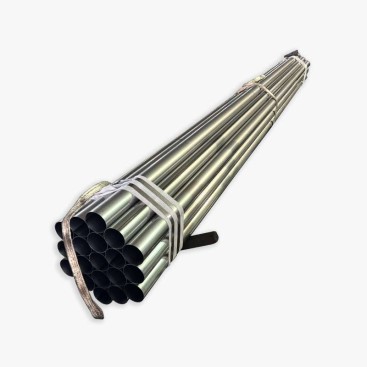
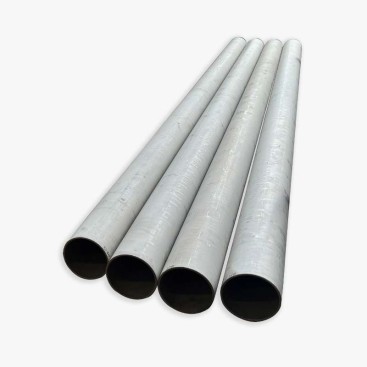
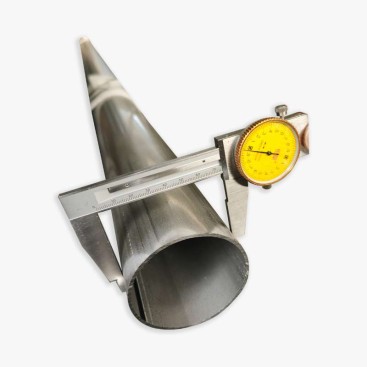
No Teda Ganghua, we supply aluminized steel pipes and tubing designed for high-temperature corrosion resistance, with stable Al-Si coating performance and strict dimensional control for global industrial applications.
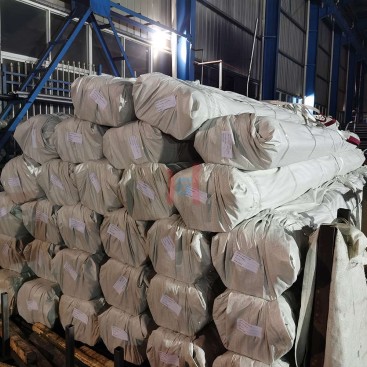
Apoiamos o corte OEM, preparação de flexão, and export packaging for automotive and industrial pipeline systems.
Explore nossos produtos de tubos de aço aluminizado aqui:
Produtos de tubo de aço aluminizado
Conclusão
O tubo de aço aluminizado é a escolha superior para ambientes de alta temperatura e oxidação, enquanto o tubo de aço galvanizado permanece ideal para proteção contra corrosão atmosférica em baixa temperatura. A seleção correta depende da temperatura operacional, exposição à corrosão, e considerações de custo do ciclo de vida.