
Preço do tubo de aço aluminizado por kg


- Descrição
Descrição
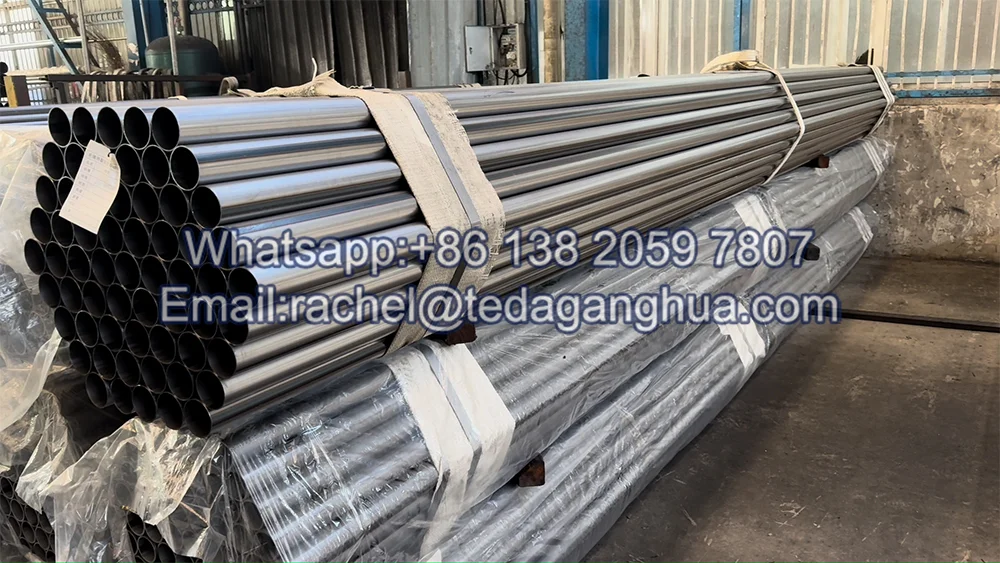
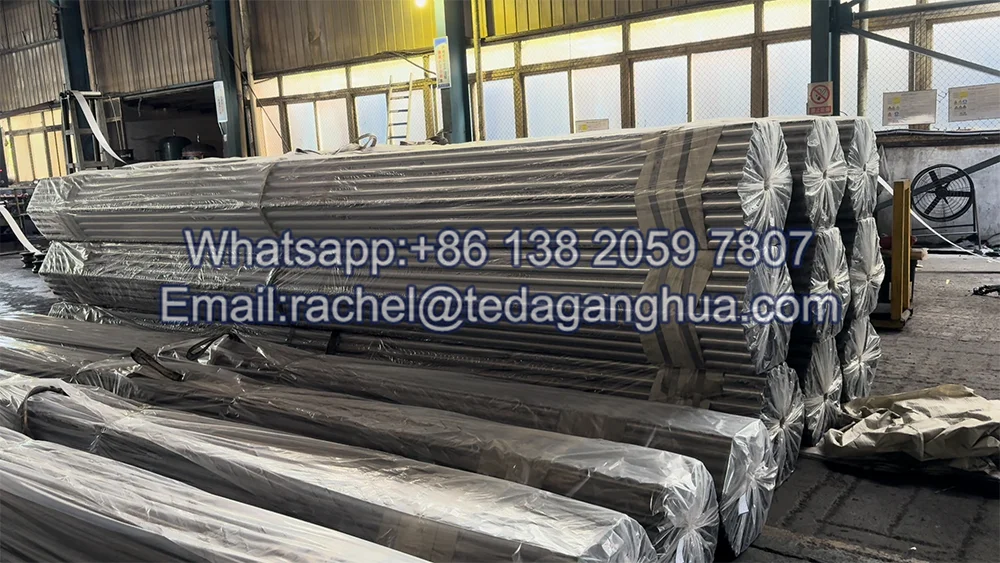
Comparing aluminized steel pipe price per kg is useful when purchasing small quantities, replacement sections, trial orders, or materials for prototype production. A kilogram-based quotation makes it easier to calculate the cost of a limited quantity, but the unit price may be higher than a bulk quotation because cutting, sorting, embalagem, handling, and documentation costs are distributed across fewer kilograms.
A higher price per kilogram does not automatically mean a small order is uneconomical. For maintenance teams and buyers who need only a few pieces, buying a limited quantity can avoid minimum-order commitments, excess inventory, and cash tied up in unused material. The key is to compare the complete cost of obtaining the required material rather than focusing only on the headline rate.
1. Why Small-Quantity Orders Can Have a Higher Price per Kilogram
The price of a finished pipe includes more than its raw material value. Produção, inspeção, corte, handling, packing, and order administration can all contribute to the final quotation. Many of these activities have minimum costs that do not fall in direct proportion to order weight.
When a buyer orders a large quantity, these costs can be spread across more kilograms. When the buyer orders only a few short pieces, the same types of activities may be required for a much smaller shipment, increasing the cost allocated to each kilogram.
| Cost component | Effect on a small order | Question to ask |
|---|---|---|
| Cutting and preparation | Individual pieces may require extra setup, medindo, corte, and deburring. | Is cutting included, or charged per cut or order? |
| Sorting and handling | Selecting a few pieces from stock may require additional picking and verification. | Are there small-order handling charges? |
| Packaging | Protective packing and secure bundling still require materials and labor. | Does the price include the required packaging? |
| Inspection and documents | Order checks and paperwork may have minimum administrative costs. | Which inspection records and material documents are included? |
| Freight and order processing | Minimum transport or processing charges may be spread over fewer kilograms. | What is the total delivered cost? |
This is why a small-order price should be evaluated against the quantity actually needed, the services included, and the cost of holding excess inventory. A lower bulk rate may offer little practical benefit if it forces the buyer to purchase more material than the project requires.
2. Convert Kilogram, Tonne, and Meter Prices Correctly
Price per kilogram, price per metric tonne, and price per meter describe different purchasing units. They can be compared mathematically, but only after the pipe specification and weight basis have been confirmed.
Kilogram price to metric-tonne price
Price per metric tonne = Price per kg × 1,000
Metric-tonne price to kilogram price
Price per kg = Price per metric tonne ÷ 1,000
Kilogram price to meter price
Price per meter = Price per kg × Weight per meter in kg
Meter price to kilogram price
Price per kg = Price per meter ÷ Weight per meter in kg
These formulas assume that the tonne is a metric tonne of 1,000 kg and that all prices use the same currency and comparable commercial terms. Taxes, delivery, embalagem, corte, and other charges should be adjusted separately if they are not included on the same basis.
Weight per meter is the essential link between length-based and weight-based prices. It depends on the outside diameter, espessura da parede, material, and the agreed treatment of the coating. Use the supplier’s confirmed weight table or an agreed calculation method rather than applying a weight figure from another pipe size.
3. Why You Should Not Compare Different Pipe Sizes by Kilogram Price Alone
A kilogram quotation can conceal important differences between products. Two pipes may have the same price per kilogram but different weights per meter, requisitos de processamento, especificações de revestimento, and suitability for the intended application.
Before comparing quotations, verify the following:
- Outside diameter: Confirm the exact dimension and whether the stated size refers to actual outside diameter or a nominal pipe designation.
- Espessura da parede: Check the specified thickness and permitted tolerance. Different thicknesses change weight per meter and may affect performance.
- Coating requirements: Identify the coating type, required coating mass or thickness where applicable, and the relevant inspection method.
- Product construction: Confirm whether the pipe is welded or seamless and identify the applicable finished-pipe standard.
- Length and preparation: Check whether the quotation covers standard lengths, cut pieces, deburring, end preparation, or other services.
- Weight convention: Establish whether payment uses actual scale weight, theoretical weight, net weight, or another agreed basis.
Por exemplo, a quotation for a larger-diameter pipe should not be judged against a smaller-diameter pipe solely because both use the same kilogram rate. The required quantity, weight per meter, manufacturing route, and processing scope may be different. The comparison must begin with technical equivalence.
4. When Buying by the Kilogram Makes Sense
Small-quantity purchasing can be a practical strategy when the buyer values flexibility, quick replenishment, or limited inventory exposure more than the lowest possible bulk unit rate.
| Purchasing situation | Why a small order may be suitable | Main consideration |
|---|---|---|
| Trial order | Allows the buyer to evaluate dimensions, revestimento, and supplier consistency before scaling up. | Agree on the inspection criteria for future repeat orders. |
| Maintenance and repairs | Provides replacement material without requiring a large stock purchase. | Confirm compatibility with the existing installation. |
| Prototype or sample production | Keeps material commitment limited while the design is being validated. | Check whether the sample specification will match production material. |
| Occasional replenishment | Avoids excess stock for low-frequency demand. | Compare the delivered small-order cost with the cost of holding inventory. |
| Low-volume fabrication | Lets a fabricator purchase material for a defined job or batch. | Check cutting yield, offcuts, e requisitos de embalagem. |
Buying by the kilogram is not necessarily a poor deal when the quantity is genuinely small. A buyer may avoid minimum-order pressure, storage costs, unused stock, and working capital tied up in material that may not be consumed for months. The correct decision depends on the total cost of ownership, not simply the unit price.
5. How to Move from Kilogram Purchases to Ton-Level Orders
Once demand becomes regular and predictable, it may be worth requesting a bulk quotation. The transition should be based on consumption, stock availability, and the economics of the specific pipe specification rather than a fixed order-size rule.
Consider requesting ton-based pricing when:
- The same dimensions and coating requirements are purchased repeatedly.
- Forecast demand is stable enough to justify holding inventory.
- The expected reduction in unit price exceeds additional storage, handling, financing, and inventory risks.
- The supplier can consolidate production or shipment without compromising the required delivery schedule.
- The buyer can accept the supplier’s minimum order quantity and standard production or packing arrangements.
When negotiating a transition to bulk orders, ask for a written price ladder based on the same specification. Confirm the minimum production quantity, stock-order options, volume thresholds, tempo de espera, condições de pagamento, weight settlement method, and delivery scope.
It is also useful to ask whether several sizes can be combined toward a volume threshold, whether the quoted rate requires one shipment, and whether split deliveries incur additional costs. A lower ton price may not be advantageous if it requires unnecessary inventory or creates extra handling expenses.
6. Small-Order Quotation Checklist
Use this checklist to compare kilogram-based offers from different suppliers. Record the exact product specification and included services before evaluating the final cost.
| Item | Supplier A | Supplier B |
|---|---|---|
| Outside diameter and wall thickness | Enter confirmed specification | Enter confirmed specification |
| Material and coating requirement | Enter grade and coating details | Enter grade and coating details |
| Quoted price per kg | Enter price and currency | Enter price and currency |
| Weight basis | Real / theoretical / other | Real / theoretical / other |
| Required quantity | Enter kg and piece count | Enter kg and piece count |
| Cutting and end preparation | Included / excluded | Included / excluded |
| Packaging and delivery | Enter terms and charges | Enter terms and charges |
| Taxes and documentation | Enter included items | Enter included items |
| Total cost for required quantity | Calculate after adjustments | Calculate after adjustments |
For a fair comparison, calculate the total cost for the quantity you actually need, including any applicable cutting, embalagem, inspeção, tax, and delivery charges. If the suppliers use different currencies or weight conventions, normalize those first. Do not compare the kilogram rate of one pipe size with another without checking the specifications.
7. Request a Specification-Based Quote from Teda Ganghua
Teda Ganghua supports procurement teams sourcing tubos de aço aluminizados for project orders, replenishment, and planned production. To assess whether a small-quantity purchase or a bulk order is more suitable, provide the outside diameter, espessura da parede, material and coating requirements, required lengths, estimated quantity, and destination.
Ask the supplier to distinguish the base material rate from cutting, embalagem, inspeção, and delivery costs. If demand is expected to increase, request both the small-order option and applicable volume tiers so that the purchasing decision reflects the complete cost rather than a single unit price.
Perguntas frequentes
Why is the price per kilogram higher for a small order?
Corte, sorting, handling, embalagem, inspeção, and documentation may involve minimum costs. When the order contains fewer kilograms, those costs are distributed across a smaller quantity, increasing the effective unit rate.
How do I convert a kilogram price into a meter price?
Multiply the price per kilogram by the confirmed weight per meter. The weight must correspond to the exact outside diameter, espessura da parede, material, and applicable coating basis.
Is buying by the kilogram more expensive than buying by the ton?
The kilogram rate for a small order may be higher because of order-processing and production economics. No entanto, a small purchase can still be more economical overall when it avoids excess inventory, minimum-order commitments, storage costs, or unused material.
When should I switch from small orders to bulk purchasing?
Consider bulk purchasing when demand becomes predictable, specifications are standardized, and the potential unit-cost reduction justifies the added inventory and cash commitment. Compare written volume tiers and include storage, delivery, and handling costs.
What information is needed for an accurate small-order quotation?
Provide the pipe’s outside diameter, espessura da parede, grau de material, exigência de revestimento, norma aplicável, required lengths, quantidade, necessidades de processamento, requisitos de embalagem, e destino de entrega. Confirme também a base de peso e se o preço inclui impostos e frete.