Алюминированная сталь для теплообменника


- Описание
Описание
Aluminized Steel for Heat Exchangers: Tubes, Fins & Plates for Dry Heat Transfer Applications
Aluminized steel for heat exchangers is used in applications where heat transfer performance, стойкость к окислению, and cost control are required. With an aluminum-silicon coating on a steel substrate, aluminized steel provides protection against high-temperature oxidation while maintaining good mechanical strength.
In heat exchanger systems, aluminized steel is commonly used for fins, tubes, and plates, especially in dry or low-moisture environments such as exhaust gas heat recovery systems, air coolers, industrial ventilation equipment, and thermal management components.
Forms of Aluminized Steel Used in Heat Exchangers
| Компонент | Typical Thickness | Main Function |
|---|---|---|
| Heat Exchanger Fins | 0.2-0.5мм | Increase surface area and improve heat transfer |
| Heat Exchanger Tubes | 1.0-2.0мм | Transfer heat while resisting oxidation |
| Heat Transfer Plates | Customized thickness | Structural heat exchange surfaces |
Why Aluminized Steel Is Suitable for Heat Exchanger Fins
Heat exchanger fins require a combination of corrosion resistance, тепловые характеристики, и технологичность. Aluminized steel offers a practical alternative when pure aluminum or copper solutions are not suitable for the operating environment.
- Атмосферная коррозионная стойкость: The aluminum coating helps protect steel fins in outdoor environments.
- High-temperature oxidation protection: The coating forms a stable aluminum oxide layer during heating.
- Mechanical strength: The steel core provides better rigidity than pure aluminum materials.
- Cost efficiency: It provides a lower-cost option for large heat exchanger structures.
Dry Applications and Operating Boundaries
Aluminized steel performs best in dry heat transfer applications where moisture and acidic condensation are limited. Typical applications include air cooling systems, dry exhaust heat recovery, Промышленные печи, and ventilation equipment.
For wet exhaust environments, especially where sulfur-containing gases may create acidic condensation, material selection requires additional evaluation. Dew point corrosion can damage protective coatings and accelerate substrate corrosion.
| Operating Condition | Material Suitability |
|---|---|
| Dry Hot Gas | Excellent application area |
| Low Moisture Exhaust | Generally suitable with proper design |
| Acid Dew Point Zone | Requires corrosion assessment |
| Wet Chemical Environment | May require upgraded materials |
Aluminized Steel vs Copper and Aluminum Fins
| Материал | Heat Transfer | Сила | Cost Performance |
|---|---|---|---|
| Алюминированная сталь | Умеренный | Высокий | Balanced for industrial use |
| Алюминий | Высокий | Lower than steel substrate | Good for lightweight systems |
| Медь | Отличный | Хороший | Более высокая стоимость материала |
Common Failure Modes in Aluminized Heat Exchangers
Understanding possible failure mechanisms helps engineers select the correct material and operating conditions.
- Dew point corrosion: Moist acidic gases condense on surfaces and attack the coating.
- Coating consumption: Long-term high-temperature exposure gradually reduces aluminum protection.
- Thermal cycling damage: Repeated heating and cooling may affect coating adhesion.
- Mechanical damage: Forming or handling defects can expose the steel substrate.
Heat Exchanger Material Selection Guide
| Приложение | Recommended Material Consideration |
|---|---|
| Air Cooling Fins | Aluminized steel for corrosion and cost balance |
| Dry Exhaust Heat Recovery | Aluminized steel with proper temperature control |
| Wet Exhaust Systems | Evaluate stainless steel or upgraded alloys |
| High Corrosion Environment | Select according to chemical exposure |
Processing Requirements for Heat Exchanger Materials
Heat exchanger manufacturers often require aluminized steel with consistent thickness, качество поверхности, and forming performance. Typical processes include:
- Fin stamping and corrugation
- Tube forming and welding
- Plate cutting and shaping
- Assembly fabrication
Teda Ganghua Aluminized Steel for Heat Exchanger Applications
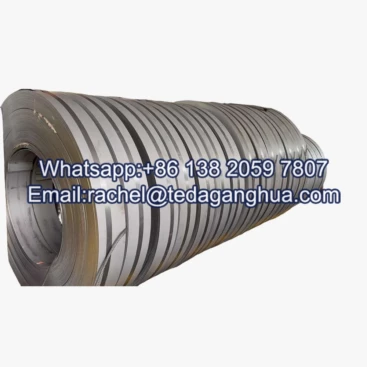
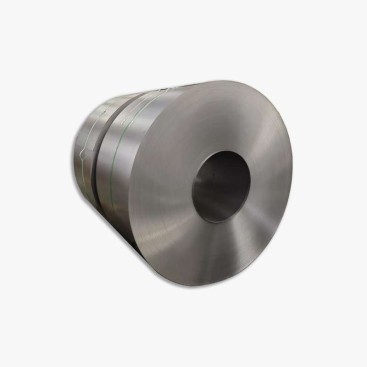
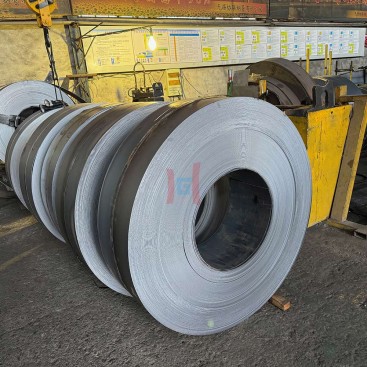
Теда Ганхуа поставки катушка из алюминизированной стали for heat exchanger manufacturers, выхлопные системы, промышленное отопительное оборудование, and thermal management applications. With stable coating quality, индивидуальные спецификации, и поддержка обработки, Teda Ganghua helps customers select suitable aluminized materials for fins, tubes, and fabricated heat transfer components.
Choosing the correct aluminized steel grade and thickness according to temperature, moisture level, and corrosion conditions is essential for achieving reliable heat exchanger performance.