- คำอธิบาย
คำอธิบาย
Aluminized Steel for Baking Pans: Heat Distribution, ความทน & Food Processing Performance
Aluminized steel for baking pans is widely used in commercial baking equipment because it combines the thermal advantages of aluminum with the strength and durability of steel. For bakeries, food manufacturers, and kitchen equipment producers, aluminized steel provides a practical balance between heating performance, ความต้านทานการกัดกร่อน, and service life.
Compared with traditional tin-coated steel or pure aluminum sheets, aluminized steel offers better mechanical strength while maintaining excellent heat transfer characteristics. This makes it a preferred material for baking trays, bread pans, cake molds, and industrial baking equipment.
Why Aluminized Steel Is Used for Baking Pans
The structure of aluminized steel includes a steel substrate and an aluminum-rich coating. The steel core provides rigidity, while the aluminum coating improves oxidation resistance and heat performance during repeated baking cycles.
| ข้อได้เปรียบ | Benefit for Baking Applications |
|---|---|
| Uniform Heat Transfer | Supports even baking and reduces hot spots |
| การป้องกันการกัดกร่อน | Reduces rust during humid storage and cleaning |
| ความแข็งแรงเชิงกล | Maintains tray shape after repeated use |
| ประสิทธิภาพต้นทุน | Lower cost compared with stainless steel alternatives |
Heat Distribution Performance in Baking
Aluminum has higher thermal conductivity than ordinary steel. The aluminum coating on aluminized steel helps improve surface heat response, allowing baking pans to heat efficiently while the steel substrate provides structural stability.
For commercial baking operations, stable heat distribution is important because it affects baking consistency, product appearance, and production efficiency.
Recommended Thickness for Baking Pan Production
The thickness of aluminized steel depends on the pan design, forming process, and required rigidity. Most baking pan manufacturers select thinner gauges for lightweight trays and thicker materials for reusable commercial products.
| แอปพลิเคชัน | Typical Thickness | Processing Method |
|---|---|---|
| Disposable or Light Baking Tray | 0.5-0.7มม | Stamping and edge forming |
| Commercial Baking Pan | 0.8-1.0มม | การวาดภาพลึก, ดัด, rolling edge |
| Heavy-Duty Industrial Tray | Customized thickness | Precision forming |
Baking Pan Manufacturing Process
Aluminized steel sheets and coils can be processed into different baking products through standard metal forming processes.
- Blank cutting from coil or sheet
- Stamping and deep drawing
- Edge rolling or folding
- Surface treatment and cleaning
- Optional non-stick coating application
Aluminized Steel vs Pure Aluminum Baking Pan
| การเปรียบเทียบ | เหล็กอลูมิไนซ์ | อลูมิเนียมบริสุทธิ์ |
|---|---|---|
| ความแข็งแกร่ง | Higher due to steel substrate | Softer material |
| การป้องกันพื้นผิว | Aluminum coating provides oxidation resistance | Natural oxide layer only |
| Deformation Resistance | Better for repeated commercial use | Easier to deform |
| แอปพลิเคชัน | Commercial baking equipment | Lightweight household products |
Aluminized Steel vs Carbon Steel Baking Pan
Carbon steel provides good strength but requires additional protection against moisture and oxidation. The aluminum coating on aluminized steel improves rust resistance and reduces maintenance requirements.
| คุณสมบัติ | เหล็กอลูมิไนซ์ | เหล็กกล้าคาร์บอน |
|---|---|---|
| Rust Resistance | Higher due to aluminum coating | Requires protective treatment |
| ประสิทธิภาพความร้อน | Suitable for repeated baking cycles | Good but needs surface protection |
| Maintenance | Lower maintenance demand | Higher corrosion control requirement |
Commercial Baking Industry Applications
Aluminized steel is commonly used by commercial baking equipment manufacturers and food processing companies for:
- Bread baking trays
- Cake molds
- Pizza pans
- Industrial oven trays
- Food production line containers
Purchasing Guide for Baking Pan Material
- Confirm sheet thickness according to pan design.
- Check coating quality and surface uniformity.
- Evaluate stamping performance before mass production.
- Confirm whether additional non-stick coating is required.
- Request material documentation for food-related applications.
Teda Ganghua Aluminized Steel for Baking Pan Production
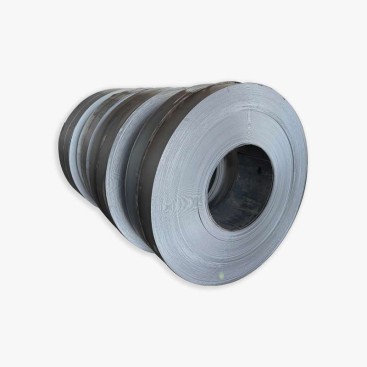
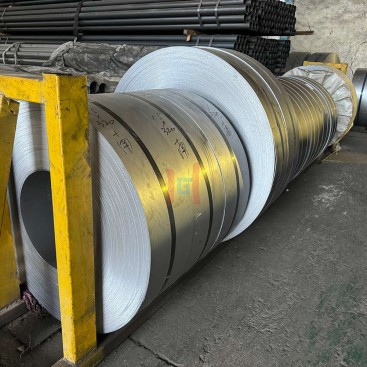
เสบียง Teda Ganghua ขดลวดเหล็กอลูมิไนซ์ for baking pans, food processing equipment, and formed metal components. With stable coating quality, customized sizes, และการสนับสนุนการประมวลผล, Teda Ganghua helps manufacturers obtain reliable materials for large-scale baking pan production.
การเลือกความหนาและคุณภาพพื้นผิวของเหล็กอลูมิไนซ์ที่ถูกต้องสามารถปรับปรุงประสิทธิภาพการขึ้นรูปได้, ความสม่ำเสมอในการอบ, และความทนทานของผลิตภัณฑ์ในระยะยาว.