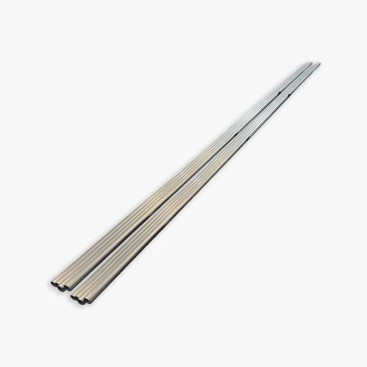
- คำอธิบาย
คำอธิบาย
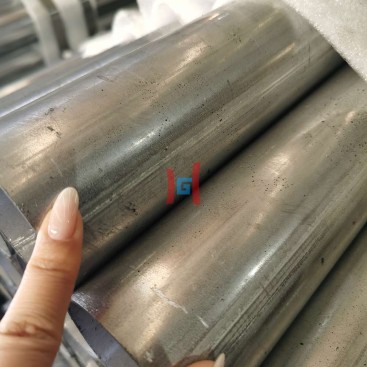
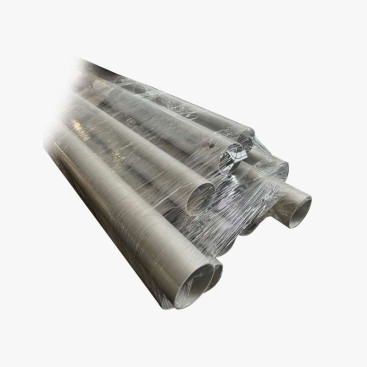
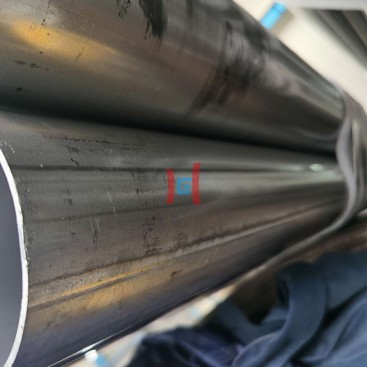
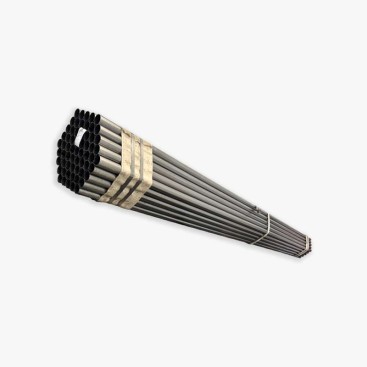
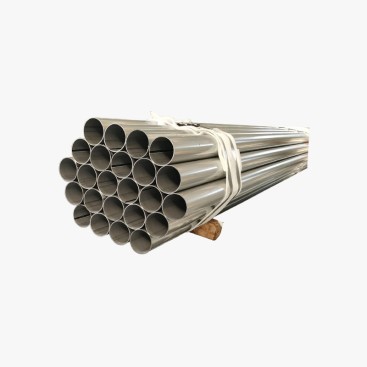
Hot dipped aluminized steel tubing is a terminology and specification choice that matters when a project requires controlled outside diameter, ความหนาของผนัง, ประสิทธิภาพการขึ้นรูป, and aluminum-based surface protection. Unlike conventional pipe, tubing is commonly specified by its actual outside diameter and wall thickness, making it better suited to precision fabricated components.
Tubing vs Pipe: What Is the Difference?
In engineering practice, ท่อ is commonly associated with conveying fluids and is often designated by nominal pipe size and schedule. ท่อ is more commonly specified by actual outside diameter and wall thickness and is widely used for mechanical and fabricated components.
The distinction is not absolute across every standard or industry. Some specifications use the terms differently. For purchasing, the governing standard should therefore be stated together with the dimensions.
| รายการ | ท่อ | ท่อ |
|---|---|---|
| Typical dimensional basis | Actual OD × wall thickness | Nominal size × wall/schedule |
| Typical focus | Precision and fabrication | Fluid conveyance and piping systems |
| Dimensional control | Often tighter for precision applications | Controlled according to the pipe standard |
| Common ordering format | OD × WT × length | Nominal size × schedule × length |
Typical Tubing Size Range
For precision applications, a practical reference range can include outside diameters of approximately 6–60 mm and wall thicknesses around 0.5–3.0 มม. Actual availability depends on the manufacturing process, เกรดพื้นผิว, ข้อกำหนดการเคลือบ, and required dimensional tolerances.
Thin-wall tubing can reduce component weight and may be suitable for formed parts. Larger wall thicknesses can provide greater mechanical and dimensional stability. The correct combination should be selected from the application’s pressure, load, อุณหภูมิ, and forming requirements.
Quick specification reference
Outside diameter: approximately 6–60 mm
Wall thickness: approximately 0.5–3.0 mm
Ordering basis: actual OD × WT
พื้นผิว: aluminum-based protective coating
Why Precision Dimensions Matter
Tubing is often incorporated directly into assemblies, วงเล็บ, clamps, ระบบไอเสีย, heat-transfer equipment, or formed mechanical components. A small dimensional deviation can affect fit-up, bending behavior, joint design, and installation.
For a precision application, buyers may request an outside-diameter tolerance such as ±0.05 mm. This should not be treated as a universal requirement for all coated tubing. The applicable standard, production route, ขนาด, and coating process determine the achievable tolerance.
By comparison, piping products may commonly use percentage-based dimensional tolerances under their relevant standards. ดังนั้น, an apparent difference such as “±0.05 mm versus ±1%” should always be checked against the exact product specification rather than used as a universal rule.
Small-Diameter Internal Coating Is More Difficult
Coating the outside of a tube is generally more straightforward than achieving controlled coverage inside a small-diameter tube. The internal surface has restricted access, and molten coating flow, drainage, trapped gas, and surface preparation can all affect coverage.
For small-bore products, internal coating should therefore be treated as a specific purchasing requirement rather than assumed automatically. Buyers should state whether the inside surface must be coated and whether a minimum internal coating thickness or coverage criterion applies.
| Internal coating factor | Why it matters | What to specify |
|---|---|---|
| Small OD | Restricted coating access | Minimum internal coverage requirement |
| Long tube | Drainage and process control become more difficult | Length and internal inspection method |
| Thin wall | Forming and dimensional stability require closer control | WT tolerance and forming requirements |
| Post-forming | Bending can affect coating integrity | Bend radius and coating inspection |
Precision Applications
Automotive Exhaust Components
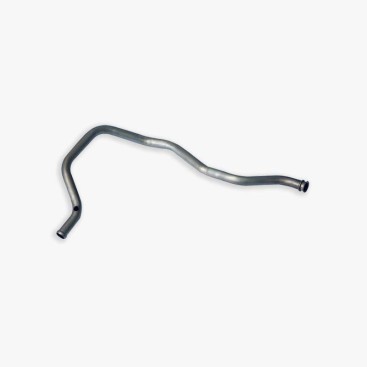
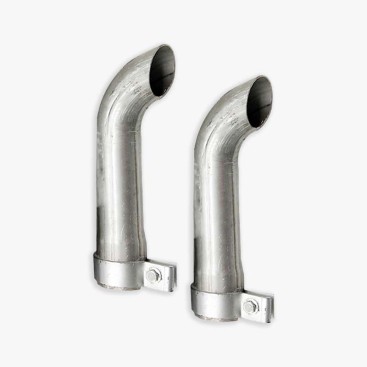
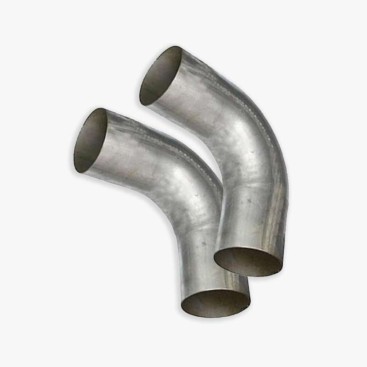
Coated tubing can be used for exhaust-related components where curved geometry, controlled dimensions, and resistance to oxidation are required. Typical examples include exhaust sections, connectors, and formed tube assemblies.
Refrigeration and Thermal Equipment
Selected thermal and refrigeration equipment can use coated tubes where surface protection is needed. Tube selection should consider operating temperature, heat transfer requirements, internal medium, and corrosion environment.
Mechanical Components
Precision tubing is also useful for mechanical assemblies that require controlled OD, ความหนาของผนัง, ดัด, การตัด, or joining. The substrate and coating should be matched to the expected forming and service conditions.
How to Order Tubing Correctly
The clearest purchasing format is based on actual dimensions. Instead of specifying only a nominal pipe size, provide the เส้นผ่านศูนย์กลางภายนอก, ความหนาของผนัง, ความยาว, ระบบการเคลือบ, เกรดพื้นผิว, and required tolerances.
Example purchasing format
Hot-dip aluminized steel tubing, OD × WT × length
ตัวอย่าง: 25 mm × 1.2 mm × 6,000 มม
การเคลือบ: aluminum-silicon based
Internal coating: specify if required
OD tolerance: specify according to drawing or standard
สภาพพื้นผิว: as agreed
Inspection: dimensional and coating verification
For components that will be bent or expanded after delivery, the purchase order should also state the bend radius, forming direction, end treatment, and any restrictions on coating damage. This prevents a tube that meets the basic dimensional specification from failing during downstream fabrication.
What to Check Before Approval
- Actual outside diameter and wall thickness
- Dimensional tolerances
- Steel substrate grade
- Coating composition and coating mass or thickness
- Outside surface uniformity
- Internal coating coverage when required
- Coating adhesion
- Tube straightness and ovality
- Required bend radius and forming process
- Cut-end condition
- Inspection and material documentation
Source Precision Coated Tubing
Teda Ganghua can support sourcing requirements for coated steel tubing used in exhaust systems, อุปกรณ์ระบายความร้อน, mechanical assemblies, and other precision applications. Buyers can review the ท่อเหล็กอลูมิไนซ์ range and submit the required OD, ความหนาของผนัง, ความยาว, ข้อกำหนดการเคลือบ, ความอดทน, and internal coverage requirements.
For tubing that will be bent, expanded, flared, or welded after delivery, fabrication details can be included with the inquiry. This allows dimensional accuracy and coating performance to be evaluated together rather than separately.
คำถามที่พบบ่อย
What is the difference between steel tubing and steel pipe?
Tubing is commonly ordered by actual outside diameter and wall thickness and is widely used for mechanical and precision applications. Pipe is commonly associated with fluid conveyance and nominal pipe sizing. The exact terminology depends on the governing standard.
How is hot-dip aluminized tubing specified?
A practical purchase description includes OD × wall thickness × length, เกรดพื้นผิว, ข้อกำหนดการเคลือบ, ความคลาดเคลื่อนมิติ, internal coating requirements, และข้อกำหนดในการตรวจสอบ.
Can small-diameter tubing be coated on the inside?
Internal coating is possible for suitable products and processes, but smaller diameters create greater process challenges. Internal coverage should be explicitly specified and verified when it is important to service performance.
Is ±0.05 mm a standard tolerance for all precision tubing?
เลขที่. ±0.05 mm can be a project-specific precision requirement, but allowable tolerance depends on tube size, วิธีการผลิต, coating process, and the governing standard. It should be confirmed on the technical drawing or purchase specification.
Can coated tubing be bent after production?
ใช่, เมื่อระบบการเคลือบและโครงสร้างท่อมีความเหมาะสมสำหรับการขึ้นรูปที่ต้องการ. รัศมีโค้งงอ, เครื่องมือ, การเสียรูป, และความสมบูรณ์ของการเคลือบควรได้รับการประเมินก่อนการผลิต.