- คำอธิบาย
คำอธิบาย
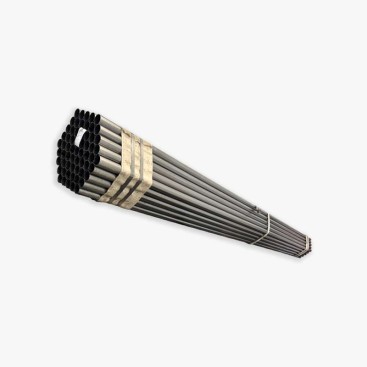
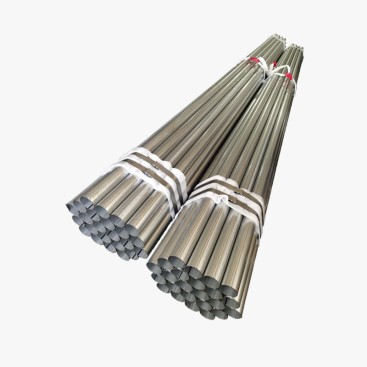
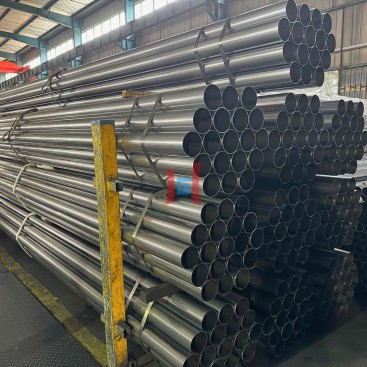
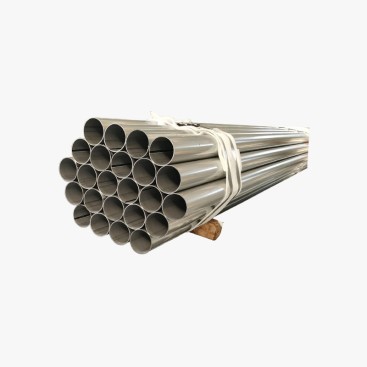
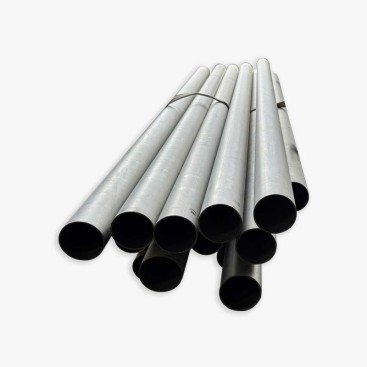
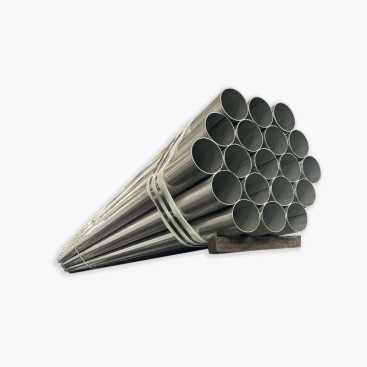
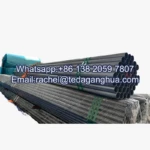
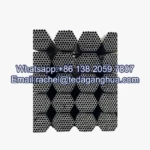
Q235 aluminized steel tube combines a higher-strength Chinese structural steel substrate with an aluminum-based protective coating. Under GB/T 700, Q235 belongs to the general carbon structural steel family and provides a specified minimum yield-strength level of 235 MPa for applicable product dimensions. When converted into tube and aluminized, it becomes a practical option for brackets, frames, agricultural structures and other applications that require both mechanical strength and improved surface protection.
Material concept: Q235 supplies the structural strength of the tube, while the aluminized layer provides additional resistance against atmospheric corrosion and oxidation. The two functions should be specified separately: select the substrate for load requirements and the coating for environmental exposure.
What Is Q235 Aluminized Steel Tube?
Q235 is a widely used Chinese carbon structural steel grade specified by กิกะไบต์/ที 700. The “235” designation corresponds to the nominal minimum yield-strength level of 235 MPa. For applicable thickness ranges, the grade provides a higher strength level than Q195 while retaining the fabrication characteristics expected from general carbon structural steel.
The base steel is normally selected when a fabricated tube needs more structural capacity than a low-strength economy grade can provide. After aluminizing, the external surface gains an aluminum-silicon protective layer, making the finished tube more suitable for environments where bare carbon steel would be vulnerable to atmospheric corrosion.
This creates a useful division of functions:
Q235 Substrate
Provides the required mechanical strength, rigidity and fabrication characteristics for the tube structure.
Aluminized Surface
Provides additional protection against atmospheric exposure and oxidation, extending the useful surface life when properly specified.
Why Q235 Is Used for Structural Tube
The main reason to move from Q195 toward Q235 is mechanical capacity. Q235 provides a higher specified yield-strength level, giving designers more structural margin for brackets, supports and frames when geometry and wall thickness remain otherwise comparable.
Typical applications can include:
- Equipment support frames
- Structural brackets and guards
- Agricultural structures and greenhouse components
- Outdoor support assemblies
- Light and medium-duty fabricated frames
- General mechanical structures exposed to atmospheric conditions
The aluminized surface is particularly useful where the finished tube will be exposed to moisture, outdoor air or other conditions that could accelerate corrosion of uncoated carbon steel.
Q235 vs Q195: When Is the Strength Upgrade Worth It?
| Factor | Q195 Base | Q235 Base | Selection Meaning |
|---|---|---|---|
| Specified yield-strength level | 195 MPa | 235 MPa | Q235 provides the higher strength level |
| Structural positioning | Light-duty/general fabrication | General structural fabrication | Use Q235 when greater load capacity is required |
| Typical tube use | Light supports, guards and general-purpose structures | Frames, วงเล็บ, supports and agricultural structures | Application and design load determine the final choice |
| การขึ้นรูป | Generally favorable | Generally favorable | Confirm forming radius and wall thickness for the actual tube |
| Coating role | ป้องกันการกัดกร่อน | ป้องกันการกัดกร่อน | Coating does not replace substrate strength |
The upgrade from Q195 to Q235 should not be viewed simply as a “stronger coating system.” The higher strength comes from the steel substrate itself. If a design calculation requires the higher yield-strength level, increasing the aluminum coating will not solve the structural requirement.
เคลือบอลูมิไนซ์: Protection Without Changing the Structural Grade
Aluminizing creates a protective metallic surface over the steel substrate. Aluminum has a strong affinity for oxygen and forms a stable oxide layer, which helps protect the underlying material from further oxidation. Silicon is commonly included in aluminized coatings to control coating behavior and the steel-coating interface.
For structural tubing, this distinction is important. The coating is primarily a surface-protection system; it should not be treated as a substitute for a suitable structural steel grade.
Procurement principle: Select Q235 because the tube needs its mechanical properties. Select the aluminized coating because the tube needs additional environmental protection. These are two separate engineering decisions within one product specification.
Welding Q235 Aluminized Tube: Watch the Coating Zone
Welding is one of the most important production considerations for aluminized tube. The welding arc and heat-affected area can locally remove, melt or otherwise disturb the aluminum-based coating. The exposed steel around a welded joint can therefore have a different corrosion behavior from the original coated surface.
Production planning should address:
- Welding process and heat input
- Coating condition near the joint
- Joint design and weld penetration
- Post-weld surface condition
- Protection or repair of exposed areas where required
- Ventilation and worker protection during welding of coated material
- Final dimensional inspection after fabrication
For production parts with extensive welding, the coating specification should be discussed together with the fabrication procedure. A coating that performs well on an unprocessed tube may not provide identical protection after cutting, bending and welding.
Tube Dimensions and Specification Options
There is no single standard dimension that defines this material combination. Outside diameter, ความหนาของผนัง, ความยาว, cross-section and coating level should be selected according to the final component.
| Tube Parameter | Typical Specification Approach | Key Procurement Point |
|---|---|---|
| Base steel | Q235 | Confirm GB/T 700 compliance and material certificate |
| Outside diameter | Project-specific, including round, square or rectangular tube | Specify OD or section dimensions and tolerance |
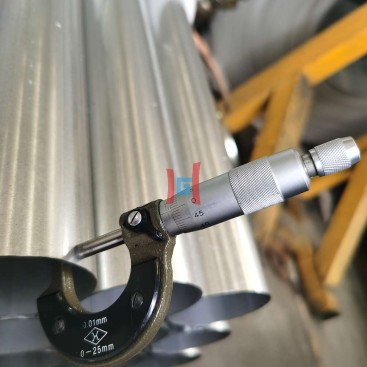
| Wall thickness | Selected from structural calculation and fabrication requirements | Check minimum wall after forming |
| Tube length | Fixed length or cut-to-length | Confirm length tolerance and cut condition |
| Profile | กลม, สี่เหลี่ยม, rectangular or project-specific section | Confirm corner radius and dimensional tolerance |
| เคลือบอลูมิไนซ์ | Project-specific coating grade or mass | Specify applicable coating standard rather than only a commercial name |
กลม, Square or Rectangular Q235 Aluminized Tube?
The cross-section should follow the structural function. Round tube is useful when a smooth profile, torsional behavior or bending in multiple directions is important. Square and rectangular sections can be advantageous for frames because their flat faces simplify connection, mounting and fabrication.
Round Tube
Suitable for supports, ราง, tubular frames and applications requiring a circular section.
Square Tube
Useful for frames, supports and fabricated structures where four flat faces simplify assembly.
Rectangular Tube
Useful when section depth and width need to be optimized independently for a frame or support structure.
Agricultural and Outdoor Applications
Agricultural structures combine two requirements that make aluminized structural tube attractive: mechanical support and exposure to moisture. Greenhouse frames, equipment supports, fencing components and other outdoor fabricated structures can benefit from a coated steel surface when the coating level is matched to the environmental conditions.
อย่างไรก็ตาม, agricultural exposure can be more aggressive than ordinary indoor conditions. Fertilizers, เกลือ, animal waste, standing water and cleaning chemicals can change the corrosion environment significantly. The coating should therefore be selected from the actual exposure rather than simply because the component is classified as “outdoor.”
How to Specify Q235 Aluminized Tube
- Identify the substrate: Q235 and the applicable structural-steel standard.
- Calculate the load: Confirm that the 235 MPa yield-strength level is sufficient for the design.
- Select the profile: กลม, square or rectangular according to the structural function.
- Set dimensions: Define outside dimensions, wall thickness and length.
- Select the coating: Specify coating type and required coating mass or thickness according to the applicable standard.
- Review fabrication: Confirm cutting, bending and welding requirements before production.
- Inspect the finished tube: Check dimensions, weld quality and coating continuity.
Teda Ganghua Supply for Aluminized Steel Tubes
เทดา กังฮวา provides aluminized steel tube solutions for procurement projects requiring a balance between structural steel performance and surface protection. Tube specifications can be coordinated around the substrate grade, outside dimensions, ความหนาของผนัง, ข้อกำหนดการเคลือบ, tube length and fabrication needs.
For structural frames, agricultural components and general outdoor applications, Q235 aluminized steel tube can be specified according to the actual load and environmental exposure rather than treating the coating as a replacement for structural strength.
ประเด็นสำคัญ
- Q235 is a general Chinese carbon structural steel grade under GB/T 700.
- The grade provides a nominal minimum yield-strength level of 235 MPa for applicable dimensions.
- Compared with Q195, Q235 provides a higher structural strength level.
- Aluminizing adds surface protection but does not increase the substrate’s structural grade.
- รองรับ, frames and agricultural structures are logical application areas when the design load is appropriate.
- Welding can locally damage the coating, so joint design and post-weld protection should be considered.
- Outside diameter, ความหนาของผนัง, profile and length should be specified according to the actual structure.
- The coating specification should identify the applicable standard and coating requirement rather than relying on an ambiguous coating name.
คำถามที่พบบ่อย
What is Q235 in Q235 aluminized steel tube?
Q235 identifies the Chinese carbon structural steel substrate. The “235” designation corresponds to its nominal minimum yield-strength level of 235 MPa for applicable dimensions. The aluminized layer is a separate surface-protection system.
Is Q235 stronger than Q195?
ใช่. Q235 has a higher specified yield-strength level than Q195. This makes it more appropriate when the tube needs greater structural load capacity, provided the rest of the design is correctly engineered.
Does aluminizing make Q235 stainless steel?
เลขที่. The substrate remains carbon structural steel. Aluminizing provides a protective surface coating but does not change the material into stainless steel.
Can Q235 aluminized tube be welded?
ใช่, but welding can locally disturb or burn away the aluminized coating. The welding procedure, heat input, joint area and any required post-weld protection should therefore be included in the fabrication specification.
What tube sizes are available?
Dimensions can be selected according to the project, including round, square and rectangular profiles. Outside diameter or section dimensions, ความหนาของผนัง, ควรยืนยันความยาวและความคลาดเคลื่อนก่อนการผลิต.