- Sự miêu tả
Sự miêu tả
Al-Si Alloy Coated Pipe: The Full Metallurgical Story — From Liquid Bath to Solid Protection
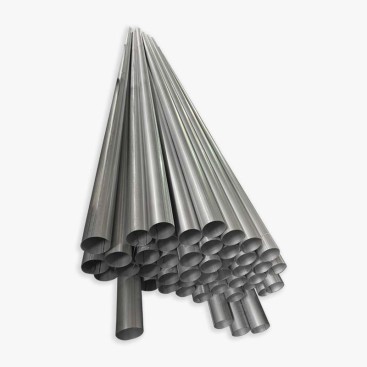
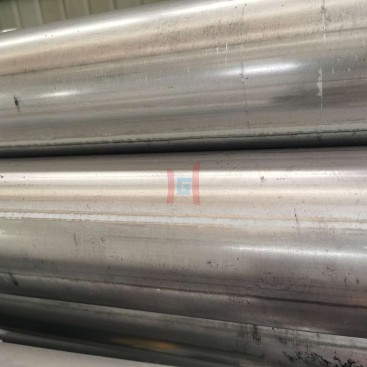
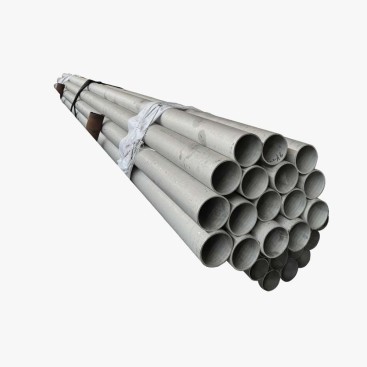
Aluminium silicon alloy coated steel pipe is not just a surface-treated product—it is a metallurgically bonded multi-layer system formed through controlled reactions between steel substrate and an Al-Si liquid bath. Its performance depends on the evolution of intermetallic compounds such as FeAl₃ and Fe₂Al₅, and how silicon modifies their growth.
This article explains the full metallurgical pathway: from molten coating bath → diffusion layer formation → intermetallic control → final protective structure.
1. Al–Si–Fe Phase System: The Foundation of Coating Behavior
| Element System | Metallurgical Role |
|---|---|
| Aluminium (Al) | Main corrosion-resistant coating element, forms protective oxide layer |
| Silicon (Và) | Controls diffusion rate and suppresses brittle phase growth |
| Sắt (Fe) | Substrate element diffusing into coating during immersion |
In the Al–Si–Fe system, the key challenge is controlling iron diffusion into aluminum, which otherwise leads to brittle intermetallic layers.
2. Formation of Intermetallic Layers (Critical Engineering Zone)
| Layer Type | Behavior | Engineering Risk |
|---|---|---|
| Fe₂Al₅ (inner layer) | Fast-growing, hard, brittle intermetallic compound | Cracking under thermal or mechanical stress |
| FeAl₃ (outer intermetallic) | Less stable, forms under prolonged diffusion | Reduces ductility of coating system |
| Al-Si coating layer | Main protective layer above intermetallic zone | Performance depends on thickness control |
These layers form naturally during hot-dip aluminizing, but their thickness must be carefully controlled.
3. Why Silicon Changes Everything
| Silicon Function | Metallurgical Effect |
|---|---|
| Diffusion control | Slows Fe → Al interdiffusion rate |
| Phase stabilization | Limits excessive Fe₂Al₅ growth |
| Interface refinement | Produces thinner, more uniform intermetallic layer |
| Coating adhesion improvement | Reduces delamination risk under thermal cycling |
This is why industrial coatings typically use ~9–10% Si in aluminizing baths.
4. Simplified Metallurgical Evolution Path
| Stage | Process Description |
|---|---|
| Immersion in Al-Si bath | Steel enters molten alloy (~680°C) |
| Initial reaction | Iron begins diffusing into aluminum layer |
| Intermetallic formation | Fe₂Al₅ and FeAl₃ layers develop at interface |
| Solidification | Stable Al-Si coating forms outer protective layer |
The final structure is a multi-layer composite system with graded composition.
5. Performance Impact of Intermetallic Control
| Factor | Controlled Intermetallic Layer | Uncontrolled Growth |
|---|---|---|
| Flexibility | Cao | Thấp (brittle cracking) |
| Thermal cycling resistance | Ổn định | Coating spalling |
| Adhesion strength | Mạnh | Weak interface separation |
6. Key Industrial Applications
| Ngành công nghiệp | Ứng dụng |
|---|---|
| ô tô | Hệ thống xả, catalytic converter housings |
| Energy Systems | Ống dẫn khí thải, thermal recovery pipelines |
| Sưởi ấm công nghiệp | Ống lò, burner components |
| HVAC | High-temperature ventilation systems |
7. Tại sao người mua chọn Teda Ganghua
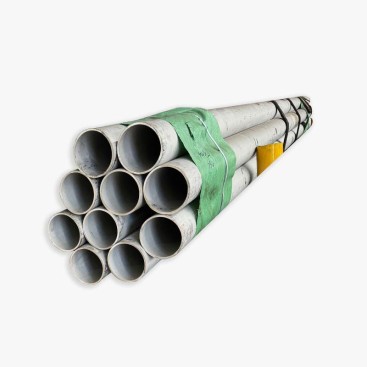
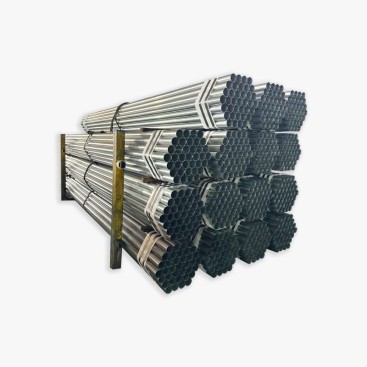
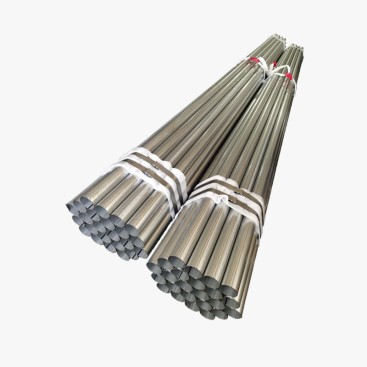
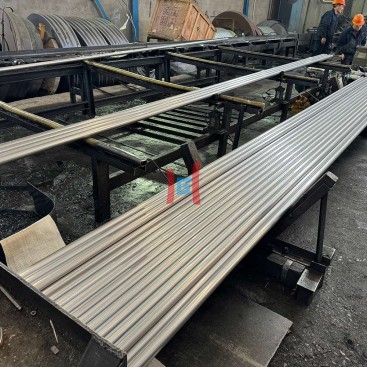
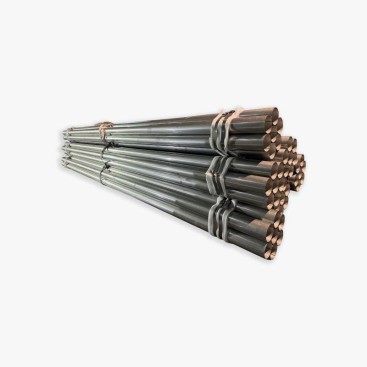
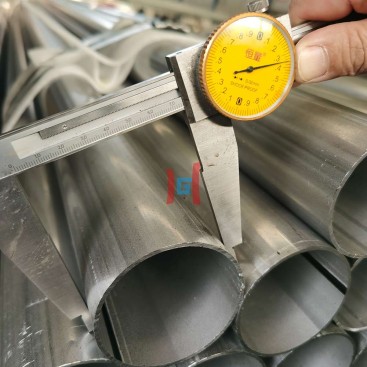
Tại Teda Ganghua, we supply aluminium silicon alloy coated steel pipes with controlled Al–Si composition, optimized intermetallic layer thickness, and stable metallurgical bonding for demanding industrial environments.
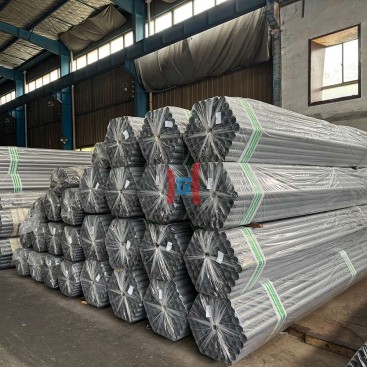
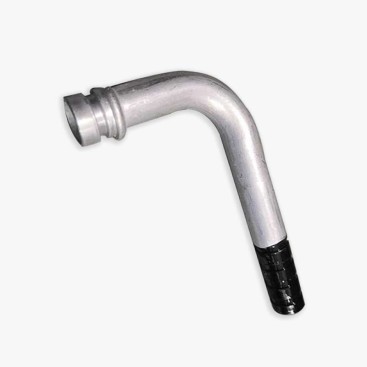
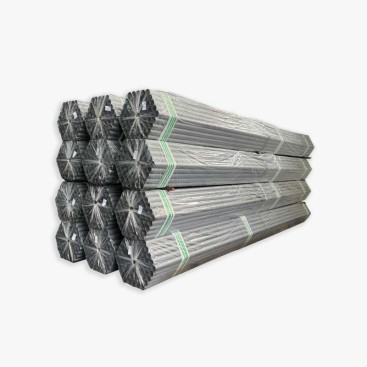
Chúng tôi hỗ trợ cắt OEM, uốn cong, and export packaging solutions for global automotive and energy customers.
Khám phá các sản phẩm ống thép aluminized của chúng tôi tại đây:
Sản phẩm ống thép Aluminized
Phần kết luận
Hiệu suất của ống thép phủ Al-Si bị chi phối bởi các phản ứng luyện kim sâu trong hệ thống Al–Si–Fe. Bằng cách kiểm soát các pha liên kim loại như Fe₂Al₅ và FeAl₃, silicon đảm bảo sự ổn định, bền bỉ, và hệ thống sơn chịu nhiệt độ cao phù hợp cho các ứng dụng công nghiệp hiện đại.