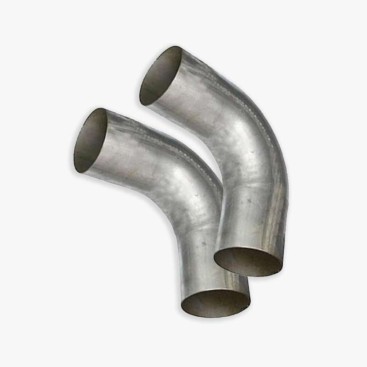
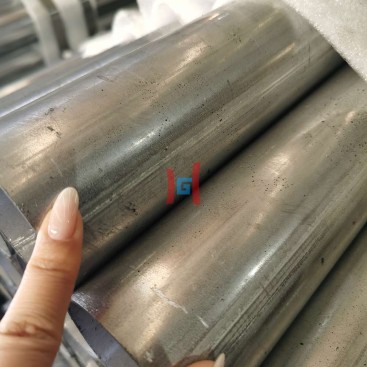
- Sự miêu tả
Sự miêu tả
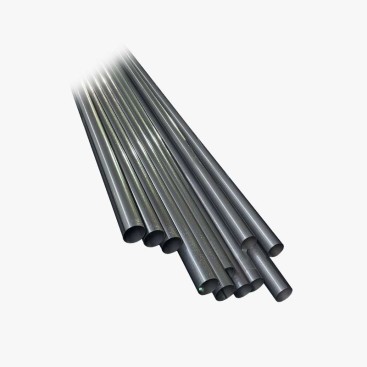
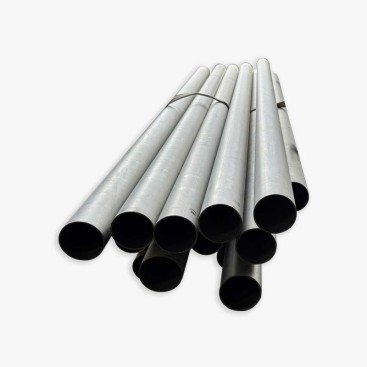
Aluminized mild steel pipe combines an easy-to-form low-carbon steel substrate with an aluminum-based protective coating. This construction is often selected when a project needs better heat and corrosion resistance than ordinary carbon steel while avoiding the material cost and fabrication complexity associated with stainless steel.
What Is Aluminized Mild Steel Pipe?
The pipe starts with mild steel, which normally contains a relatively low carbon level and is valued for its ductility, weldability, and forming performance. An aluminum-based coating is then applied to the steel surface, creating a protective barrier against oxidation and atmospheric corrosion.
This combination separates the jobs of the two materials. Các mild steel substrate provides strength, khả năng định hình, và khả năng hàn, while the coating provides much of the resistance to heat, quá trình oxy hóa, và ăn mòn.
Simple material concept
A relatively soft and economical steel core does not have to provide all of the environmental resistance. The aluminum-rich coating performs much of that protective function at the surface.
Why Use Mild Steel as the Base?
Mild steel is widely used for fabricated tube products because its low carbon content generally supports good welding and cold-forming behavior. For many general-purpose applications, it also provides sufficient mechanical strength without requiring a highly alloyed substrate.
A commonly used engineering description is low-carbon steel with carbon below about 0.25%. Tuy nhiên, “mild steel,” “low-carbon steel,” and “carbon steel” are not always interchangeable standard designations. The exact chemical limits should be taken from the specified material standard.
| Material term | General meaning | Typical characteristic |
|---|---|---|
| Mild steel | Common low-carbon steel description | Good formability and weldability |
| Thép carbon thấp | Steel defined by relatively low carbon content | Generally ductile and easy to fabricate |
| Thép cacbon | Broader steel category where carbon is the principal alloying element | Properties vary considerably by grade |
For purchasing, the steel grade and governing standard should always be stated instead of relying only on the general term “mild steel.”
How the Aluminum Coating Compensates for the Steel
Uncoated mild steel can oxidize relatively quickly when exposed to moisture, muối, sự ngưng tụ, and elevated temperatures. The aluminum-based surface changes this behavior by creating a protective metallic layer.
At elevated temperature, aluminum can form a stable oxide film that slows further oxidation. In atmospheric service, the coating also acts as a barrier between the steel substrate and the surrounding environment.
The result is a useful division of functions: the steel remains economical and easy to process, while the coating improves the surface performance. This is why coated low-carbon tube can be attractive for applications where the base metal does not need the corrosion resistance of stainless steel throughout its entire cross-section.
Typical Pipe Dimensions
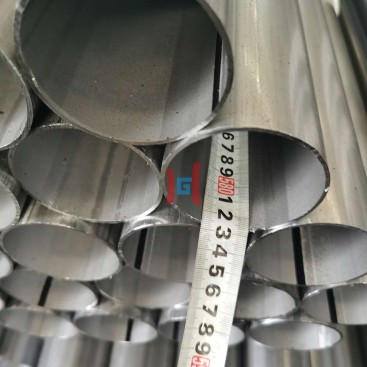
For fabricated and industrial applications, common dimensions can fall within approximately 20–100 mm outside diameter Và 1.0–2.5 mm wall thickness. These figures are representative ranges rather than universal limits. Actual availability depends on the production process, tiêu chuẩn, và ứng dụng.
| Mục | Typical reference range | Specification note |
|---|---|---|
| Outside diameter | 20–100 mm | Confirm required OD tolerance |
| Độ dày của tường | 1.0–2,5 mm | Confirm nominal and minimum thickness |
| Chiều dài | Application dependent | Fixed length or cut-to-length |
| Lớp phủ | Aluminum-based | Specify coating system and mass |
Where Is It Used?
Hệ thống xả
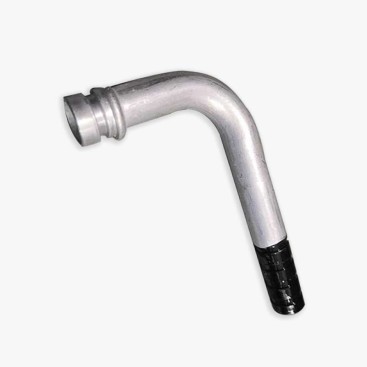
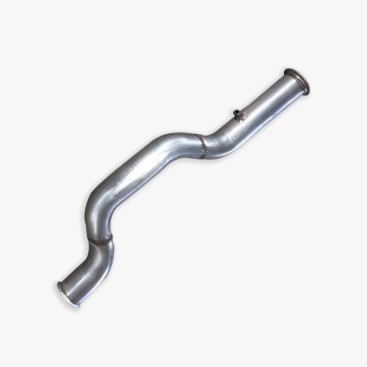
Coated mild steel tubing is suitable for selected exhaust components, especially sections operating at moderate temperatures. It can provide a practical combination of formability, chống ăn mòn, và khả năng chịu nhiệt.
For areas exposed to the highest exhaust temperatures, the exact substrate, hệ thống sơn, độ dày của tường, and temperature limit should be verified rather than selecting material based only on the word “aluminized.”
Ventilation and Ducting
Ventilation ducts and fabricated air-handling components can benefit from the coating when corrosion and moderate heat exposure are concerns. Mild steel also makes fabrication, cắt, and joining relatively straightforward.
General Heat-Resistant Tubing
It can also be considered for selected oven, thiết bị nhiệt, and industrial components where the operating conditions are within the specified coating and substrate limits.
Aluminized Mild Steel vs Galvanized vs Stainless Steel
The three material systems serve different engineering priorities. Galvanized steel is primarily selected for general corrosion protection, aluminized mild steel adds stronger high-temperature capability, and stainless steel provides corrosion resistance through the alloy composition of the material itself.
| Factor | Aluminized mild steel | Thép mạ kẽm | Thép không gỉ |
|---|---|---|---|
| Vật liệu cơ bản | Thép carbon thấp | Carbon/low-carbon steel | Alloy steel containing chromium |
| General corrosion | Tốt | Tốt | Often excellent, depending on grade |
| High-temperature suitability | Strong advantage over zinc coating | More limited | Grade dependent |
| Khả năng định dạng | Generally good | Generally good | Grade dependent |
| Material strategy | Economical steel + protective coating | Thép + zinc corrosion protection | Corrosion resistance throughout the alloy |
This is an engineering comparison, not a universal ranking. Actual service performance depends on temperature, atmosphere, phơi nhiễm ăn mòn, đặc điểm kỹ thuật lớp phủ, chế tạo, and selected stainless grade.
Why It Can Be an Economical Material Strategy
The cost advantage of a coated low-carbon substrate comes from using alloying only where it provides the most value. Instead of making the entire tube from a highly alloyed material, the steel core supplies the required structural and fabrication properties while the coating handles much of the surface protection.
A practical material-selection sequence is:
Check continuous and peak exposure.
Identify moisture, muối, and condensate.
Check bending, cắt, và hàn.
Match coating and substrate durability.
Forming and Welding Considerations
The low-carbon substrate generally provides good forming and welding characteristics. Tuy nhiên, the coating must also be considered. uốn, flaring, drilling, and cutting can damage the protective layer, particularly at highly deformed areas.
Welding can locally remove or alter the coating around the weld zone. The appropriate welding procedure and post-weld protection should therefore be determined according to the application, hệ thống sơn, and applicable safety requirements.
Important fabrication point
Good weldability of the mild steel substrate does not mean that the coated surface can be treated exactly like bare steel. Coating damage, fumes, cut edges, and post-fabrication protection should all be considered.
What Should Be Included in a Purchase Specification?
- Steel substrate grade and applicable standard
- Outside diameter
- Wall thickness and tolerance
- Required tube length
- Aluminum-based coating designation
- Coating mass or thickness
- Surface requirements
- uốn, flaring, or forming requirements
- Operating temperature
- Corrosion environment
- Inspection and certification requirements
For industrial sourcing, Teda Ganghua can support requirements for coated steel tube used in exhaust, thông gió, thiết bị nhiệt, and fabricated components. Buyers can review the Ống thép Aluminized range and submit dimensions, lớp nền, đặc điểm kỹ thuật lớp phủ, chiều dài, and application conditions for technical matching.
Câu hỏi thường gặp
What is aluminized mild steel pipe?
It is a low-carbon steel pipe with an aluminum-based protective coating. The steel provides structural strength and fabrication performance, while the coating improves resistance to oxidation, ăn mòn, and elevated temperature.
Is mild steel suitable for aluminized pipe?
Đúng. Low-carbon steel is commonly suitable as a substrate because it offers good formability and weldability. The exact substrate grade should still be selected according to the applicable product standard.
Is aluminized mild steel better than galvanized steel for heat?
Nói chung là, yes for elevated-temperature service. Aluminum-based coatings are designed for substantially higher-temperature exposure than zinc coatings. The actual limit depends on the coating system, chất nền, atmosphere, and operating conditions.
What are common applications?
Common applications include selected exhaust components, ventilation and ducting systems, oven parts, thiết bị nhiệt, and other fabricated tubing exposed to moderate or elevated temperatures.
Can aluminized mild steel pipe be welded?
The low-carbon steel substrate is generally weldable, nhưng hàn có thể ảnh hưởng đến lớp phủ bảo vệ xung quanh khớp. Cần thiết lập quy trình hàn phù hợp và lớp phủ bảo vệ sau hàn cho ứng dụng cụ thể..