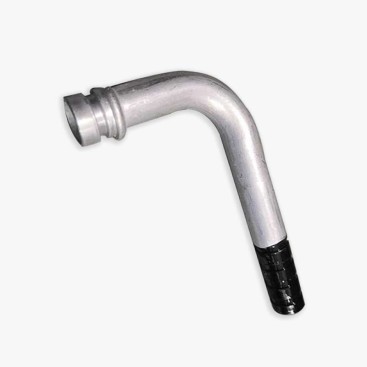
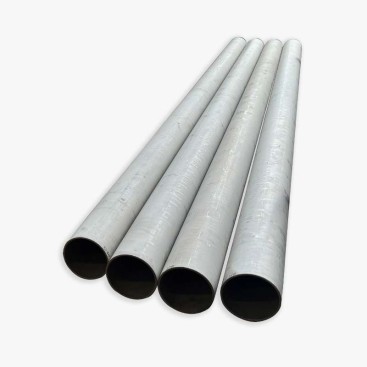
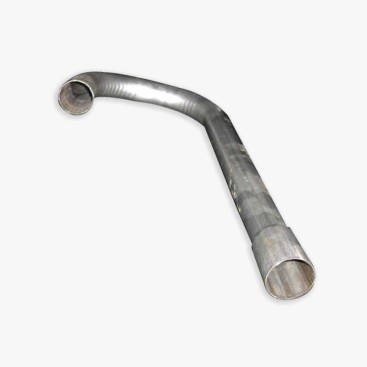
- 描述
描述
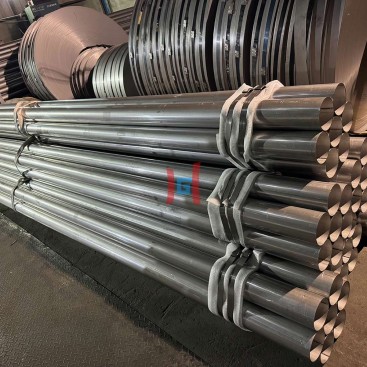
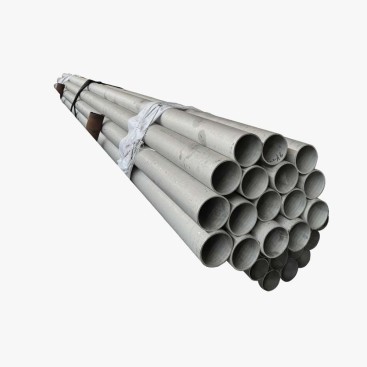
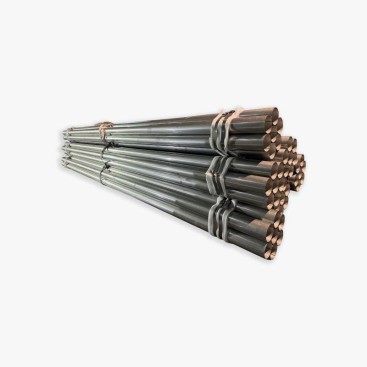
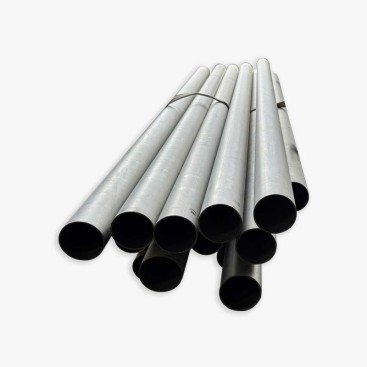
Aluminized carbon steel pipe combines the mechanical strength of a carbon steel substrate with the heat and corrosion resistance of an aluminum-based coating. This combination can be useful when ordinary coated steel does not provide enough strength or temperature resistance, while a fully alloyed stainless steel pipe would be unnecessary for the application.
What Is Aluminized Carbon Steel Pipe?
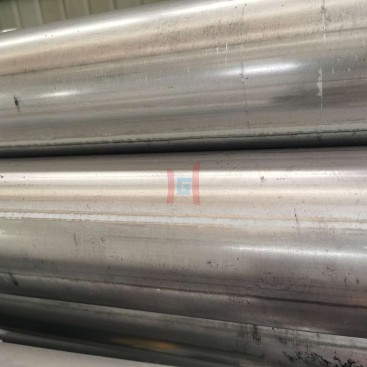
The basic construction consists of a carbon steel pipe substrate and a hot-dip aluminum-based coating. The substrate provides the mechanical foundation, while the coating creates a protective surface against oxidation and corrosion.
This is different from stainless steel, where chromium and other alloying elements provide corrosion resistance throughout the material. In a coated carbon steel pipe, the protective function is concentrated primarily at the surface.
Material concept
Carbon steel = strength and structural support
Aluminum-based coating = surface protection and heat resistance
Carbon Steel Substrate: More Than Just Mild Steel
Carbon steel covers a broad range of steel grades. A lower-carbon grade may be selected when welding and forming are the main priorities, while a higher-carbon or higher-strength grade may be considered when greater mechanical strength is required.
For preliminary engineering discussions, carbon levels around C ≤0.30% may be encountered in some pipe materials. 然而, carbon content alone does not define a pipe grade. The complete chemical composition, 屈服强度, tensile strength, 制造过程, and governing standard must be checked before substitution.
ASTM A53 and GB/T 3091 as Substrate References
When specifying carbon steel pipe, buyers may encounter standards such as ASTM A53 和 国标/T 3091. These standards address different product requirements and should not be treated as automatically interchangeable.
| Reference | System | Typical relevance | Important note |
|---|---|---|---|
| ASTM A53 | 美国材料试验协会 / U.S. | Carbon steel pipe | Select the applicable type and grade |
| 国标/T 3091 | Chinese GB/T | Welded steel pipe for low-pressure fluid service | Check the current edition and product scope |
If the finished pipe will receive an aluminum-based coating, the coating specification must also be defined. The substrate standard and coating standard together determine the finished product requirements.
How the Coating Changes the Performance
Bare carbon steel can provide useful mechanical strength but is vulnerable to oxidation and corrosion when exposed to moisture or aggressive environments. An aluminum-rich coating changes the surface behavior without replacing the carbon steel core.
在高温下, aluminum can form a protective oxide layer. This helps reduce further oxidation and makes the coated system more suitable for thermal service than many conventional zinc-coated carbon steel products.
The coating therefore works as a surface protection system, while the steel substrate continues to determine much of the pipe’s load-bearing behavior.
Strength and Coating: A Balanced Design
Using a stronger carbon steel substrate can increase the load-carrying capability of a pipe, but increasing substrate strength does not automatically improve coating performance. The coating must remain sufficiently adherent during forming, 弯曲, impact, 和热循环.
| Substrate approach | Main advantage | Coating consideration | Typical priority |
|---|---|---|---|
| 低碳钢 | Formability and weldability | Generally favorable for fabrication | 预制件 |
| 中碳钢 | Higher strength potential | Forming and coating adhesion need closer evaluation | Higher mechanical demand |
| Higher-strength steel | Greater load capacity | Coating deformation and adhesion require qualification | Structural applications |
For a high-strength substrate, coating quality should be evaluated together with the forming process. A strong steel tube that cannot maintain coating integrity after fabrication may not deliver the expected service life.
典型应用
Industrial Piping
Selected industrial lines can use coated carbon steel where structural strength, 耐腐蚀性, and moderate thermal exposure are required. The fluid, 压力, 温度, and corrosion environment must be checked against the governing pipe specification.
暖通空调和通风
Coated carbon steel pipe can be considered for ventilation equipment, duct-related structures, and heating systems where ordinary carbon steel may need additional surface protection.
农业设备
Agricultural machinery and equipment can be exposed to humidity, 灰尘, fertilizers, soil, and temperature changes. A protective aluminum-based surface can therefore be useful for selected fabricated tube components.
General Structural Components
Where a component requires a tubular steel structure with improved environmental resistance, a coated carbon steel solution can be evaluated as an alternative to bare steel or more highly alloyed materials.
典型尺寸范围
Depending on the production route and application, coated carbon steel pipe can be supplied across a broad range of outside diameters, 壁厚, and lengths. A practical inquiry should specify the dimensions rather than relying on a general “carbon steel pipe” description.
| 规格 | Common purchasing format | Why it matters |
|---|---|---|
| Outside diameter | OD in mm or nominal pipe size | Determines connection and installation compatibility |
| 壁厚 | Nominal or specified thickness | Affects strength, 重量, and corrosion allowance |
| 长度 | Fixed or cut length | Affects fabrication and logistics |
| 涂层 | Coating system and mass | Determines surface protection |
Aluminized Carbon Steel vs Galvanized Carbon Steel
Both systems use a carbon steel substrate with a metallic coating, but the coating metals behave differently at elevated temperature. Zinc is highly effective for many atmospheric corrosion applications, while aluminum-based coatings are more suitable when oxidation and heat exposure become important.
Zinc melts at about 419.5°C, so a galvanized surface is not intended to provide the same high-temperature performance as an aluminum-rich coating. The actual operating limit of either coated product depends on the complete system and should be verified against the applicable specification.
| Factor | Aluminum-based coating | 镀锌层 |
|---|---|---|
| Primary surface benefit | Oxidation and corrosion resistance | Atmospheric corrosion protection |
| High-temperature suitability | Generally stronger choice | More limited |
| Coating metal melting point | 铝: about 660°C | 锌: about 419.5°C |
| Typical selection driver | 热 + 腐蚀 | General corrosion |
Coating Adhesion Matters for Stronger Steel
When the substrate strength is increased, fabrication loads can also become more demanding. 弯曲, expansion, flaring, and impact may place stress on the coating/substrate interface.
A good coating should remain sufficiently bonded during the required manufacturing process. For demanding applications, coating adhesion can be assessed through specified bend, impact, or other qualification tests, together with metallographic examination when required.
Do not select by strength alone
A higher-strength substrate is useful only when the complete pipe system can maintain dimensional stability, 涂层附着力, weld performance, and corrosion protection under actual service conditions.
Specification Checklist
- Carbon steel grade
- Governing substrate standard, such as ASTM A53 or GB/T 3091 where applicable
- Outside diameter
- 壁厚
- Tube length
- Aluminum-based coating specification
- Coating mass or thickness
- Required tensile and yield properties
- 弯曲, flaring, or forming requirements
- Operating temperature
- Corrosion environment
- Inspection and certification requirements
Source Aluminized Carbon Steel Pipe
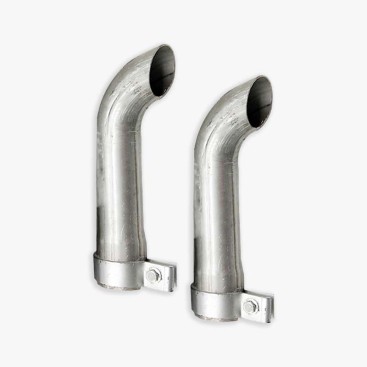
Teda Ganghua supports industrial sourcing for aluminum-coated steel tubes used in piping, 通风, agricultural equipment, exhaust-related components, and general fabrication. Buyers can review the 渗铝钢管 range and provide the substrate grade, 方面, 涂层要求, strength level, and application conditions.
For projects requiring higher-strength carbon steel, it is recommended that the inquiry also state the forming process and service temperature. This allows the substrate and coating to be evaluated as one complete material system.
常问问题
What is aluminized carbon steel pipe?
It is a carbon steel pipe protected by an aluminum-based coating. The carbon steel provides the main mechanical strength, while the coating improves resistance to oxidation, 腐蚀, and elevated temperature.
Is carbon steel stronger than mild steel?
“Carbon steel” is a broad category rather than one fixed strength level. Mild steel is generally a low-carbon subset. Specific strength depends on the grade, carbon content, alloying, 加工, 和热处理.
Can ASTM A53 carbon steel pipe be aluminized?
A carbon steel substrate meeting an ASTM specification can potentially be used in a coated product, but the finished product must satisfy both the substrate requirements and the applicable coating requirements. The coating process should therefore be agreed in the purchase specification.
Is aluminized carbon steel better than galvanized steel for high temperatures?
For elevated-temperature service, an aluminum-based coating generally offers a significant advantage over zinc because zinc has a much lower melting point. Actual service suitability depends on the complete material system and operating environment.
Does a stronger carbon steel substrate improve coating performance?
未必. Higher substrate strength can improve load capacity, but coating adhesion and deformation performance must also be qualified. 最好的材料是满足强度的材料, 制造, 腐蚀, 和温度要求一起.