- 描述
描述
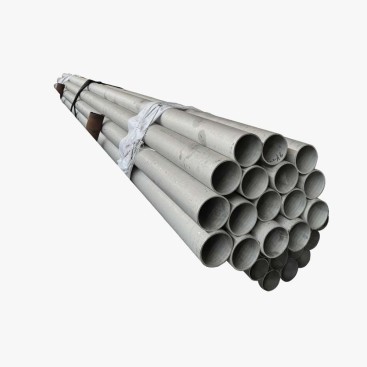
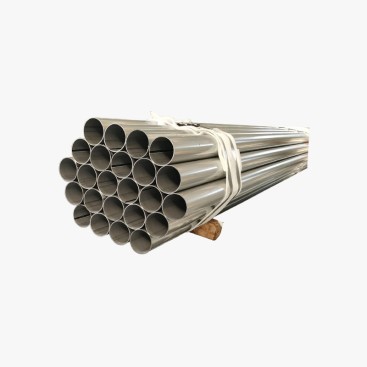
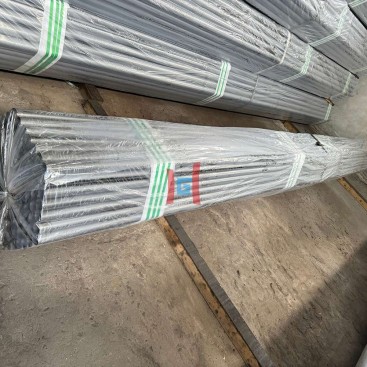
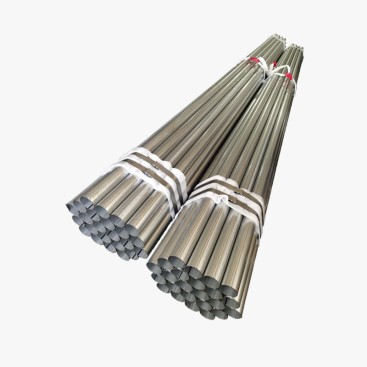
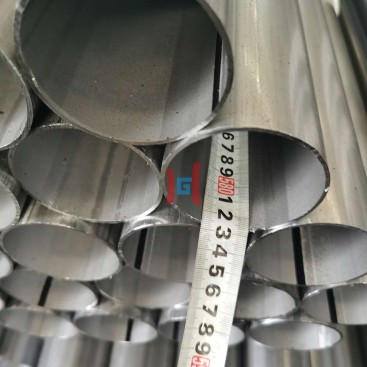
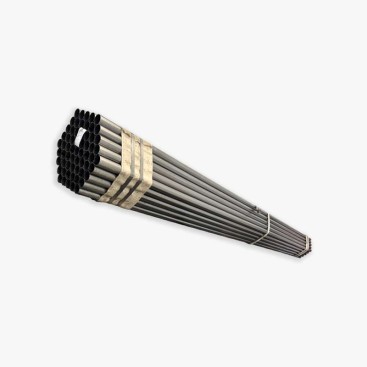
Aluminized pipe price per kg is mainly a small-quantity purchasing tool, not simply a smaller version of a per-ton quotation. For samples, trial orders, repair materials, and retail-length purchases, the kilogram basis makes the quotation easier to understand, but the unit cost can be higher because fixed handling and processing costs are spread over fewer kilograms.
When Is Price per kg the Right Basis?
Per-kilogram pricing is particularly useful when the buyer does not need a full bundle, container, or production lot. It provides a practical way to compare a small quantity of material without requiring the buyer to convert the order into tonnes first.
Useful when a buyer wants to test forming, 焊接, corrosion behavior, or assembly compatibility before placing a larger order.
A maintenance team may need only several kilograms or a few pieces rather than a complete commercial bundle.
Per-kg quotations simplify transactions where quantities, 长度, and packaging requirements vary from order to order.
Why Does the kg Basis Usually Cost More?
A large-volume quotation distributes production, 检查, 包装, and logistics costs across many tonnes. A small order cannot spread those fixed costs as efficiently.
| Cost Element | Large-Volume Order | Small kg-Based Order |
|---|---|---|
| Material purchasing | Distributed over a larger quantity | Less purchasing leverage |
| 切割 / 浆纱 | Usually incorporated into batch processing | Individual cutting may be required |
| Packaging | Bundle or pallet efficiency | More packaging per kg |
| Labor | Spread across a production lot | A larger share per kg |
| Freight | Better transport utilization | Higher freight allocation per kg |
This means a higher kilogram quotation does not automatically indicate a higher underlying material cost. The buyer should determine which additional services are included in the small-lot quotation before comparing it with a bulk offer.
How to Judge a Reasonable Small-Lot Premium
Instead of asking whether the kilogram price is simply “high” or “low,” compare the complete cost structure with a larger-volume reference. A useful calculation is:
Small-Lot Premium (%) = (Small-Lot Unit Cost − Bulk Reference Unit Cost) ÷ Bulk Reference Unit Cost × 100%
The percentage alone is not enough. First confirm whether the two quotations have the same substrate, 涂层规格, 外径, 壁厚, 长度, 宽容, quantity basis, 包装, 和交货条款.
| Comparison Question | Why It Matters |
|---|---|
| Is the material from existing stock? | Stock material can avoid a dedicated production setup. |
| Is cutting included? | Cut-to-length work can materially change the unit cost. |
| How is packaging calculated? | Individual pieces require more handling and protective packaging. |
| Is freight included? | A delivered kg cost can be substantially different from an ex-warehouse cost. |
A practical benchmark is therefore based on the same specification and the same delivery condition, rather than on the numerical kg price alone.
公斤, tonne and metre: How to Convert Correctly
The three common quotation units are directly connected:
1 tonne = 1,000 公斤
Price per kg = Price per tonne ÷ 1,000
Price per tonne = Price per kg × 1,000
Price per metre = Price per kg × Theoretical kg/m
For a round tube, a commonly used theoretical-weight approximation is:
kg/m ≈ 0.02466 × t × (D − t)
where d is outside diameter in mm and t is wall thickness in mm.
例如, a round tube with an outside diameter of 50.8 mm and a wall thickness of 1.5 mm has a theoretical mass of approximately 1.82 kg/m. If a quotation is given per kg, multiplying the unit rate by this theoretical mass gives an approximate material cost per metre before additional cutting, 包装, freight, or other charges.
例子: Converting a Small-Order Quotation
| 物品 | Example Basis |
|---|---|
| Theoretical weight | 1.82 kg/m |
| Required length | 20 米 |
| Theoretical material weight | 大约 36.4 公斤 |
| Equivalent tonne quantity | 大约 0.0364 t |
This conversion shows why a buyer should not compare a small-order quotation with a tonne quotation without first converting both to the same specification and unit basis.
How to Buy Small Quantities More Economically
Ask suppliers to check standard OD, 壁厚, coating mass, and available lengths before requesting a dedicated production run.
If several projects require similar dimensions, combining them into one cutting order can reduce handling and setup costs.
Combining several small requirements into one shipment can improve packaging and freight efficiency.
A nearby stock source may have a higher material unit rate but a lower final cost after freight and handling.
What Should a Small-Lot Inquiry Include?
For a useful quotation, provide the dimensional and commercial information together. A supplier can then determine whether existing stock or a new production batch is more appropriate.
| Required Information | Example Description |
|---|---|
| 材料 | Base steel grade or specified substrate |
| Dimensions | OD × wall thickness |
| 涂层 | Coating type and required coating mass |
| 长度 | Standard length or exact cut length |
| Quantity | Total metres, pieces, or kilograms |
| Delivery | Destination and preferred delivery condition |
When the buyer provides only “price per kg,” the supplier may not know whether the requirement is for stock material, cut pieces, or a dedicated production batch. That uncertainty can make the quotation less comparable.
Teda Ganghua: Small-Quantity Sourcing Support
Teda Ganghua supports buyers who need to evaluate aluminized steel tube specifications before moving to larger procurement volumes. The quotation can be structured around OD, 壁厚, 涂层要求, 长度, 数量, 检验要求, 和交货条款, allowing buyers to compare kilogram, metre, and tonne bases on the same specification.
For trial orders and maintenance requirements, checking available stock before requesting dedicated production can also reduce unnecessary setup and processing costs. Buyers can review available specifications and submit their requirements through the 渗铝钢管 product range.
常问问题
Is price per kg suitable for small orders?
是的. It is particularly practical for samples, repair materials, trial orders, and small quantities where buying by the tonne is unnecessary.
Why is the kg quotation higher than a tonne quotation?
Small orders spread cutting, 包装, handling, 检查, and logistics costs over fewer kilograms, so the effective unit cost can be higher.
How do I convert price per tonne to price per kg?
Divide the tonne quotation by 1,000. The result is the equivalent price per kilogram when both quotations use the same specification and commercial terms.
Can I convert kg pricing into a metre price?
是的. 将每公斤价格乘以指定外径和壁厚的理论重量(公斤/米), 然后添加任何适用的处理, 包装, freight, or other charges.
如何降低小订单的成本?
首先检查现有库存, 在可行的情况下接受标准长度, 整合多项要求, 并比较交付成本,而不是仅查看材料单位费率。.