- 描述
描述
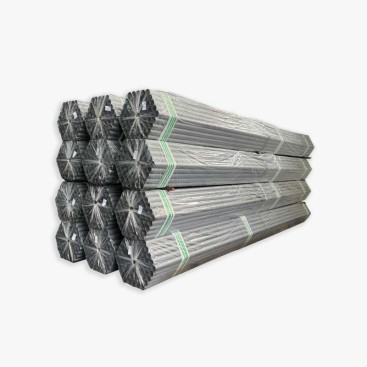
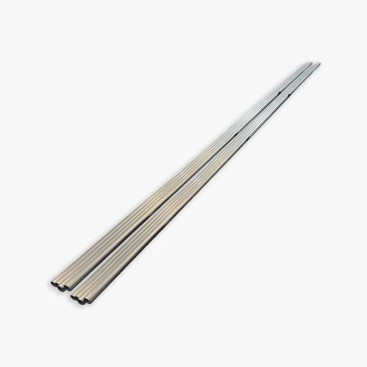
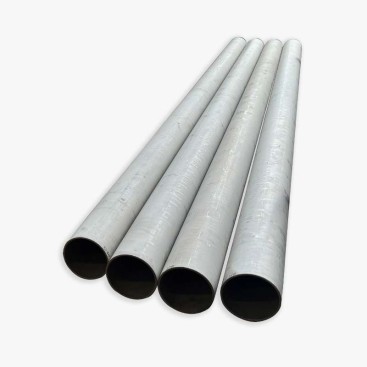
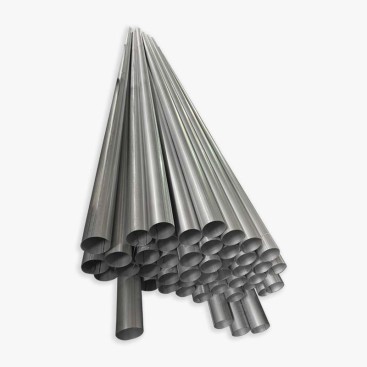
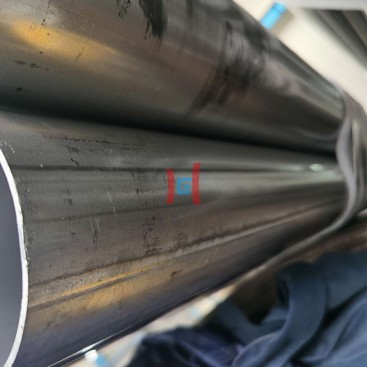
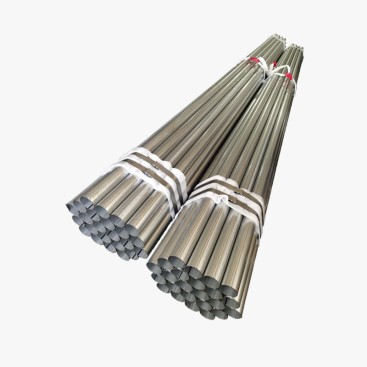
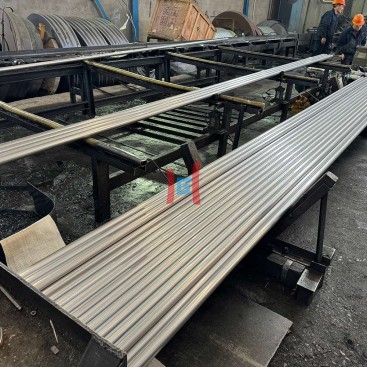
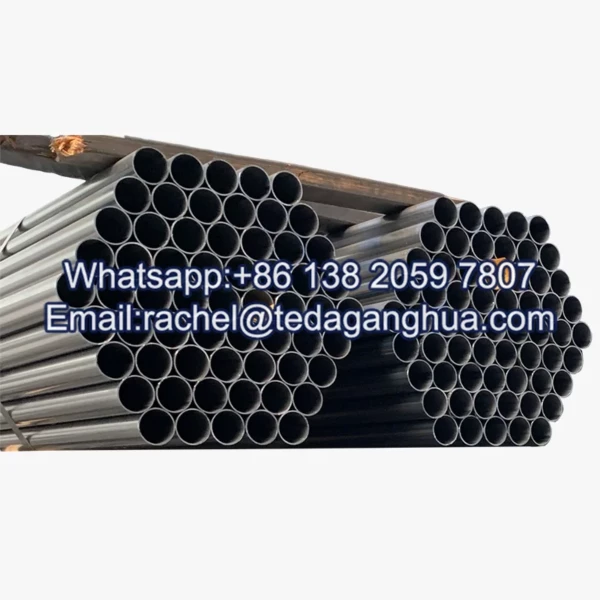
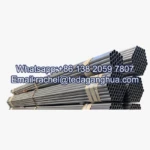
Aluminized round pipe is one of the most widely used pipe sections for exhaust, fluid or air transfer, and light structural applications. Its circular section provides uniform geometry, efficient flow, and good resistance to external pressure. When an aluminum-silicon coating is added to a steel substrate, the pipe can also provide better heat and oxidation resistance than ordinary uncoated carbon steel.
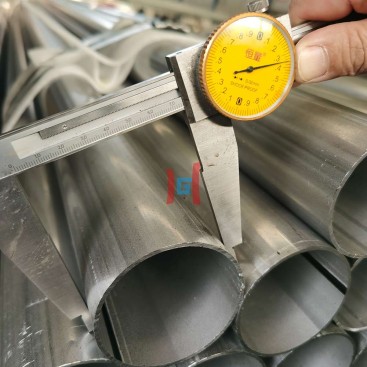
For purchasing, 然而, the most important point is not simply the word “round.” The pipe must be defined by its 外径 (从), 壁厚, 长度, coating grade, and steel substrate. Understanding these size systems makes quotation and specification much easier.
Quick answer: A typical round-pipe specification can be written as OD × wall thickness × length, for example 38 × 1.2 × 6000 毫米. Common sizes can cover approximately OD 16–114 mm with wall thicknesses from 0.8–3.0 毫米, while actual availability depends on the mill, forming route, 基材, and coating specification.
Why Is Round Pipe the Workhorse Section?
The round section is popular because it is simple to manufacture, easy to connect, and suitable for many different service conditions. For fluid and gas movement, the circular internal passage also provides an efficient flow path.
For mechanical applications, a round section distributes stress around the circumference. This makes it useful for supports, frames, guards, 括号, and other tubular structures. For heat-related applications, the round shape is also widely used in exhaust systems and heat-transfer assemblies.
Flow
The circular bore provides an efficient path for air, 气体, and other fluids.
力量
The closed round section provides useful stiffness for tubular components.
制造业
Round tube can be produced efficiently by common forming and welding processes.
Pipe Size System: Dn, OD and Wall Thickness
One of the most common sources of confusion is the difference between DN and OD. DN means nominal diameter. It is a standardized nominal designation and should not automatically be treated as the measured outside diameter.
For many industrial pipe systems, the purchasing specification may use DN together with a pipe standard. For fabricated aluminized products, 然而, the actual outside diameter and wall thickness are often more useful because they directly define the physical tube.
| Dimension | Meaning | Why it matters |
|---|---|---|
| Dn | Nominal diameter | Useful for standardized piping systems and connections |
| 从 | Actual outside diameter | Controls fit, connections, 括号, and forming dimensions |
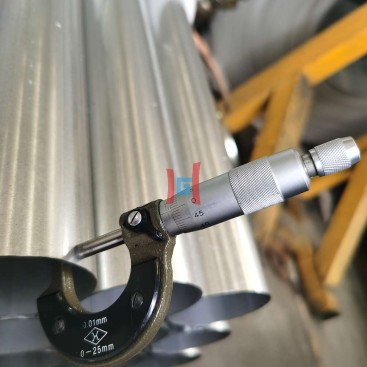
| 墙 | Pipe wall thickness | Affects strength, 重量, 流通面积, and heat transfer |
| 长度 | Overall supplied length | Affects transportation, 切割, and installation |
例如, a specification of 从 50 mm × 1.5 mm wall × 6000 毫米 means the outside diameter is 50 毫米, the nominal wall thickness is 1.5 毫米, and the supplied straight length is 6 米.
Common Round Pipe Sizes
The following table shows common example dimensions within the requested 16–114 mm OD 和 0.8–3.0 mm wall range. These are useful for inquiry and planning, but they should not be treated as a universal stock list.
| 从 (毫米) | Typical wall options (毫米) | Typical application |
|---|---|---|
| 16 | 0.8–1.2 | Small ducts, 括号, light components |
| 20 | 0.8–1.5 | Exhaust and small tubular parts |
| 25 | 0.8–1.5 | Automotive and equipment components |
| 32 | 1.0–2.0 | 排气, conveying and support parts |
| 38 | 1.0–2.0 | Exhaust and general industrial use |
| 48 | 1.0–2.0 | Heat-transfer and structural components |
| 60 | 1.2–2.5 | Industrial ducts and supports |
| 76 | 1.5–2.5 | Exhaust and larger conveying systems |
| 89 | 1.5–3.0 | Industrial piping and structural supports |
| 114 | 2.0–3.0 | Heavy tubular components and supports |
Stock note: Smaller OD and thinner-wall combinations are often easier to keep in regular inventory. Larger OD, thicker walls, unusual tolerances, and special coating requirements may require production to order.
How Wall Thickness Changes Performance
Wall thickness is not just a weight parameter. It directly affects the mechanical and thermal behavior of the pipe.
- 0.8–1.0 mm: lightweight applications where low weight and forming efficiency are important.
- 1.2–1.5 mm: a common balance for exhaust, equipment, and general thin-wall applications.
- 1.5–2.0 毫米: greater stiffness and mechanical margin for more demanding components.
- 2.0–3.0 毫米: heavier tubular sections for higher stiffness, impact resistance, or structural requirements.
Increasing wall thickness also increases material weight and can affect bending, 焊接, 成型, and heat-transfer behavior. 所以, the thickest available option is not automatically the best choice.
典型应用
排气系统
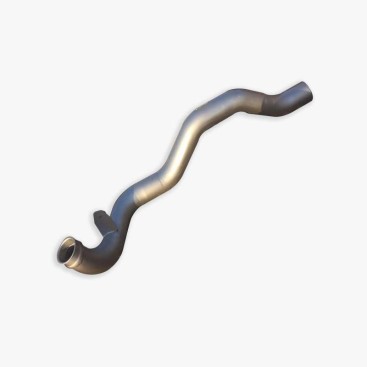
Round aluminized pipe is widely associated with exhaust applications because the Al-Si coating can improve resistance to oxidation and high-temperature surface exposure. Suitable coating level and substrate grade should be selected according to the actual exhaust temperature, 热循环, 及服务环境.
Conveying and Duct Systems
Round sections can be used for air, 气体, 灰尘, and other conveying systems where the required medium, 温度, 压力, and corrosion conditions are compatible with the selected steel and coating.
Structural Supports
Round pipe can also be used for light frames, equipment supports, agricultural machinery components, guards, and other tubular structures. In these cases, wall thickness and substrate mechanical properties should be checked against the design load.
Application Selection Rule
Exhaust → check temperature and coating grade first. Conveying → check internal diameter, medium, 压力, 和腐蚀. Structural support → check OD, 壁厚, 屈服强度, buckling, and connection design.
6-Meter Fixed Length: The Common Supply Choice
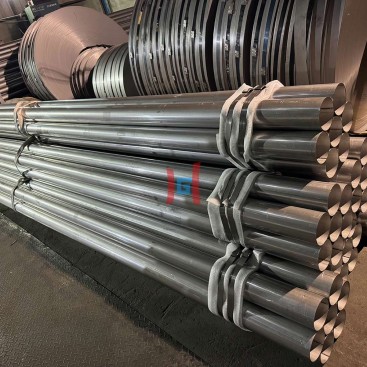
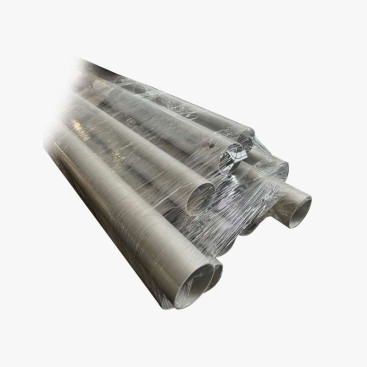
6 m fixed length is a common supply format for straight steel pipe. It provides a practical balance between production efficiency, 运输, storage, and downstream cutting.
For project orders, other cut lengths may also be possible depending on the production route and processing requirements. If the finished parts require precise lengths, it is better to specify the required cutting tolerance rather than simply asking for “6 m pipe.”
| Length request | 最佳使用 |
|---|---|
| 6 m fixed length | Standard stock and industrial projects |
| Custom cut length | Fabrication and assembly lines |
| Cut-to-length batches | OEM and high-volume production |
Pipe vs Tube: Why the Difference Matters
Pipe and tube are not always interchangeable terms. Pipe is traditionally associated with pressure or fluid conveyance and is often specified through nominal size systems. Tube is commonly specified by its actual OD and wall thickness and is widely used for mechanical or structural applications.
然而, commercial terminology varies between markets and manufacturers. A round aluminized product can therefore be called either “pipe” or “tube” even when its physical geometry is similar.
When ordering, the safest method is to provide the actual OD, 壁厚, 长度, 材料等级, coating grade, and applicable standard. This avoids ambiguity caused by terminology.
Pipe vs Tube will be discussed in detail in #7, including DN versus OD, pressure-service terminology, mechanical tubing, tolerance systems, and how to write a clear international purchasing specification.
What to Include in an Inquiry
A good inquiry should contain enough information for the supplier to identify the correct production route and calculate an accurate quotation.
- 产品: round aluminized steel pipe or tube
- Steel substrate grade
- Al-Si coating grade, such as AS60, AS80, AS120, AS150, or AS200 when applicable
- Outside diameter
- 壁厚
- 长度, 例如 6,000 毫米
- Quantity and expected order frequency
- Welding or forming requirements
- Surface and dimensional tolerance requirements
- Application and service temperature when used for exhaust or heat-related equipment
Example inquiry: “Aluminized round pipe, 从 48 mm × WT 1.2 mm × L 6000 毫米, AS120, straight length, 数量 20 吨, for automotive exhaust components.” This format gives a supplier a much clearer starting point than “48 mm aluminized pipe.”
Teda Ganghua: Stock and Custom Supply
Teda Ganghua supports B2B buyers sourcing aluminized steel round pipe and tube from China. Common OD and wall combinations can be checked against current inventory, while non-standard dimensions can be evaluated for production orders.
For industrial buyers, we can help match the steel substrate, Al-Si coating level, 从, 壁厚, 长度, 及加工要求 to the intended application. 切割, 成型, 焊接, and other processing requirements can also be discussed for project orders.
我们的 渗铝钢管 range can be considered for exhaust, agricultural machinery, heat-related equipment, conveying systems, and selected structural applications.
For a stock inquiry, send the required OD × wall thickness × length + coating grade + 数量. This allows available sizes and suitable supply options to be checked efficiently.
FAQs
What is the most common size format for round pipe?
A clear format is outside diameter × wall thickness × length, 例如 38 × 1.2 × 6000 毫米. For standardized piping systems, DN may also be required.
What OD sizes are common for aluminized round pipe?
Common commercial sizes can range from small diameters such as 16 mm to larger sizes around 114 毫米. Wall thickness may range from approximately 0.8 到 3.0 毫米, depending on the product and application.
是 6 m a standard pipe length?
是的. 一个 6 m fixed length is a common supply choice for straight steel pipe. Custom cut lengths may also be available depending on the supplier and production route.
What is the difference between DN and OD?
DN is a nominal diameter designation used in standardized piping systems. OD是管道的实际外径. 不应假定它们是相同的测量值.
镀铝圆管可以用作结构支撑吗?
它可用于选定的轻型结构应用, 但基材等级, 从, 壁厚, 连接设计, 负载, 屈曲风险, 结构审批前必须检查使用环境.