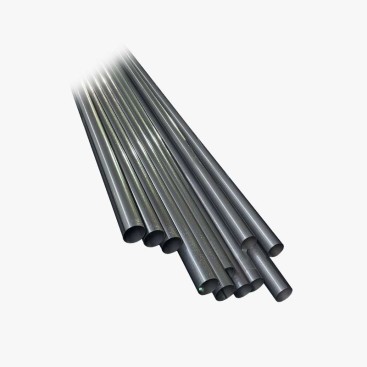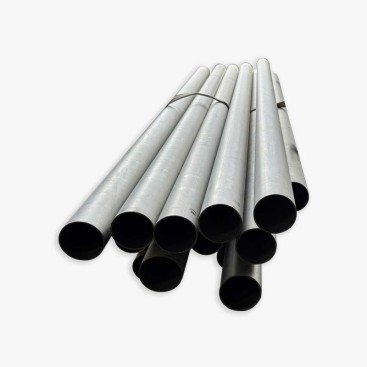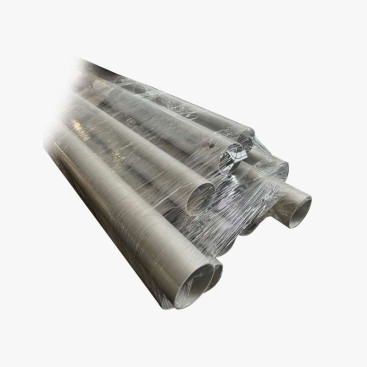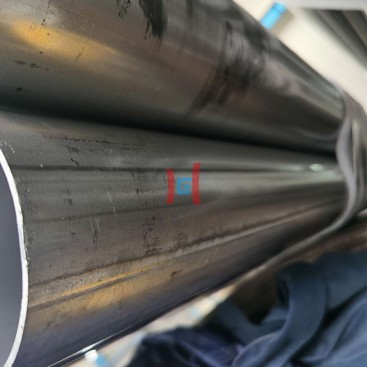
- 描述
描述
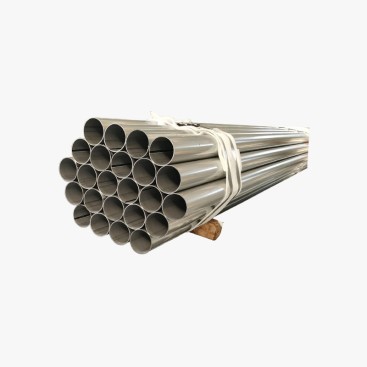
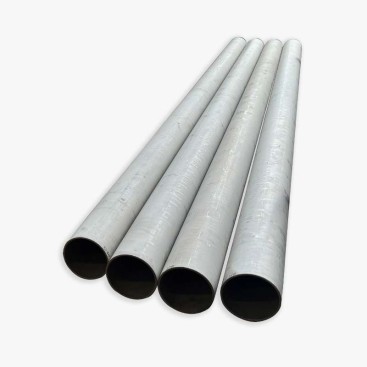
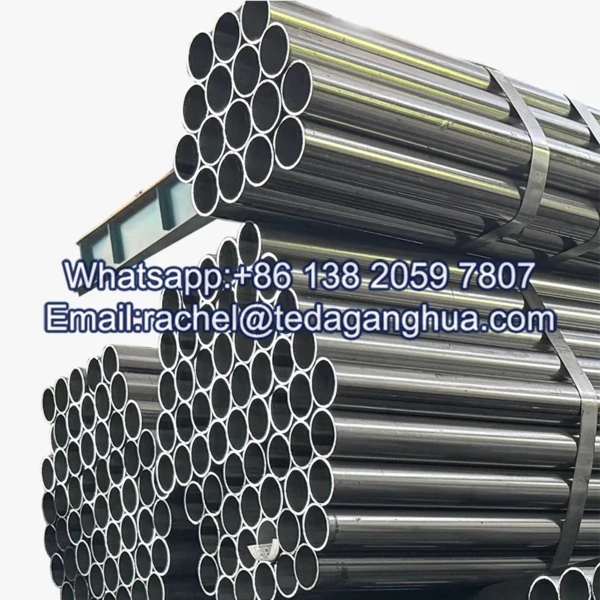
When buyers search for cold rolled aluminized steel pipe, they are specifying something about the steel substrate before the aluminum-based coating is applied. Cold rolling describes a manufacturing route for the base steel. It does not automatically indicate better coating quality, stronger welds, or higher finished-pipe performance.
This distinction matters because a finished coated pipe has several independent quality dimensions. The substrate determines characteristics such as thickness consistency and surface condition. The coating has its own requirements for type, mass, and adhesion. The pipe manufacturing process introduces another set of requirements, particularly weld quality and dimensional accuracy.
In other words, cold rolled is a substrate statement, not a complete quality claim. Buyers should specify the substrate, 涂层, and weld requirements separately rather than relying on one descriptive phrase.
1. What Does Cold Rolled Mean for the Steel Substrate?
Cold rolling is a steel processing operation in which steel is rolled at a temperature below its recrystallization temperature, typically after hot rolling and appropriate preparation. The process can improve dimensional control and surface characteristics compared with many hot-rolled products.
When cold-rolled steel is selected as the substrate for an aluminum-coated pipe, its main relevance is the condition of the base material before coating and pipe forming.
Three substrate characteristics are particularly relevant to buyers:
- Thickness consistency: Cold rolling supports tighter control of strip thickness and can help provide more consistent material for downstream processing.
- 表面状况: A smoother and more controlled surface can be beneficial for coating preparation, appearance requirements, and subsequent finishing.
- Thin-gauge production: Cold rolling supports the production of thinner steel strip for applications where reduced material thickness is required.
These characteristics can make cold-rolled substrate suitable for products requiring a controlled appearance, coating preparation, or further forming. 然而, the actual result still depends on the material grade, production route, surface preparation, 及检验要求.
2. What Cold Rolling Changes — and What It Does Not
The easiest way to evaluate the term is to separate substrate characteristics from coating and finished-pipe performance.
| What Cold-Rolled Substrate Can Change | What It Does Not Automatically Change |
|---|---|
| Thickness consistency and flatness Supports more controlled strip dimensions and surface geometry. | 镀层质量 The amount of aluminum-based coating must be specified and inspected separately. |
| 表面状况 Can provide a more controlled surface for appearance and finishing applications. | Coating adhesion Adhesion depends on surface preparation, coating process, and agreed testing. |
| Thin-gauge availability Supports production of thinner steel substrates where required. | Weld quality Weld integrity depends on pipe-forming and welding parameters, not the cold-rolling designation alone. |
This distinction prevents a common purchasing misunderstanding: a cold-rolled substrate may offer advantages in surface and dimensional control, but those advantages cannot replace separate coating and pipe-quality specifications.
3. 表面质量: Why Cold-Rolled Substrate Matters for Appearance
Surface condition is often an important reason for choosing cold-rolled steel. Compared with many hot-rolled substrates, cold-rolled material can offer a more uniform surface and fewer surface irregularities, depending on the original material condition and subsequent processing.
This can be valuable when the finished pipe is visible or will receive additional surface treatment. A more controlled substrate surface provides a useful starting point for coating preparation and appearance management.
Applications Where Surface Condition Matters
- Visible components: Products used in equipment housings, decorative structures, and other applications where surface appearance is important.
- Painted components: Parts that receive additional painting or finishing after pipe fabrication, subject to suitable surface preparation.
- Stamped or formed parts: Components requiring a controlled substrate condition for subsequent forming operations.
然而, cold rolling does not guarantee a defect-free finished surface. 贮存, handling, cleaning, 涂层, 焊接, and forming can all introduce marks or defects. Buyers should define the required finished surface condition instead of assuming that the substrate designation guarantees the final appearance.
4. Thin Specifications: A Substrate Advantage, Not a Strength Guarantee
Cold rolling is commonly associated with the production of thinner steel strip and improved dimensional control. This can help manufacturers produce pipes for applications where reduced wall thickness, lower weight, or more controlled dimensions are required.
But a thinner substrate is not automatically suitable for every application. A product’s load-bearing capacity and structural performance depend on more than whether the steel was cold rolled.
For pressure-related or structural applications, buyers should focus on the specified steel grade, mechanical properties, 壁厚, pipe dimensions, design requirements, and applicable product standards.
Important selection principle: Cold rolling describes how the substrate was processed. Steel grade and verified mechanical properties are the basis for evaluating strength requirements. Do not use the words cold rolled as a substitute for grade selection.
5. What Cold Rolling Does Not Tell You About the Coating
A cold-rolled substrate does not establish the type or quantity of aluminum-based coating applied to the finished material.
For coated steel pipe, coating requirements should be stated independently. Buyers should confirm at least the following items:
| Coating Item | What to Confirm | Why It Matters |
|---|---|---|
| 涂层类型 | Pure aluminum or aluminum-silicon alloy | Defines the required coating system. |
| 镀层质量 | Agreed value in g/m² and whether it is the combined mass on both sides | Provides a measurable acceptance requirement. |
| Coating adhesion | Bend test, cupping test, or another agreed method | Evaluates coating integrity under specified conditions. |
Surface preparation and coating-process control also matter. A suitable cold-rolled surface can support coating production, but the final adhesion result must be verified through the relevant process controls and agreed inspection method.
6. Weld Quality Is Another Independent Dimension
When steel strip is formed into pipe, the edges are brought together and joined through a welding process. The quality of the finished weld depends on the selected welding method, edge preparation, alignment, heat input, production speed, and process monitoring.
Cold-rolled substrate does not automatically mean that the pipe has a stronger or more reliable weld. Even a well-controlled base material can produce an unsatisfactory weld if the forming and welding process is not properly managed.
What Should Be Specified for the Weld?
- Welding process and applicable manufacturing requirements.
- Weld seam appearance and dimensional acceptance criteria.
- Required inspection or testing method.
- Any additional requirements for internal or external weld treatment.
- Coating condition around the weld seam, where relevant to the manufacturing route.
For coated pipe, buyers should also clarify whether coating is applied before or after pipe forming and welding. These production routes can result in different coating conditions around the weld seam and should not be treated as identical.
7. Where Should Cold Rolled Appear in a Purchase Inquiry?
The correct position for cold rolled is the substrate section of the inquiry. It should be listed alongside, rather than merged with, the coating and weld requirements.
A clear inquiry separates the three quality dimensions so that the supplier can confirm each one independently.
| Inquiry Section | Information to Provide | Quality Dimension |
|---|---|---|
| 基材 | Cold-rolled or hot-rolled, 钢种, 机械要求 | Base material condition and properties |
| 涂层 | 涂层类型, coating mass, 附着力测试方法 | Coating composition and performance |
| Weld and pipe | Welding requirements, 方面, 公差, 检查 | Finished pipe manufacturing quality |
A practical inquiry template could read:
基材: Cold-rolled steel, grade and mechanical requirements to be confirmed.
涂层: Aluminum-based coating type, agreed coating mass, and adhesion test method.
Pipe manufacturing: Pipe dimensions, 壁厚, 焊接要求, 公差, 及检验标准.
This structure makes the inquiry easier to review and reduces the risk of treating a substrate description as a complete product specification.
8. When Is Cold-Rolled Substrate the Right Choice?
Cold-rolled substrate is worth considering when the finished component has requirements related to appearance, surface preparation, coating consistency, or subsequent stamping and forming.
For pressure-bearing and structural applications, 然而, the first decision should be whether the selected steel grade and verified mechanical properties meet the design requirements. Cold-rolled or hot-rolled describes the processing condition; it does not replace engineering evaluation.
Buyers should therefore select the substrate according to the actual application rather than treating cold rolled as a universal upgrade.
9. 泰达港华金属: Substrate and Coating Specification Support
Teda Ganghua Metal is a steel stockist based in Tianjin TEDA, 和 20 years of stockist and export experience. The company supports industrial buyers with steel sourcing, material specification communication, and export supply coordination.
When sourcing cold-rolled or other aluminized steel products, buyers need to distinguish between substrate condition, 涂层要求, and finished-pipe manufacturing quality. Teda Ganghua Metal can help coordinate these requirements during inquiry and order confirmation.
Our supply services include material grade confirmation, dimensional coordination, coating specification discussions, material test certificates, and third-party inspection arrangements according to agreed order requirements.
For buyers looking for 渗铝钢管, our team can discuss the intended application, substrate requirements, coating type, and finished dimensions before confirming the purchasing specification.
Teda Ganghua Metal welcomes customer inspections. Material documentation and inspection arrangements can be coordinated according to the confirmed contract, helping buyers verify that the supplied products meet their agreed requirements.
常见问题
1. Does cold-rolled steel automatically have better coating adhesion?
不. Cold rolling can provide a more controlled substrate surface, but coating adhesion also depends on surface preparation, coating process conditions, and the final coating structure. Adhesion should be evaluated using an agreed test method.
2. Does cold-rolled substrate mean the finished pipe is stronger?
未必. Finished-pipe strength depends on steel grade, mechanical properties, 壁厚, 方面, welding quality, 和申请要求. The cold-rolling designation alone cannot establish structural or pressure-bearing suitability.
3. Why is cold-rolled substrate useful for appearance parts?
It can provide a more uniform surface and better dimensional control, which may be beneficial for visible components, painted products, and parts requiring subsequent forming. The final surface condition still depends on handling and later manufacturing operations.
4. Should cold rolled be written in the coating specification?
不. It belongs in the substrate section. 涂层类型, coating mass, and adhesion testing should be specified separately, while welding and finished-pipe requirements should have their own section.
5. Is cold-rolled material always better than hot-rolled material?
不. 合适的基材取决于应用. 冷轧材料有利于满足表面和尺寸要求, 而结构和压力相关的应用必须优先考虑指定的等级, mechanical properties, 及相关设计标准.