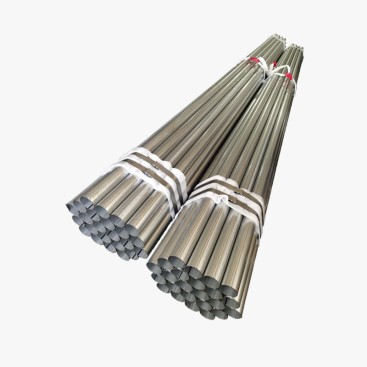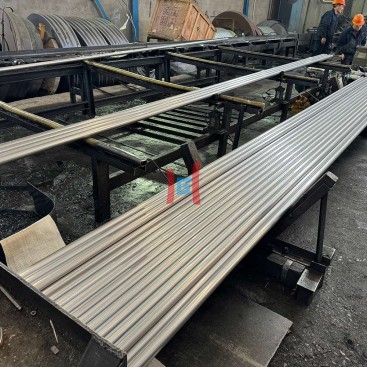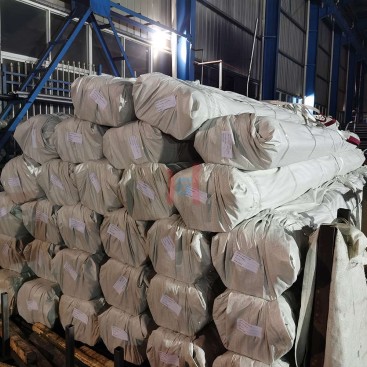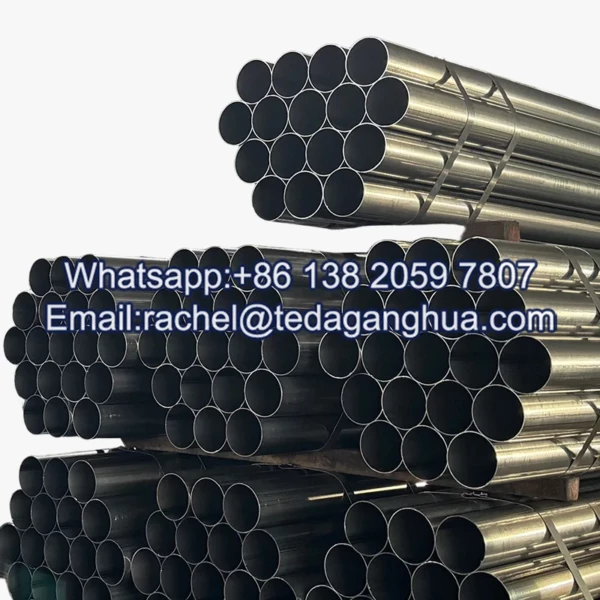
- 描述
描述
When buyers search for hot-dip aluminized steel tube, they may assume that the product specification is already clear. 然而, this description only identifies a steel tube with an aluminum-based protective coating. It does not establish the steel substrate, 涂料组合物, manufacturing sequence, or dimensional system. These details can significantly affect forming performance, 耐腐蚀性, high-temperature behavior, weld integrity, and compatibility with downstream equipment.
For procurement engineers, the important step is to turn a general product description into a verifiable technical specification. Four independent decisions need to be confirmed before comparing suppliers or approving a material for production.
1. Four Decisions Hidden Behind One Product Name
The following table summarizes the four specification areas that buyers should clarify. Each decision addresses a different manufacturing or application requirement.
| 规格 | Possible Options | Main Decision Factor |
|---|---|---|
| 钢基材 | Cold-rolled or hot-rolled steel; DC54D, Q195, Q235, SA1C and other applicable grades | Forming requirements and mechanical strength |
| Coating composition | Commercially pure aluminum or aluminum-silicon alloy; specified coating designation and mass | 耐腐蚀、耐热性 |
| Manufacturing route | Forming from pre-coated steel or coating after tube fabrication | Weld seam protection and surface continuity |
| Dimensional system | Tube dimensions using actual OD × WT, or pipe dimensions using NPS or DN | Downstream connections and installation requirements |
A practical procurement rule: The product name tells you that the steel has an aluminum-based coating, but it does not define any of these four decisions. A complete inquiry must specify all four.
2. Steel Substrate: Cold-Rolled or Hot-Rolled?
The substrate determines the mechanical foundation of the finished tube. Even when two products have similar external dimensions and coating appearances, their underlying steel grades and manufacturing conditions may differ.
Cold-Rolled Steel Substrate
Cold-rolled steel is commonly considered when the application requires controlled thickness, a relatively smooth surface, and good dimensional consistency. Drawing-quality grades such as DC54D may be relevant for applications involving more demanding forming operations, subject to the applicable product specification.
Hot-Rolled Steel Substrate
Hot-rolled steel may be selected for applications where its mechanical characteristics, manufacturing route, or structural requirements are more suitable. Grades such as Q195 and Q235 may appear in procurement discussions, but their suitability must be checked against the required chemical composition, mechanical properties, and applicable standard.
What buyers should verify
- Exact steel grade and governing standard
- Cold-rolled or hot-rolled manufacturing condition
- Yield strength and tensile strength requirements
- Elongation and forming requirements
- Material certificate and heat or coil traceability
One important distinction is that a steel grade appearing in a coated-sheet specification is not automatically interchangeable with a tube-grade designation. Buyers should verify whether the proposed substrate is suitable for the intended tube manufacturing process.
3. 铝涂层: Pure Aluminum or Aluminum-Silicon?
The term aluminum coating can describe different coating compositions. In conventional aluminized steel classifications, 类型 1 和类型 2 represent two important coating approaches. Their differences are relevant when selecting materials for heat exposure or atmospheric corrosion conditions.
类型 1: 铝硅合金
This coating contains aluminum with silicon as an alloying element. Silicon helps control the growth of the iron-aluminum intermetallic layer during coating formation.
Typical consideration: Applications requiring a combination of heat resistance and corrosion protection, including exhaust-related components and heating equipment.
类型 2: Commercially Pure Aluminum
This coating primarily uses commercially pure aluminum rather than an aluminum-silicon alloy.
Typical consideration: Applications where atmospheric corrosion resistance is a major selection factor, including certain building and outdoor components.
The two coating types should not be treated as identical simply because both contain aluminum. Their coating structures, processing characteristics, and intended service environments can differ.
Another important procurement detail is coating mass. Buyers should request the applicable coating designation, measurement method, and acceptance requirements instead of relying on descriptions such as heavy coating or enhanced protection.
Coating mass alone also cannot establish service life. 温度, 湿度, corrosive media, surface damage, and operating conditions all influence actual performance.
4. Manufacturing Route: Pre-Coated Steel or Post-Coated Tube?
The manufacturing sequence is one of the most frequently overlooked details when purchasing coated tubing. Two products may both be described as aluminum-coated steel tubes while having different coating conditions around the welded area.
Route A: Forming and Welding Pre-Coated Steel
In this route, aluminum-coated steel strip or sheet is slit, roll-formed into a tubular shape, and joined through a welding process, commonly electric resistance welding for applicable products.
The original coating is present on the steel strip before tube forming. 然而, the forming and welding operations can affect coating continuity around the edges and weld seam. The weld area may require additional treatment or coating restoration depending on the product design and corrosion protection requirements.
Route B: Coating After Tube Fabrication
In this approach, the steel tube is manufactured first and subsequently receives an aluminum-based coating through an appropriate coating process.
This route changes the sequence of surface treatment and tube fabrication. Buyers should confirm whether the selected coating process can adequately cover the external surface, internal surface, weld area, and other specified regions.
| 比较 | Pre-Coated Steel Route | Post-Coated Tube Route |
|---|---|---|
| Coating sequence | Before tube forming | After tube fabrication |
| Weld area | May require coating restoration | Depends on coating coverage and process control |
| Inspection focus | Original coating and weld treatment | Coating continuity after tube fabrication |
| Key question | How is the weld protection restored? | Does the coating cover all required surfaces? |
Neither route should be considered automatically superior. The correct choice depends on the required coating performance, manufacturing capabilities, 检查标准, and final operating environment.
5. Dimensions: Tube OD × WT or Pipe NPS / Dn?
The dimensional system is another important source of misunderstanding in international procurement. Tube and pipe are sometimes used interchangeably in general communication, but their dimensional specifications may follow different conventions.
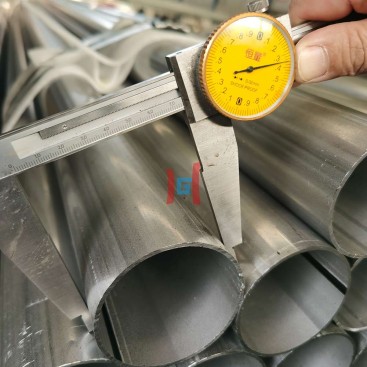
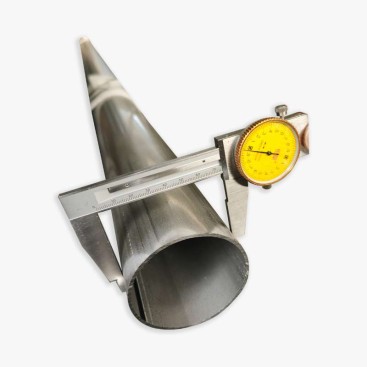
管尺寸 are commonly specified using actual outside diameter and wall thickness. 例如, a purchase specification may identify a product by its measured outside diameter and wall thickness in millimeters.
Pipe dimensions may use Nominal Pipe Size (NPS) or Nominal Diameter (Dn). These are nominal designation systems, and the stated nominal size should not be mistaken for the actual outside diameter or internal diameter.
Example of a dimensional inquiry
Tube: Actual outside diameter × wall thickness
管道: NPS or DN + applicable schedule or wall thickness specification
Always confirm actual dimensions, 尺寸公差, and connection requirements before ordering.
This distinction becomes especially important when the finished product must connect to existing fittings, 排气系统, 加热设备, or mechanical assemblies.
6. How to Navigate the 20-Page Technical Guide
Rather than treating every technical question as part of one oversized product specification, this guide separates the subject into dedicated pages. Each page addresses a particular procurement decision or engineering issue.
Technical Navigation
Page #5 — Aluminum coating composition, coating characteristics, and selection considerations.
页数 #6, #7, #14, and #16–#18 — Base steel grades, substrate characteristics, and material selection.
Pages #8–#11 — Tube forming, welding methods, weld seam treatment, and manufacturing considerations.
页数 #12 和 #13 — Tube and pipe dimensional systems and dimensional requirements.
Page #15 — Matching material characteristics with application requirements.
页数 #19 和 #20 — Relevant material standards, product specifications, and verification requirements.
7. 标准: Why the Product Form Matters
A material standard for coated steel sheet does not automatically define every requirement for a finished welded tube. This distinction is essential when reviewing technical documents.
例如, ASTM A463/A463M addresses aluminum-coated steel sheet, while ASTM A787/A787M covers electric-resistance-welded metallic-coated carbon steel mechanical tubing. The latter references applicable coating specifications for tubing manufactured from pre-coated sheet.
In China, 国标/T 36399-2018 covers continuously hot-dip aluminum-silicon alloy-coated steel sheet and strip. Its scope should not be interpreted as a complete finished-tube specification.
When evaluating a quotation or material certificate, buyers should distinguish between:
- The standard governing the steel substrate
- The standard governing the aluminum-based coating
- The standard governing finished tube manufacturing
- The inspection and dimensional acceptance requirements
These documents serve different purposes. A technically complete order should identify which requirements apply to the substrate, 涂层, 制造过程, and finished product.
8. What Should Buyers Include in an Inquiry?
Before requesting quotations, prepare a technical inquiry that addresses the four decisions discussed above. This reduces specification ambiguity and makes it easier to compare offers from different manufacturers or material suppliers.
Procurement Specification Checklist
- Steel substrate grade and applicable standard
- Cold-rolled or hot-rolled substrate condition
- Aluminum or aluminum-silicon coating designation
- Required coating mass and inspection method
- Pre-coated or post-coated manufacturing route
- Weld seam protection and surface coverage requirements
- Actual OD × WT or NPS / DN dimensional designation
- Dimensional tolerances and mechanical properties
- Inspection documents and material traceability
- Final application and operating environment
9. 泰达港华金属: Supporting Industrial Steel Procurement
Teda Ganghua Metal is a Tianjin TEDA-based steel stockist with 20 years of stockist experience and export experience. The company works with established steel producers, including Baosteel, TISCO, Angang Steel, TPCO, and VALIN, and maintains a broad steel inventory for industrial procurement requirements.
For buyers sourcing aluminum-coated steel products, the first step is to establish the exact substrate grade, 涂料组合物, manufacturing route, and finished dimensions. These details help determine whether a proposed material is suitable for the intended application.
Teda Ganghua Metal can assist buyers with steel material sourcing, specification communication, material documentation, and inspection coordination. Available documentation can include material test certificates and third-party inspection arrangements, subject to the confirmed product and order requirements.
For product inquiries and specification discussions, visit our 渗铝钢管 product category or contact our team with your technical requirements.
Our procurement approach emphasizes specification verification, material traceability, and clear communication before shipment. Buyers are welcome to arrange inspections and verify the supplied materials against the agreed purchase specifications.
常见问题
1. Does hot-dip aluminized steel tube always use an aluminum-silicon coating?
不. Aluminum-coated steel products can use different coating compositions. 类型 1 generally refers to an aluminum-silicon alloy coating, 而类型 2 refers to a commercially pure aluminum coating. Buyers should specify the required coating type rather than relying on the general product name.
2. Can DC54D, Q195, and Q235 all be used as steel substrates?
These grades may be considered in different steel product and manufacturing contexts, but they are not automatically interchangeable. Their suitability depends on the applicable standard, chemical composition, mechanical properties, 成型要求, and coating process compatibility.
3. Is the weld seam protected when pre-coated steel is formed into a tube?
未必. Welding can affect the original coating around the joint. Buyers should confirm whether the weld area receives additional coating treatment and how the finished seam is inspected.
4. Is NPS the same as the actual outside diameter of a tube?
不. NPS is a nominal pipe size designation, not a direct measurement of actual outside diameter. For applications requiring precise connections, confirm the actual outside diameter, 壁厚, and applicable dimensional standard.
5. What is the most important information when requesting a quotation?
Start with four items: steel substrate, 涂料组合物, manufacturing route, and dimensional system. Then add mechanical requirements, coating acceptance criteria, inspection documentation, and final application conditions to establish a complete purchasing specification.