ASTM A787 مقابل ASTM A463 للأنابيب الفولاذية بالألمنيوم
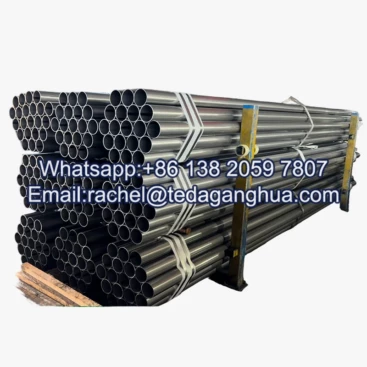
عند تحديد الأنابيب الفولاذية المطلية بالألمنيوم لأنظمة عوادم السيارات, قنوات العادم الصناعية, وتطبيقات درجات الحرارة العالية, understanding the relationship between ASTM A787 and ASTM A463 is essential. These two standards address different stages of the product specification: one focuses on electric-resistance-welded metallic-coated steel tubing, while the other establishes requirements for aluminum-coated steel sheet used as the raw material.
For procurement managers, engineers, and exhaust system manufacturers, specifying only the tube dimensions or aluminum coating designation may leave important technical requirements undefined. A complete purchasing specification should identify the tubing standard, coating standard, coating type, درجة الصلب, التحمل الأبعاد, عملية التصنيع, ومتطلبات التفتيش.
1. ASTM A787 and ASTM A463: Two Standards with Different Responsibilities
The most important distinction is that ASTM A787/A787M covers the finished electric-resistance-welded metallic-coated carbon steel mechanical tubing, whereas ASTM A463/A463M covers aluminum-coated steel sheet manufactured through the hot-dip coating process.
These specifications are complementary rather than interchangeable. The sheet standard establishes the coating requirements for the incoming flat material, while the tubing standard addresses the manufacturing and quality requirements of the resulting tubular product.
Key distinction
أستم A463/A463M: Defines the aluminum-coated steel sheet used for tube production.
ASTM A787/A787M: Defines the requirements for electric-resistance-welded metallic-coated carbon steel mechanical tubing.
| مقارنة | أستم A463/A463M | ASTM A787/A787M |
|---|---|---|
| Product form | Aluminum-coated steel sheet | Metallic-coated steel tubing |
| Manufacturing focus | Hot-dip aluminum coating | Electric-resistance welding and tube production |
| Main application | Raw material for coated products | Finished mechanical tubing |
| Coating requirements | Aluminum coating types and coating mass | Applicable metallic-coated sheet designation and tube requirements |
| Dimensional requirements | Sheet thickness and associated product requirements | Tube outside dimensions, سمك الجدار, and tolerances |
| Typical inspection | كتلة الطلاء, جودة السطح, and sheet properties | Dimensions, mechanical properties, جودة اللحام, and coating-related requirements |
For buyers sourcing coated exhaust tubing, the combination provides a useful framework for tracing the requirements from the original coated sheet to the finished tube. لكن, additional application-specific requirements may be necessary to establish exhaust system performance.
2. What Does ASTM A463/A463M Specify?
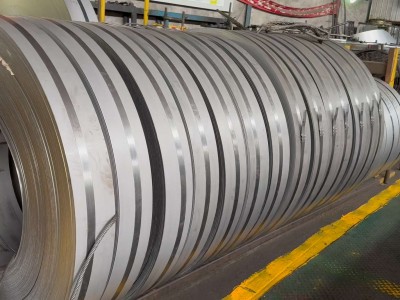
ASTM A463/A463M is the specification for steel sheet coated with aluminum through the hot-dip process. It covers coils and cut lengths and identifies two aluminum coating types with different coating characteristics.
2.1 يكتب 1: Aluminum-Silicon Coating
يكتب 1 is an aluminum-silicon coating system. The addition of silicon helps control the formation and growth of the iron-aluminum intermetallic layer during the hot-dip coating process.
This coating is widely associated with applications requiring heat resistance, مقاومة الأكسدة, and protection against atmospheric corrosion. It is particularly relevant to automotive exhaust components, الدروع الحرارية, and thermal equipment.
When selecting Type 1 material for exhaust tubing, buyers should pay attention to coating uniformity, coating mass, substrate compatibility, and the intended operating temperature.
2.2 يكتب 2: Commercially Pure Aluminum Coating
يكتب 2 uses a commercially pure aluminum coating rather than the aluminum-silicon composition associated with Type 1. Its properties and intended applications differ from those of the aluminum-silicon system.
يكتب 2 can be considered for applications where aluminum coating characteristics are required, but it should not automatically be treated as an equivalent substitute for Type 1 in exhaust applications. The operating temperature, متطلبات التشكيل, and corrosion environment must be evaluated before material substitution.
| Characteristic | يكتب 1 | يكتب 2 |
|---|---|---|
| Coating composition | Aluminum-silicon alloy | Commercially pure aluminum |
| Main characteristic | Heat-resistant coating system | طبقة حماية غنية بالألمنيوم |
| Typical consideration | High-temperature oxidation and fabrication behavior | Atmospheric corrosion protection and forming requirements |
| Exhaust application | Commonly considered for exhaust components | Requires application-specific evaluation |
One important purchasing detail is that Type 1 والنوع 2 describe coating composition, not a universal temperature rating. Actual heat resistance depends on the complete material system, including substrate chemistry, هيكل الطلاء, سماكة, fabrication history, and service conditions.
3. What Does ASTM A787/A787M Specify for Tubing?
ASTM A787/A787M covers round, مربع, مستطيلة, and special-shaped electric-resistance-welded carbon steel mechanical tubing. It includes tubing manufactured from different types of metallic-coated steel sheet, including aluminum-coated material.
The standard is particularly relevant when a buyer needs a defined manufacturing route and dimensional requirements for coated mechanical tubing rather than simply purchasing aluminum-coated flat steel.
3.1 Tube Manufacturing Process
For aluminum-coated tubing produced from precoated sheet, the manufacturing route generally involves the following operations:
Verify material grade, تسمية طلاء, and surface condition.
Prepare the required strip width and inspect cut edges.
Form the strip into the required tubular profile.
Join the longitudinal edges to create the tube.
Control tube dimensions, straightness, and surface condition.
Verify dimensional and applicable mechanical and manufacturing requirements.
Because the coating is applied before tube forming, the welding area and formed edges deserve particular attention. Heat input during welding can alter or remove coating locally, and the finished weld area may require application-specific corrosion assessment or additional treatment.
3.2 Dimensions and Tolerances
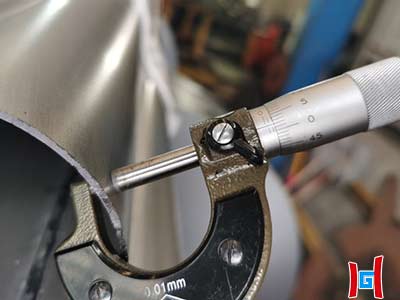
Tube dimensions are a major part of the purchasing specification. Under the ASTM A787/A787M-24 scope, the stated general dimensional coverage includes outside diameters or maximum outside dimensions from 12.7 mm to 380.0 mm and wall thicknesses from 0.70 mm to 4.60 مم.
Sizes outside the listed ranges may also be ordered subject to the applicable requirements and agreement between the purchaser and manufacturer. Buyers should verify the exact dimensional and tolerance provisions in the edition specified in the purchase order.
| Parameter | ASTM A787/A787M-24 Scope | Purchasing Consideration |
|---|---|---|
| Tube shape | دائري, مربع, مستطيلة, and special shapes | Specify the required cross-section |
| Outside diameter or maximum dimension | 12.7–380.0 mm | Specify actual dimensions and tolerance |
| Wall thickness | 0.70–4.60 mm | Clarify whether ordered thickness includes coating |
| Manufacturing process | Electric-resistance welding | Define weld inspection requirements |
Important: The dimensions above describe the general scope of the cited edition, not a complete list of available commercial sizes or a substitute for the standard’s tolerance tables. For precoated tubing, the ordered wall thickness is generally the total thickness, including the metallic coating, so the purchaser should clarify the required basis of measurement.
4. How the Two Standards Work Together for Exhaust Tubing
For an exhaust tube manufactured from aluminum-coated steel sheet, the two specifications can be used together to establish the material and product requirements.
The first step is to identify the coating specification for the incoming steel sheet. The next step is to define the finished tube requirements, including the manufacturing method, التحمل الأبعاد, and applicable mechanical properties.
A practical specification structure can be summarized as follows:
| Specification Item | Recommended Requirement | غاية |
|---|---|---|
| Finished tube standard | ASTM A787/A787M | Define mechanical tubing requirements |
| Base sheet coating standard | أستم A463/A463M | Define aluminum-coated sheet requirements |
| نوع الطلاء | يكتب 1 أو النوع 2, as required | Identify coating composition |
| درجة الصلب | Specified grade under the applicable requirements | Establish substrate properties |
| Tube dimensions | OD × wall thickness × length | Ensure dimensional compatibility |
| Weld quality | Applicable inspection and acceptance criteria | Verify weld integrity |
| Additional performance | Application-specific thermal and corrosion tests | Evaluate exhaust service suitability |
This combination helps prevent a common procurement problem: ordering tubing with an aluminum coating designation but without clearly defining the requirements for the finished welded product.
5. Why Exhaust Applications Require Additional Technical Requirements
Although the two specifications provide an important material framework, compliance with them alone does not establish that a tube is suitable for every exhaust system. Exhaust components experience multiple operating conditions that can affect coating performance, سلامة اللحام, and service life.
5.1 Operating Temperature and Thermal Cycling
Exhaust tubing is exposed to repeated heating and cooling. During operation, the material experiences thermal expansion, temperature gradients, and repeated changes in surface conditions.
Aluminum-silicon coatings are often selected for their high-temperature oxidation resistance. لكن, the actual maximum operating temperature should be evaluated against the specific steel grade, نظام الطلاء, مدة التعرض, and thermal cycling conditions.
5.2 Welding and Heat-Affected Areas
Electric-resistance welding creates localized heat along the longitudinal seam. This can change the coating structure and affect the protective condition around the weld.
Manufacturers should evaluate weld appearance, seam integrity, and the condition of the coating near the weld. Additional protection may be required depending on the exhaust environment and design requirements.
5.3 Condensation and Internal Corrosion
Exhaust systems can experience internal condensation, particularly during cold starts and short operating cycles. Condensed moisture may contain acidic compounds and other corrosive substances generated during combustion.
Consequently, the inside surface of the tube should not be overlooked. Material selection should consider both external atmospheric exposure and internal exhaust condensate conditions.
5.4 تشكيل, الانحناء, and Expansion
Exhaust tubing may undergo bending, إحراق, توسيع, and end forming during assembly. Excessive deformation can cause local coating damage, surface cracking, or dimensional distortion.
Buyers should specify forming requirements and, where necessary, request representative fabrication trials to evaluate the material’s suitability for the intended manufacturing process.
6. Common Procurement Mistakes When Specifying Coated Exhaust Tubes
Incomplete purchasing descriptions can create misunderstandings between material suppliers, tube manufacturers, and end users. The following issues deserve particular attention.
| Common Mistake | Potential Problem | Better Approach |
|---|---|---|
| Specifying only ASTM A463 | Finished tube requirements remain unclear | Include the applicable tubing specification |
| Specifying only ASTM A787 | The incoming coating type may be insufficiently defined | Identify the sheet coating designation |
| Omitting coating type | Different coating compositions may be supplied | State Type 1 أو النوع 2 where applicable |
| Not defining wall thickness basis | Measurement and material calculations may differ | Clarify total thickness versus substrate thickness |
| Ignoring weld requirements | Potential seam defects or coating discontinuity | Define inspection and acceptance criteria |
| Assuming standard compliance guarantees exhaust performance | Thermal and corrosion requirements may remain unverified | Specify application-specific testing |
7. A Practical Purchase Specification for Aluminized Exhaust Tubing
For international procurement, a clear purchase description should contain enough information for the supplier to identify the correct raw material and finished tube requirements without relying on assumptions.
The following template can be adapted for technical inquiries and purchase orders:
Example purchasing specification
| Product | Aluminum-coated ERW carbon steel tube |
| Tube standard | ASTM A787/A787M, specified edition |
| Coating standard | أستم A463/A463M, specified edition |
| نوع الطلاء | يكتب 1 أو النوع 2, as specified |
| درجة الصلب | To be confirmed according to the applicable grade requirements |
| Outside diameter | Specify in mm or inches |
| Wall thickness | Specify required thickness and measurement basis |
| طول | Specify fixed or random length |
| Weld inspection | Specify applicable inspection method and acceptance criteria |
| طلب | عادم السيارات, industrial exhaust, or other specified service |
Purchasers should also request the applicable material test certificate, coating inspection records, dimensional inspection results, and agreed test reports. Where traceability is important, the documentation should connect the finished tube with the relevant incoming material batch.
8. تيدا جانجوا: Supporting Aluminized Steel Tube Procurement
Choosing the correct standard combination is only one part of a successful industrial material purchase. Buyers also need consistent material specifications, reliable dimensional control, traceable documentation, and clear communication between the raw material supplier and the finished tube manufacturer.
Teda Ganghua supports international metal procurement projects through material sourcing, specification confirmation, processing coordination, and quality inspection arrangements. For buyers developing exhaust components or industrial thermal equipment, understanding the difference between the sheet coating standard and the finished tube standard helps establish more precise purchasing requirements.
When requesting an inquiry, procurement managers can provide the following details:
- Required tube outside diameter and wall thickness.
- Required length and dimensional tolerances.
- Applicable tubing and coating standards.
- Aluminum coating type and required coating designation.
- Operating temperature and exhaust environment.
- لحام, الانحناء, and end-processing requirements.
- Material certification and inspection documentation requirements.
For buyers evaluating أنابيب الصلب بالألمنيوم, Teda Ganghua can assist with reviewing the required material specifications and coordinating suitable product solutions according to project dimensions and application conditions.
The objective is to establish a clear connection between the raw material coating requirements, finished tube quality, and actual service conditions, helping reduce specification misunderstandings and improve procurement consistency.
9. خاتمة: Specify Both the Sheet and Tube Requirements
ASTM A463/A463M and ASTM A787/A787M serve different but complementary purposes in the production of aluminum-coated steel tubing. The former establishes requirements for hot-dip aluminum-coated sheet, while the latter addresses electric-resistance-welded metallic-coated carbon steel mechanical tubing.
For exhaust applications, specifying both standards provides a more complete technical foundation. لكن, buyers should also identify the coating type, درجة الركيزة, أبعاد الأنبوب, wall thickness basis, جودة اللحام, and additional thermal and corrosion performance requirements.
A well-prepared purchase specification does more than identify a standard number. It connects the material’s original coating characteristics with the manufacturing process and the operating conditions of the finished component. This is essential for selecting suitable tubing and maintaining consistent quality across industrial supply chains.
الأسئلة المتداولة
1. What is the difference between ASTM A787 and ASTM A463?
ASTM A787/A787M specifies electric-resistance-welded metallic-coated carbon steel mechanical tubing. ASTM A463/A463M specifies hot-dip aluminum-coated steel sheet. The two standards can be used together when coated sheet is converted into finished tubing.
2. Which ASTM A463 coating type is commonly considered for exhaust tubing?
يكتب 1, which uses an aluminum-silicon coating, is commonly considered for exhaust applications because of its high-temperature oxidation resistance. Actual suitability depends on substrate composition, درجة حرارة التشغيل, exposure conditions, ومتطلبات التصنيع.
3. Does ASTM A787 automatically guarantee exhaust system performance?
لا. The specification establishes requirements for metallic-coated mechanical tubing, but it does not independently guarantee suitability for every exhaust application. Thermal cycling, condensate corrosion, سلامة اللحام, تشكيل الأداء, and service-life requirements may need additional evaluation.
4. Does ASTM A787 cover aluminum-coated ERW steel tubes?
نعم. يشمل نطاقها الأنابيب الميكانيكية المصنوعة من الفولاذ الكربوني الملحومة بالكهرباء والمنتجة من صفائح الفولاذ المطلية بالألمنيوم, إلى جانب أنواع أخرى من المواد المغلفة بالمعادن المحددة. يجب تأكيد الإصدار المطبق ومتطلبات المنتج عند تقديم الطلب.
5. ما هي المعلومات التي يجب على المشترين تضمينها عند طلب أنابيب العادم المطلية بالألمنيوم?
يجب على المشترين تحديد معيار الأنابيب, coating standard, coating type, درجة الصلب, القطر الخارجي, سمك الجدار, طول, عملية التصنيع, متطلبات فحص اللحام, وبيئة التشغيل المقصودة. وينبغي أيضًا الاتفاق على شهادة المواد واختبار الأداء الإضافي قبل الإنتاج.