
Warum der Aluminiumbeschichtung Al-11 % Si und der Fe-Al-Schicht Silizium zugesetzt wird
Aus metallurgischen Gründen wird einem Aluminiumbeschichtungsbad Silizium zugesetzt, not simply to modify the coating’s chemical label. In hot-dip aluminum-silicon coating, silicon changes the reaction between molten aluminum and the iron-based substrate. A controlled Al-Si bath can limit excessive growth of the brittle Fe-Al reaction layer while maintaining a strong metallurgical bond between the coating and steel. This balance is particularly important when the coated material must later be bent, gebildet, geschweißt, or exposed to elevated temperature.
Core principle: silicon does not make the coating adhesive by acting like a conventional bonding agent. Its main metallurgical role is to modify the steel-to-aluminum reaction zone, helping control intermetallic growth and coating morphology. The result is a better balance between adhesion, formability and high-temperature performance.
Why Add Silicon to a Molten Aluminum Bath?
When clean steel enters a molten aluminum bath, iron from the steel and aluminum from the bath react at the interface. This produces iron-aluminum intermetallic compounds before the outer aluminum-rich coating solidifies.
The reaction is necessary because it creates metallurgical bonding. Jedoch, uncontrolled intermetallic growth is undesirable. Some Fe-Al phases are considerably harder and more brittle than the surrounding aluminum-rich coating and steel. If the reaction zone becomes excessively thick, severe bending or forming can cause cracking or delamination.
Silicon modifies this reaction. In an aluminum-silicon bath, silicon participates in the interfacial reaction and can reduce the growth rate of certain Fe-Al intermetallic phases. This creates a thinner and more controlled reaction zone under appropriate processing conditions.
The Al-11%Si Bath: What Does 11% Mean?
An Al-11%Si bath refers to an aluminum-based molten coating bath containing approximately 11% silicon by composition, with aluminum making up most of the remainder. Industrial coating systems may use slightly different silicon levels depending on the applicable standard and process design.
The important point is that the silicon percentage describes the molten bath chemistry. It should not automatically be interpreted as the final silicon content of every microscopic region of the finished coating. During dipping and solidification, Aluminium, silicon and iron redistribute between the outer coating and the interfacial reaction zone.
| Stage | Main Metallurgical Event | Effect of Controlled Silicon |
|---|---|---|
| Steel immersion | Molten aluminum contacts the steel surface | Silicon begins influencing the steel-aluminum interface reaction |
| Interfacial reaction | Fe-Al intermetallic compounds form | Intermetallic growth can be restrained and morphology modified |
| Coating solidification | Al-rich coating develops above the reaction zone | Silicon distribution influences coating microstructure |
| Bildung | Coating and reaction layer experience deformation | A controlled reaction layer can reduce the risk of excessive brittle-layer cracking |
| Thermal service | Diffusion and oxidation continue | The initial microstructure influences subsequent coating evolution |
Silicon Controls the Fe-Al Reaction Zone
The most important reason for adding silicon is the control of intermetallic growth. Without suitable control of the bath chemistry and dipping process, the reaction between iron and aluminum can generate a relatively thick intermetallic layer.
In aluminum-coated steel, phases such as Fe2Al5 and FeAl3 can develop near the steel-coating interface. These phases are structurally different from the softer aluminum-rich outer coating. Their excessive growth can make the coating less tolerant of deformation.
Silicon can interrupt or alter the normal diffusion and reaction path between iron and aluminum. Silicon-containing regions and phases can develop near the interface, changing the kinetics and morphology of intermetallic formation. The practical objective is not to eliminate the reaction layer, but to keep it controlled.
The Desired Balance
A successful coating requires enough interfacial reaction to establish metallurgical attachment, but not uncontrolled intermetallic growth that compromises ductility and forming performance. Silicon is one of the principal tools used to manage this balance in Al-Si hot-dip coating.
Why Strong Adhesion Does Not Mean a Thick Intermetallic Layer
A common misconception is that a thicker reaction layer must produce stronger coating adhesion. Metallurgical bonding does not work that way. The quality of the interface depends on its composition, morphology, Kontinuität, thickness and relationship with the surrounding coating and steel.
A controlled reaction layer can provide excellent attachment while remaining sufficiently thin to tolerate downstream processing. If the intermetallic region becomes excessively thick, its higher hardness and brittleness can become a weakness during bending, Stempeln, expansion or other deformation.
This is why bath chemistry, immersion time, Temperatur, steel surface preparation and cooling conditions must be controlled together. Silicon contributes to the metallurgical balance, but it cannot compensate for poor process control.
Al-11%Si and Coating Microstructure
After hot-dip coating, the finished surface is not chemically identical from the outside to the steel interface. The outer region is predominantly aluminum-rich, while the interface contains iron-aluminum reaction products. Silicon can be distributed through the coating and concentrated in particular microstructural regions.
For this reason, laboratory analysis of a cross-section is more informative than judging coating chemistry from surface appearance. Optical microscopy, scanning electron microscopy and elemental mapping can reveal the thickness and morphology of the reaction zone and the distribution of aluminum, iron and silicon.
| Property to Inspect | Why It Matters | Typical Evaluation Method |
|---|---|---|
| Intermetallic-layer thickness | Indicates the extent of steel-coating reaction | Metallographic cross-section |
| Interface morphology | Helps identify discontinuities and abnormal growth | Optical or electron microscopy |
| Element distribution | Shows Al, Fe and Si partitioning | EDS or related elemental analysis |
| Coating adhesion | Confirms resistance to fabrication and service stresses | Bend, forming or adhesion-related testing |
Why Process Control Matters as Much as Bath Chemistry
Specifying an Al-Si bath composition does not by itself guarantee a particular intermetallic thickness. The final microstructure depends on multiple process variables.
Steel Surface
Cleaning and surface activation determine how uniformly molten aluminum can contact the substrate.
Bath Temperature
Temperature influences reaction kinetics, wetting, dissolution and solidification behavior.
Immersion Time
Longer contact can increase interfacial reaction and alter the thickness of reaction products.
Cooling Conditions
Cooling affects coating solidification and the resulting surface microstructure.
Consequently, the relationship between silicon and adhesion should be understood as a process-microstructure-performance relationship. Silicon changes the reaction pathway, while production controls determine whether that chemistry produces a consistent commercial coating.
Why This Matters for Formed Components
Many coated steel products are not used as flat sheets. They may be roll-formed, gestempelt, gebogen, drawn, welded or fabricated into finished components. During these operations, the coating and the intermetallic layer experience different levels of strain.
The aluminum-rich outer layer is relatively ductile, while the intermetallic reaction zone is harder and less tolerant of severe deformation. A properly controlled interface therefore becomes especially important for components requiring tight bend radii or complex forming.
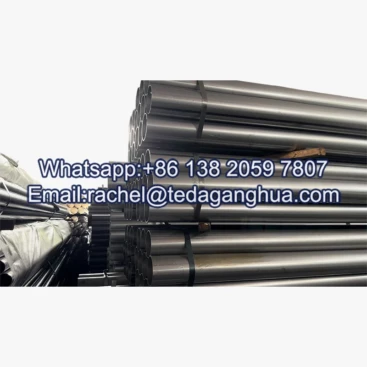
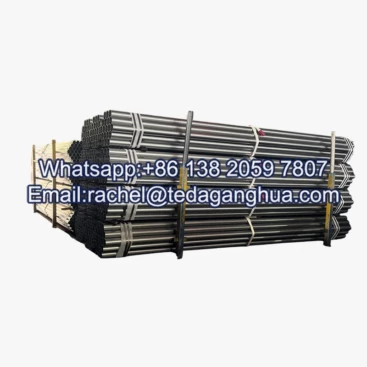
For exhaust tubes and other thermal components, the requirements are even more demanding because the material must tolerate fabrication stresses and elevated-temperature exposure. The coating specification should consequently be selected together with the tube dimensions, Umformverfahren, welding process and service temperature.


What Procurement Managers Should Specify
When purchasing Al-Si coated steel, avoid reducing the specification to a single phrase such as “aluminum-coated steel.” A useful technical inquiry should define the governing standard, Substratqualität, Abmessungen, coating designation or mass, surface requirements and intended application.
For tubular products, include outside diameter, Wandstärke, Länge, weld condition, forming requirements and operating temperature. These details allow the supplier to evaluate the coating and substrate as a complete material system.
RFQ Checklist for Al-Si Coated Material
- Applicable material standard
- Base steel grade
- Dicke, width or tube dimensions
- Coating type and coating mass or designation
- Oberflächenzustand
- Biegen, stamping or forming requirements
- Welding method and joint requirements
- Continuous and peak service temperature
- Inspection and material documentation
Teda Ganghua Supply and Processing Support
Teda Ganghua supports industrial procurement projects requiring aluminum-coated steel matched to specific forming and service conditions. Instead of evaluating coating chemistry separately from the base steel, the technical review can consider substrate grade, Abmessungen, Beschichtungsanforderungen, fabrication route and operating environment together.
For exhaust, thermal and other tubular applications, buyers can review aluminierte Stahlrohre and provide the outside diameter, Wandstärke, Länge, welding condition and working temperature. This information is particularly useful when the finished tube will undergo bending, welding or repeated thermal cycling.
For procurement managers, the practical objective is to obtain a stable metallurgical interface rather than simply specify a nominal silicon percentage. Teda Ganghua can work from drawings, material specifications and application requirements to support the selection of an appropriate coated steel configuration.
FAQ
Why is silicon added to an aluminum coating bath?
Silicon is added primarily to modify the reaction between molten aluminum and the iron-based substrate. It can help control the growth and morphology of Fe-Al intermetallic phases, supporting a useful balance between metallurgical bonding and forming performance.
Does 11% silicon mean the finished coating contains exactly 11% silicon everywhere?
NEIN. An Al-11%Si designation describes the bath composition. During coating and solidification, Aluminium, iron and silicon redistribute between different microstructural regions, so the local composition of the finished coating is not uniform.
Does more silicon always mean better adhesion?
NEIN. Coating adhesion depends on bath chemistry, steel surface condition, Temperatur, immersion time and other process variables. Silicon is an important metallurgical control element, but simply increasing its concentration does not guarantee better overall performance.
Why is intermetallic-layer thickness important?
The intermetallic layer provides metallurgical bonding, but excessive growth can increase brittleness and reduce tolerance to severe forming. The objective is a controlled interface rather than the thickest possible reaction layer.
Is Al-Si coated steel suitable for exhaust tubes?
It can be suitable for many exhaust and thermal applications, provided the coating, substrate, dimensions and fabrication method match the operating temperature and service environment. Tube geometry and welding requirements should be included in the material specification.


