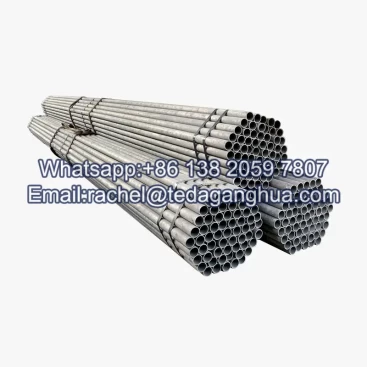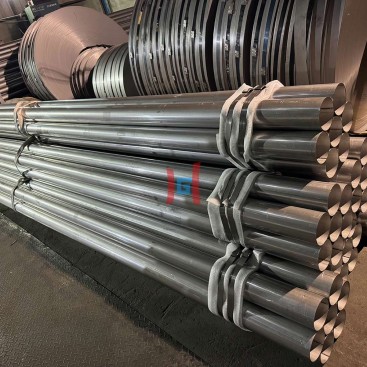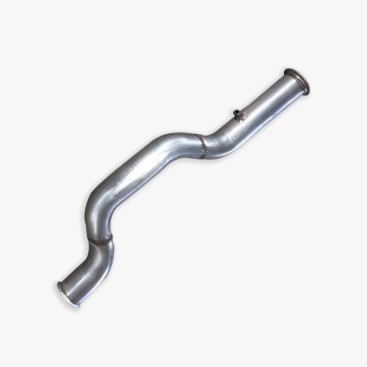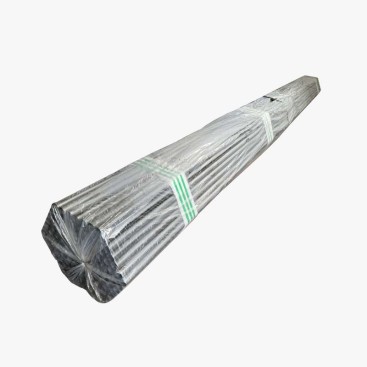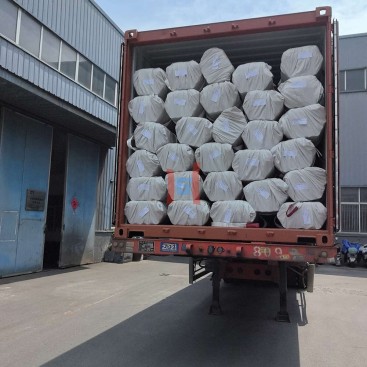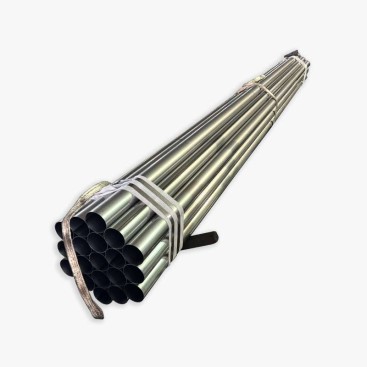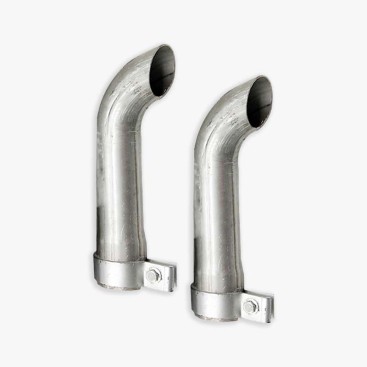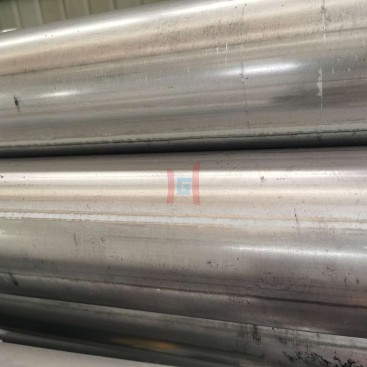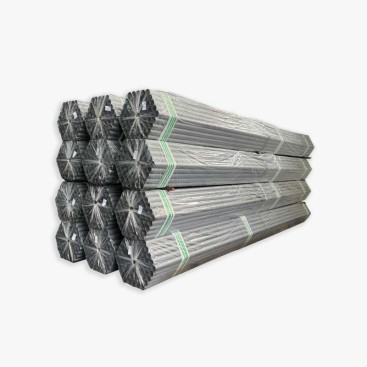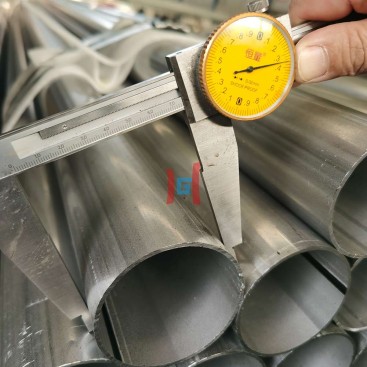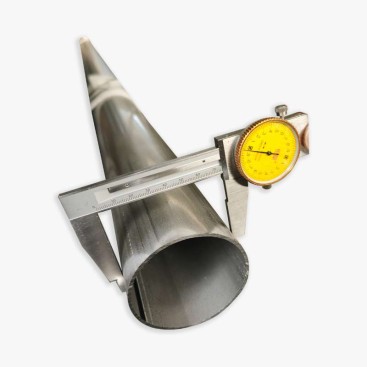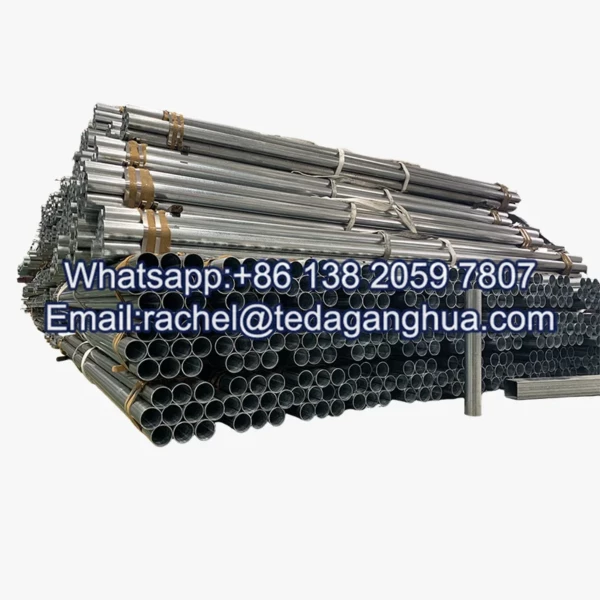
Tubo de acero aluminizado Dc53d+As120
- Descripción
Descripción
DC53D+AS120 aluminized steel tube combines a deep-drawing-quality cold-rolled steel substrate with an AS120 aluminum-silicon coating. The code is useful because it identifies both the formability level of the base steel and the nominal coating class. Sin embargo, one terminology point is important for procurement: DC53D is commonly used in Chinese/EN-aligned coated-steel grade systems, not as a JIS G3141 grade designation. JIS G3141 uses designations such as SPCC, SPCD and SPCE for cold-rolled carbon steel sheet. DC53D is commonly cross-referenced with DX53D and JIS SGCD2 in coated-sheet product documentation. :contenidoReferencia[oveja:0]{índice=0}
Code takeaway: DC53D identifies a highly formable deep-drawing substrate, mientras +AS120 identifies a nominal 120 g/m² aluminum-silicon coating class. The combination is attractive when a tube requires substantial forming while retaining an external aluminized protective layer.
DC53D+AS120 Code Decoded
| Code | Meaning | Procurement significance |
|---|---|---|
| DC | Cold-rolled coated-sheet grade family used for forming applications | Indicates a formable flat-steel substrate |
| 53 | Grade sequence identifying the deep-drawing quality | Higher formability than ordinary commercial-grade substrate |
| D | Deep-drawing designation in this grade system | Important for stamping, bending and tube forming |
| +COMO | Aluminum-silicon coating designation used for aluminized steel | Provides the protective coating system |
| 120 | Nominal coating mass class of 120 gramos/m² | Defines the specified coating quantity; confirm whether the supplier states total or per-side mass |
Commercial product documentation confirms DC53D as a deep-drawing grade, while equivalent-grade tables commonly associate DC53D with DX53D and JIS SGCD2 depending on the coating standard and application. :contenidoReferencia[oveja:1]{index=1}
What Does DC53D Mean for Tube Formability?
DC53D is an interstitial-free steel grade intended for deep drawing. Its low-carbon, highly formable substrate is designed to accommodate deformation more readily than ordinary structural grades. This is particularly relevant when a flat aluminized strip is subsequently formed into a round, oval, rectangular or other tube profile.
For procurement, the important mechanical characteristics are bajo límite elástico, sufficient tensile strength and high elongation. These properties provide the deformation capacity needed for drawing, bending and tube forming.
| Mechanical characteristic | Why it matters for DC53D tube |
|---|---|
| Fuerza de producción | Lower yield strength allows the substrate to deform without excessive forming force |
| Resistencia a la tracción | Provides the required strength after forming |
| Alargamiento | Higher elongation supports deeper forming and reduces cracking risk |
| r-value | Measures resistance to thinning during sheet deformation and is useful for demanding deep-drawing applications |
Do not treat r-value as a universal fixed number for every DC53D purchase. Depending on the applicable product standard and mill specification, r-value may be controlled differently or may be a project-specific requirement. If the tube involves severe drawing or complex forming, buyers should request the actual certified forming-property requirements rather than relying only on the grade name.
What Does +AS120 Mean?
El +AS120 portion describes the aluminized coating system. AS-type aluminized steel uses an aluminum-rich coating containing silicon, with the coating bonded metallurgically to the steel substrate. The silicon addition helps control the coating/substrate reaction during hot-dip coating.
The number 120 refers to a nominal coating mass of 120 gramos/m² under the applicable coating designation. For an RFQ, the buyer should confirm whether the stated value represents the total coating mass on both sides or a specified single-side requirement, because coating conventions differ among standards and suppliers.
Why AS120 matters for tube applications
The coating provides a protective aluminum-rich surface while the silicon-containing system supports coating stability at elevated temperatures.
For exhaust, heat-transfer and thermal applications, coating mass is an important part of the expected service performance.
For formed tube, the coating must also survive bending, sizing and forming without unacceptable cracking, peeling or exposure of the steel substrate.
DC53D + AS120: Why the Combination Matters After Forming
The commercial value of this combination is not simply “deep-drawing steel plus coating.” The two specifications must work together during tube production.
DC53D provides the forming capability. Its deep-drawing characteristics make it suitable for deformation into complex profiles and reduce the forming burden compared with a higher-strength structural substrate.
AS120 provides the protective layer. During tube forming, the coating experiences bending, compression, tension and local sliding against tooling. Excessive deformation or unsuitable tooling can damage the coating even when the base steel itself remains intact.
For this reason, a buyer should evaluate both substrate formability and post-forming coating integrity. A good material selection is one that reaches the required tube geometry without unacceptable coating damage.
DC53D vs DX53D: What Is the Difference?
DC53D and DX53D are closely related designations encountered in different standards and product documentation. In many coated-steel supply chains, DC53D is associated with Chinese GB-based or mill-specific grade systems, while DX53D is the designation used by EN 10346. Cross-reference tables also commonly show JIS SGCD2 as a related Japanese designation. :contenidoReferencia[oveja:2]{index=2}
| Designation | Typical standard context | General application position |
|---|---|---|
| DC53D | Chinese coated-steel / mill product systems | embutición profunda |
| DX53D | EN 10346 | embutición profunda |
| SGCD2 | JIS G3302 family | Deep-drawing coated sheet |
| SPCD / SPCE | JIS G3141 | Cold-rolled drawing / deep-drawing sheet |
This distinction is important when preparing an international RFQ. A buyer should specify the actual governing standard rather than writing “JIS DC53D,” because DC53D and JIS G3141 are not interchangeable code systems.
Typical DC53D+AS120 Aluminized Tube Specifications
Después del recubrimiento, the strip can be slit and formed into welded tube. The final tube dimensions should be selected according to the forming route, end use and required tolerances.
| Tube parameter | Typical sourcing range | RFQ requirement |
|---|---|---|
| Outside diameter | Approximately 6–60 mm for many formed tube applications | Specify exact OD and tolerance |
| Grosor de la pared | Approximately 0.5–3.0 mm | Confirm nominal and minimum wall requirements |
| Tube profile | Redondo, oval, rectangular or formed section | Provide cross-section drawing where applicable |
| Longitud | Fixed cut lengths or mill lengths | Specify tolerance and end condition |
| Revestimiento | AS120 | Confirm coating mass convention and ID/OD coverage |
Applications for DC53D+AS120 Tube
The combination is most relevant where a tube needs both good forming performance and an aluminum-silicon protective surface. Typical application areas can include automotive and equipment components, thermal systems, exhaust-related components, heat shields and formed tubing where resistance to heat and oxidation is required.
Application suitability should still be checked against the actual service temperature, atmosphere, internal fluid, forming severity and required coating life. “Aluminized” does not automatically mean that every AS120 tube is suitable for every high-temperature or corrosive environment.
Tube Forming and Coating Integrity: What Buyers Should Ask
| Question | Why it matters |
|---|---|
| What forming route is used? | Determines deformation level and coating stress |
| Is AS120 applied before tube forming? | Pre-coated tube forming requires attention to coating integrity |
| Is the inside also aluminized? | Important for exhaust and internal corrosion or oxidation requirements |
| What is the allowable coating damage? | Defines acceptance after bending, sizing and welding |
| How is the weld area treated? | The weld zone may require separate inspection or protection requirements |
Teda Ganghua Aluminized Steel Coil Supply
Teda Ganghua supports aluminized steel sourcing through coil-based supply and processing coordination. For DC53D+AS120 tube projects, buyers can specify the substrate grade, coating mass, espesor, ancho, dimensiones del tubo, forming route, OD/ID coating requirements, quantity and destination so the suitable coil and tube-production route can be evaluated together.
The commercial focus is not only on the nominal coating code. Procurement teams can also confirm material certificates, coil traceability, dimensional requirements, forming requirements and the expected coating condition after tube production.
For coil requirements supporting aluminized tube production, submit the specification through DC53D+AS120 aluminized steel coil supply and processing options.
FAQs About DC53D+AS120 Aluminized Steel Tube
What does DC53D mean?
DC53D is a deep-drawing-quality coated-steel substrate designation commonly encountered in Chinese product standards and mill documentation. It is associated with highly formable interstitial-free steel and is commonly cross-referenced with DX53D in EN 10346 and SGCD2 in JIS G3302-related documentation.
Is DC53D a JIS G3141 grade?
No. JIS G3141 uses designations such as SPCC, SPCD and SPCE. DC53D belongs to a different coated-steel designation system. A procurement document should therefore state the governing standard rather than describing DC53D as a JIS G3141 grade.
What does AS120 mean?
AS120 identifies a nominal 120 g/m² aluminum-silicon coating class in the applicable aluminized-steel specification. Buyers should confirm the coating-mass convention, including whether the stated value applies to both sides or a specified surface.
Why use DC53D for formed aluminized tube?
Its deep-drawing characteristics provide good formability for bending, drawing and tube shaping. This can help produce complex tube profiles while reducing the risk of substrate cracking compared with less formable grades.
Should AS120 cover the inside of the tube?
No necesariamente. Internal coating depends on the production route and product specification. For exhaust, thermal or internally exposed service, Los compradores deben indicar explícitamente si se requiere recubrimiento de identificación y cómo se verificará..