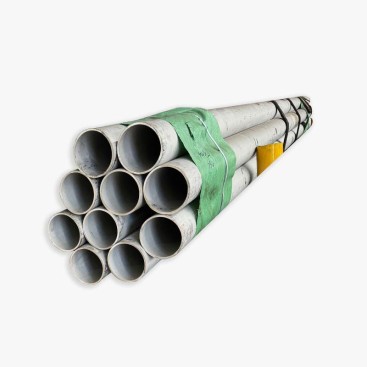
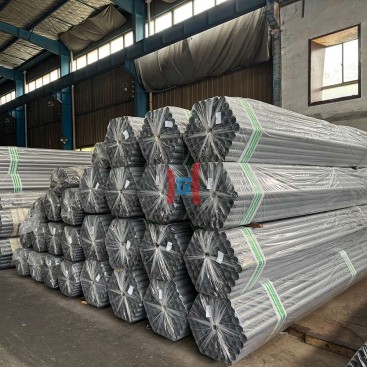
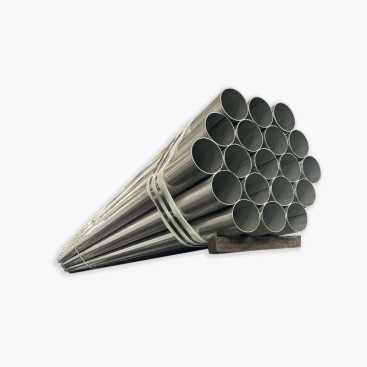
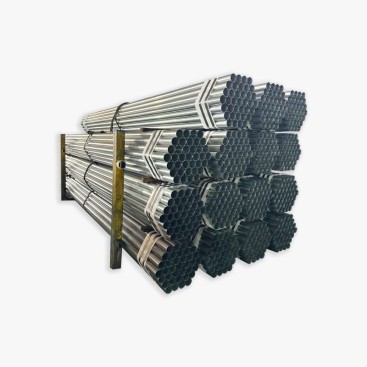
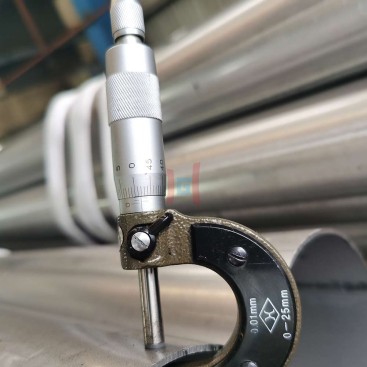
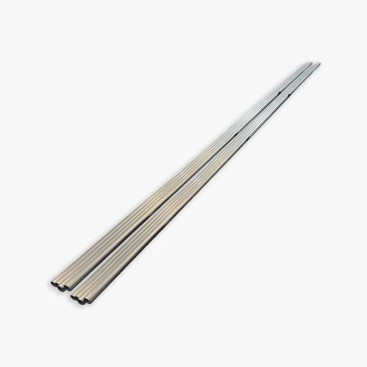
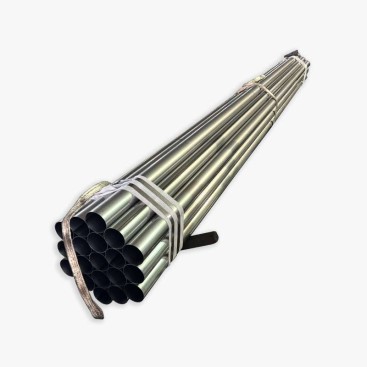
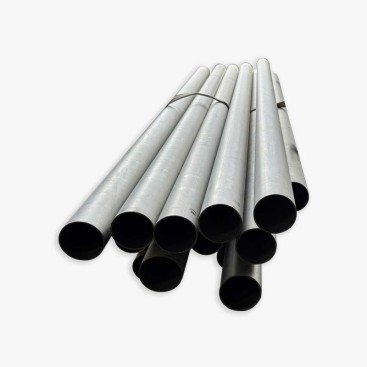
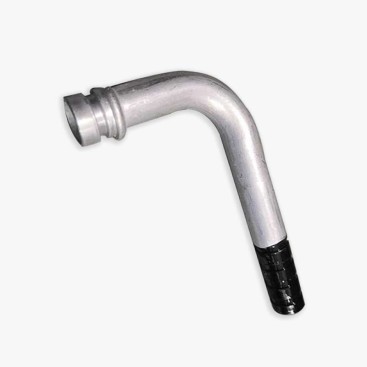
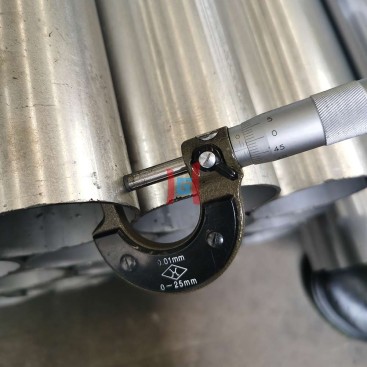
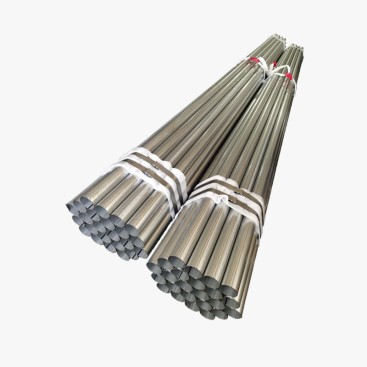
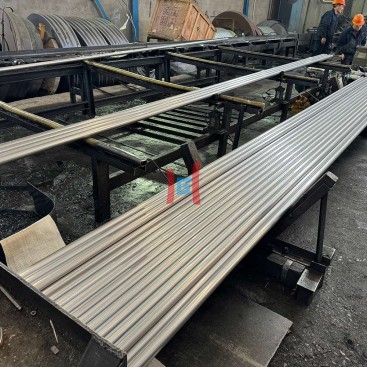
Tipo 1 Tubería de acero aluminizado


- Descripción
Descripción
Tipo 1 Tubería de acero aluminizado: Al-Si Coated — The Workhorse for Automotive Exhaust & Intercambiadores de calor
Tipo 1 tubo de acero aluminizado refers to a hot-dip coated steel pipe using an Aluminum–Silicon (Al-10%Si) revestimiento de aleación. It is widely regarded as the “workhorse material” in automotive exhaust systems and heat exchanger applications due to its strong balance of resistencia a altas temperaturas, protección contra la oxidación, y rentabilidad.
Compared with pure aluminum coating systems, Tipo 1 introduces silicon to stabilize the coating structure and significantly improve thermal fatigue resistance.
1. Tipo 1 Composición del recubrimiento (Al-10%Si System)
| Elemento | Contenido típico | Función |
|---|---|---|
| Aluminio (Alabama) | ~90% | Main oxidation-resistant matrix, forms Al₂O₃ protective film |
| Silicio (Y) | ~9–10% | Controls intermetallic growth and improves coating adhesion |
| Hierro (fe) | capa de difusión | Forms controlled Fe–Al intermetallic bonding layer |
This Al-Si system is specifically engineered for thermal stability and long service life under cyclic heating conditions.
2. Why Type 1 is the Automotive Industry Standard
| Requisito de desempeño | Tipo 1 Ventaja |
|---|---|
| Resistencia a altas temperaturas (hasta ~800°C) | Stable Al₂O₃ protective oxide layer |
| Thermal cycling durability | Silicon reduces coating cracking under expansion/contraction |
| Resistencia a la oxidación | Dense, self-renewing oxide film |
| Cost efficiency | Lower cost than stainless steel alternatives |
3. Automotive OEM Exhaust System Requirements
| Requirement | Industry Expectation |
|---|---|
| Resistencia al calor | Continuous exposure to 600–800°C exhaust gas |
| Thermal fatigue test | Repeated heating/cooling cycles without coating failure |
| Resistencia a la corrosión | Resistance to condensate, SOx, NOx, and road salt |
| Formabilidad | Compatible with mandrel bending and hydroforming |
Tipo 1 aluminized pipe is widely specified in OEM exhaust systems due to its validated performance under cyclic thermal stress testing.
4. Thermal Cycling & Fatigue Performance
| Test Condition | Tipo 1 Behavior |
|---|---|
| Repeated heating (RT ↔ 800°C) | Stable oxide layer with minimal cracking |
| Long-term thermal exposure | Controlled intermetallic layer growth |
| Vibration + thermal stress | No significant coating delamination |
| Oxidation weight gain | Low and stable increase over time |
Silicon plays a key role in preventing brittle intermetallic growth, ensuring durability under cyclic stress conditions.
5. Tipo 1 vs Alternative Materials
| Material | High-Temp Resistance | Costo | Application Fit |
|---|---|---|---|
| Tipo 1 Al-Si Pipe | Excelente (hasta ~800°C) | Medio | escape automotriz, intercambiadores de calor |
| Tubería Galvanizada | Pobre (≤250°C) | Bajo | Low-temperature structural use |
| Tubería de acero inoxidable | Excelente | Alto | High-end corrosive environments |
6. Key Industrial Applications
| Industria | Solicitud |
|---|---|
| Automotor | Tubos de escape, catalytic converter housings, resonadores |
| Energy Systems | Intercambiadores de calor, flue gas ducts |
| Calefacción Industrial | High-temperature ventilation pipelines |
| Maquinaria | Thermal management tubing systems |
7. Por qué los compradores eligen Teda Ganghua
En Teda Ganghua, we supply Type 1 aluminized steel pipes with controlled Al-10%Si coating chemistry, stable intermetallic layer formation, y rendimiento constante de ciclos térmicos para aplicaciones automotrices e industriales.
Apoyamos el corte OEM, preparación para doblar, y embalaje de exportación adaptado a los fabricantes mundiales de sistemas de escape.
Explore nuestros productos de tubos de acero aluminizado aquí:
Productos de tubo de acero aluminizado
Conclusión
Tipo 1 La tubería de acero aluminizado es el punto de referencia de la industria para sistemas de intercambiadores de calor y escape de alta temperatura.. Su sistema de recubrimiento Al-Si ofrece una combinación única de resistencia a la oxidación., durabilidad a la fatiga térmica, y rentabilidad, lo que lo convierte en la opción preferida para los fabricantes de equipos originales (OEM) de automoción a nivel mundial..