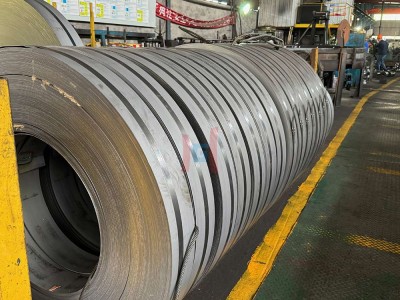
Peso de revestimiento de acero aluminizado T1-40 y guía ASTM A463
En especificaciones de acero aluminizado., T1-40 frecuentemente se malinterpreta porque el número 40 no representa 40 g/m² of aluminum coating. Under the ASTM A463/A463M coating designation system, T1-40 refers to a Type 1 aluminum-silicon coating with a nominal designation based on 0.40 oz/ft² of coating mass, measured as the total coating on both sides of the steel sheet under the triple-spot test. This corresponds to approximately 122 gramos/m², commonly expressed as 120 g/m² in the metric designation system. Understanding the difference between imperial and metric coating designations, total coating mass, and single-side coating distribution is essential when purchasing aluminized steel coils, hojas, and tubes.
1. What Does the Number 40 in T1-40 Actually Represent?
The designation T1-40 consists of two parts. T1 identifies Type 1 acero aluminizado, which uses an aluminum-silicon alloy coating, mientras 40 is associated with the imperial coating designation of 0.40 ounces per square foot (oz/ft²).
The important point is that this value represents the combined coating mass on both surfaces of the steel sheet, rather than the coating mass on one individual surface.
T1-40 = 0.40 oz/ft² = approximately 122 g/m² total on both sides.
It is not equivalent to 40 gramos/m², and it does not mean 40 g/m² on each side.
The conversion is based on the following relationship:
1 oz/ft² = 305.15 gramos/m²
Por lo tanto:
0.40 × 305.15 = 122.06 gramos/m²
This conversion explains why T1-40 is commonly associated with approximately 120 g/m² in metric purchasing specifications. The small difference between 122 y 120 comes from the standard’s metric designation and rounding conventions, not from a different coating system.
2. T1-40 Coating Weight: oz/ft² vs g/m²
For international procurement, converting coating mass correctly is important because suppliers and buyers may use different measurement systems. North American specifications commonly use oz/ft², while metric purchasing documents generally use g/m².
The following table shows the relationship between common Type 1 coating designations and their metric equivalents.
| Imperial Designation | Masa de recubrimiento (oz/ft²) | Converted Mass (gramos/m²) | Common Metric Designation |
|---|---|---|---|
| T1-13 | 0.13 | 39.7 | T1M 40 |
| T1-25 | 0.25 | 76.3 | T1M 75 |
| T1-40 | 0.40 | 122.1 | T1M 120 |
| T1-60 | 0.60 | 183.1 | T1M 180* |
| T1-100 | 1.00 | 305.2 | T1M 300 |
*Metric equivalents shown for comparison are approximate conversions. The applicable ASTM edition and its specified metric designations should be checked when preparing a purchase order.
One particularly important distinction is that T1M 40 and T1-40 are not equivalent designations. T1M 40 refers to approximately 40 g/m² total coating mass, whereas T1-40 corresponds to approximately 122 gramos/m². Confusing these two specifications can result in a substantial difference in the actual coating requirement.
3. Total Both Sides vs Single-Side Coating Weight
Another common source of confusion is whether a stated coating weight applies to one surface or both surfaces combined. ASTM A463/A463M uses total-both-sides coating mass for its coating-weight acceptance requirements.
3.1 Triple-Spot Test: 0.40 oz/ft²
For the T1-40 designation, the minimum triple-spot test requirement is 0.40 oz/ft², equivalent to approximately 122 g/m² across both surfaces.
The triple-spot test evaluates coating mass using multiple measurements distributed across the sheet. The result is used to assess the average coating mass over the test area, rather than requiring each individual surface to carry exactly half of the total.
3.2 Single-Spot Test: 0.30 oz/ft²
The single-spot test has a separate minimum acceptance value of 0.30 oz/ft², equivalent to approximately 91.5 g/m² across both surfaces.
This distinction is important because the triple-spot and single-spot requirements are not interchangeable. They represent different acceptance criteria within the same coating designation.
| Test Method | Minimum oz/ft² | Approximate g/m² | Measurement Basis |
|---|---|---|---|
| Triple-spot test | 0.40 | 122 | Total both sides |
| Single-spot test | 0.30 | 91.5 | Total both sides |
For procurement purposes, a supplier should not claim that a material meets the T1-40 triple-spot requirement simply because its single-spot result exceeds 0.30 oz/ft². Both acceptance criteria must be interpreted according to the applicable standard and test method.
4. Does T1-40 Mean 0.20 oz/ft² on Each Side?
No. Although dividing 0.40 oz/ft² by two gives an arithmetic average of 0.20 oz/ft² per surface, ASTM coating requirements do not establish an exact 50:50 distribution between the two sides.
During continuous hot-dip aluminizing, coating distribution can vary because of bath conditions, air-knife settings, strip speed, surface characteristics, and other manufacturing variables. One side may therefore receive more aluminum-silicon coating than the other.
4.1 Why the Coating Is Not Always Evenly Distributed
The coating process involves drawing the steel strip out of a molten aluminum-silicon bath and controlling the remaining molten metal using gas-wiping equipment. Differences in wiping pressure, strip alignment, and operating conditions can influence the final coating distribution.
Consequently, the total coating mass on both surfaces is the primary designation basis, while individual-side distribution requires separate attention when the application has surface-specific requirements.
4.2 El 40% Individual-Side Consideration
ASTM A463/A463M includes a note addressing coating distribution. Normally, not less than 40% of the single-spot test limit will be found on either surface. This is not the same as requiring an equal division of the total coating mass.
For T1-40, the single-spot test limit is 0.30 oz/ft². Forty percent of this value is:
0.30 × 40% = 0.12 oz/ft²
This is approximately 36.6 g/m² on an individual surface as the reference for the standard’s stated distribution note. It should not be misinterpreted as a separate universal guaranteed minimum coating mass for every individual-side measurement or every test location.
Procurement reminder: If a component requires a specific coating thickness or corrosion performance on one particular surface, specifying only T1-40 may not fully address the requirement. Request individual-side coating information and agree on the relevant inspection criteria before production.
5. Why T1-40 and T1M 40 Are Frequently Confused
The confusion usually comes from the fact that the number following T1 represents different measurement conventions in imperial and metric designations.
In the imperial designation T1-40, the number 40 is associated with 0.40 oz/ft². In the metric designation T1M 40, the number 40 represents approximately 40 gramos/m².
These are two different coating-weight levels, even though their designation numbers look similar.
| Artículo | T1-40 | T1M 40 |
|---|---|---|
| Measurement system | Imperial | Métrico |
| Designation basis | 0.40 oz/ft² | 40 gramos/m² |
| Triple-spot minimum | 0.40 oz/ft² | 40 gramos/m² |
| Single-spot minimum | 0.30 oz/ft² | 30 gramos/m² |
| Approximate converted triple-spot mass | 122 gramos/m² | 40 gramos/m² |
The difference is substantial. T1-40 represents approximately three times the total coating mass of T1M 40. Por lo tanto, international buyers should always identify the measurement system and full coating designation rather than specifying only the number 40.
6. How to Specify T1-40 Correctly in a Purchase Order
For steel importers, distribuidores, and industrial manufacturers, an incomplete coating description can create misunderstandings between the buyer, steel processor, and inspection team.
A reliable purchase specification should include the following information:
Recommended Purchase Specification Checklist
Tipo de recubrimiento: Tipo 1 acero aluminizado, aluminum-silicon alloy coating.
Applicable standard: ASTM A463/A463M, including the agreed edition.
Coating designation: T1-40 or the applicable metric equivalent T1M 120.
Masa de recubrimiento: Specify whether the requirement is based on the triple-spot or single-spot test.
Measurement basis: Total coating mass on both surfaces, unless otherwise agreed.
Individual-side requirements: Add separate requirements if the application depends on a particular surface coating condition.
Inspección: Define the coating-weight testing method, sampling requirements, and acceptance criteria.
Substrate dimensions: Confirm steel grade, espesor, ancho, and applicable dimensional tolerances.
An example of a clearer purchasing description is:
Aluminum-coated steel sheet, Tipo 1, ASTM A463/A463M, coating designation T1-40, minimum triple-spot coating mass 0.40 oz/ft² total both sides, with applicable single-spot acceptance requirements according to the specified standard edition.
This description reduces the risk of confusing imperial and metric coating designations or treating the total coating mass as an individual-side requirement.
7. T1-40 Requirements for Aluminized Steel Tubes
When aluminum-coated steel sheet is used to manufacture tubes, coating specifications become even more important because the original sheet coating may experience additional processing during tube forming and welding.
For longitudinally welded tubes, the original coating condition, forming deformation, weld seam treatment, and any post-weld coating process should be considered together. A sheet specification alone does not automatically establish the coating condition of every finished tube surface or weld area.
Procurement managers should distinguish between three different requirements:
- Incoming sheet coating: The coating designation and coating mass before tube manufacturing.
- Finished tube coating: The coating condition after forming, soldadura, and any additional processing.
- Service performance: The actual oxidation resistance and corrosion protection required under operating conditions.
These requirements are particularly relevant to exhaust pipes, industrial heating systems, escudos termicos, and ventilation equipment, where dimensional accuracy and coating integrity both affect finished-product performance.
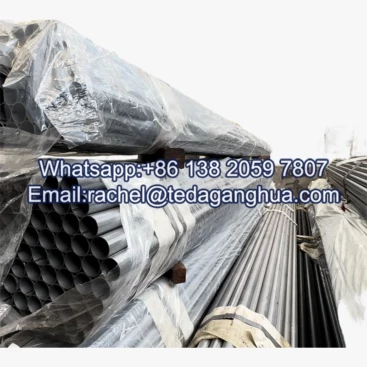
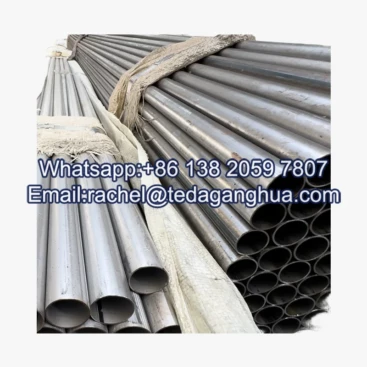
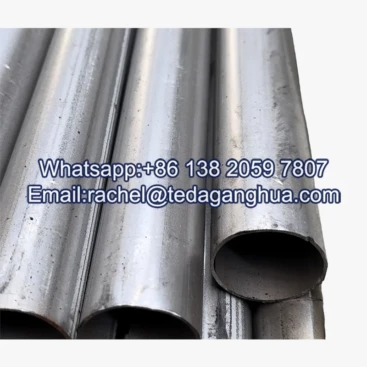

8. Teda Ganghua: Aluminized Steel Tube Supply and Specification Coordination
Teda Ganghua is a China-based metal materials supplier with export experience dating back to 2006. The company supports international procurement requirements for steel products, including material specification confirmation, dimensional coordination, processing arrangements, and quality inspection documentation.
For manufacturers and distributors sourcing tubos de acero aluminizado, confirming the coating designation is an important part of the purchasing process. Buyers should clarify whether their requirements refer to T1-40, T1M 120, or another coating category, rather than relying on an isolated numerical value.
Teda Ganghua can coordinate technical requirements involving:
- Aluminum-silicon coating type and applicable specifications
- Steel tube outside diameter and wall thickness
- Tube length and dimensional tolerances
- Coating mass and inspection requirements
- Weld seam condition and fabrication requirements
- Material certificates and quality documentation
With attention to coating designation, substrate dimensions, and finished-product requirements, Teda Ganghua helps procurement managers establish clearer material specifications and reduce the risk of misunderstandings during international steel purchasing.
Request Technical Material Information
When submitting an inquiry, provide your required coating designation, coating-weight measurement basis, grado de acero, dimensiones, intended application, y requisitos de inspección. This information helps establish whether the requested material is suitable for your manufacturing process and operating environment.
Clear coating specifications are the first step toward consistent material quality and reliable industrial supply.
9. Preguntas frecuentes
Q1. Does T1-40 mean 40 g/m² of aluminum coating?
No. T1-40 is an imperial coating designation representing 0.40 oz/ft², equivalent to approximately 122 g/m² total on both sides under the triple-spot requirement. It should not be confused with T1M 40, which represents 40 g/m² in the metric designation system.
Q2. Is T1-40 coating weight measured on one side or both sides?
The ASTM A463/A463M coating-weight designation is based on the total coating mass on both sides of the steel sheet. It does not mean that each individual surface must have 0.40 oz/ft² of coating.
Q3. What is the single-spot minimum for T1-40?
The single-spot minimum is 0.30 oz/ft², equivalent to approximately 91.5 g/m² total on both sides. The triple-spot minimum is 0.40 oz/ft², or approximately 122 gramos/m².
Q4. Is T1-40 equivalent to T1M 120?
Sí, they are commonly treated as corresponding imperial and metric coating designations. T1-40 converts to approximately 122 gramos/m², while T1M 120 uses a nominal metric designation of 120 gramos/m². The applicable ASTM edition should be confirmed in the purchase specification.
Q5. Can the coating mass be divided equally between the two surfaces?
No automáticamente. Although half of the total mass provides an arithmetic average, actual coating distribution may differ between surfaces during manufacturing. If individual-side coating performance is critical, separate inspection and acceptance requirements should be agreed upon with the supplier.