Comparaison des normes EN ASTM JIS ISO pour l'acier revêtu d'Al-Si
DANS, ASTM, JIS et ISO ne doivent pas être traités comme quatre dictionnaires de noms de nuances interchangeables pour l'acier revêtu d'aluminium et de silicium.. Each system can define the substrate, coating designation, mechanical properties, dimensions, test methods, exigences de surface, and delivery conditions in a different way. For procurement, the goal is therefore not to find a single “equivalent grade” and assume everything else is identical, but to align the complete technical specification.
The Four Standards Answer Different Questions
When purchasing Al-Si coated steel, the first step is to separate the standard into its functional components. A material designation may tell you the substrate and coating system, while another part of the standard controls coating mass, another defines mechanical properties, and a separate standard may control dimensions or test methods.
| System | Common procurement role | What must be checked |
|---|---|---|
| DANS | European product designation and delivery requirements | Substrate grade, coating designation, mechanical properties, dimensions and delivery condition |
| ASTM | North American specification and test framework | Product scope, coating type, coating mass, substrate and applicable test requirements |
| IL | Japanese industrial specification | Grade designation, coating class, mechanical properties and dimensional requirements |
| OIN | International standardization and cross-market reference | Whether the relevant ISO document actually covers the product, coating and required test method |
This is why a purchase inquiry should state the standard + substrate + revêtement + épaisseur + exigences mécaniques + application, rather than only a short material name.
DANS 10346: The European Reference for Continuously Hot-Dip Coated Flat Products
For European procurement, DANS 10346 is an important reference for continuously hot-dip coated flat steel products. Its scope includes several coating systems, including aluminum-silicon coatings designated with the +COMME suffix.
The material designation can contain information about the steel grade and coating system. Par exemple, a designation such as DX54D+AS combines a substrate grade with an aluminum-silicon coating designation.
The important point is that DX54D describes the steel substrate and its forming characteristics; +AS identifies the coating system. The complete product specification still needs thickness, dimensions, exigence de revêtement, surface condition and other applicable requirements.
Do not write only “DX54D equivalent” in an RFQ. State whether the required product is EN 10346 DX54D+AS and then define coating class, dimensions, mechanical requirements and delivery condition.
ASTM: Do Not Convert EN +AS into a Grade Name Without Checking the Product Scope
ASTM specifications for aluminum-coated or aluminum-silicon-coated steel can use different designation systems from EN 10346. The relevant ASTM document should therefore be identified according to the product form and intended application.
Par exemple, ASTM specifications may distinguish coating type, coating mass, substrate characteristics and product class in ways that do not map one-to-one onto an EN designation.
This means that a supplier saying “ASTM equivalent” has not necessarily demonstrated full equivalence. The buyer should request the exact ASTM standard, grade, coating designation and applicable test requirements.
| Comparison item | What to compare |
|---|---|
| Substrat | Chemical composition and mechanical-property range |
| Coating chemistry | Al-Si coating system and any specified alloy range |
| Masse de revêtement | Specified minimum, nominal value, total or per-side basis |
| Mechanical properties | Limite d'élasticité, tensile strength and elongation requirements |
| Dimensions | Épaisseur, width, length and permitted tolerances |
| Testing | Sampling, test direction, method and acceptance criteria |
IL: Similar Coating Concepts, Different Designation Logic
JIS specifications can describe aluminized steel using designations such as SA1C together with a coating class such as AS120, depending on the applicable product specification.
The critical procurement issue is that SA1C and DX51D/DX54D should not be treated as automatically identical simply because both may be used for forming applications. Their chemical composition, mechanical-property requirements, tolérances dimensionnelles, test methods and designation rules need to be compared line by line.
The same caution applies to the coating class. An AS number should be checked against the standard’s definition and test basis rather than converted directly into another standard’s designation.
OIN: Use It as a Technical Bridge, Not a Shortcut
ISO standards are often useful when an international project needs a common framework for terminology, testing, dimensions, or material requirements. Cependant, “ISO equivalent” is too broad to serve as a complete purchasing specification.
Before accepting an ISO reference, verify that the cited document actually covers the required coated-steel product and the specific property being used for acceptance. An ISO test method and an ISO product standard are not the same thing.
This distinction matters when a buyer receives an inspection report stating that the material was “tested according to ISO.” The next question should be: ISO for which test, and which product requirement?
The Most Important Difference: Product Standard vs Test Standard
One reason cross-standard purchasing becomes confusing is that a single material may involve several standards at the same time.
The product standard can define the material and coating. A separate standard can define tensile testing. Another document may define dimensional tolerances. The inspection certificate then reports the measured values against these requirements.
| Document level | Example procurement question |
|---|---|
| Product standard | What steel and coating system is being supplied? |
| Coating requirement | What coating class and coating-mass requirement applies? |
| Mechanical test | How were yield strength, tensile strength and elongation measured? |
| Dimensional standard | Which tolerance system controls thickness and width? |
| Inspection certificate | Do the reported results satisfy the actual purchase specification? |
How to Align EN, ASTM, JIS and ISO in an RFQ
A reliable cross-standard RFQ can be built in six layers.
1. Product form
State whether you need sheet, coil, strip, tube, pipe or a fabricated component.
2. Substrat
State the exact grade and standard instead of requesting a generic “deep-drawing steel.”
3. Revêtement
Specify Al-Si coating type and the required coating class or mass according to the selected standard.
4. Dimensions
Define thickness, width, length or tube OD/wall thickness and their tolerances.
5. Mechanical and forming requirements
Include yield strength, tensile strength, elongation and forming parameters such as r-value or n-value where required.
6. Inspection and documentation
Specify MTC, coating test results, dimensional inspection, mechanical testing and any third-party inspection requirement.
A Practical Cross-Standard Comparison Example
Suppose a buyer normally purchases an EN 10346 Al-Si coated deep-drawing flat product but wants an alternative from a supplier accustomed to JIS or ASTM specifications.
The buyer should not simply ask the supplier to quote “the JIS equivalent” or “the ASTM equivalent.” Instead, provide the original EN specification and ask the supplier to propose a technically comparable material, with differences clearly identified.
| Original requirement | Supplier should confirm |
|---|---|
| EN substrate grade | Proposed JIS/ASTM substrate and chemistry comparison |
| +AS coating | Equivalent coating chemistry and designation |
| Classe de revêtement | Comparable coating-mass requirement and test basis |
| Deep-drawing requirement | Rendement, traction, elongation and relevant formability data |
| Dimensional tolerance | Applicable tolerance standard and actual limits |
| Inspection requirement | Test method, sampling plan and certificate format |
This creates a property-by-property equivalence check instead of relying on a potentially misleading grade-name translation.
Why “Equivalent Grade” Can Be Dangerous
Two grades can appear similar on a commercial comparison sheet while having different limits for carbon, manganèse, aluminium, silicium, limite d'élasticité, élongation, coating mass, thickness tolerance, or forming behavior.
For a component that will be deep drawn, welded, courbé, or exposed to elevated temperature, these differences can become important. A material can be chemically similar but still fail to satisfy the mechanical or dimensional requirements of the original design.
For this reason, procurement should distinguish between:
- Chemical equivalence — similar composition.
- Mechanical equivalence — similar required strength and ductility.
- Coating equivalence — comparable coating chemistry and mass.
- Dimensional equivalence — comparable tolerances.
- Application equivalence — suitable for the same forming and service conditions.
Special Note for Al-Si Coated Tubes
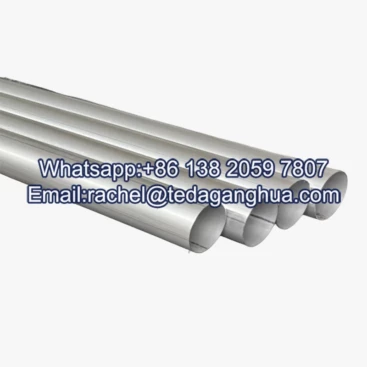
A further complication appears when the buyer is sourcing finished aluminized steel tubes rather than flat sheet. A flat-product designation such as DX54D+AS identifies the starting material, but it does not by itself define the finished tube.
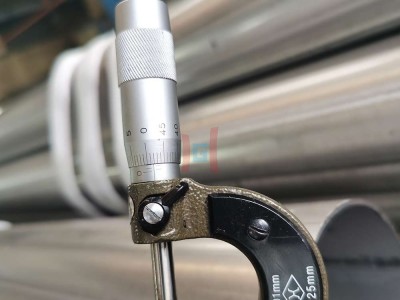
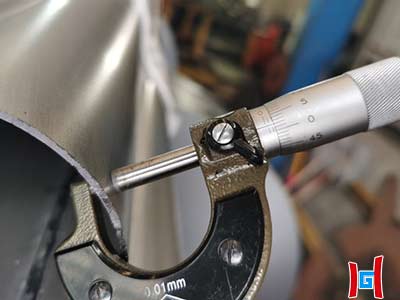
The tube specification may additionally require outside diameter, épaisseur de paroi, longueur, weld condition, tolérance dimensionnelle, end treatment, méthode de formage, coating continuity and final application requirements.
Donc, a tube inquiry should not simply say “EN 10346 equivalent tube.” The supplier needs both the flat-product material requirement and the finished-tube specification.
Teda Ganghua Commercial Support for Cross-Standard Sourcing
Teda Ganghua can help procurement teams organize Al-Si coated steel inquiries around the complete technical specification rather than a single translated grade name. For projects involving European, ASTM or JIS requirements, the inquiry can define substrate grade, coating designation, coating mass, épaisseur, dimensions, exigences de formation, service conditions and inspection documents.
For finished tube applications, the same approach can be extended to tube OD, épaisseur de paroi, longueur, exigences de soudure, surface condition and dimensional tolerances. This helps reduce ambiguity when a buyer needs to compare suppliers working under different standards.
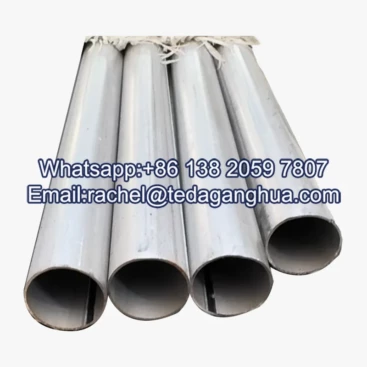
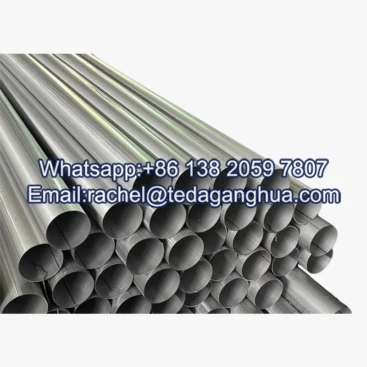
Tubes en acier aluminisé can be evaluated according to the actual application and required specification, with the material, coating and finished dimensions defined separately.
Four-Standard Alignment Checklist
| Check | Buyer action |
|---|---|
| Standard | Identify the exact product standard and revision |
| Substrat | Compare chemistry and mechanical-property requirements |
| Revêtement | Compare coating chemistry, class, mass and test basis |
| Dimensions | Confirm thickness, width, length and tolerances |
| Formabilité | Check elongation, r-value, n-value or forming trials where applicable |
| Inspection | Confirm test methods, sampling and certificate requirements |
| Finished product | For tubes, define OD, épaisseur de paroi, longueur, weld and end requirements |
Foire aux questions
Is EN 10346 DX54D+AS directly equivalent to a JIS or ASTM grade?
Pas automatiquement. A meaningful comparison requires the substrate chemistry, mechanical properties, système de revêtement, coating mass, dimensions, tolerances and test methods to be compared against the relevant specification.
Does AS120 mean the same thing in every standard?
No assumption should be made from the number alone. The coating designation must be interpreted according to the exact standard, product scope and coating-mass test basis stated in the specification.
Can an ISO test report prove that an ASTM material is equivalent?
Not by itself. A test method confirms how a particular property was measured. Product equivalence requires comparison against the applicable product and acceptance requirements.
What is the safest way to request a cross-standard substitute?
Provide the original specification and ask the supplier to submit a proposed alternative with a property-by-property comparison covering substrate, revêtement, mechanical properties, dimensions, tolerances and testing.
Does a finished aluminized tube use the same standard as the flat steel coil?
Pas nécessairement. The flat steel standard can define the substrate and coating, while the finished tube requires additional dimensional, manufacturing and inspection requirements. Both levels should be stated in the purchasing specification.