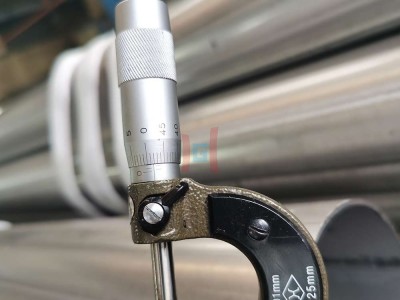
Perché i tubi in acciaio alluminato vengono utilizzati negli scambiatori di calore | Resistenza al calore & Benefici in termini di costi
Gli scambiatori di calore funzionano in condizioni impegnative che combinano temperature elevate, umidità, ciclo termico, e gas corrosivi. Material selection directly influences heat transfer efficiency, equipment lifespan, maintenance costs, and overall project economics. For many HVAC, riscaldamento industriale, combustion, and process equipment applications, aluminized steel pipes provide an effective balance between heat resistance, protezione della corrosione, and manufacturing cost.
Perché i tubi in acciaio alluminato vengono utilizzati negli scambiatori di calore
Aluminized steel pipes consist of carbon steel coated with an aluminum-silicon alloy through a hot-dip process. The aluminum layer forms a stable oxide film during service, protecting the steel substrate against oxidation while maintaining excellent thermal conductivity and structural strength.
| Proprietà | Benefit for Heat Exchangers |
|---|---|
| Resistenza al calore | Maintains stable performance during continuous heating cycles. |
| Resistenza all'ossidazione | Protects pipe surfaces from high-temperature scaling. |
| Resistenza alla corrosione | Improves durability in condensate and humid operating environments. |
| Formabilità | Supporta la flessione, espansione, saldatura, and tube fabrication. |
| Cost efficiency | Lower material cost than most stainless steel alternatives. |
Material Selection Criteria
Selecting heat exchanger tubing involves evaluating the complete operating environment rather than temperature alone.
| Selection Factor | Engineering Consideration |
|---|---|
| Operating temperature | Continuous and peak temperature determine coating stability. |
| Working medium | Air, combustion gas, steam, or process gas require different corrosion resistance. |
| Condensation | Frequent moisture increases corrosion requirements. |
| Pressure | Wall thickness must satisfy mechanical design standards. |
| Vita utile | Longer design life may justify higher-performance materials. |
Comparison with Other Heat Exchanger Materials
| Materiale | Resistenza al calore | Resistenza alla corrosione | Relative Cost |
|---|---|---|---|
| Acciaio al carbonio | Moderare | Basso | Basso |
| Acciaio alluminato | Alto | Alto | Medio |
| 409 acciaio inossidabile | Alto | Alto | Medium to High |
| 304 acciaio inossidabile | Alto | Eccellente | Alto |
Typical Heat Exchanger Applications
- HVAC heat exchanger tubes
- Industrial air heaters
- Gas-fired furnace heat exchangers
- Boiler heat recovery systems
- Attrezzatura per l'asciugatura
- Industrial combustion systems
- Process gas heating equipment
- Agricultural grain dryers
Industry Application Example
A commercial HVAC equipment manufacturer originally used galvanized tubing for its combustion heat exchanger assemblies. After repeated warranty claims caused by high-temperature oxidation, the manufacturer switched to aluminized steel pipes. Field performance showed significantly improved oxidation resistance, reduced maintenance frequency, and longer equipment service life while maintaining competitive manufacturing costs.
In another industrial air heater project, aluminized steel tubing replaced stainless steel in sections where operating temperatures remained within the coating’s design range. The redesign reduced raw material costs while maintaining required durability and thermal performance.
Manufacturing Advantages
Aluminized steel pipes are compatible with standard manufacturing processes including laser cutting, tube bending, roll forming, robotic welding, espansione, and end forming. Their excellent dimensional consistency supports high-volume production with stable product quality.


How Teda Ganghua Supports Heat Exchanger Manufacturers
Teda Ganghua supplies aluminized steel pipes for heat exchanger manufacturing with stable dimensions, qualità del rivestimento costante, and flexible processing services. Available solutions include custom lengths, tube cutting, pipe fabrication, imballaggio per l'esportazione, and bulk supply for OEM manufacturers and industrial equipment producers.
View available specifications at
tubi in acciaio alluminato.
Domande frequenti
Why are aluminized steel pipes commonly used in heat exchangers?
They offer an excellent balance of oxidation resistance, protezione della corrosione, resistenza al calore, producibilità, and overall cost.
Can aluminized steel replace stainless steel in heat exchangers?
In molte applicazioni a temperatura moderata, SÌ. Per corrosione estremamente aggressiva o temperature di esercizio molto elevate, potrebbe essere ancora necessario l'acciaio inossidabile.
I tubi in acciaio alluminato sono facili da fabbricare?
SÌ. Sono adatti per il taglio, flessione, saldatura, espansione, e processi di produzione automatizzati.
Quali industrie utilizzano comunemente tubi per scambiatori di calore in acciaio alluminato?
Hvac, riscaldamento industriale, caldaie, forni, attrezzature per l'essiccazione agricola, e i sistemi di riscaldamento di processo utilizzano spesso tubi di acciaio alluminato.
Teda Ganghua fornisce servizi di elaborazione personalizzati?
SÌ. Teda Ganghua offre tagli personalizzati, lavorazione del tubo, imballaggio per l'esportazione, e soluzioni di fornitura flessibili per i produttori di scambiatori di calore industriali.