600°C アルミメッキ鋼 vs 409 ステンレス鋼: 高温限界
600℃高温限界バトル: アルミめっきコーティングの拡散破壊 vs 409 Stainless Oxidation Limit
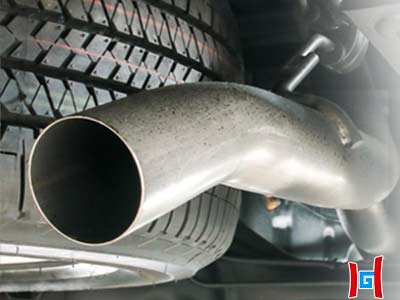
Aluminized steel vs 409 stainless steel at 600°C is a critical comparison for engineers selecting materials for exhaust systems, 熱交換器, and high-temperature components. Although both materials provide oxidation resistance, their protection mechanisms are completely different. Aluminized steel depends on an aluminum-rich protective layer, その間 409 stainless steel relies on a chromium oxide passive film.
At around 600°C, the performance gap becomes more obvious. The key question is not simply which material survives higher temperatures, but how each protection system changes during long-term thermal exposure.
Different Protection Mechanisms at High Temperature
Aluminized steel uses an aluminum-silicon coating applied on a steel substrate. During heating, aluminum reacts with oxygen and forms a dense aluminum oxide (Al₂O₃) layer. This oxide layer slows further oxidation and protects the steel base.
409 stainless steel belongs to the ferritic stainless family. Its corrosion resistance mainly comes from chromium content, which forms a chromium oxide (Cr₂O₃) protective film during oxidation.
| Protection System | Main Oxide Layer | Failure Mechanism |
|---|---|---|
| アルミメッキ鋼 | Al₂O₃ aluminum oxide | Aluminum diffusion and coating depletion |
| 409 ステンレス鋼 | Cr₂O₃ chromium oxide | Chromium consumption and oxide scale growth |
Why 600°C Becomes a Critical Temperature Point
Around 600°C, aluminized steel enters a stage where coating diffusion becomes increasingly important. Aluminum atoms gradually migrate into the steel substrate, creating an intermetallic diffusion zone. This process improves bonding but also reduces the available aluminum reservoir over long service periods.
The coating does not fail immediately at 600°C. しかし, continuous exposure, repeated thermal cycling, and mechanical deformation can accelerate aluminum consumption and reduce the remaining protective thickness.
のために 409 ステンレス鋼, 600°C is also an important operating boundary. The chromium oxide layer can provide protection, but oxidation rates increase as temperature rises. Long-term exposure may cause oxide scale growth and reduce high-temperature strength.
アルミメッキ鋼 vs 409 Stainless Steel Performance Comparison
| アイテム | アルミメッキ鋼 | 409 ステンレス鋼 |
|---|---|---|
| Protection Principle | Aluminum oxide coating protection | Chromium oxide passive protection |
| 600°C Performance | Good oxidation resistance, monitor coating consumption | Stable oxidation resistance, strength gradually decreases |
| 主な利点 | Excellent heat reflection and oxidation protection | Integrated corrosion resistance without coating dependency |
| 一般的な使用方法 | 排気システム, 炉, 熱シールド | 自動車排気部品, 括弧, パイプ |
Thermal Cycling: The Real Challenge Beyond Temperature
実際の応用例では, thermal cycling is often more damaging than a single high-temperature exposure. Exhaust components may repeatedly experience heating and cooling cycles, which create expansion differences between coating and substrate.
Aluminized steel requires good coating adhesion because cracking or peeling of the aluminum layer can expose the steel substrate. 409 stainless steel avoids coating damage issues but must maintain sufficient chromium content to support oxide regeneration.


How to Select Between Aluminized Steel and 409
- Choose aluminized steel when cost efficiency, heat reflection, and oxidation resistance are the main requirements.
- Choose 409 ステンレス鋼 when long-term corrosion resistance and coating-free performance are preferred.
- Choose based on actual temperature cycle instead of maximum temperature only.
- Consider coating thickness and service environment for aluminized applications.
Teda Ganghua Aluminized Steel Coil Supply Solution
Teda Ganghua supplies aluminized steel coil solutions for high-temperature applications including automotive exhaust systems, 産業機器, および耐熱部品. The company supports different specifications, 処理要件, and export supply services.
Customers can learn more about aluminized steel coil products, 仕様, and processing options through:
アルミメッキ鋼コイル.
結論
The 600°C range represents a performance transition point rather than an absolute failure temperature. Aluminized steel may gradually lose protection through aluminum diffusion, その間 409 stainless steel faces oxidation and chromium consumption limits. 最適な選択は使用温度によって異なります, 熱サイクル, 腐食環境, および必要な耐用年数.