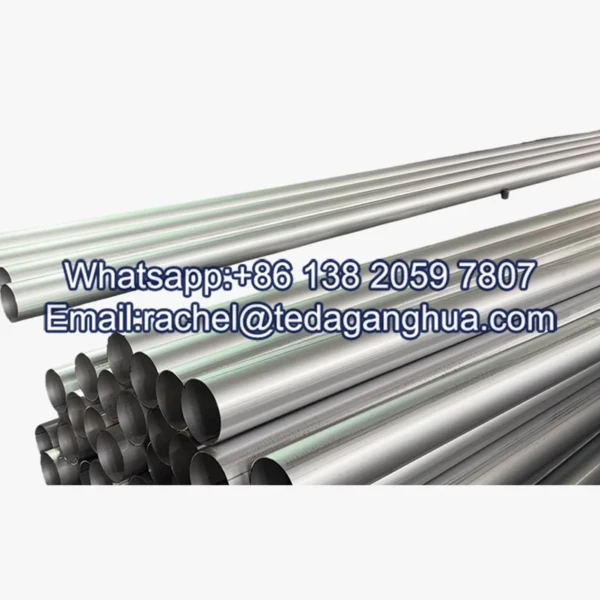
- 説明
説明
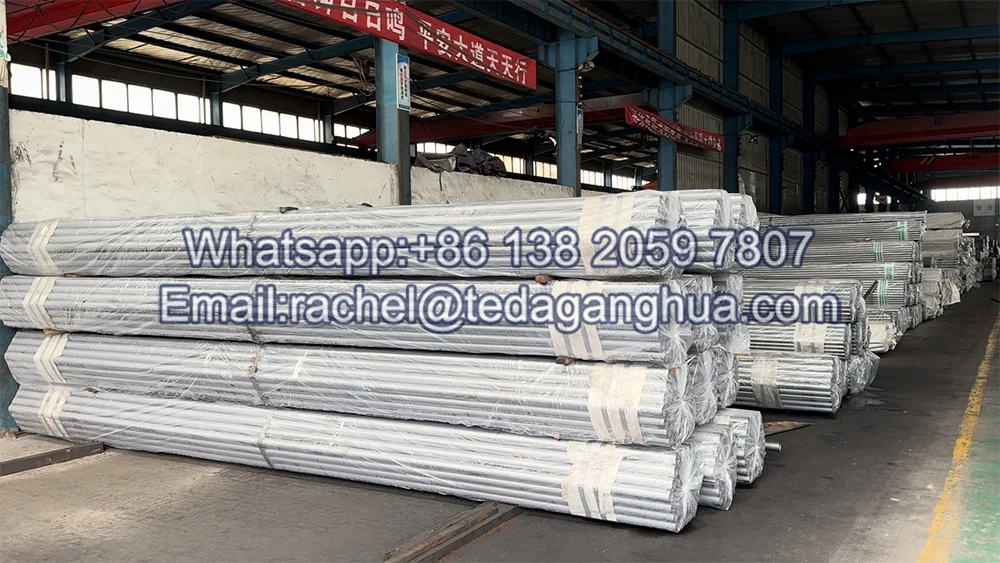
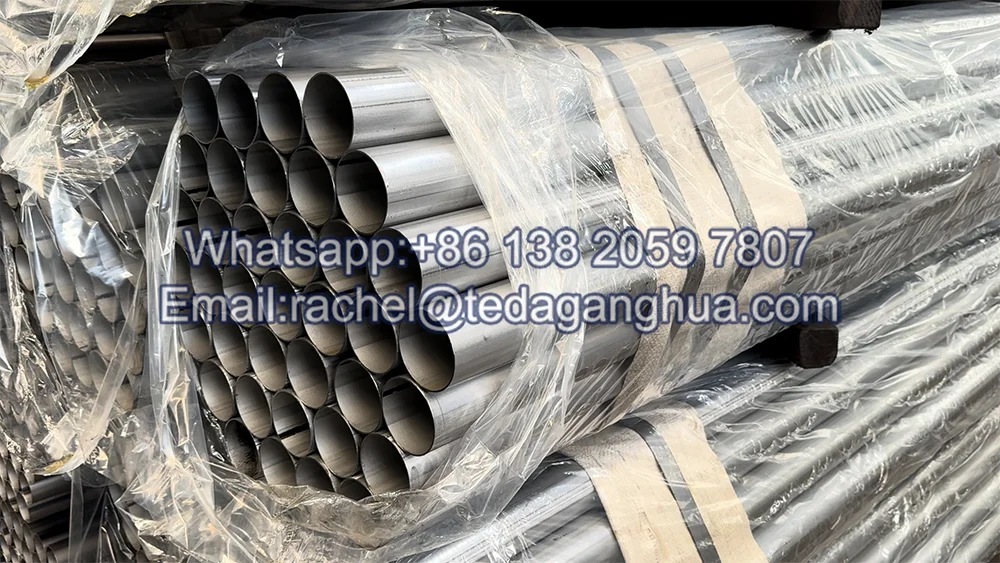
Buying aluminized steel pipe made in China requires more than confirming the country of manufacture. For international procurement teams, the important questions are whether the finished tube meets the agreed standard, whether the aluminum-silicon coating is properly specified and verified, and whether the supplier can deliver consistent quality on schedule. A country-of-origin label does not, by itself, prove product conformity, coating performance, or manufacturing capability.
China-based suppliers may operate as steel manufacturers, tube-processing factories, trading companies, or exporters coordinating multiple production sources. Buyers should identify the actual manufacturing route and request evidence that connects the finished pipe to its material specifications, コーティング要件, inspection results, and shipping documents. This approach is more reliable than selecting a supplier based on country of origin alone.
1. What Buyers Actually Check When Sourcing from China
Three factors deserve priority when evaluating a supplier: standards compliance, コーティング品質, and delivery stability. These factors should be converted into measurable purchase requirements rather than left as general statements in a quotation.
| Priority | What the buyer needs to confirm | Evidence to request |
|---|---|---|
| Standards compliance | The material grade, 塗装仕様, finished-tube dimensions, 公差, and acceptance criteria match the purchase order. | Applicable standards, approved technical specification, material certificate, and dimensional inspection report. |
| Coating quality | The coating type and required coating mass or thickness are defined, traceable, and verified using an agreed test method. | Coating designation, supplier certificate, coating test results, and identification of the relevant material batch. |
| Delivery stability | The supplier can support the agreed quantity, production schedule, inspection window, packing requirements, and shipment date. | Production plan, confirmed lead time, packing specification, shipment schedule, and communication process for delays. |
These checks should apply to the actual finished product. A certificate for the incoming coated steel coil may provide useful evidence about the substrate and coating, but it does not automatically establish that the finished tube meets all requirements for outside diameter, 壁の厚さ, 溶接品質, straightness, 長さ, or end preparation.
2. で, ASTM, 彼, and ISO: Do Not Assume the Standards Are Interchangeable
International buyers may encounter EN, ASTM, 彼, and ISO references when sourcing aluminum-silicon coated steel. These standards and specifications do not necessarily define the same product scope, designation system, test method, or acceptance criteria. Some address coated flat steel, while others may be relevant to material testing or a particular finished product.
The distinction matters because aluminum-silicon coated steel is commonly coated as flat strip or coil before a downstream manufacturer forms and welds it into a tube. The coating specification for the incoming strip and the requirements for the finished tube therefore need to be considered separately.
| Standards reference | What to establish | Procurement action |
|---|---|---|
| で | The specific European standard and edition, product scope, coating designation, and applicable test requirements. | Record the complete standard number and edition in the purchase specification. |
| ASTM | The relevant specification, coating classification, 指定, and applicable test methods. | Confirm that the cited specification covers the material being supplied and the agreed acceptance criteria. |
| 彼 | The applicable Japanese standard, grade or coating designation, and verification requirements. | Request the exact designation and supporting test records rather than accepting a generic JIS claim. |
| ISO | The particular ISO document and whether it specifies the product, test method, or another technical aspect. | Avoid treating an ISO reference as proof that every product requirement has been satisfied. |
When multiple standards are mentioned in a quotation, ask the supplier to explain how each applies. If a project requires a specific standard, do not accept a different designation solely because the supplier describes it as equivalent. Any proposed equivalence should be supported by a documented technical comparison and approved by the buyer before production.
For background on comparing different standards systems, buyers can consult the で, ASTM, 彼, and ISO comparison of aluminum-silicon coated steel. The applicable standard and edition should still be verified against the actual purchase specification.
3. AS Coating Designations and ASTM A463 Type 1: Align the Requirements First
One of the most important purchasing checks is to distinguish coating designations that belong to different specification systems. AS-series designations and ASTM A463 Type 1 designations such as T1-13, T1-25, and T1-40 should not be treated as interchangeable labels without a verified technical basis.
In ASTM A463 nomenclature, the T1 designation identifies Type 1 aluminum-silicon coating, while the number following the hyphen is associated with a coating-weight class under the applicable specification. AS-series designations, such as AS060, AS080, AS100, AS120, and AS150, belong to a different designation convention. Their definitions and verification basis must be checked against the relevant standard and product documentation.
| Item to verify | Why it matters | What to write into the order |
|---|---|---|
| Coating system | Different systems may use different designations and acceptance rules. | Specify the governing standard and edition. |
| Coating designation | Similar-looking labels may not represent identical requirements. | State the complete coating designation exactly as required. |
| Coating mass basis | A value may refer to a total coating mass on both sides or another defined basis. | Specify single-side or total coating mass, 単位, and test basis where applicable. |
| Test method | Results cannot be compared reliably if the test methods or reporting basis differ. | Agree on the method, sampling frequency, and acceptance limits. |
| Traceability | The report must relate to the actual material used for the shipment. | Require identifiable batch or coil references on supporting records. |
Do not approve a substitution based only on a numerical resemblance between two coating labels. Before ordering, compare the applicable coating mass or thickness requirement, whether the value is single-side or total, the test method, and the acceptance criteria. A conversion should be used only when supported by the governing standards and the supplier’s documented technical data.
For additional background, see this AS060, AS080, AS100, AS120, and AS150 coating guide. Use it as a starting point for technical discussions, not as a substitute for the current standard or an approved project specification.
4. Verify the Material and Coating Documents
Documents should support the precise product ordered, not merely demonstrate that a supplier has handled a similar material in the past. Ask for the applicable records before shipment and agree on whether original documents, certified copies, electronic files, or third-party reports are required.
| Document or report | Key information to check | Common warning sign |
|---|---|---|
| Material certificate | 学年, 適用規格, heat or batch reference where relevant, and reported properties. | The grade or batch identity does not match the order or traceability records. |
| Coating mass or thickness report | コーティングの種類, measured values, 単位, test method, sampling details, and acceptance limits. | The report omits the test basis or refers to a different coating designation. |
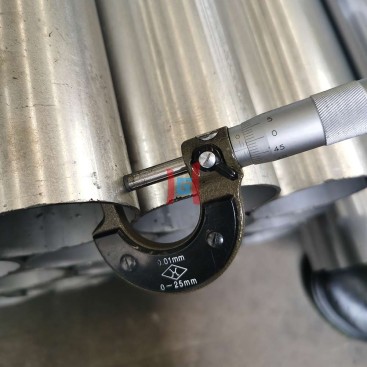
| Dimensional inspection report | Outside diameter, 壁の厚さ, 長さ, 公差, and any other dimensions required by the order. | Only nominal sizes are listed, with no actual measurements or sampling details when those are required. |
| Finished-tube inspection record | Weld-related checks, appearance, straightness, end condition, and other specified product tests. | The evidence covers incoming coil only and does not address the agreed finished-tube requirements. |
| Packing and identification records | Bundle marks, 量, weights, and links between packaging labels and inspection documents. | Bundle labels cannot be reconciled with the packing list or product records. |
For higher-risk orders, consider an agreed pre-shipment inspection or independent testing. The inspection plan should define the sample size, measurement methods, acceptance limits, witness arrangements, and handling of nonconforming results. A third-party inspection can provide additional evidence, but it does not replace a complete contract specification or the buyer’s responsibility to define the required product.
5. Country of Origin and Import Duty: Check the Destination Rules
“Made in China” is a country-of-origin statement, not a universal guarantee of a particular duty rate or a complete customs classification. The tariff treatment of an imported tube depends on the destination country’s current regulations and may be affected by product classification, origin rules, trade remedies, preferential arrangements, documentation, and other applicable measures.
Buyers should verify the following before confirming the landed cost:
- Determine the appropriate customs classification for the actual finished product, using its material, 寸法, 製造方法, and intended classification rules.
- Check the destination country’s current tariff schedule and any applicable anti-dumping, countervailing, safeguard, or other trade measures.
- Confirm the origin criteria that apply to the product and the evidence needed to substantiate origin.
- Ask whether a certificate of origin is required, which form is acceptable, and which issuing authority or process applies.
- Confirm whether additional import permits, product compliance documents, labeling, or declarations are required.
- Ask the customs broker or qualified trade-compliance adviser to confirm the treatment before calculating the final landed cost.
Do not assume that a product manufactured or shipped from China automatically qualifies for a particular tariff rate. Likewise, a certificate of origin does not independently establish tariff eligibility if the applicable rules require additional conditions. Requirements must be checked for the specific destination, product classification, and date of import.
6. How to Evaluate a China-Based Supplier Before Ordering
A practical supplier review should connect the commercial offer, production route, technical requirements, and shipment documents. Use the following checklist to compare suppliers on evidence rather than general claims about factory size or export experience.
| Evaluation area | Questions to ask | Preferred outcome |
|---|---|---|
| Manufacturing route | Who supplies the coated steel and who forms, welds, cuts, and inspects the finished tube? | Clear identification of responsible facilities and material traceability. |
| Technical specification | Are the material, コーティング, 寸法, 公差, tests, and standards explicitly stated? | An approved specification with no unresolved conflicts between standards. |
| Quality evidence | Can the supplier provide batch-linked certificates and actual inspection results? | Documents that can be reconciled with the finished goods. |
| Capacity and scheduling | Can the supplier meet the required volume, production window, and inspection schedule? | A realistic, confirmed schedule with clear communication if changes occur. |
| Export compliance | Can the exporter provide the documents required for customs and payment? | A document list agreed before shipment and consistent commercial records. |
| Claims and accountability | Who investigates nonconformities and how are corrective actions handled? | Written acceptance criteria, claims deadlines, and responsibility for corrective action. |
7. Sourcing Aluminized Steel Tubes from Teda Ganghua
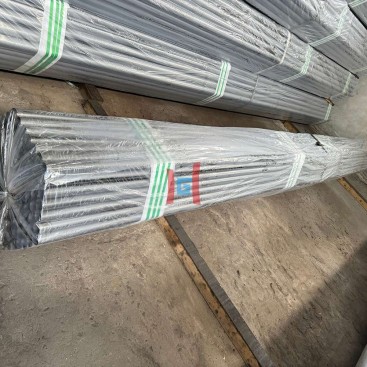
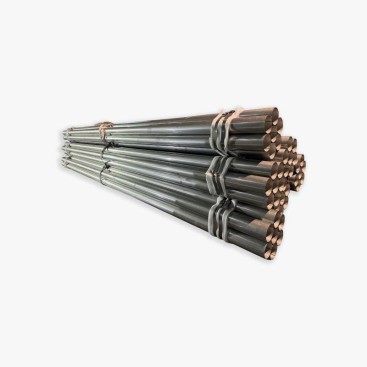
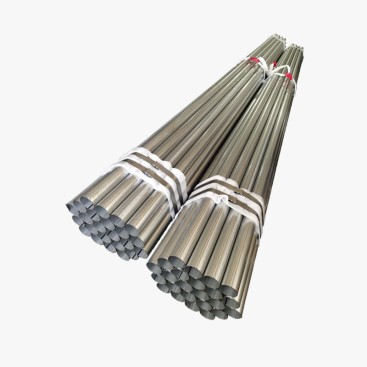
Teda Ganghua supports international procurement teams seeking アルミメッキ鋼管 for industrial and project applications. To assess suitability for a specific order, provide the required outside diameter, 壁の厚さ, 長さ, coating designation, 適用規格, 量, destination country, and intended service conditions.
Buyers should identify the required finished-tube standard separately from the incoming coated-steel specification. If a project calls for a particular AS-series designation or ASTM coating class, include the complete requirement and agreed verification method in the inquiry. The quotation can then be evaluated against the same technical basis, inspection scope, packing requirements, and delivery schedule.
Before placing an order, confirm which certificates and reports will be supplied, how material traceability will be maintained, and whether pre-shipment inspection is required. This makes it easier to compare offers objectively and reduces the risk of specification misunderstandings after production has started.
よくある質問
Does “Made in China” guarantee that aluminized steel pipe meets international standards?
いいえ. Country of origin identifies the product’s origin under the applicable rules; it does not prove conformity with a specific EN, ASTM, 彼, ISO, or finished-tube standard. Buyers should review the applicable specification, 証明書, inspection results, and traceability records.
Can AS120 be treated as automatically equivalent to ASTM A463 Type 1 T1-40?
Do not assume equivalence based only on the designation. Confirm the relevant editions, coating-mass basis, test methods, and acceptance criteria. Any proposed conversion should be documented and approved before ordering.
Which quality documents should I request from a Chinese supplier?
少なくとも, define the need for a material certificate, coating mass or thickness evidence, and dimensional inspection report. アプリケーションに応じて, the buyer may also require finished-tube inspection results, weld-related tests, packing records, and independent inspection.
Will a Chinese certificate of origin reduce import duties?
必ずしもではありません. The duty rate and any preferential treatment depend on the destination country’s rules, product classification, origin criteria, and applicable trade measures. Confirm the current requirements with the destination customs authority or a qualified customs broker.
How can I improve delivery reliability when sourcing from China?
Agree on the product specification, 量, production lead time, inspection schedule, 梱包, required documents, and shipment term before placing the order. Request progress updates and define how schedule changes or nonconforming goods will be handled.