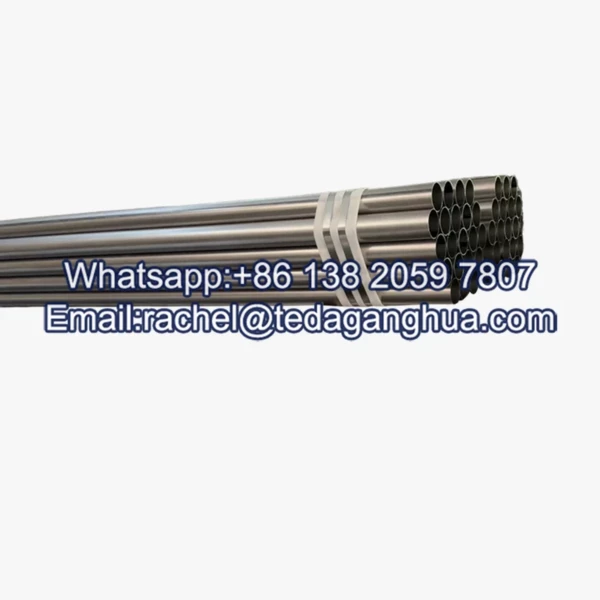
- 説明
説明
JIS G 3314 distinguishes SA1C and SA1D primarily by forming class, not by coating identity. SA1C is classified for general use, while SA1D is the drawing-quality grade intended for greater forming demand. The distinction becomes particularly important when aluminized steel is converted into tubes that require bending, フレアする, expansion, or other deformation after coating. JIS G 3314 itself specifies hot-dip aluminium-coated steel sheet and strip, so when the material is subsequently manufactured into pipe or tube, the tube producer should preserve the original material grade and applicable inspection requirements rather than treating the pipe designation as a separate JIS G 3314 product form. :コンテンツ参照[羊:0]{インデックス=0}
1. SA1C vs SA1D: The Core Difference
Within JIS G 3314, SA1C is designated for general use, whereas SA1D is designated for drawing applications. The standard also lists SA1E and SA1F for progressively more demanding drawing requirements, so SA1D should not be interpreted as the deepest-drawing grade in the entire standard. :コンテンツ参照[羊:1]{index=1}
| アイテム | SA1C | SA1D |
|---|---|---|
| JIS G 3314 classification | 一般用途 | Drawing use |
| Typical forming demand | Moderate forming | More demanding forming |
| Applicable thickness in JIS G 3314:2019 | 0.3–2.5mm | 0.3–2.5mm |
| Primary tube relevance | Straight tube, moderate bending, limited forming | 曲げ, フレアする, expansion and greater deformation |
| When to specify | When general forming capability is sufficient | When forming performance is a defined design requirement |
The JIS classification table identifies SA1C as “general” and SA1D as “drawing,” while SA1E is identified as “deep drawing” and SA1F as “extra deep drawing.” This hierarchy is important when selecting material for tube components because a drawing requirement should be stated according to the actual forming operation rather than inferred from the coating alone. :コンテンツ参照[羊:2]{index=2}
2. 化学組成: Do Not Assume the Grade Difference Comes From the Coating
SA1C and SA1D belong to the same JIS G 3314 aluminized-steel family. The functional distinction is primarily related to the quality of the steel substrate and its forming performance, while the aluminium coating provides the intended surface characteristics.
Published manufacturer data for JIS G 3314 products shows that SA1C and SA1D can be specified with closely related limits for carbon, シリコン, マンガン, phosphorus, and sulfur. 例えば, one published SA1C/SA1D product table gives maximum values of 0.06% C, 0.02% そして, 0.40% Mn, 0.04% p, そして 0.04% S for both grades. Such supplier data should be treated as a product-specific specification; the applicable edition of JIS G 3314 and the actual mill certificate remain the controlling documents for procurement. :コンテンツ参照[羊:3]{index=3}
Important: Do not use a generic chemical-composition table from another supplier as a substitute for the current JIS certificate. For production purchasing, verify the heat analysis and the exact standard edition stated on the mill test certificate.
3. Mechanical Properties and Forming Capability
The clearest practical difference is elongation and forming performance. A published manufacturer catalogue based on JIS G 3314-2018 lists SA1D with minimum elongation values that increase with nominal thickness: 30% for 0.40–0.60 mm, 32% for 0.60–1.00 mm, そして 34% のために 1.00 mm and above. The same table does not specify minimum elongation values for SA1C in those thickness ranges. :コンテンツ参照[羊:4]{index=4}
Another manufacturer comparison gives SA1C a higher permitted inner spacing for a 180° bending test, while SA1D is associated with a tighter bending condition. The exact test requirements should always be checked against the applicable JIS edition and purchase specification. :コンテンツ参照[羊:5]{インデックス=5}
| Forming Factor | SA1C | SA1D |
|---|---|---|
| 曲げ | Suitable where general forming is sufficient | Better suited to tighter forming requirements |
| フランジ加工 / フレアする | Use after validating the forming geometry | Preferred when greater deformation is specified |
| 拡大 | Suitable for limited expansion when validated | More appropriate for higher forming demand |
| 深絞り加工 | Not the preferred grade for demanding drawing | Designed for drawing applications |
4. What Does the Difference Mean for Aluminized Steel Pipe?
JIS G 3314 covers coated sheet and strip rather than finished pipe. したがって, “JIS G 3314 SA1C pipe” or “JIS G 3314 SA1D pipe” should be understood carefully: the aluminized tube is manufactured from material whose substrate grade is specified to JIS G 3314, while the completed tube may have its own dimensional, 溶接, 形にする, および検査要件.
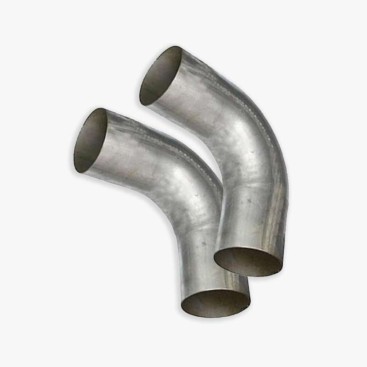
For a straight tube that receives little deformation after forming, SA1C may be technically adequate if the tube design and forming process have been validated. For a tube that must undergo substantial bending, end expansion, フレアする, かしめ加工, or other deformation, SA1D provides a more appropriate starting material because its classification specifically addresses drawing/forming requirements.
Consider SA1C when the bend radius, 壁の厚さ, tooling and production trials demonstrate adequate forming performance.
SA1D is generally the more relevant grade when the tube end must expand substantially without cracking or unacceptable distortion.
If the design involves significant drawing or repeated deformation, evaluate SA1D and, where necessary, the higher drawing grades in the same standard.
5. 曲げ, Flaring and Deep-Drawing Limits Should Be Tested, Not Assumed
There is no single universal “maximum bend” or “maximum expansion” value that can be applied to every aluminized tube. The result depends on wall thickness, チューブの直径, 曲げ半径, ツーリング, grain direction, weld condition if applicable, forming speed, lubrication, and the amount of deformation.
For this reason, a procurement specification should define the actual forming operation. “Bendable tube” is less useful than specifying the tube OD, 壁の厚さ, 曲げ半径, number of bends, expansion ratio, flare diameter, or forming sequence.
例えば, a tube requiring a small-radius bend and subsequent end expansion represents a substantially different material challenge from a straight tube that is only cut and welded. In the former case, grade selection should be made together with a forming trial rather than solely from the nominal tensile strength.
6. When Can SA1C Be Considered Instead of SA1D?
SA1C can be considered when the actual manufacturing process requires only general forming and the buyer has verified that the required bend, flange, or tube geometry can be achieved without cracking, excessive springback, coating damage, or dimensional instability.
The decision should therefore be based on process qualification rather than a simple assumption that the general-use grade is always interchangeable with the drawing grade. If a component has already been validated with SA1D, replacing it with SA1C should trigger a material-substitution review and, where necessary, a forming trial.
From a procurement perspective, the correct question is not simply “Which grade costs less?” It is “Can the lower-formability grade complete the specified manufacturing sequence with the required yield, appearance, 寸法精度, and rejection rate?” A small material saving can be offset if additional forming failures, tool adjustments, or quality sorting occur.
7. Inspection and Certificate Requirements
For commercial procurement, the mill test certificate should identify the applicable JIS standard and material designation and provide the relevant chemical and mechanical test results. The certificate should also allow the material to be traced to the production heat or coil.
| Document / Check | What to Verify |
|---|---|
| Material certificate | JIS G 3314 edition, grade designation and heat/coil traceability |
| Chemical analysis | Actual heat analysis against the specified limits |
| Tensile test | Tensile strength and applicable elongation requirements |
| Coating inspection | 塗布量, surface condition and agreed coating designation |
| 寸法検査 | 厚さ, width or tube dimensions and applicable tolerances |
| Forming validation | 曲げ, フレアする, expansion or drawing trial where required by the application |
JIS G 3314 manufacturer data also demonstrates why the certificate matters: mechanical requirements can depend on thickness, and published tables distinguish tensile and elongation requirements by grade and thickness range. :コンテンツ参照[羊:6]{index=6}
8. Teda Ganghua Support for Aluminized Tube Procurement
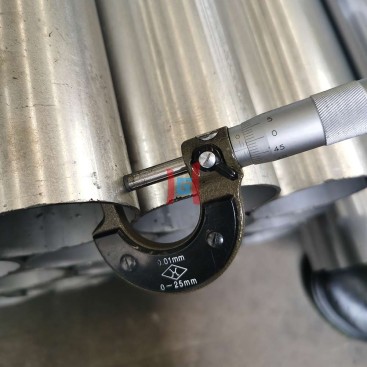
Teda Ganghua can support buyers who need aluminized steel tubes with a defined base-steel grade, 塗装仕様, 寸法, and forming requirements. For procurement projects involving bending, フレアする, expansion, or other downstream fabrication, the material grade can be reviewed together with the tube dimensions and forming sequence rather than selected from the coating designation alone.
For customers comparing SA1C and SA1D, an inquiry can include tube outside diameter, 壁の厚さ, 長さ, coating designation, forming operation, minimum bend radius, expansion or flare requirement, 適用規格, 検査書類, and expected quantity. This gives the supplier a clearer basis for recommending a suitable material route and preparing traceable production documentation.
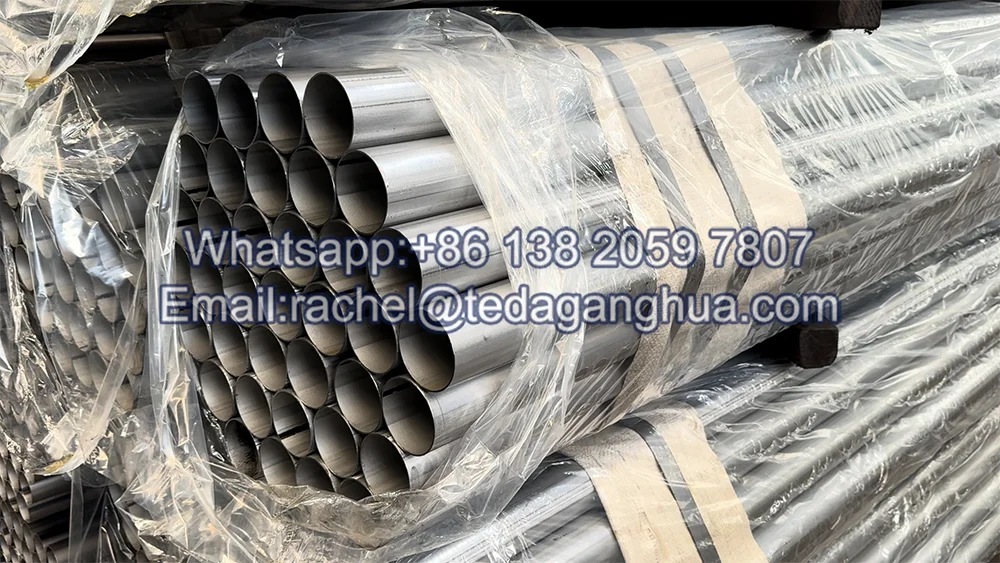
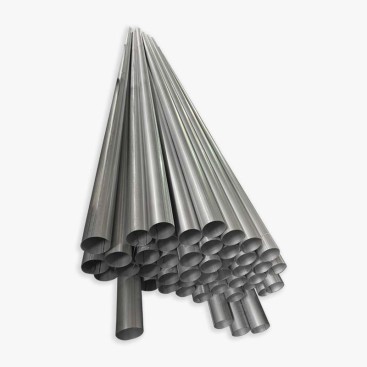
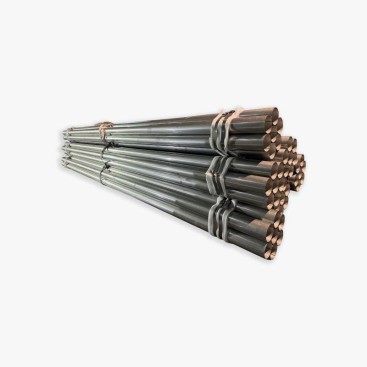
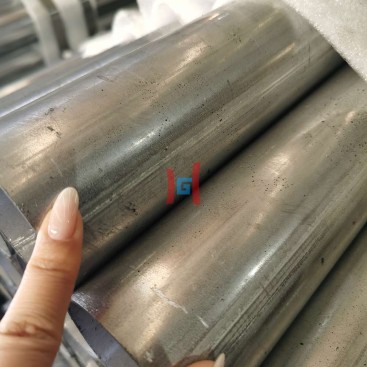
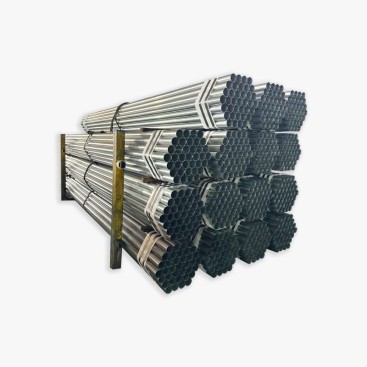
For tube-specific sourcing, Teda Ganghua’s アルミメッキ鋼管 range can be evaluated according to the required grade, 寸法, コーティング, processing route, そしてアプリケーション.
9. Practical Selection Guide
| Tube Requirement | Material Selection Consideration |
|---|---|
| Straight tube with limited forming | SA1C may be considered after dimensional and forming validation |
| Moderate tube bending | Compare bend radius and thickness with the required forming capability |
| End flaring or expansion | SA1D is generally more appropriate when substantial deformation is required |
| Deep drawing or severe deformation | Evaluate SA1D together with SA1E/SA1F where the forming severity requires it |
| Material substitution | Require technical review and forming validation before changing grade |
10. よくある質問
Is SA1D stronger than SA1C?
The main distinction is not simply higher strength. SA1D is classified for drawing applications and has specified forming-related mechanical requirements. Grade selection should therefore consider elongation and forming behavior together with strength.
Can SA1C be used for aluminized steel tubes?
はい, when the tube design and manufacturing process require only general forming and the material has been validated for the required operations. The completed tube specification should also define its own dimensional and processing requirements.
Is SA1D the deepest-drawing grade in JIS G 3314?
いいえ. JIS G 3314 also identifies SA1E as deep-drawing quality and SA1F as extra-deep-drawing quality. SA1D is the drawing-quality grade within this progression. :コンテンツ参照[羊:7]{index=7}
Can I determine the maximum tube bend radius from the grade alone?
いいえ. Bend radius depends on tube diameter, 壁の厚さ, ツーリング, forming direction, weld condition where applicable, and the specific production process. A forming trial or validated process specification is more reliable than a grade-only assumption.
What should be checked on the certificate?
Check the JIS G 3314 designation and edition, 材質グレード, heat or coil traceability, chemical analysis, tensile properties, applicable elongation, coating information, and dimensional inspection records. For formed tubes, also retain evidence of the required forming validation.