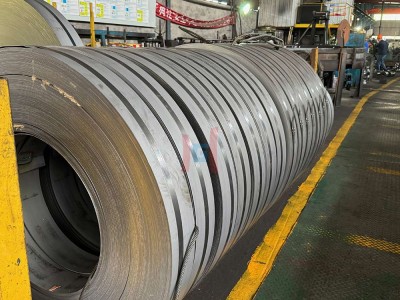
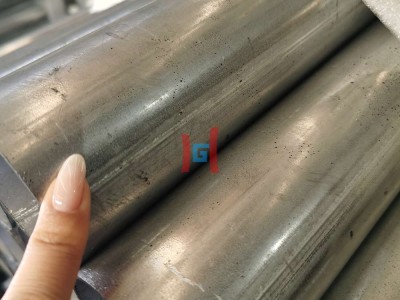
T1-13 vs T1-25 vs T1-40 vs T1-60 アルミメッキスチールコーティング
T1 ~ 13 から選択する, T1-25, T1-40, and T1-60 is not simply a matter of selecting the thickest aluminized coating available. The correct coating weight depends on the operating temperature, 腐食環境, component geometry, expected service life, and applicable product specification. A heavier coating may provide a larger aluminum-silicon coating reserve, but it does not automatically deliver proportionally longer service life in every application. Buyers should first understand what the T1 designation represents, how coating weight is measured, and which performance requirements actually matter.
1. What Do T1-13, T1-25, T1-40, and T1-60 Mean?
T1-13, T1-25, T1-40, and T1-60 are commonly used commercial designations for Type 1 aluminized steel coating levels. タイプ 1 coating is an aluminum-silicon alloy coating applied to a steel substrate through a hot-dip process. Its aluminum-rich composition provides oxidation resistance and heat-reflective properties, while silicon helps control the coating-substrate reaction and coating structure.
The numbers indicate coating-weight or coating-mass classes under the relevant designation system. They should not be interpreted as coating thickness in micrometers, maximum service temperature, or a direct measure of steel thickness.
In particular, T1-40 is frequently encountered in commercial specifications. しかし, the meaning of the number must always be checked against the referenced standard, supplier specification, and whether the stated coating mass represents the total of both coated sides or another defined measurement basis.
Important distinction: T1 identifies the Type 1 aluminum-silicon coating family, while the numerical suffix identifies a coating level within the applicable specification system. Do not use the suffix alone to calculate coating thickness or predict service life.
2. Comparing T1-13, T1-25, T1-40, and T1-60
The practical difference between these coating classes is the amount of coating material available on the steel surface. As the specified coating level increases, the coating reserve generally increases as well. This can be beneficial where oxidation exposure, surface degradation, or longer maintenance intervals are important.
| Coating designation | Relative coating level | Typical selection consideration | Buyer priority |
|---|---|---|---|
| T1-13 | より低い | Applications with relatively moderate coating requirements | Cost and basic coating performance |
| T1-25 | Intermediate | Applications requiring a greater coating reserve than lower classes | Balanced coating requirement |
| T1-40 | より高い | Commonly specified for industrial heat-resistant components | Coating reserve and application consistency |
| T1-60 | Highest among these four | Applications where a higher coating level is specifically required | Higher coating requirement and specification compliance |
This comparison is a relative selection guide, not a substitute for the numerical requirements in the governing standard. The exact coating mass, 許容範囲, test method, and measurement basis should be confirmed before comparing offers from different suppliers.
3. Coating Weight Is Not the Same as Coating Thickness
One of the most common purchasing mistakes is treating coating weight and coating thickness as interchangeable. Coating weight describes the mass of coating deposited over a defined surface area. Coating thickness describes the physical distance between the steel substrate and the coating surface.
For a uniform coating with a known composition and density, coating mass and thickness are related. しかし, the conversion is not always straightforward because actual coating structure, alloy layers, surface distribution, and the measurement basis can affect the result.
例えば, if a specification expresses coating mass as a total for both sides, it cannot be directly compared with a value measured on one side only. A buyer who overlooks this distinction may mistakenly believe that one supplier is offering a heavier coating than another.
| Specification item | What it describes | What buyers should confirm |
|---|---|---|
| 塗布量 | Mass of coating per defined surface area | Unit, total or per-side basis, and tolerance |
| Coating thickness | Physical thickness of the coating layer | Measurement method and sampling location |
| Coating composition | Aluminum-silicon alloy characteristics | タイプ 1 designation and applicable composition requirements |
| Substrate thickness | Thickness of the underlying steel | Nominal thickness and whether coating is included in the stated dimension |
When comparing T1-13, T1-25, T1-40, and T1-60, buyers should request the actual coating mass requirement and its measurement basis rather than relying only on a commercial label.
4. How Operating Temperature Influences Coating Selection
タイプ 1 aluminized steel is widely used in applications where oxidation resistance and elevated-temperature performance are important. The aluminum-rich coating forms a protective oxide layer during exposure to suitable high-temperature conditions. This helps slow further oxidation of the underlying steel.
しかし, coating weight alone does not determine the maximum operating temperature. Temperature fluctuations, 露出時間, atmosphere composition, 熱サイクル, and mechanical damage all influence performance.
Temperature-related selection factors
- Continuous operating temperature: Long-term exposure can consume the protective coating differently from short-duration heating.
- Peak temperature: Temporary temperature spikes may create different oxidation conditions from normal operation.
- Thermal cycling: Repeated heating and cooling can place stress on the coating and its interface with the steel substrate.
- Atmosphere: Oxidizing, reducing, sulfur-containing, or otherwise aggressive environments can change coating performance.
- Mechanical contact: Abrasion, impact, 形にする, and installation damage may locally reduce the protective coating.
A higher coating class may provide more coating material, but it cannot compensate for an unsuitable alloy system or an operating environment outside the material’s performance limits. If the component operates under severe thermal cycling or aggressive gas exposure, the complete service conditions should be evaluated before selecting the coating level.
5. How Corrosion Conditions Affect the Choice
Although Type 1 aluminized steel is often selected for heat and oxidation resistance, it should not be treated as a universal replacement for stainless steel or corrosion-resistant alloys. Its performance depends on the environment and the condition of the coating after fabrication.
例えば, a component exposed to hot combustion gases may have different coating requirements from a component exposed to outdoor moisture, 結露, 塩, or industrial chemicals. The same T1-40 coating designation does not guarantee the same service life in these different environments.
| サービス環境 | Main concern | Selection approach |
|---|---|---|
| Elevated-temperature oxidation | Gradual consumption of the protective coating | Evaluate temperature, duration, and coating reserve |
| Outdoor atmospheric exposure | Moisture, pollutants, and coating damage | Assess exposure severity and fabrication condition |
| Condensation or wet-dry cycles | Localized corrosion and deposit formation | Evaluate condensate chemistry and drainage design |
| Industrial chemical exposure | Chemical attack on the coating or substrate | Confirm compatibility with the actual chemical environment |
| Abrasion or repeated contact | Mechanical removal of coating material | Consider wear protection and component design |
For applications involving condensate, chemical deposits, or repeated wet-dry cycles, buyers should avoid selecting a coating level based only on nominal coating mass. Testing under representative service conditions may be necessary.
6. Does a Heavier Coating Always Mean Better Performance?
いいえ. A heavier coating can increase the available coating reserve, but the benefits must be evaluated against fabrication requirements, component geometry, and total production cost.
Several considerations may limit the value of selecting the highest coating class:
- 成形性: The coating must remain suitable for the intended bending, 描画, or forming operation.
- 溶接性: Coating condition and thickness can affect welding procedures, fume generation, and joint preparation requirements.
- Surface quality: Coating appearance and uniformity should meet the component’s functional and visual requirements.
- Dimensional control: Buyers should confirm whether coating thickness is included in the specified product dimensions.
- Cost efficiency: Additional coating mass is useful only when it contributes to the required performance or specification compliance.
The correct choice is the coating level that meets the expected service conditions and manufacturing requirements with an appropriate safety margin. Selecting T1-60 simply because it is the highest option may increase material cost without delivering a meaningful improvement in the actual application.
7. A Practical Checklist for Selecting the Right T1 Coating Level
Before issuing a purchase order, procurement managers should establish the following information:
| Item to confirm | Information required |
|---|---|
| コーティングの種類 | タイプ 1 アルミメッキ鋼, Al-Siコーティング |
| コーティングクラス | T1-13, T1-25, T1-40, or T1-60 as specified |
| Reference standard | Applicable standard and edition, such as ASTM A463 where relevant |
| Coating measurement | Coating mass unit, both-side or one-side basis, and tolerance |
| スチール基板 | 学年, 厚さ, width, および機械的特性 |
| Fabrication process | 曲げ, 溶接, 切断, 描画, or tube forming |
| Service conditions | Operating temperature, 露出時間, atmosphere, and corrosion conditions |
| Inspection documents | Mill Test Certificate, coating inspection results, and agreed acceptance criteria |
Providing these details helps suppliers quote against the same technical basis and reduces the risk of receiving material that carries a familiar commercial designation but does not meet the intended coating requirement.
8. 泰達江華: Aluminized Steel Tube Supply for Industrial Applications
Choosing the right aluminized coating class requires coordination between material specification, fabrication requirements, and actual operating conditions. Teda Ganghua has 20 years of industry experience and has been engaged in export business since 2006, supporting international buyers with steel products for industrial manufacturing and processing applications.
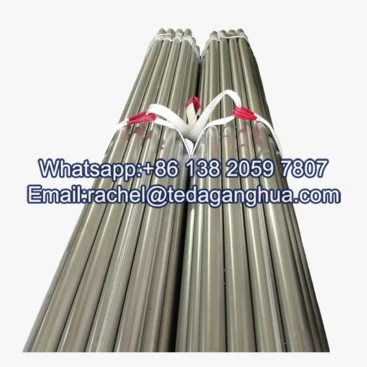
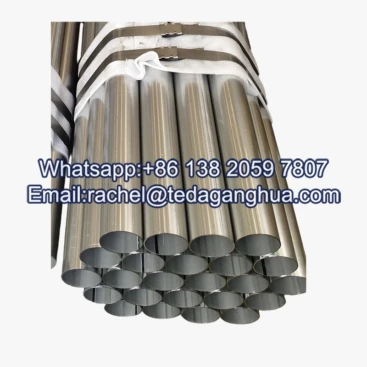
For aluminized steel tube projects, buyers can provide the required steel grade, tube outside diameter, 壁の厚さ, 長さ, coating type, coating class, and applicable standard. Teda Ganghua can assist with specification confirmation, product coordination, and material documentation to help procurement teams evaluate suitable supply options.
When requesting a quotation, it is particularly important to identify whether T1-13, T1-25, T1-40, or T1-60 is mandatory, and to state the coating mass measurement basis. This makes technical comparison between suppliers more reliable and helps avoid misunderstandings about coating weight and thickness.
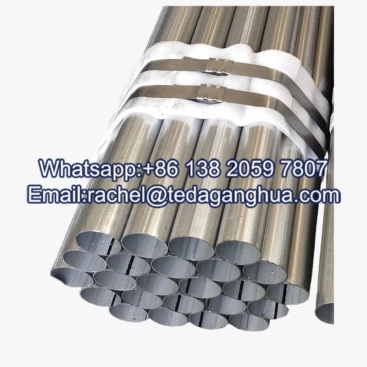
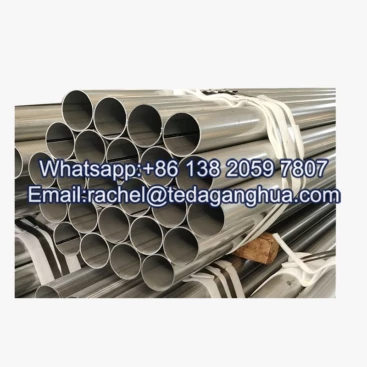
Explore アルミメッキ鋼管 from Teda Ganghua and submit your required dimensions, coating class, and application details for a project-specific inquiry.
9. よくある質問
Q1: What is the main difference between T1-13, T1-25, T1-40, and T1-60?
They represent different coating levels within a Type 1 aluminized steel designation system. The higher numerical class generally indicates a greater specified coating level. The exact mass, 許容範囲, and measurement basis must be confirmed against the applicable specification.
Q2: Does T1-40 mean 40 micrometers of coating thickness?
いいえ. The number should not be interpreted as a coating thickness in micrometers. It is a coating-level designation, and the actual coating mass and thickness must be determined from the relevant standard and measurement method.
Q3: Is T1-60 always better than T1-40?
自動的ではありません. T1-60 represents a higher coating level among these options, but its additional coating reserve may not provide a meaningful benefit if the application does not require it. 製作, service conditions, and cost should all be considered.
Q4: Can coating weight be converted directly into coating thickness?
Only when the coating composition, density, surface basis, and measurement method are clearly defined. A total two-side coating mass cannot be compared directly with a one-side value without adjusting the measurement basis.
Q5: What information should be included when ordering Type 1 アルミメッキ鋼管?
Specify the steel grade, 外径, 壁の厚さ, チューブの長さ, タイプ 1 coating designation, coating class, 適用規格, coating measurement basis, および対象となるサービス環境. These details help suppliers confirm the correct product before production.