
Spesifikasi Tiub Ekzos Alumin dan Kawalan Kualiti
Spesifikasi yang disediakan dengan baik untuk tiub ekzos aluminisasi harus meliputi lebih daripada gred keluli, diameter luar, dan ketebalan dinding. Jisim salutan, coating integrity after fabrication, repair procedures, and resistance to exhaust condensate are equally important when evaluating long-term service performance.
For automotive exhaust systems and industrial exhaust equipment, the material may experience repeated heating and cooling, pemeluwapan dalaman, acidic combustion by-products, road salt exposure, and mechanical damage during installation. If these conditions are not addressed in the purchasing specification, a product that meets basic dimensional requirements may still fail to deliver the expected corrosion resistance.
This guide provides a practical specification framework for procurement managers, engineers, and quality control teams. It explains how to define aluminum-silicon coating requirements, specify post-fabrication coating repair, and establish condensate corrosion testing with measurable acceptance criteria.
1. Why an Exhaust System Specification Must Cover Three Additional Requirements
Traditional tube purchasing specifications generally focus on material grade, dimensi, proses pembuatan, dan sifat mekanikal. For coated exhaust products, three additional areas deserve explicit attention.
Three essential specification controls
1. Jisim salutan: Defines the quantity of metallic coating applied to the steel substrate and establishes an important basis for material consistency.
2. Coating repair: Defines how scratches, cut edges, weld areas, and other damaged locations are treated after fabrication.
3. Condensate corrosion testing: Evaluates the resistance of the internal surface to corrosive liquids that may accumulate during exhaust system operation.
These requirements should be connected to the actual manufacturing route. Contohnya, precoated steel sheet may meet its original coating specification, but subsequent slitting, roll forming, mengimpal, memotong, and bending can change the condition of the coating on the finished tube.
2. How to Specify Aluminum-Silicon Coating Mass
Coating mass is one of the most important purchasing parameters for aluminum-coated steel sheet. It indicates the mass of metallic coating per unit area and helps buyers establish consistent incoming material requirements.
2.1 Define the Coating Type First
Under ASTM A463/A463M, aluminum-coated steel sheet is classified into two main coating types:
- taip 1: Salutan aluminium-silikon, commonly considered for heat-resistant applications such as exhaust components.
- taip 2: Commercially pure aluminum coating, generally selected for applications requiring its particular aluminum coating characteristics.
For exhaust systems, taip 1 is frequently evaluated because its coating structure is designed to provide high-temperature oxidation resistance. Namun begitu, coating type alone does not establish suitability for a particular exhaust temperature or service life.
2.2 Specify Whether Coating Mass Is Total or Per Side
A frequent source of procurement misunderstanding is the interpretation of coating mass. A value expressed in grams per square meter may refer to the combined coating mass on both surfaces or to an individual surface, depending on the product specification.
The purchasing document should explicitly state:
- Whether the coating mass applies to both sides combined or each side individually.
- Whether the requirement is a minimum, nominal, or specified range.
- The applicable test method and sampling frequency.
- Whether the measurement applies to the original coated sheet or the finished tube.
- How coating variation between the two surfaces is controlled.
Example of clear coating mass wording
Salutan aluminium-silikon: ASTM A463/A463M, taip 1, coating designation and minimum coating mass to be agreed upon. The specified coating mass shall be identified as the total mass of both coated surfaces or the mass per individual surface. Test method and acceptance criteria shall follow the applicable material specification and agreed purchase requirements.
2.3 Coating Mass Is Not the Same as Coating Thickness
Coating mass and coating thickness are related but are not interchangeable. Coating mass measures the amount of coating per unit area, while coating thickness measures the physical thickness of the coating layer.
For aluminum-silicon coatings, conversion between these parameters requires consideration of coating composition and density. A simple universal conversion should not be used without confirming the applicable material characteristics.
| Specification Item | What to Define | Why It Matters |
|---|---|---|
| Jenis salutan | taip 1 atau Jenis 2 | Identifies coating composition |
| Coating designation | Applicable designation under the selected standard | Establishes the required coating level |
| Coating mass basis | Both sides combined or per side | Prevents interpretation differences |
| Measurement method | Applicable standard test method | Ensures consistent verification |
| Sampling | Sampling location and frequency | Improves batch consistency |
For procurement purposes, the coating designation should be selected according to the applicable edition of ASTM A463/A463M rather than replaced with an independently invented coating mass value.
3. How to Write Coating Repair Requirements After Fabrication
Original coating quality does not automatically guarantee that every area of the finished exhaust tube remains protected. Fabrication operations can create coating discontinuities that require separate inspection and treatment.
3.1 Identify Areas Requiring Repair
The specification should identify which manufacturing operations can damage the coating and where inspection is required.
- Cut edges: Exposed steel at tube ends and cut-to-length locations.
- Weld seams: Areas affected by localized welding heat and coating disruption.
- Drilled openings: Exposed substrate around holes and punched features.
- Formed sections: Areas where bending, expansion, or flaring causes coating cracking or separation.
- Handling damage: Scratches, dents, and coating loss caused during transportation or assembly.
3.2 Define the Approved Repair Method
Repair methods should be selected according to the original coating chemistry and the operating temperature of the exhaust component.
Possible approaches include compatible aluminum-rich repair coatings, specialized thermal spray systems, or other qualified protective treatments. Namun begitu, these methods are not automatically interchangeable.
A repair product suitable for ambient-temperature atmospheric exposure may lose adhesion, oxidize, or deteriorate when exposed to exhaust operating temperatures. Oleh itu, the selected repair system should be validated under representative thermal and corrosion conditions.
Recommended repair specification wording
All coating damage caused by cutting, mengimpal, drilling, membentuk, or handling shall be inspected. Damaged areas shall be treated using a repair system approved for compatibility with the original aluminum-silicon coating and the specified service temperature. The repair process shall define surface preparation, application method, minimum dry film thickness where applicable, curing conditions, dan kriteria pemeriksaan.
3.3 Define Repair Acceptance Criteria
Simply requiring that damaged areas be repaired is insufficient. The purchasing specification should establish measurable acceptance requirements.
| Item Pemeriksaan | Suggested Requirement | Pengesahan |
|---|---|---|
| Surface preparation | Remove loose coating, minyak, kotoran, and corrosion products | Visual inspection |
| Repair material | Approved and application-compatible system | Technical documentation |
| Coverage | All designated damaged areas treated | Visual inspection and coverage records |
| Repair thickness | Specified according to the qualified repair system | Suitable thickness measurement |
| Adhesion | Meet agreed qualification criteria | Appropriate adhesion test |
| Thermal resistance | No unacceptable deterioration under specified exposure | Thermal cycling qualification |
It is also important to distinguish between a repair coating and the original hot-dip metallic coating. A repair system should not be described as restoring the original coating process or automatically providing identical metallurgical properties.
4. Why Exhaust Condensate Corrosion Testing Is Necessary
Exhaust systems are not exposed only to hot combustion gases. During cold starts, short-distance operation, and shutdown periods, water vapor can condense inside the tubing.
This condensate may contain dissolved combustion by-products, including acidic species. Depending on fuel composition, engine operation, suhu, and exhaust system design, the liquid can become corrosive to the internal steel surface.
Oleh itu, a material that performs well in dry atmospheric exposure may behave differently when subjected to repeated internal wetting and drying.
4.1 Important Condensate Test Variables
A meaningful condensate corrosion test should define the test liquid and exposure conditions rather than simply state that the material must pass an acid resistance test.
- Condensate composition: Identify the chemical components and concentrations of the test solution.
- pH: Establish the initial pH and monitoring requirements.
- Suhu: Define the test temperature and any thermal cycling.
- Exposure duration: Specify total exposure time and inspection intervals.
- Wetting conditions: Define continuous immersion, intermittent wetting, or condensation exposure.
- Specimen condition: Identify whether testing uses intact surfaces, cut edges, welded specimens, or repaired areas.
- Acceptance criteria: Establish measurable limits for corrosion and coating deterioration.
4.2 Do Not Use Salt Spray Testing as a Substitute
Neutral salt spray testing is useful for comparing certain atmospheric corrosion characteristics, but it does not reproduce the complete chemical environment inside an exhaust system.
Salt spray exposure and exhaust condensate exposure involve different electrolytes, reaction mechanisms, dan syarat perkhidmatan. A material that performs well in one test cannot automatically be assumed to perform equally well in the other.
For exhaust applications, a dedicated condensate test should be developed according to the actual operating environment or an agreed industry-specific test method.
5. How to Build a Condensate Corrosion Test Specification
Instead of using an undefined requirement such as good acid resistance, the specification should establish a reproducible laboratory procedure.
5.1 Define the Test Solution
The test solution should represent the expected exhaust condensate or an agreed accelerated corrosion environment. Its chemical composition should be documented so that different laboratories can reproduce the test.
Potential parameters include water quality, acidity, chloride concentration, sulfate concentration, and other relevant chemical constituents. These parameters should be selected according to the application rather than combined into an arbitrary universal recipe.
5.2 Define the Specimen Preparation
Specimen preparation has a significant influence on the test results. The specification should identify whether the test uses:
- As-received coated sheet or tubing.
- Finished tube sections with original cut ends.
- Welded specimens representing the longitudinal seam.
- Artificially scratched specimens with a defined defect size.
- Specimens containing repaired coating areas.
Where possible, both intact and deliberately damaged specimens should be evaluated. This helps distinguish the barrier performance of the original coating from the corrosion behavior of exposed or repaired locations.
5.3 Define Exposure Conditions and Evaluation
For a controlled test, the laboratory should record exposure temperature, duration, solution renewal frequency, pH changes, and wet-dry cycles where applicable.
After exposure, specimens can be evaluated for red rust, localized corrosion, coating blistering, delamination, and measurable mass loss. Cross-sectional examination may also be appropriate when the objective is to investigate coating degradation mechanisms.
| Test Parameter | Specification Requirement | Record |
|---|---|---|
| Test solution | Defined chemical composition | Chemical formulation |
| Initial pH | Agreed target and tolerance | Measured initial pH |
| Suhu | Specified exposure temperature | Temperature history |
| Duration | Defined exposure period | Start and finish times |
| Specimen condition | Intact, cut, dikimpal, scratched, or repaired | Specimen identification |
| Corrosion evaluation | Defined visual and quantitative criteria | Inspection and test report |
6. How to Write Quantifiable Acceptance Criteria
A specification becomes useful only when its requirements can be verified. Statements such as excellent coating quality, good corrosion resistance, or no serious damage are too subjective for consistent supplier evaluation.
Acceptance criteria should be agreed upon before production and testing. They should cover the original coating, repaired areas, and the corrosion behavior of the finished component.
| Quality Item | Example Acceptance Requirement | Verification Method |
|---|---|---|
| Jisim salutan | Meet the agreed ASTM coating designation | Standardized coating mass test |
| Keadaan permukaan | No unacceptable peeling, flaking, or unapproved exposed areas | Visual inspection |
| Repair coverage | All designated damaged locations treated | Visual inspection and records |
| Repair adhesion | Meet the agreed qualification threshold | Selected adhesion test |
| Condensate corrosion | Meet the agreed corrosion rating or mass-loss limit | Defined condensate test |
| Thermal durability | No unacceptable coating deterioration | Thermal cycling test |
The numerical limits for corrosion rating, mass loss, lekatan, and thermal exposure should be established through application requirements, design validation, and supplier qualification. They should not be copied from an unrelated coating system or assumed to be universal acceptance values.
7. Complete Specification Template for Aluminized Exhaust Systems
The following template can be adapted for technical inquiries, supplier quotations, quality agreements, and production purchase orders. It separates material requirements from fabrication and performance requirements.
Aluminized Exhaust Tube Technical Specification
A. Product Identification
| produk | Aluminum-silicon coated steel exhaust tube |
| Manufacturing route | ERW or other specified process |
| Product standard | Applicable tubing standard and edition |
| Bahan asas | Specified steel grade |
B. Dimensional Requirements
| Outside diameter | _____ mm |
| Ketebalan dinding | _____ mm |
| Panjang | _____ mm |
| OD tolerance | As agreed |
| WT tolerance | As agreed |
| Measurement basis | Total coated thickness or substrate thickness, explicitly stated |
C. Coating Requirements
| Coating standard | ASTM A463/A463M or agreed equivalent |
| Jenis salutan | taip 1 or other specified type |
| Coating designation | _____ |
| Coating mass basis | Both sides combined / per side |
| Inspection method | Applicable standardized method |
D. Coating Repair Requirements
| Areas requiring repair | Cut edges, weld zones, scratches, and other damaged areas |
| Repair material | Approved compatible repair system |
| Surface preparation | Specified cleaning and preparation procedure |
| Repair thickness | According to qualified repair system |
| Thermal compatibility | Suitable for specified service temperature |
| Acceptance criteria | Defined visual, lekatan, and performance requirements |
E. Condensate Corrosion Test
| Test method | Agreed application-specific procedure |
| Solution composition | Defined chemical formulation |
| Initial pH | _____ |
| Exposure temperature | _____ °C |
| Exposure duration | _____ hours |
| Specimen condition | Intact / cut / dikimpal / scratched / repaired |
| Acceptance criteria | Specified corrosion rating or mass-loss limit |
F. Documentation and Traceability
- Material test certificate and heat or batch identification.
- Coating mass inspection records.
- Dimensional inspection report.
- Weld and surface inspection records.
- Coating repair procedure and inspection records.
- Condensate corrosion and thermal test reports, where required.
This template should be adapted to the applicable material standards, design requirements, and customer validation procedures. Blank fields should be completed and acceptance criteria agreed upon before production begins.
8. Supplier Quality Control: What Procurement Managers Should Verify
A detailed specification is effective only when the supplier can demonstrate that the requirements are controlled during production. Procurement managers should therefore evaluate both the material documentation and the manufacturer’s inspection process.
The following checks can be incorporated into supplier qualification and incoming material inspection:
- Confirm the original sheet coating designation and applicable standard edition.
- Check that coating mass results use the agreed measurement basis.
- Verify tube OD, ketebalan dinding, panjang, and dimensional tolerances.
- Inspect longitudinal weld seams and heat-affected areas.
- Review cut-edge and post-fabrication repair procedures.
- Confirm that repair materials have documented thermal compatibility.
- Review condensate test procedures and actual laboratory results.
- Maintain traceability between incoming coated material and finished tubing.
For projects with demanding operating conditions, sample testing before mass production is recommended. This allows engineers to evaluate the complete manufacturing route, including forming, mengimpal, repair, and corrosion performance, rather than assessing the original sheet alone.
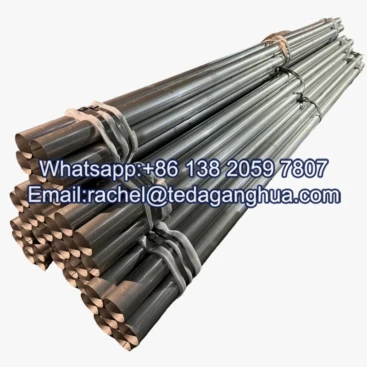
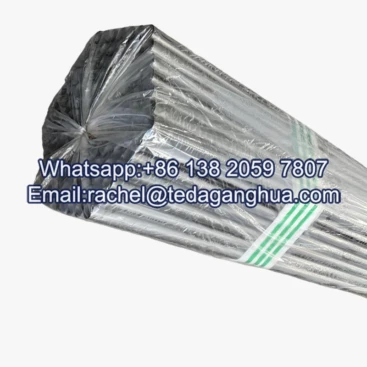
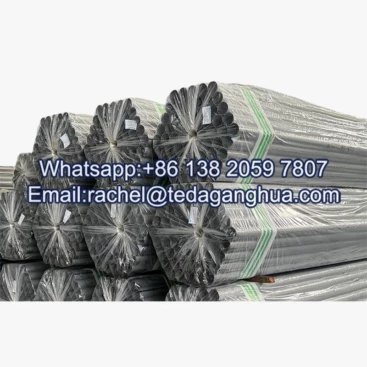
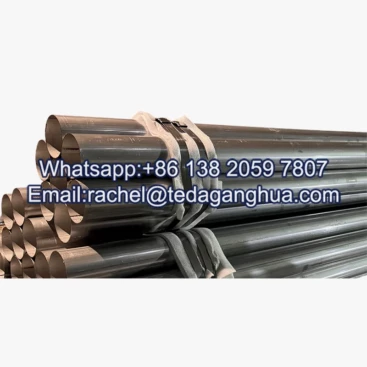
9. Teda Ganghua: Supporting Aluminized Exhaust Tube Specifications
For international industrial buyers, the challenge is not simply finding coated tubing with the correct dimensions. The material must also meet the coating requirements, fabrication conditions, inspection expectations, and service environment defined by the project.
Teda Ganghua supports metal procurement projects through material sourcing, specification review, dimensional customization, processing coordination, and quality inspection arrangements. With export experience since 2006, the company works with international customers to clarify technical requirements and coordinate suitable material solutions.
When sourcing tiub keluli beraluminium, procurement managers can provide the following information to help establish an accurate technical inquiry:
- Required steel grade and coating type.
- Coating designation and coating mass measurement basis.
- Tube outside diameter, ketebalan dinding, and length.
- Applicable manufacturing and material standards.
- Kimpalan, memotong, membongkok, and end-processing requirements.
- Operating temperature and expected thermal cycling conditions.
- Internal condensate composition or corrosion testing requirements.
- Material certification, traceability, and inspection documentation.
Teda Ganghua can assist buyers in reviewing these parameters and coordinating material requirements for exhaust tubing and related industrial applications. Defining the technical requirements before ordering helps reduce specification gaps and makes supplier quality evaluation more consistent.
10. Kesimpulan: Turn Coating Requirements into Measurable Purchasing Criteria
A reliable aluminized exhaust system specification should address three areas beyond basic tube dimensions: coating mass, post-fabrication repair, and condensate corrosion resistance.
Coating mass establishes the incoming material requirement, but it does not independently guarantee the corrosion performance of the finished tube. Memotong, mengimpal, membentuk, and handling can create damaged areas that need compatible repair procedures and clearly defined acceptance criteria.
Similarly, conventional salt spray testing cannot fully represent the internal chemical conditions of an exhaust system. Condensate corrosion testing should use a documented solution, controlled exposure conditions, representative specimens, and measurable evaluation criteria.
By combining these requirements into one coordinated specification, manufacturers and procurement managers can improve material traceability, reduce quality misunderstandings, and make more reliable decisions when selecting coated exhaust tubing.
Soalan yang sering ditanya
1. What coating information should be included in an aluminized exhaust tube specification?
The specification should identify the coating standard, coating type, coating designation, coating mass requirement, and whether the mass applies to both sides combined or each side individually. The applicable test method and sampling requirements should also be stated.
2. Does aluminized coating need repair after tube welding?
It depends on the welding process and the extent of coating damage. Welding can alter or remove the original coating locally. Where additional protection is required, the repair material should be compatible with the original coating and validated for the intended operating temperature.
3. Why is condensate corrosion testing important for exhaust tubing?
Water vapor can condense inside exhaust systems during cold starts and shutdown periods. The resulting liquid may contain corrosive combustion by-products that attack the internal tube surface. Dedicated condensate testing helps evaluate this specific exposure condition.
4. Can salt spray testing replace exhaust condensate testing?
Tidak. Salt spray testing evaluates corrosion behavior under a controlled salt-containing environment, while exhaust condensate testing addresses the chemical and exposure conditions inside an exhaust system. The two methods serve different evaluation purposes.
5. What documents should buyers request from an aluminized tube supplier?
Relevant documents may include material test certificates, laporan pemeriksaan salutan, dimensional inspection records, weld inspection results, coating repair procedures, traceability records, and agreed condensate corrosion or thermal testing reports.

