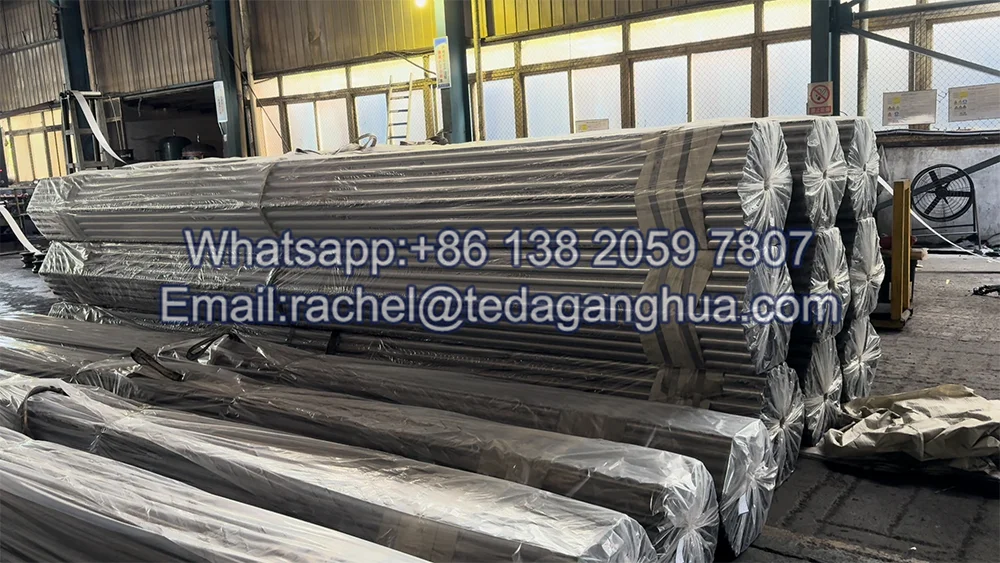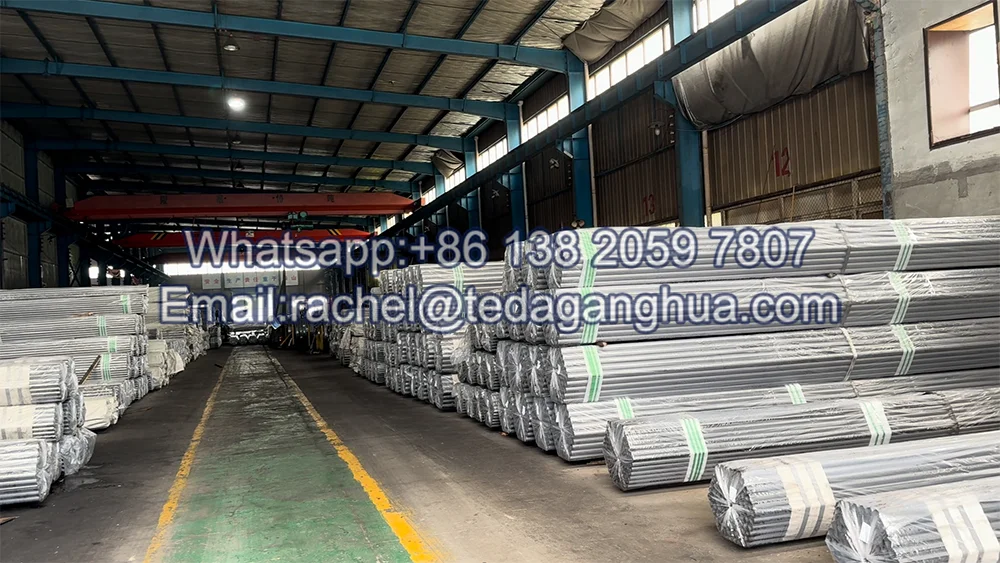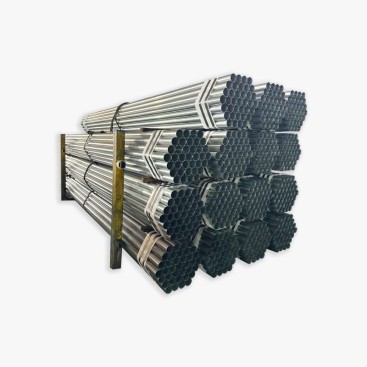
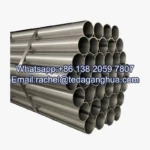
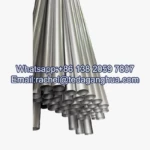
- Description
Description
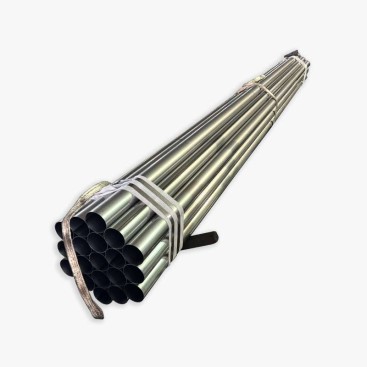
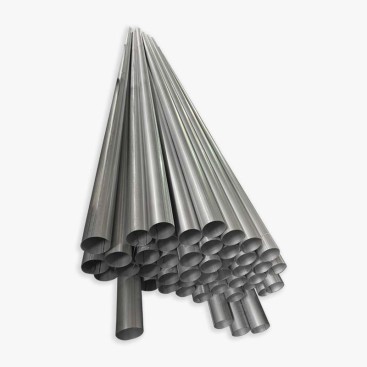
Choosing 12 ft aluminized steel tube offers a practical middle ground between shorter stock lengths and longer sections. At 3.6576 m, a 12 ft tube is longer than a 10 ft section, potentially reducing the number of joints in an installation, yet shorter than a 20 ft section, which can make handling, storage, and delivery easier in some situations. The actual advantage depends on tube dimensions, order volume, cutting requirements, and the available transport equipment.
For procurement managers, length selection should account for the complete supply chain: material cost, cutting yield, end preparation, packing, container or truck loading, unloading access, and installation labour. A medium length can be particularly useful for equipment assemblies and coordinated supply packages, but the best choice must be confirmed against the project’s dimensional and logistics requirements.
1. Why 12 ft Is a Practical Middle Length
A 12 ft section provides more usable length than 10 ft stock while avoiding some of the handling challenges associated with 20 ft sections. For repeated pipe runs, the additional length may reduce joint count. For projects with limited access, it may remain easier to manoeuvre than a longer tube, depending on outside diameter, wall thickness, weight, and the route to the installation point.
The 12 ft Length Trade-Off
- Compared with 10 ft: More length per piece may reduce jointing and simplify supply for longer components.
- Compared with 20 ft: The shorter section may be easier to handle, store, and route through restricted spaces.
- For equipment packages: A consistent intermediate length can support coordinated cutting and assembly schedules.
- For distribution: Medium-length bundles may suit some regional deliveries, subject to carrier rules and the customer’s unloading facilities.
These are planning advantages, not guarantees. A 12 ft section may still be too long for a narrow access route, while a 20 ft section may be more economical when the job consists of long, straight runs. Compare total installed cost rather than selecting by length alone.
2. Container Loading and Shared Truck Transport
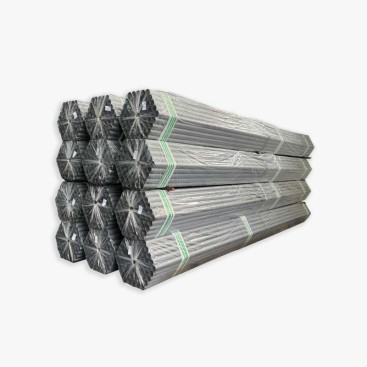
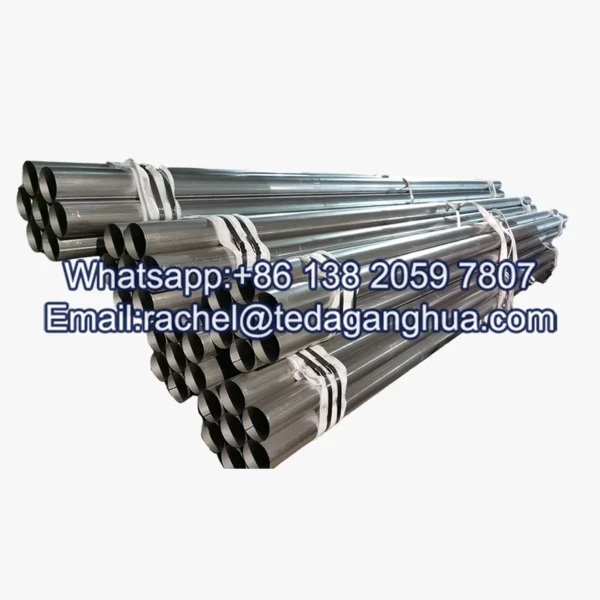
Although 12 ft equals approximately 3.66 m, container suitability cannot be determined from nominal length alone. The usable internal length, door opening, bundle dimensions, packing frames, dunnage, loading orientation, and securing arrangement all affect whether a shipment can be loaded safely.
For international shipments, confirm the specific container type and its current usable dimensions with the freight provider. The bundle must fit the actual loading envelope, not merely the nominal container size. For road transport, check vehicle-bed dimensions, legal load limits, any permitted overhang, and the carrier’s rules for long cargo.
| Transport Option | What to Check | Cost and Risk Implications |
|---|---|---|
| Standard container | Usable internal length, door clearance, bundle dimensions, payload, and securing points. | May provide an economical option if the cargo fits without special arrangements. |
| Shared truck / LTL | Carrier length limits, minimum charges, handling transfers, and packaging requirements. | Can suit smaller shipments, but extra handling and dimensional charges may offset the benefit. |
| Full truckload | Order volume, vehicle configuration, load distribution, and unloading equipment. | May reduce handling transfers and improve cost efficiency at sufficient shipment volume. |
| Specialized transport | Whether cargo dimensions exceed available standard equipment or require special restraints. | May add equipment, handling, and coordination costs; use only when the cargo plan requires it. |
Shared transport can be attractive for medium-sized orders because the cargo may be easier to consolidate than very long sections. Nevertheless, tube length alone does not determine freight cost. Total packed volume, gross weight, route, delivery urgency, terminal charges, and unloading arrangements should all be included in the comparison.
3. Cutting Allowances and End Protection
If 12 ft tubes will be cut into finished components, prepare the cutting list before confirming the order. Account for saw kerf, end squaring, beveling, and any length allowance needed for final fitting. A tube that appears to match the required component length may be too short after end preparation.
Cutting can expose the steel substrate at the end of an aluminum-silicon-coated tube. The appropriate protection depends on the product specification, service environment, storage period, and approved coating-repair procedure. A generic sealant or paint should not be assumed suitable for every application.
Cut-End Protection Checklist
- Confirm cut length: State the nominal length and permitted tolerance on the purchase order.
- Specify end preparation: Identify whether the ends should remain plain, be deburred, beveled, flared, or otherwise formed.
- Protect during transit: Use suitable end caps or packaging to reduce impact, abrasion, and contamination.
- Manage moisture: Store and pack the tubes to prevent water accumulation and allow appropriate drainage and drying.
- Define coating repair: Follow the approved method where cutting or forming damages the coating or exposes the substrate.
For factory-cut orders, agree on the cutting list, quantities per length, identification method, and treatment of cut edges before production. For site cutting, specify the tools and post-cut inspection requirements. This helps maintain consistent end quality and avoids disputes over whether the delivered material is ready for assembly.
4. Tube-End Options and Their Effect on Connections
End preparation affects how the tube joins to other components. The correct choice depends on the connection design, tube wall, fitting geometry, manufacturing method, and application requirements. The options below are not interchangeable without checking the intended joint.
| End Type | Typical Purpose | Key Consideration |
|---|---|---|
| Plain end | Cut-to-length supply, fitting connections, or preparation for subsequent fabrication. | Specify deburring, squareness, and the required cut-end condition. |
| Beveled end | Preparation for certain welded joints. | Confirm bevel angle, root face, fit-up requirements, and coating treatment near the weld. |
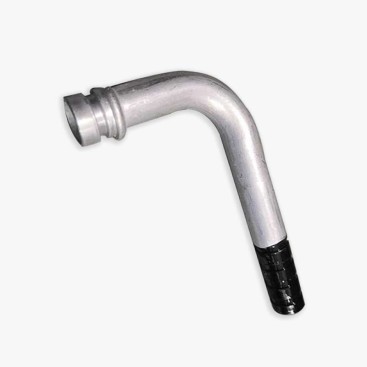
| Rolled end | May be used for specific retention, reinforcement, or assembly designs. | Define the profile and compatibility with the mating part; verify deformation limits. |
| Flared / expanded end | May facilitate selected fitting or tube-joining systems. | Check the fitting design, wall-thickness reduction, dimensional limits, and coating integrity after forming. |
Not every tube is suitable for every end-forming operation. Before specifying rolled or expanded ends, confirm that the material, wall thickness, diameter, and coating can tolerate the required deformation. If the tube is welded or intended for pressure service, the connection design and applicable joining procedure must govern the final specification.
5. Where 12 ft Tubes Make Sense
The intermediate length can be useful when the project needs more reach than a 10 ft section provides but does not require the full length of a 20 ft tube. Its value is strongest when it matches the downstream component schedule and fits the available transport and installation arrangements.
Potential Application Scenarios
- Equipment packages: Medium-length sections may suit repeatable assemblies when the cut list and connection positions are standardized.
- Fabrication workshops: The length can provide room for multiple cut parts while remaining manageable for suitable workshop equipment.
- Regional distribution: Bundles may be convenient for distributors and project customers, subject to carrier and storage limits.
- Mixed-length projects: A medium stock length can be evaluated alongside shorter and longer alternatives to reduce waste and joint count.
Suitability must still be confirmed for the actual operating environment. Temperature, corrosion exposure, pressure, structural loads, material grade, and coating specification are separate engineering considerations; selecting a convenient length does not establish product suitability for a particular service.
6. 12 ft vs 10 ft vs 20 ft: A Three-Way Comparison
The table below compares the main procurement trade-offs. Actual prices and freight charges depend on the supplier, quantity, dimensions, packaging, route, and delivery terms, so they should be confirmed by quotation rather than inferred from length alone.
| Decision Factor | 10 ft / 3.048 m | 12 ft / 3.658 m | 20 ft / 6.096 m |
|---|---|---|---|
| Unit price tendency | May involve more cuts or more pieces per project. | Depends on stock availability and cutting requirements. | May reduce processing per metre for standard stock, but is not always cheaper. |
| Joint count | Potentially higher on long runs. | Intermediate; fewer joints than 10 ft when layout permits. | Potentially lowest on long, straight runs. |
| Freight | Can be easier to consolidate, subject to weight and carrier rules. | May offer a balance between bundle size and usable length. | Requires closer checks on loading envelope, packing, and long-load handling. |
| Handling difficulty | Often easier to manoeuvre, depending on weight. | Intermediate; assess access and lifting needs. | Greater need to manage sagging, turning clearance, and lifting support. |
| Cutting waste | Can work well for short parts but may leave more end waste for longer components. | May suit intermediate part lengths and mixed cutting schedules. | Can improve yield for long parts, but leftover material may be harder to reuse. |
| Best fit | Restricted access, shorter parts, or small deliveries. | Equipment packages, medium-length parts, and balanced handling needs. | Long straight runs and projects equipped for long-section handling. |
For an accurate comparison, calculate total material purchased, usable yield, number of joints, fabrication labour, freight, unloading, storage, and expected damage risk for each length. This gives a more meaningful result than comparing the price per tube alone.
7. Teda Ganghua Supply and Specification Support
Teda Ganghua supports industrial procurement teams evaluating aluminized steel tubing dimensions, cut lengths, end preparation, coating requirements, and delivery planning. For orders involving several component lengths, sharing a cutting schedule and packaging requirements helps align material supply with fabrication and logistics needs.
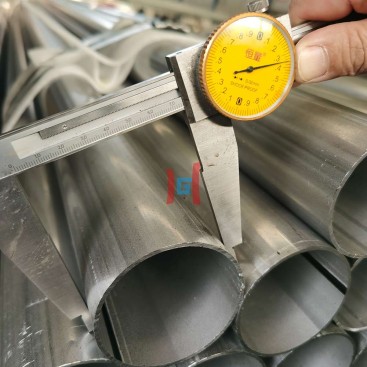
When requesting a quotation, provide the outside diameter, wall thickness, material and coating specification, required length, dimensional tolerances, end condition, quantity, application, and delivery destination. If 12 ft sections are being considered, include the finished-part lengths, jointing method, and any restrictions on container loading, shared transport, storage, or unloading equipment.
Review aluminized steel tubes and submit your dimensions and delivery requirements for review. Before confirming the order, align the cutting list, end-protection method, packing dimensions, and transport plan with the intended installation conditions.
Frequently Asked Questions
1. How long is a 12 ft tube in metres?
Twelve feet equals 3.6576 m, commonly rounded to 3.66 m. The purchase order should specify the nominal length and its permitted tolerance.
2. Is 12 ft easier to ship than 20 ft?
It can be easier to handle or consolidate, but the result depends on packed dimensions, cargo weight, carrier restrictions, container or vehicle configuration, and delivery facilities. Confirm the actual loading plan before choosing a length.
3. Should 12 ft tubes be ordered with plain or beveled ends?
Choose the end preparation that matches the connection method. Plain ends may suit certain fitting systems, while beveled ends may be required for specified welded joints. Confirm dimensions and the applicable joining procedure before ordering.
4. How should cut ends be protected?
Use end protection and packaging appropriate to the transport and storage conditions, and define an approved coating-repair method where cutting exposes the substrate. Avoid packaging that traps moisture or contaminates the tube interior.
5. Is 12 ft always the most economical length?
No. It is a useful intermediate option, but the best length depends on the cutting schedule, joint count, freight charges, site access, and handling requirements. Compare the total delivered and installed cost for all practical lengths.