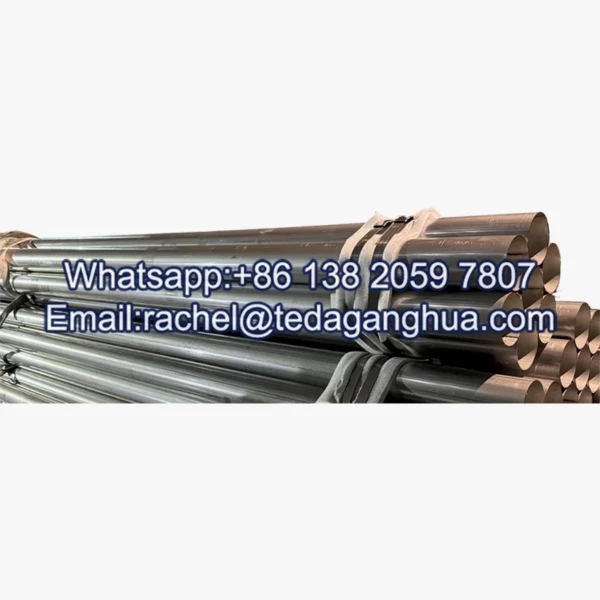
- Description
Description
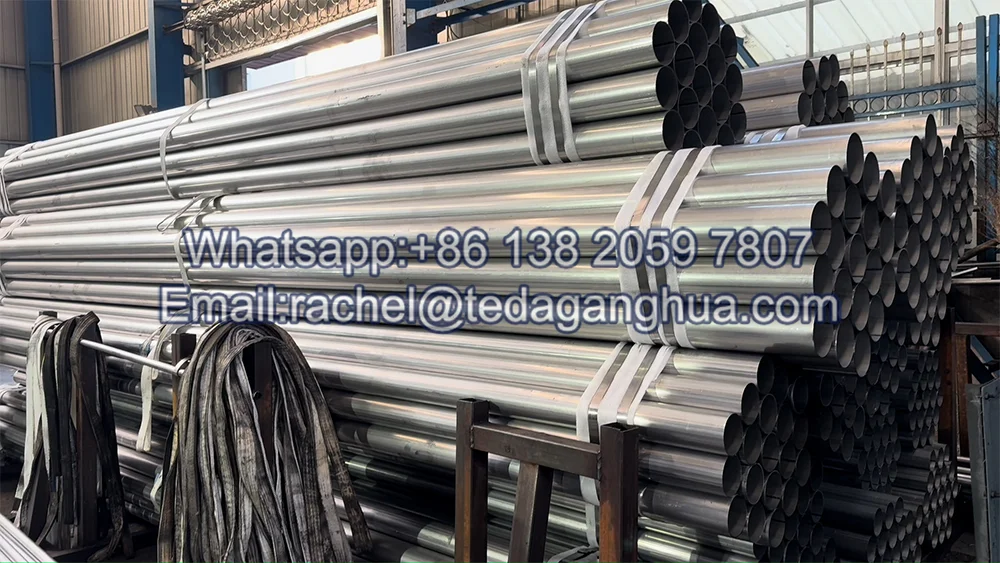
An aluminized tube factory is defined by its production line, process control, inspection capability, and ability to maintain consistent coating and dimensional quality—not simply by the word “factory” on a quotation. For procurement managers, the key question is whether the supplier can demonstrate how the substrate is prepared, how the aluminum-based coating is controlled, how the tube is formed and finished, and how the final product is inspected before shipment.
What Does an Aluminized Tube Production Line Look Like?
A typical production route depends on whether the supplier starts with coated strip, performs continuous hot-dip aluminizing before tube forming, or integrates coating and tube production into a more specialized process. For continuously coated tube products, the overall workflow can be understood as a sequence of material preparation, coating, forming, welding or tube production, finishing, inspection, and packing.
Coil or strip is checked for grade, thickness, width, surface condition, and incoming quality.
The prepared strip passes through the coating bath, where coating mass, bath condition, strip speed, and cooling are controlled.
Coated strip is slit and formed progressively into the required circular or shaped tube profile.
For welded construction, the longitudinal seam is produced under controlled welding parameters and subsequently inspected.
Sizing, straightening, deburring, end treatment, and cut-to-length operations bring the tube to the required specification.
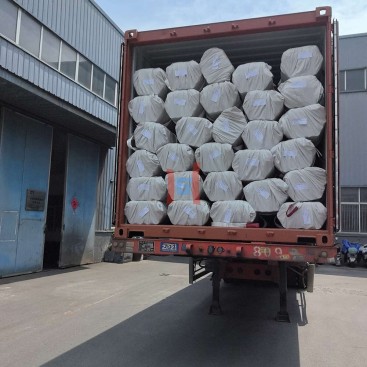
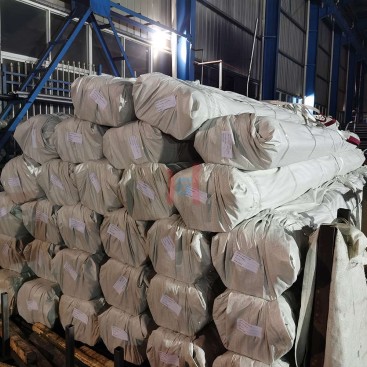
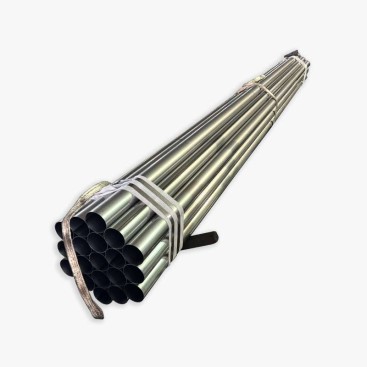
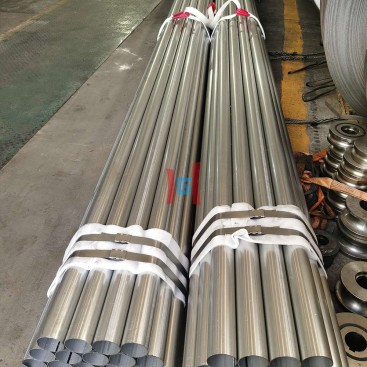
Finished tubes are dimensionally checked, tested as specified, bundled, protected, and prepared for shipment.
Not every factory performs every stage in one building. A supplier may operate an integrated coating and tube line, or purchase coated strip and perform tube forming and finishing in-house. This distinction should be clarified during supplier qualification.
Key Equipment and Process Control Points
The production equipment is important, but the more useful procurement question is what each machine controls. A modern line should have measurable process parameters rather than relying only on visual inspection after production.
| Production Stage | Typical Equipment | Important Control Point |
|---|---|---|
| Strip preparation | Uncoiler, cleaning and surface-preparation equipment | Surface cleanliness and strip tension |
| Hot-dip coating | Coating bath, air-knife or wiping system, cooling section | Coating mass, uniformity, bath condition, line speed |
| Forming | Roll-forming and sizing stands | Diameter, wall-thickness deformation, ovality |
| Welding | ERW/HFW welding system | Welding current, frequency, speed, seam integrity |
| Sizing and finishing | Sizing mill, straightener, cutting and deburring equipment | Dimensional tolerance and tube-end condition |
Coating Thickness and Adhesion Control
The aluminum-based coating is one of the main reasons buyers select this product for elevated-temperature or corrosive environments. However, specifying only the coating name is insufficient. The coating mass, uniformity, surface condition, adhesion, and substrate grade should be defined in the purchase specification.
Coating control begins during the continuous hot-dip stage. Bath temperature, strip immersion, line speed, wiping conditions, cooling rate, and surface preparation can all influence the final coating. The factory should therefore be able to explain how coating mass is monitored and how deviations are handled.
Procurement check: Ask for the specified coating mass, measurement method, acceptable tolerance, and inspection frequency rather than accepting a statement such as “thick coating” or “high-temperature coating.”
Adhesion is equally important. Forming the coated strip into a tube places mechanical stress on the coating, particularly around the seam, bends, sizing section, and tube ends. A qualified production line should control forming conditions so that the coating remains sufficiently bonded after processing.
Tube-End Treatment Matters More Than It Looks
Tube ends are frequently exposed to handling, welding, assembly, and cutting operations. Poorly controlled cutting can create burrs, distort the end geometry, or locally damage the coating.
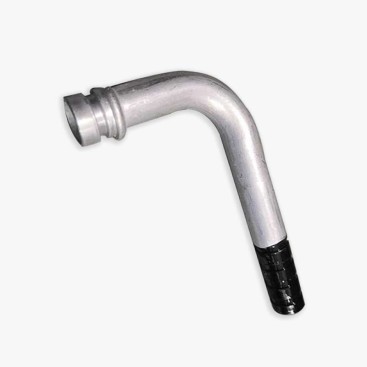
Depending on the application, finishing may include saw cutting, flying cutting, deburring, chamfering, end sizing, or customized end preparation. If the tubes will be inserted into another component, connected with clamps, or welded into an exhaust assembly, the required end condition should be stated before production.
Factory Capacity: OD, Wall Thickness and Length
“Factory direct” does not mean every possible dimension is available from stock. Production capability is normally constrained by the forming mill, strip width, welding equipment, tooling range, and cutting system.
| Capability Item | What Buyers Should Confirm |
|---|---|
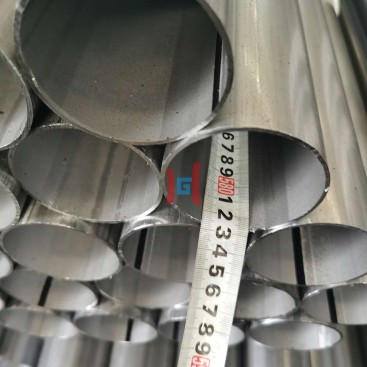
| Outside diameter | Minimum and maximum OD supported by the forming and sizing tooling |
| Wall thickness | Available thickness range and applicable tolerance |
| Production length | Standard length, maximum cut length, and customized length capability |
| Coating specification | Available coating type, coating mass range, and uniformity control |
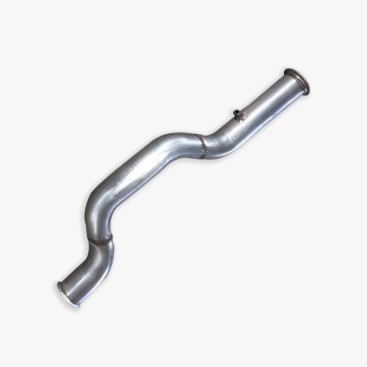
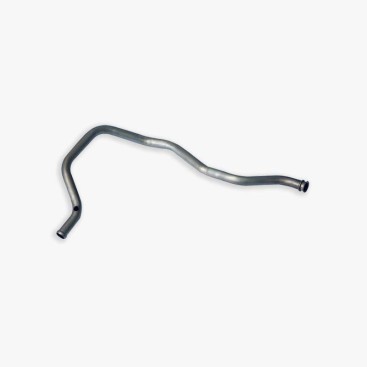
| Special processing | Bending, flaring, swaging, drilling, notching, or other downstream operations |
For a new specification, ask the factory for the actual tooling range rather than a generic statement such as “custom sizes available.” The difference can determine whether the order can enter normal production or requires new tooling and a separate production schedule.
What Quality Tests Should a Factory Be Able to Perform?
A credible production facility should have a defined inspection process covering both the coating and the finished tube. The exact test program depends on the applicable standard and purchase specification.
Confirms that the coating meets the specified mass and helps identify coating variation.
Evaluates coating behavior after mechanical deformation according to the applicable test method.
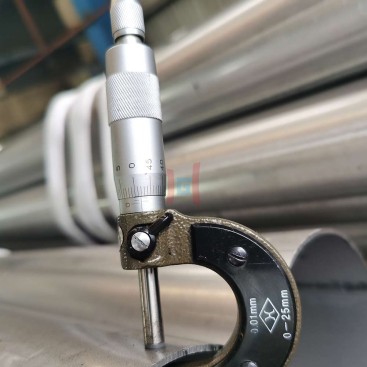
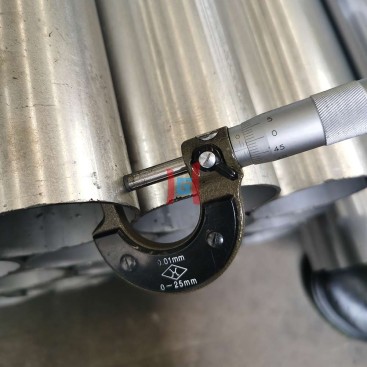
Includes OD, wall thickness, length, straightness, ovality, and tube-end condition as required.
Hydrostatic or air-leak testing can be specified when pressure tightness is required by the application.
Inspection records should connect the test result to a specific production batch. This is more useful than receiving a generic certificate that does not identify the actual shipment.
How to Verify That the Supplier Is Really a Factory
A factory claim should be verified through production evidence rather than company wording alone. Procurement teams can use several levels of verification depending on order value and technical risk.
| Verification Method | What to Check |
|---|---|
| Production-line images or video | Coating, forming, welding, cutting, inspection, and packing equipment |
| Sample inspection records | Actual dimensions, coating results, testing dates, batch identification |
| Factory video inspection | Whether the displayed equipment corresponds to the supplier’s stated production route |
| On-site audit | Equipment, personnel, QC system, raw-material traceability, production records and warehouse |
For a high-value project, an independent or buyer-appointed audit can provide stronger evidence than photographs. The objective is not simply to confirm that machinery exists, but to determine whether the supplier can repeatedly manufacture the required specification.
Factory-Direct Purchasing: MOQ and Production Lead Time
Direct factory sourcing can reduce intermediary handling, but it may introduce minimum order quantities and production scheduling requirements. A factory normally has to balance tooling, material preparation, line setup, production sequence, inspection, and packing.
| Order Situation | Likely Purchasing Approach |
|---|---|
| Sample quantity | Check existing stock or production leftovers first |
| Small trial order | Combine with an existing production schedule where possible |
| Regular monthly demand | Use a repeat production schedule and agreed specification |
| Large customized order | Confirm tooling, raw material, MOQ, production slot, inspection and shipment plan before confirmation |
Ask two separate questions: “What is your minimum order quantity?” and “What is the production lead time after technical confirmation?” MOQ describes the economic production threshold; lead time describes the manufacturing schedule. They are not interchangeable.
Questions to Ask Before Placing a Factory Order
A concise factory qualification checklist can prevent many sourcing problems:
1. Is the coating process performed in-house or is coated strip purchased?
2. What are the actual OD and wall-thickness limits of the tube line?
3. What coating mass range can the line consistently produce?
4. How are coating adhesion and finished dimensions inspected?
5. Can the factory provide batch-level inspection records?
6. What are the standard and maximum cut lengths?
7. What MOQ applies to stock sizes versus customized sizes?
8. What production lead time applies after specification confirmation?
Teda Ganghua: Factory-Based Tube Supply
Teda Ganghua supports procurement managers with aluminized tube sourcing based on defined dimensions, coating requirements, lengths, inspection requirements, and delivery quantities. The production and processing workflow can be coordinated around standard stock or customized requirements, while inspection documentation can be aligned with the purchase specification.
For buyers evaluating factory-direct sourcing, the most useful starting point is to provide the required OD, wall thickness, coating specification, length, quantity, application, and destination. This allows the production route, stock availability, MOQ, processing requirements, and lead time to be evaluated together. You can review the aluminized steel tube factory supply range and submit a technical inquiry.
FAQ
What is the typical production route for aluminized tubes?
A common route includes substrate preparation, continuous hot-dip coating, slitting, tube forming, welding for welded products, sizing, cutting, finishing, inspection, and packaging. The exact route depends on the product construction and factory configuration.
How can I verify a tube supplier is a real factory?
Ask for production-line evidence, equipment details, batch inspection records, production videos, and, for higher-risk projects, an on-site audit. The supplier should be able to explain its actual production route and capacity limits.
What quality tests should be included?
Depending on the specification, checks can include coating mass, coating adhesion or bend testing, OD, wall thickness, length, straightness, seam quality, and hydrostatic or air-leak testing where pressure tightness is required.
Does factory-direct purchasing always mean a lower MOQ?
No. A production factory may require a minimum quantity because of material preparation, tooling, setup, production scheduling, and packaging requirements. Existing stock may be a better solution for very small orders.
What information should I send when requesting a factory quotation?
Provide the material grade, OD, wall thickness, coating specification, length, quantity, tolerance, testing requirements, packaging requirements, destination, and expected delivery schedule. Complete information allows the factory to assess production feasibility accurately.