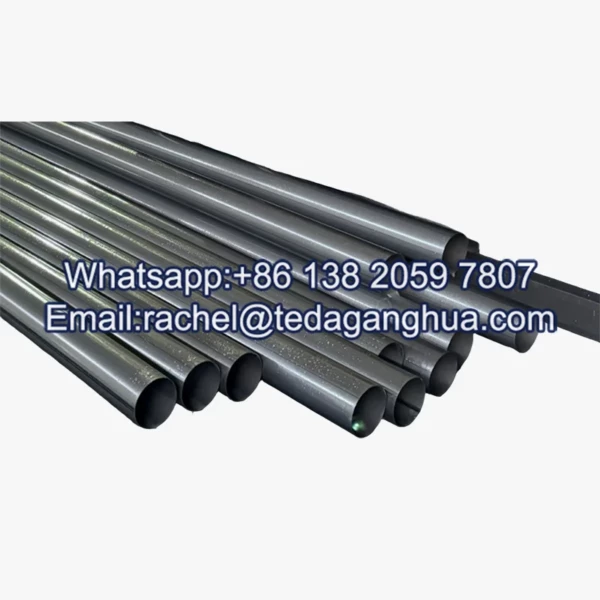



- Description
Description
An aluminized pipe exporter does more than supply metal products: the exporter coordinates commercial documents, export packaging, logistics, payment, and delivery responsibilities between the factory and the overseas buyer. For procurement managers, understanding this trade workflow helps prevent disputes over documents, cargo condition, weighing, freight responsibility, and delivery delays.
Exporter vs Factory: What Is the Difference?
A factory is primarily responsible for manufacturing. An exporter may manufacture its own products, work with affiliated production facilities, or coordinate supply from qualified factories. The commercial responsibilities can therefore extend well beyond production.
| Responsibility | Factory Focus | Exporter Focus |
|---|---|---|
| Production | Material, forming, welding, coating and finishing | Coordinates production according to the order |
| Quality | Process and final inspection | Provides inspection documents and coordinates third-party inspection when required |
| Documents | MTC and production records | Commercial invoice, packing list, shipping documents and export paperwork |
| Packaging | Bundles and protects finished goods | Confirms export packaging and coordinates loading |
| Logistics | Usually delivers cargo to the agreed loading point | Coordinates booking, shipping documents and agreed delivery arrangements |
| Payment | May receive payment through the commercial seller | Manages the agreed commercial payment process with the overseas buyer |
For an overseas buyer, the practical question is therefore not only “Who makes the tube?” but also “Who is responsible for the export transaction from factory gate to the agreed delivery point?”
Export Documents: What Should Be Prepared?
The exact document package depends on the destination, contract, customs requirements, transport mode, and product application. A standard export transaction commonly involves several core documents.
| Document | Main Purpose | Buyer Should Check |
|---|---|---|
| Commercial Invoice | Commercial value and transaction information | Product description, quantity, unit, value, seller and buyer information |
| Packing List | Cargo and package details | Package count, net/gross weight, dimensions and marks |
| Bill of Lading | Evidence of carriage and shipment information | Consignee, notify party, port information and cargo description |
| Certificate of Origin | Confirms the declared origin of the goods where required | Origin information and destination-specific requirements |
| Quality / Inspection Certificate | Documents conformity with the purchase specification | Grade, dimensions, coating, testing results and batch identification |
| Compliance Documents | Supports destination-specific regulatory requirements | Whether the requested certificate or declaration is actually required |
Documents should be consistent with one another. Product descriptions, quantities, weights, package counts, shipping marks, and consignee information should not conflict between the invoice, packing list, transport document, and inspection records.
Export Packaging: Protecting Tubes During Transit
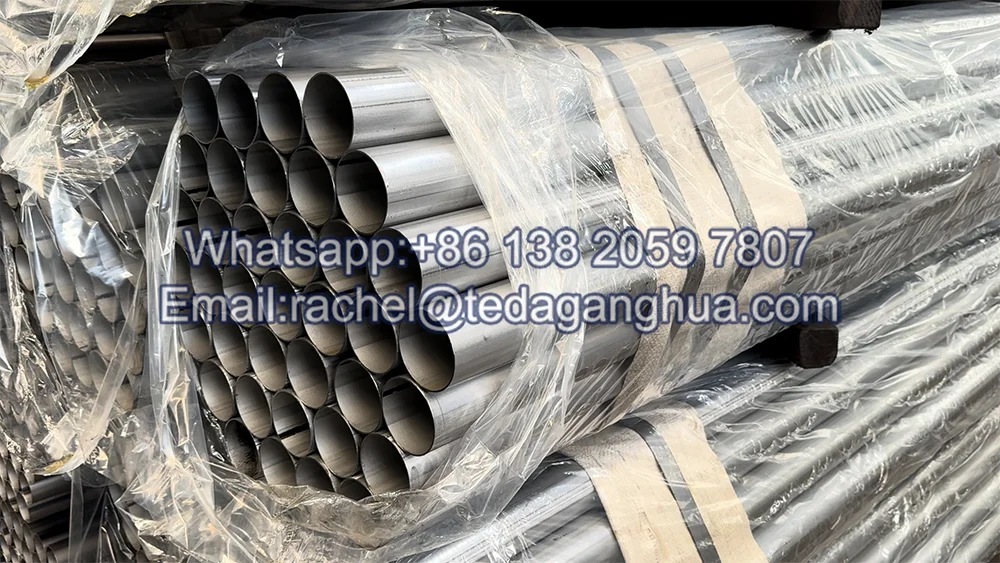
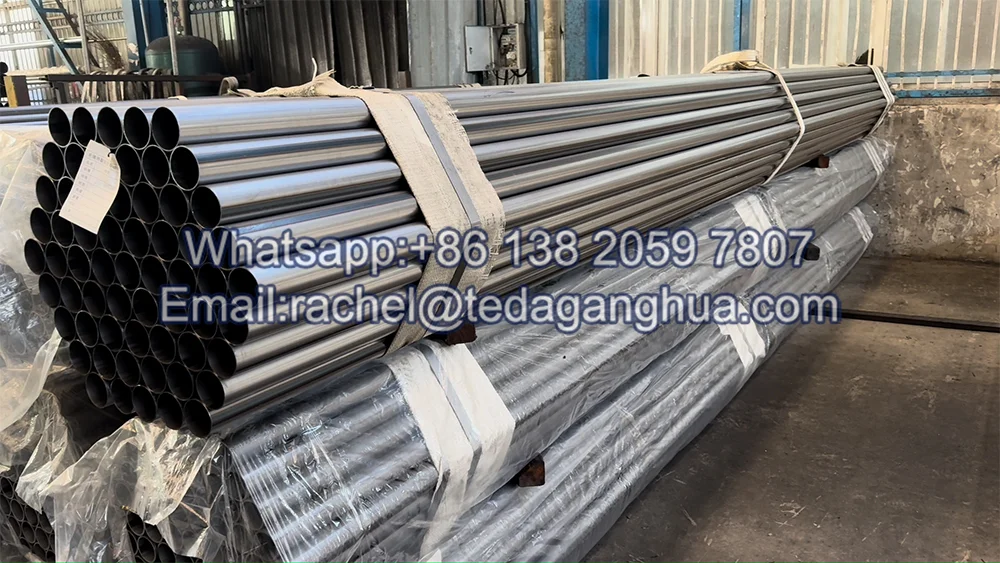
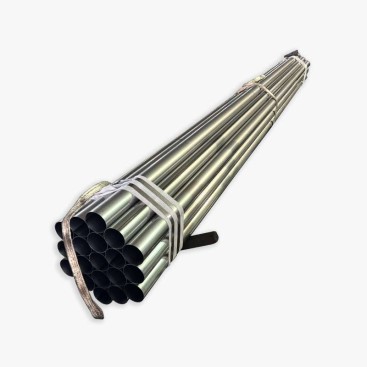
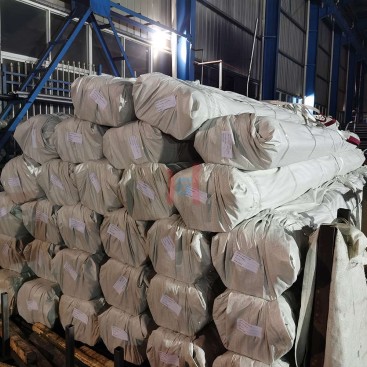
Packaging is particularly important for coated tubes because the cargo can experience vibration, impact, stacking pressure, moisture exposure, and repeated handling during international transportation.
Suitable for robust cargo and standard handling when the buyer’s requirements allow it. Bundles should be properly strapped and stabilized.
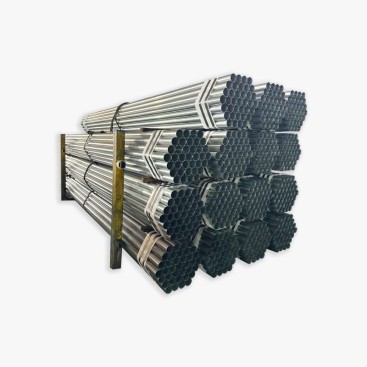
Groups tubes into manageable packages and helps prevent movement during loading and transportation.
Provides additional protection for smaller quantities, precision parts, or cargo requiring greater physical separation.
Cargo should be blocked, braced, strapped, or otherwise secured so that bundles cannot shift during ocean transportation.
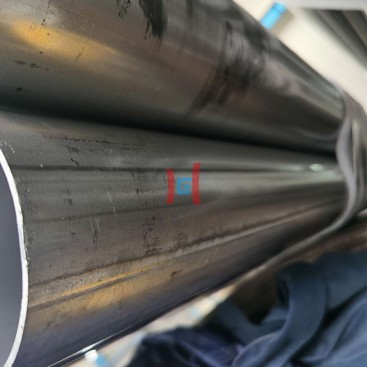
For coated products, the contact points between tubes deserve particular attention. Direct metal-to-metal friction can damage the surface during loading or transportation. Protective separators, suitable strapping, edge protection, and controlled bundle movement can reduce the risk.
Tube ends should also be protected when required. Cutting can leave sharp edges or burrs, while repeated contact between tube ends and adjacent cargo can damage the coating. The packing specification should therefore state whether end protection, separators, caps, or other measures are required.
Packaging principle: Do not evaluate packaging only by whether the cargo survives loading. The packaging should also protect the coating, tube geometry, tube ends, and identification marks throughout the entire transportation chain.
FOB vs CIF vs DAP: Why the Quoted Price Changes
Incoterms define important responsibilities between seller and buyer, including aspects of delivery, transportation, risk transfer, and costs. The commercial quotation should therefore be compared only after confirming that the delivery term is the same.
| Term | Typical Seller Responsibility | Buyer Consideration |
|---|---|---|
| FOB | Seller handles delivery to the agreed loading point and export formalities under the applicable term. | Buyer generally arranges the main international carriage and subsequent costs. |
| CIF | Seller arranges carriage and insurance to the named destination port under the agreed term. | Buyer handles responsibilities and costs beyond the applicable delivery point. |
| DAP | Seller arranges transportation to the named place, subject to the specific Incoterms allocation. | Buyer generally handles import clearance, duties and taxes unless otherwise agreed or required. |
These terms should always be written together with the named place or port and the applicable Incoterms version. A quotation that simply says “CIF” or “DAP” without the named destination is incomplete for commercial comparison.
Common Export Disputes: Weight, Coating Damage and Delays
Many international trade disputes are not caused by the basic product specification. They arise because the commercial contract did not clearly define how the cargo would be measured, accepted, packed, and delivered.
1. Net Weight vs Gross Weight
Steel products can be discussed using theoretical weight, actual weighed net weight, gross shipment weight, or another contractually defined basis. These figures are not interchangeable.
The purchase contract should specify the applicable weight basis, weighing method, tolerance, and whether packaging materials are included. The packing list and commercial documents should then use a consistent basis.
2. Coating Scratches During Transportation
If surface damage is discovered after arrival, the parties need to determine whether it occurred during manufacturing, packing, loading, ocean transportation, unloading, or local handling. Photographs taken during packing and container loading can provide useful evidence.
For sensitive coated products, buyers can specify packaging requirements before production and request loading photographs showing the completed bundles and container securing condition.
3. Shipment Delays
Production delays, inspection delays, port congestion, vessel schedule changes, customs procedures, and document corrections can affect delivery. The purchase contract should distinguish the agreed production lead time from the transportation schedule and identify the relevant responsibilities.
Useful contract checkpoints:
• Production completion date or shipment window
• Inspection and document approval procedure
• Weight measurement basis
• Packaging and container-securing requirements
• Incoterm and named place
• Procedure for reporting transit damage or shortages
What Should Buyers Request Before Shipment?
A well-organized export transaction should provide enough information for the buyer to verify both the cargo and the documents before the shipment leaves the origin country.
| Pre-Shipment Check | Recommended Evidence |
|---|---|
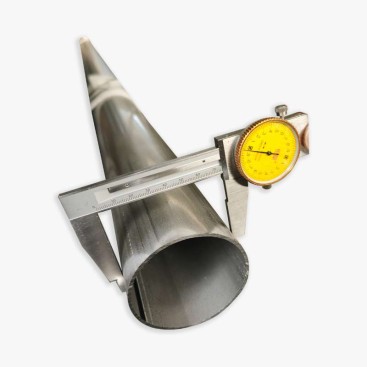
| Product identity | Grade, OD, wall thickness, coating specification and length |
| Quantity | Piece count, bundle count and agreed weight basis |
| Quality | Inspection report or certificate required by the contract |
| Packaging | Packing details and loading photographs when requested |
| Documents | Draft invoice, packing list, origin document and shipping information |
| Shipment | Container information, vessel schedule and transport document details |
Teda Ganghua: Export Support for Aluminized Tubes
Teda Ganghua combines metal product supply with export coordination for overseas procurement. For aluminized tube orders, the commercial process can cover specification confirmation, production coordination, inspection documentation, export packaging, container loading, shipping documents, and delivery arrangements according to the agreed trade term.
For buyers comparing suppliers, the most useful inquiry should include the required grade, outside diameter, wall thickness, coating specification, length, quantity, testing requirements, packaging requirements, destination, and preferred Incoterm. Teda Ganghua can then evaluate the appropriate supply and export arrangement through its aluminized steel tube export supply range.
FAQ
What documents are normally required for an export shipment?
Common documents include a commercial invoice, packing list, bill of lading, certificate of origin where required, and quality or inspection documentation. Additional compliance documents depend on the destination and application.
What is the difference between FOB, CIF and DAP?
They allocate transportation, delivery, cost, and risk responsibilities differently. The named place or port must be specified so that the quotation can be compared correctly.
How should coated tubes be packaged for export?
Packaging can include strapped bundles, protective separators, wooden cases, and appropriate container securing. The objective is to prevent movement, impact, tube deformation, and coating damage during handling and transportation.
How can buyers avoid weight disputes?
Define whether the contract uses theoretical weight, actual net weight, or another agreed basis, together with the weighing method and applicable tolerance. The invoice, packing list, and inspection records should follow the same basis.
Who is responsible when cargo is damaged during transportation?
The answer depends on the agreed Incoterm, point of delivery and evidence concerning when the damage occurred. Clear packaging requirements, loading photographs, inspection records, and transport documentation can help establish responsibility.